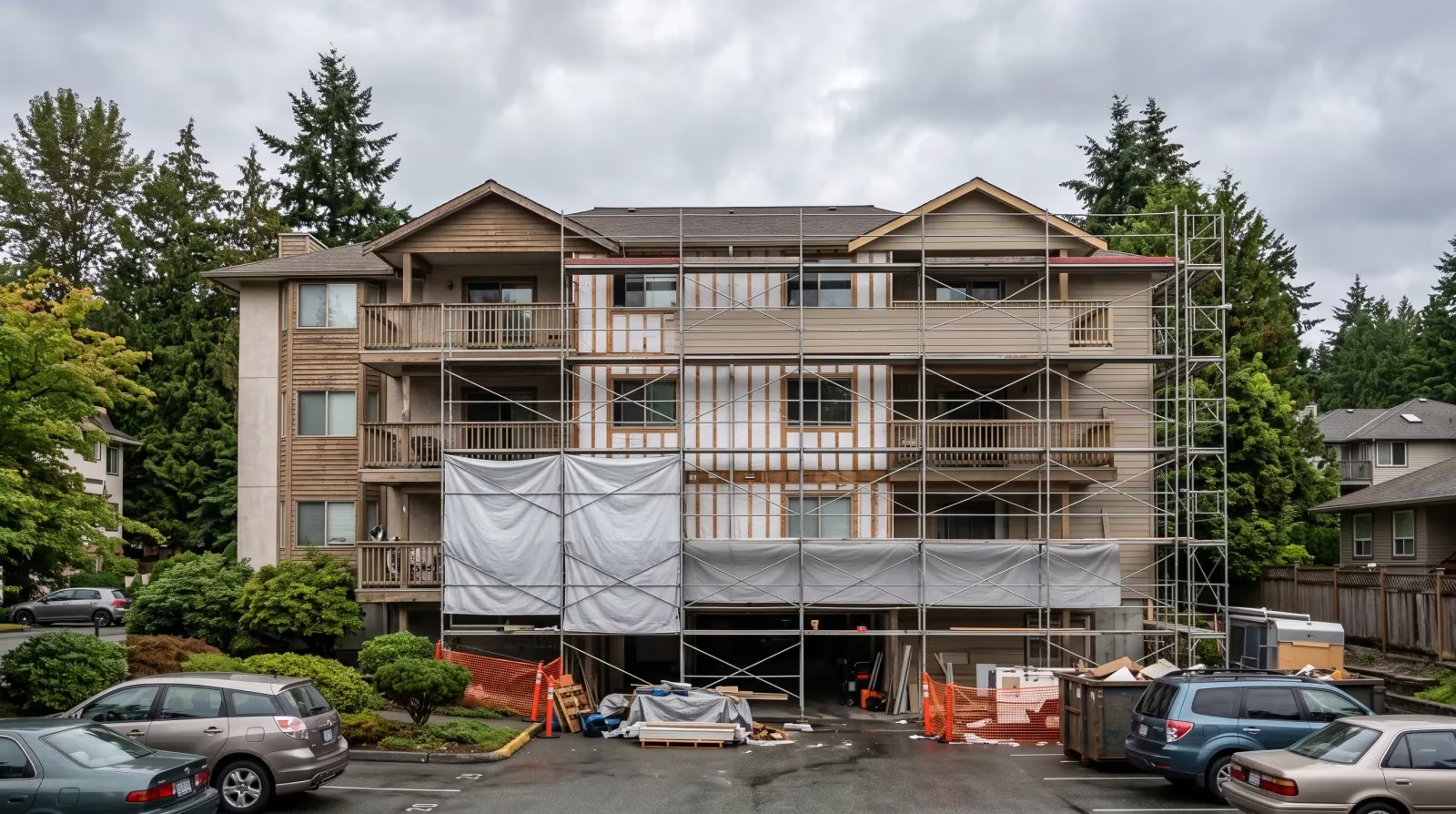

Buyers looking at Fraser Valley condos from the late 1980s and 1990s eventually ask some version of the same question: is this one of those leaky condo buildings. The useful version of that question is different, because a building that has been properly remediated and a building that has never been touched can sit side by side at similar prices.
What went wrong in the first place
Beginning in the 1980s and continuing into the early 2000s, a large number of BC buildings suffered building envelope failures. The history of the crisis is well documented: wall assemblies were built as tightly fitting layers with no drainage gap, on the theory that keeping water out entirely was enough.
In a coastal rainforest climate, that theory failed. Water found its way past the cladding, as water does, and then had no path to drain and no airflow to dry. The wood framing behind it rotted quietly, sometimes for years, before anyone saw a symptom inside a unit.
Design details made it worse in many buildings: minimal roof overhangs, poor flashing, and stucco applied directly to the sheathing.
What a rainscreen actually is
The correction is straightforward once you see it. A rainscreen wall assembly puts a deliberate air gap between the cladding and the structure behind it, usually created with vertical strapping. Water that gets past the outer surface runs down the gap and out through flashing at the bottom, and air movement dries what remains.
That is the difference between a wall that manages water and a wall that tries to block it perfectly and fails.
When a building is remediated, the old cladding comes off, damaged sheathing and framing get replaced, a new water resistive barrier goes on, strapping creates the drainage gap, and new cladding goes over top. Windows and balcony membranes are often replaced at the same time, because those are common water entry points.
It is a large, disruptive, expensive job. It is also, when done properly, a genuine reset of the building's exterior.
Why a remediated building can be the better purchase
This is the part that surprises first-time buyers.
A building of that era that has been fully remediated has a modern envelope, installed under engineering supervision, usually with a warranty, and documented in reports you can read. A building of the same age that has never been opened up has an original envelope and an unknown condition behind it.
The absence of a repair history is not the same as a clean bill of health. Some buildings performed fine. Some simply have not shown symptoms yet.
So the question we ask on behalf of our buyers is never whether the building is from that era. It is what has been done, how completely, and what the documents say about what remains.
The questions that separate a good file from a worrying one
When we review the strata package on a building from this period, we are reading for specific things.
Scope. Was the whole building remediated, or only some elevations? Partial remediation is common, often starting with the elevation that failed first. It is not automatically a problem, but it means more work is probably coming and it should be reflected in the depreciation report and the funding plan.
Inclusions. Were windows replaced? Were balcony membranes done? Were roofs addressed at the same time? A wall remediation that left original windows in place is a different piece of work from one that replaced them.
Completion and deficiencies. Was the work signed off? Were deficiencies identified and closed out, or is there a list still sitting open in the minutes?
Warranty. What warranty came with the work, who provides it, and how long does it run.
Funding and arrears. Remediation is usually paid through a special levy, sometimes with reserve funds or financing. The minutes will show how it was funded and whether any owners are still behind. Arrears matter because unpaid levies affect the strata's cash position.
Our strata document review checklist covers the general package, and strata council minutes red flags covers the patterns that tell you a problem is being managed rather than solved.
Where the depreciation report fits
A depreciation report is your best single document for understanding what the building expects to spend and when. In a remediated building it does two useful things.
It confirms the work happened as described, because a recently replaced envelope should be showing a long remaining life in the report. And it tells you what else is coming, because a building that spent heavily on its envelope still has roofing, plumbing, elevators, and everything else moving through its own life cycle.
A strata that completed a major remediation and then rebuilt its contingency reserve fund is in a genuinely good position. One that completed the work and left the fund empty is carrying more risk, even though the envelope is new.
Financing and insurance are worth confirming early
Lenders and insurers sometimes ask their own questions about buildings with envelope history, ongoing litigation, or a pending levy. In our experience most remediated buildings finance normally, but "most" is not a guarantee for your specific building and your specific lender.
Confirm both during your subject period. Our subject removal guide covers keeping enough runway to get real answers, and condo insurance versus strata insurance explains which policy covers what once you own.
When to bring in your own expert
A standard home inspection covers your unit and visible common areas. It does not evaluate a building envelope in engineering terms, and it is not meant to.
If the remediation was partial, if the reports are unclear, or if the minutes suggest ongoing water issues, paying a building envelope professional to review the documents is money well spent. That is a narrower and cheaper task than a full assessment, and it gets you an informed reading of paperwork that is genuinely technical.
The short version
Buildings from the leaky condo era are not a category to avoid. They are a category where the documents matter more than usual and where two buildings with the same year of construction can be in completely different condition.
Read the engineering reports and minutes rather than a summary. Find out what was done, how completely, what it cost, how it was paid for, and what the reserve fund looks like now. Then judge the building in front of you.
We are agents rather than engineers, and nothing here is a building assessment. What we can tell you is which documents answer these questions and which sentences in the minutes deserve a second read.
Key takeaways
- The crisis came from wall assemblies with no drainage gap, so water that got in could not drain or dry.
- A rainscreen adds a deliberate air gap behind the cladding, which is the correction used in remediation.
- A fully remediated building has a modern envelope and documentation, and can be a stronger purchase than an untouched building of the same age.
- Check scope, whether windows and balconies were included, deficiency closeout, warranty, and how the work was funded.
- The depreciation report and reserve fund tell you what the building still has ahead of it.
Frequently Asked Questions
What was the BC leaky condo crisis?
Starting in the 1980s and running into the early 2000s, many BC buildings suffered building envelope failures. Wall assemblies were built without a drainage gap, so water that got past the cladding had no way to drain or dry, and the wood framing behind it rotted. Repairs across the province cost billions.
What is a rainscreen?
A rainscreen is a wall assembly with a deliberate air gap between the cladding and the structure behind it. Water that gets past the outer surface drains down the gap and out, and air movement lets the assembly dry. It is the design correction that came out of the leaky condo era.
Is a remediated building safe to buy?
Often yes, and sometimes it is a better purchase than a building of the same age that has never been opened up. A full remediation replaces the envelope with a modern assembly, and the work is documented. What you want to confirm is scope, completeness, and warranty.
How do I tell if a remediation was complete?
Read the engineer's reports and the strata minutes rather than relying on a summary. Look for whether all elevations were done or only some, whether windows and balconies were included, what warranty was provided, and whether any deficiencies were left open.
What is a partial remediation?
Work done on part of a building, often one or two elevations that failed first, while the rest was left for later. It is common and it is not automatically bad, but it means future work is likely and should appear in the depreciation report and the reserve fund plan.
Do lenders and insurers treat these buildings differently?
They can. Some lenders and insurers ask questions about envelope history, ongoing litigation, or a pending special levy. Confirm financing and insurance for the specific building during your subject period rather than assuming.
How was remediation usually paid for?
Typically through a special levy on owners, sometimes combined with reserve funds and in some cases financing or litigation recovery. The minutes will show how the strata funded it and whether any owners remain in arrears.
Does a remediated building still need a depreciation report?
Yes. The report covers the whole building over time, including the new envelope, roofing, plumbing, and other components. A recent remediation should be reflected in it, which is one way to check the work actually happened as described.
Should I get my own building envelope opinion?
If the documents are unclear or the remediation was partial, having a building envelope professional review the reports can be worth the cost. A standard home inspection looks at your unit and visible common areas, and does not assess a building envelope in engineering terms.
Are all 1980s and 1990s BC condos affected?
No. Problems were widespread in that era, but many buildings performed fine and many others have been fully remediated. Age alone does not tell you the condition. The documents do.
Sources
Verified September 1, 2026. General information only, not an engineering or building assessment. Building envelope condition varies by property. Have qualified professionals review documents for your specific purchase.
Related FRIVE guides
- Strata depreciation reports, the document that shows what is coming
- Strata document review checklist, the full package and what to look for
- Strata special levies, how large repairs get funded
- Strata contingency reserve fund, whether the building has savings behind it
- Wood frame vs concrete condos, how construction type shapes maintenance
Next Steps: Work with FRIVE
The buyers who do well in this part of the market are the ones who read the paperwork carefully instead of reacting to the building's age. A remediated 1990s complex with a healthy reserve fund is a real option, and it often prices better than newer stock.
If you are looking at a building from this era and want help reading the engineering reports and minutes, start a conversation with the FRIVE team or browse current Fraser Valley listings.
Found a condo or townhouse you like?
Let the FRIVE team request and review the strata package for you. We'll go through the Form B, depreciation reports, and council minutes, and let you know if we spot any red flags, like upcoming special levies or restrictive rules. Completely free, no obligation, no pressure.
Sources
- A short history of the leaky condo crisis, REW
- Strata Property Act, Government of British Columbia
Older homes and building condition
8 pieces that fit together. Read them in order, or jump to the one you need.
- Start hereThe Condition Problems That Change a Fraser Valley Offer
- GuideRadon Testing for Fraser Valley Home Buyers: What to Ask Before You Close
- GuideBuried Oil Tanks: The BC Liability That Follows the Property, Not the Person
- GuidePoly-B Plumbing in BC Homes: What Buyers Should Do When They Find It
- GuideKitec Plumbing in BC Condos: How to Spot It Before You Buy
- Guide · you are hereLeaky Condo Era Buildings: How to Read a Rainscreen Remediation
- GuideAsbestos in Older Fraser Valley Homes: What Buyers Should Know
- GuideKnob-and-Tube and Aluminum Wiring: When Insurance Says No
Related guides
- StrataStrata Wind-Ups in BC: What an 80% Vote Means for You
- Home ConditionKitec Plumbing in BC Condos: How to Spot It Before You Buy
- Home ConditionPoly-B Plumbing in BC Homes: What Buyers Should Do When They Find It
- Buying ProcessNotary or Lawyer for Your BC Closing? How First-Time Buyers Should Decide
Found this useful? Share it.
A neighbour, a partner, a friend who's two FHSA contributions away, send it their way.