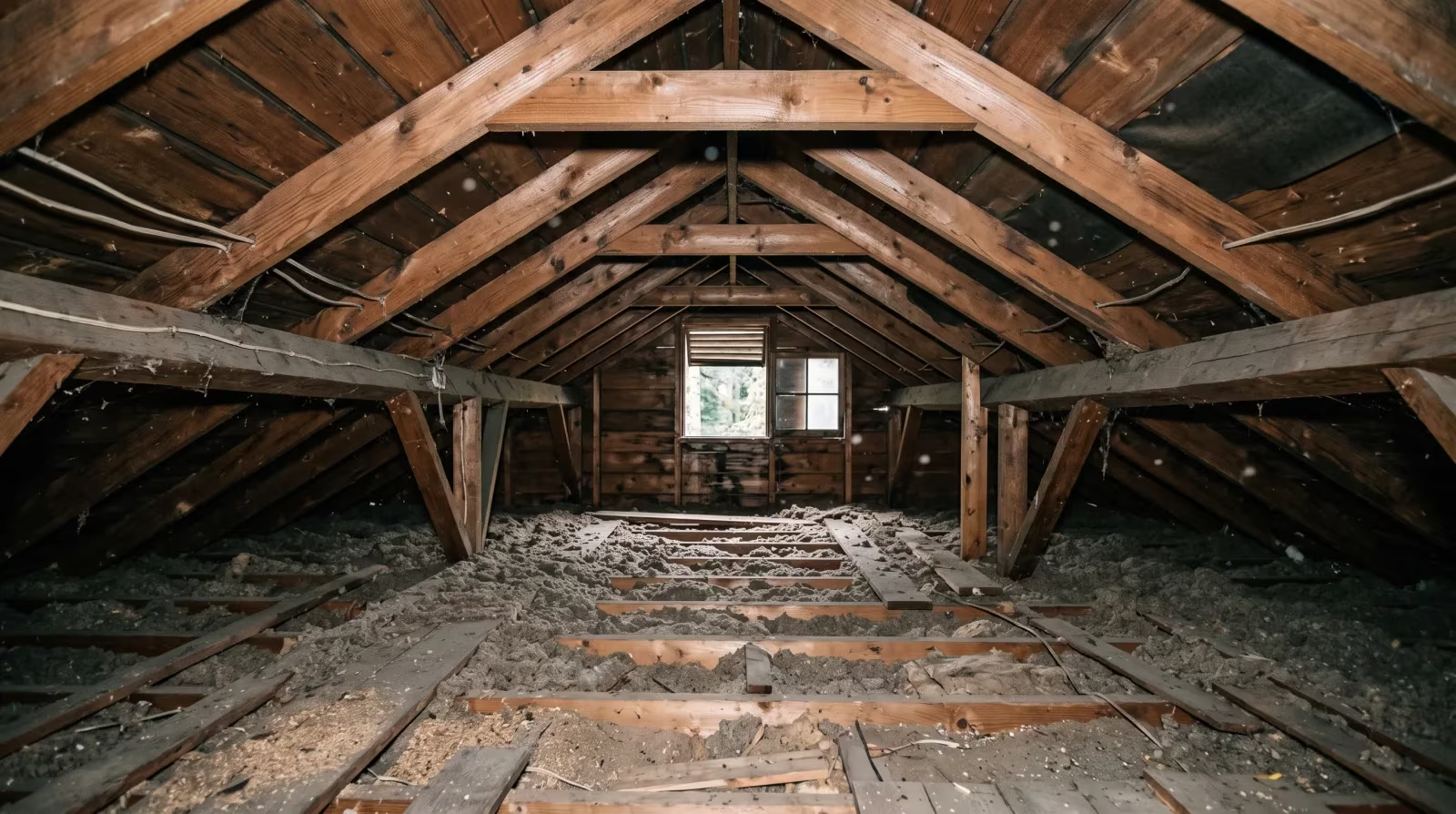

Buyers looking at older Fraser Valley homes usually raise asbestos as a safety question. For most people the more useful framing is a scheduling and budget question, because the material sitting quietly in a floor tile behaves very differently from the same material after somebody starts demolition.
Why age is the first question
Asbestos was used heavily in construction through the middle of the twentieth century for fire resistance and insulation. According to WorkSafeBC, prior to 1990 roughly 3,000 building materials incorporated it in some form.
That number explains why nobody can give you a simple list. It was in flooring, ceilings, insulation, roofing, siding, and even some drywall joint compound. Two houses built the same year on the same street can have different materials depending on who built them and what was available.
For screening purposes, homes built before 1990 are the ones where the question comes up. If your Fraser Valley search includes older stock in Abbotsford, Mission, or the established parts of Surrey and Langley, you will look at homes in this range.
Where it typically shows up
The usual locations are worth knowing, because they tell you which renovation plans are affected.
Vinyl floor tiles and the black adhesive under them. Textured ceiling finishes. Insulation on pipes and ducts, particularly around older heating systems. Some drywall joint compound. Roofing and siding products. And in attics, vermiculite.
Vermiculite deserves its own mention. It is a loose fill insulation that looks like small greyish brown pebbles, often sold under the Zonolite brand name. A large share of North American supply came from a mine near Libby, Montana, whose deposit was contaminated with asbestos. Health Canada advised Canadians about the risk associated with vermiculite insulation that may contain asbestos.
The practical rule with attic vermiculite is to leave it alone and treat it as suspect until tested by someone qualified.
Undisturbed material versus disturbed material
This distinction is the whole subject in one line. Material in good condition, left alone, is generally managed in place. Material that gets cut, sanded, broken, or demolished can release fibres into the air.
That is why the province's own guidance frames asbestos around renovations, public safety and tenancy rather than around simply occupying a building.
For a buyer, this reframes the decision. Living in a 1975 house with intact vinyl flooring is ordinary. Deciding in month three to pull that flooring up yourself over a weekend is where people get into trouble.
The requirement that affects your renovation budget
Here is the piece that catches buyers with plans.
WorkSafeBC requires a hazardous materials survey completed by a qualified professional before demolition or renovation work begins on structures built before 1995. It is a workplace safety requirement, and legitimate contractors will expect it.
So if you are buying an older home with the intention of opening walls, removing ceilings, or taking a kitchen back to studs, the survey belongs in your budget and your timeline from the beginning. Buyers who leave it out are the ones who get a surprise quote after they have already booked a contractor and given notice on a rental.
If the survey finds asbestos-containing materials in the areas you plan to disturb, abatement by a qualified contractor comes next, and it changes both cost and schedule. If it finds nothing in those areas, you have spent a modest amount to remove a large unknown.
Our guide to renovating a condo or townhouse with strata approval covers the parallel process in a strata, where you have permission questions on top of these.
What a home inspection does and does not do
A home inspection is visual and non-invasive. An experienced inspector will recognize materials typical of an era and flag them, which is genuinely useful.
What an inspection cannot do is confirm asbestos. That requires sampling and laboratory analysis by a qualified professional. So an inspection report that says "possible asbestos-containing material, testing recommended" is doing its job correctly rather than hedging.
If the answer matters to your plans, book the testing. If you are buying a home you intend to live in as-is for several years, many buyers reasonably decide to leave the question until they are ready to renovate.
How this affects the purchase decision
For most of the buyers we work with, asbestos does not change whether they buy. It changes what they plan and when.
A buyer purchasing a 1980 townhouse who plans to live in it unchanged has a low-priority item to keep in mind. A buyer purchasing the same townhouse with a gut renovation planned for month two has a survey, a possible abatement, and a schedule adjustment.
The mistake is treating those two buyers as if they face the same situation. They do not, and the second one should be getting quotes during the subject period rather than after completion.
If you are budgeting an older home purchase generally, our guide to the first year of owning a condo or townhouse covers the wider pattern of costs that arrive earlier than new owners expect.
Financing, insurance, and resale
Undisturbed asbestos in an older home is common in BC and generally does not stop a purchase or a mortgage. Insurance for older homes is worth confirming for reasons that usually have more to do with wiring, plumbing, and roof age than with asbestos.
Where problems arise is usually improper work. A renovation done without a survey, by someone cutting corners, creates a genuine issue for the home and for anyone in it. That is a good reason to use qualified contractors even when it costs more.
The short version
Asbestos in an older Fraser Valley home is normal, manageable, and mostly a question about what you intend to do next. Undisturbed material in good condition is generally left in place. Renovation is what triggers the survey requirement and the cost.
Find out during your subject period whether your plans intersect with likely asbestos locations, and get the survey quoted before you commit to a renovation timeline.
We are agents rather than environmental professionals, and none of this is a hazardous materials assessment. What we can tell you is which older homes tend to raise the question and when in the process it is cheapest to answer.
Key takeaways
- Homes built before 1990 are the usual screening range, and WorkSafeBC estimates roughly 3,000 building materials contained asbestos before then.
- Undisturbed material in good condition is generally managed in place, and disturbance is what creates exposure.
- WorkSafeBC requires a hazardous materials survey by a qualified professional before demolition or renovation on pre-1995 structures.
- Vermiculite attic insulation should be treated as suspect until tested and left undisturbed.
- A home inspection can flag likely materials but cannot confirm asbestos, which needs sampling and lab analysis.
Frequently Asked Questions
Which homes are likely to contain asbestos?
Homes built before 1990 are the usual concern, and WorkSafeBC estimates that prior to 1990 roughly 3,000 building materials incorporated asbestos. It was used for fire resistance and insulation across a wide range of products, so age is the first screening question.
Where does asbestos show up in a house?
Common locations include vinyl floor tiles and the adhesive under them, textured ceiling finishes, pipe and duct insulation, some drywall joint compound, roofing and siding products, and vermiculite attic insulation. It varies by home and by era.
What is vermiculite and why does it matter?
Vermiculite is a loose fill insulation, often sold under the Zonolite brand, that was widely used in attics. A large share came from a Montana mine whose deposit was contaminated with asbestos, so vermiculite attic insulation is generally treated as suspect until tested.
Is asbestos dangerous if I just live in the house?
Undisturbed material in good condition is generally left alone. The risk comes from disturbing it and releasing fibres into the air, which is why renovation and demolition are the activities that trigger requirements and precautions.
Do I need a survey before renovating?
WorkSafeBC requires a hazardous materials survey by a qualified professional before demolition or renovation work on structures built before 1995. That requirement is why a planned renovation on an older home needs the survey in the budget from the start.
Does a standard home inspection test for asbestos?
No. A home inspection is visual and non-invasive. An inspector may note materials that are typical of the era and suggest testing, but confirming asbestos requires sampling and lab analysis by a qualified professional.
Does asbestos affect my mortgage or insurance?
Undisturbed asbestos in an older home is common and generally does not stop a purchase. Problems are more likely to come from a renovation done improperly than from the material sitting in place. Confirm insurance for your specific property as you would for any older home.
How much does removal cost?
It depends entirely on the material, the quantity, and the location, so a real quote from a qualified abatement contractor is the only reliable number. Attic vermiculite removal is a different job from a small area of floor tile.
Can I remove it myself?
Handling asbestos-containing material without proper controls is not something to take on casually, and BC has established requirements and safe work practices for a reason. Use a qualified contractor.
Should asbestos change whether I buy the home?
For most buyers it changes the renovation plan rather than the decision. If your plan involves opening walls, removing ceilings, or gutting a kitchen, budget for a survey and possible abatement before you commit to a timeline.
Sources
- Asbestos: renovations, public safety and tenancy in British Columbia, Government of British Columbia
- Health Canada advises Canadians about potential risks posed by vermiculite insulation, Government of Canada
Verified September 1, 2026. General information only, not a hazardous materials assessment or safety advice. Requirements are administered by WorkSafeBC. Retain qualified professionals for survey and abatement.
Related FRIVE guides
- Home inspection guide for BC first-time buyers, what a visual inspection covers
- Knob-and-tube and aluminum wiring, the other older-home item insurers ask about
- Renovating a condo or townhouse with strata approval, permissions on top of the safety requirements
- First year owning a condo or townhouse, where early costs actually land
- Property disclosure statement in BC, what a seller does and does not have to tell you
Next Steps: Work with FRIVE
Older Fraser Valley homes are often the best value on a per square foot basis, and asbestos is one of the reasons buyers hesitate. In our experience it is a manageable item when it is priced into a renovation plan rather than discovered halfway through one.
If you are weighing an older home and want to understand what your renovation plan would actually involve, start a conversation with the FRIVE team or browse current Fraser Valley listings.
Sources
- Asbestos: renovations, public safety and tenancy in British Columbia, Government of British Columbia
- Health Canada advises Canadians about potential risks posed by vermiculite insulation, Government of Canada
Older homes and building condition
8 pieces that fit together. Read them in order, or jump to the one you need.
- Start hereThe Condition Problems That Change a Fraser Valley Offer
- GuideRadon Testing for Fraser Valley Home Buyers: What to Ask Before You Close
- GuideBuried Oil Tanks: The BC Liability That Follows the Property, Not the Person
- GuidePoly-B Plumbing in BC Homes: What Buyers Should Do When They Find It
- GuideKitec Plumbing in BC Condos: How to Spot It Before You Buy
- GuideLeaky Condo Era Buildings: How to Read a Rainscreen Remediation
- Guide · you are hereAsbestos in Older Fraser Valley Homes: What Buyers Should Know
- GuideKnob-and-Tube and Aluminum Wiring: When Insurance Says No
Related guides
Found this useful? Share it.
A neighbour, a partner, a friend who's two FHSA contributions away, send it their way.