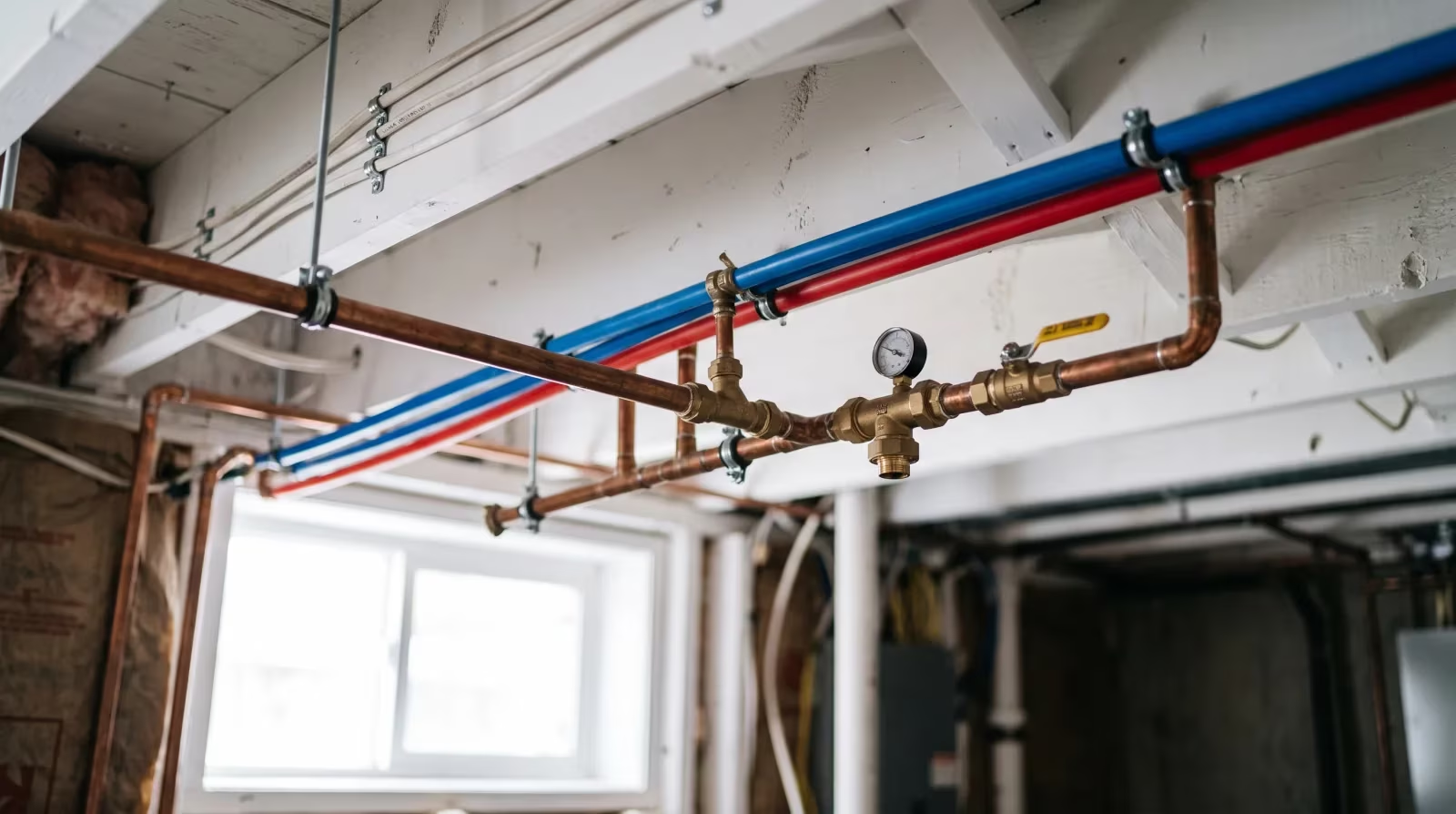

A home inspector points at a grey plastic pipe near the hot water tank and says the word "Poly-B," and the buyer's mood changes. The question that follows is almost always whether the pipe is going to fail. That is the one question nobody can answer, and it is the wrong thing to focus on.
What Poly-B actually is
Poly-B is short for polybutylene. It is a flexible grey plastic water supply pipe that was used widely in North American homes from the late 1970s into the mid 1990s. It was cheap, it bent around corners, and it went in fast. For a while it looked like an obvious improvement over copper.
Then failures started showing up, often at the fittings rather than in the middle of a pipe run. The industry moved on. By the mid 1990s it had largely stopped being installed in new homes.
That timing matters for Fraser Valley buyers because it lines up with a real chunk of our older townhouse complexes and low-rise condo buildings. If you are shopping in that age range, you will run into it.
Why it is an insurance question before it is a plumbing question
Here is the part most buyers get backwards. Poly-B is not primarily a "will it leak" problem. It is an "will anyone insure me" problem.
A water supply line is pressurized all the time. When a supply line fails, water keeps coming until somebody finds the shutoff valve. If that happens while you are at work, or away for a weekend, water runs for hours. In a condo or townhouse it travels down and sideways into other people's homes, so the claim becomes several households at once.
Insurers know this, and they price uncertainty. According to Square One's guide to Poly-B, having Poly-B can affect your options, your premium, your deductible, and your water damage coverage specifically.
In practice, in our experience, buyers see a range of responses. Some insurers decline outright. Some will write the policy with a higher premium or a higher water damage deductible. Some will cover it now but ask for proof of replacement at renewal.
That range is exactly why you cannot assume. Two buyers can get very different answers on the same building.
How to find it during your subject period
Poly-B is grey, flexible, and usually about half an inch or three quarters of an inch across. Look where pipes are visible: at the hot water tank, under sinks at the shutoff valves, and in a crawlspace or unfinished basement if the home has one.
In a finished condo you may only see a short length under a sink, because everything else is buried in walls. That short length still tells you what the building used.
A home inspector will identify the material and report on visible condition. What an inspection will not do is tell you how much life the pipe has left. There is no test for that. Our home inspection guide covers what a standard inspection does and does not include, and this is a good example of the boundary.
The two phone calls that actually resolve it
When we have a buyer facing Poly-B, we tell them to make two calls, both inside the subject period.
Call an insurance broker with the actual address. Not a general question about Poly-B. The specific building, the specific unit. Ask whether they will write it, at what premium, with what water damage deductible, and whether replacement will be required at renewal. Get it in writing.
Call a plumber for a replacement estimate. The cost depends on the size of the home, how accessible the pipe runs are, and how much wall and ceiling has to be opened and then repaired. A townhouse with an unfinished crawlspace is a different job from a finished condo where everything is behind drywall. Ask what the estimate includes, because the drywall repair and paint afterward is a real part of the cost and is sometimes quoted separately.
Those two numbers turn a vague worry into a decision you can actually make.
What replaces it
PEX is the usual replacement in BC. It is also a flexible plastic pipe, which confuses people, but it is a different material with a different record and it is widely accepted by insurers. Copper gets used in some situations. Your plumber will suggest what fits the layout.
The work is disruptive rather than complicated. Walls and ceilings get opened where the plumber needs access, the new pipe goes in, and then there is patching and painting. Most of the pain is in the finishing, not the plumbing.
In a strata, ask who owns the pipe
This is the part that catches condo and townhouse buyers, and it has nothing to do with the pipe itself.
In a strata, the answer to "who pays" depends on where the pipe sits and what the Strata Property Act, the strata plan, and the bylaws say about the boundary between common property and your strata lot. Pipe inside your unit may be yours. Pipe in the building risers is usually the strata's.
So read the documents. The strata minutes will often tell you whether a building-wide repipe has been discussed, quoted, deferred, or already done. Our strata document review checklist covers how to read the package, and strata council minutes red flags covers what a deferred major repair looks like when it shows up in minutes.
A building that has already been fully repiped is a genuinely different purchase from one where the topic keeps getting tabled. Both might have the same asking price.
If a repipe is coming and has not been funded, that is a special levy conversation. Check what is sitting in the contingency reserve fund before you assume the strata can absorb it.
What buyers actually do with this information
Most of the buyers we work with do not walk away over Poly-B. They price it.
Sometimes that means asking for a price adjustment that reflects the plumbing estimate. Sometimes it means proceeding at the agreed price with the replacement planned and budgeted for a year or two out. Occasionally, in a slower market with a motivated seller, it means the seller handles it before completion.
Which of those is available depends on how competitive the situation is, not on how serious the issue is. That is worth saying plainly, because buyers often assume a real defect automatically creates negotiating room. It creates room when there is room.
What we would not do is remove subjects without the insurance answer. A home you cannot insure is a home you cannot finance, because lenders require the property to be insurable. That turns a plumbing question into a completion question, and it does it late.
The short version
Poly-B is common in homes of a certain age, and finding it is not a reason to abandon a purchase you otherwise like. It is a reason to make two phone calls before your subject removal date.
Get the insurance answer in writing. Get the plumbing estimate. Then decide with real numbers instead of a general sense of dread about a grey pipe.
The buyers who have trouble with Poly-B are almost never the ones who found it during an inspection. They are the ones who found out in year two, when there was no budget for it and nothing left to negotiate.
We are agents, not plumbers or insurance brokers, and none of this is professional advice on your specific home. What we can tell you is which questions get answered inside a subject period, and this is one of them.
Key takeaways
- Poly-B is a grey plastic water supply pipe used from the late 1970s into the mid 1990s, so it shows up in Fraser Valley homes from that era.
- The practical risk is insurance availability and cost, not a prediction that a specific pipe will fail.
- Get a written insurance quote for the actual address before subject removal, because lenders require the property to be insurable.
- Get a plumbing estimate that includes drywall repair and paint, since the finishing work is a real part of the cost.
- In a strata, the bylaws and minutes determine who pays and whether a building-wide repipe is already planned.
Frequently Asked Questions
What is Poly-B plumbing?
Poly-B is short for polybutylene, a flexible grey plastic water supply pipe used in North American homes from the late 1970s into the mid 1990s. It was inexpensive and quick to install. Over time some installations developed failures at fittings and along pipe runs, which is why insurers now treat it as a known risk.
How do I know if a home has Poly-B?
Look for flexible grey plastic pipe, usually about half an inch or three quarters of an inch across, at the hot water tank, under sinks, and where pipes are visible in a crawlspace or unfinished basement. A home inspector will identify it. In a finished condo you may only see it at the shutoff valves under a sink.
Will insurance cover a home with Poly-B?
It depends on the insurer. Some decline new policies, some apply higher premiums or a higher water damage deductible, and some ask for proof of replacement before they will renew. Get a real quote from an insurance broker before you remove your subjects rather than assuming coverage will be routine.
Does Poly-B always fail?
No. Plenty of Poly-B is still in service and has never leaked. The problem is that failures are hard to predict and a supply line failure releases water continuously until someone shuts it off. Insurers price that uncertainty, which is what makes it a buyer issue even when the pipe looks fine.
What replaces Poly-B?
PEX is the usual replacement in BC, and it is widely accepted by insurers. PEX is also a flexible plastic pipe, but it is a different material with a different track record. Copper is used in some situations. Your plumber will recommend based on the layout of the home.
Can I make Poly-B replacement a condition of my offer?
You can ask. In practice the more common outcomes are a price adjustment reflecting the replacement cost, or the buyer accepting the home as-is with the work planned for after completion. What you can negotiate depends on how competitive the situation is.
Who pays to replace Poly-B in a strata?
It depends on where the pipe sits and what the strata plan and bylaws say about common property versus strata lot. Pipe inside your unit's walls may be your responsibility while pipe in the building risers is the strata's. Read the bylaws and recent minutes, because a building-wide repipe is usually funded through the contingency reserve fund or a special levy.
Should I walk away from a home with Poly-B?
Not automatically. Many buyers proceed once they have an insurance quote and a plumbing estimate. The buyers who regret it are the ones who found out after completion, when the cost was a surprise and there was no room left to negotiate.
Does a home inspection test the Poly-B itself?
A standard inspection identifies the material and reports visible condition. It does not predict remaining life or pressure test the system. If the home has Poly-B and you want more certainty, a plumber can look at it specifically and quote replacement.
Is Poly-B common in Fraser Valley condos and townhouses?
It appears in homes built in the era it was sold, which includes a share of the Fraser Valley's older townhouse complexes and low-rise condo buildings. Whether a specific building has it, and whether it has already been replaced, is a building-by-building question that the strata documents and an inspection will answer.
Sources
- Poly-B Plumbing: Common Issues and Maintenance, Square One Insurance
- Strata Property Act, Government of British Columbia
Verified September 1, 2026. General information only, not insurance, legal, or plumbing advice. Insurer treatment of Poly-B varies by company and changes over time. Get a written quote for your specific property.
Related FRIVE guides
- Home inspection guide for BC first-time buyers, what an inspection covers and where it stops
- Strata document review checklist, how to read the package before subject removal
- Strata council minutes red flags, how a deferred repair shows up in writing
- Strata special levies in the Fraser Valley, what happens when a big repair is not funded
- Condo insurance vs strata insurance, which policy covers what
Next Steps: Work with FRIVE
Most of the buyers we work with who run into Poly-B still buy the home. They just buy it with an insurance quote in hand and a number in their budget, instead of a vague worry they carry into completion day.
If you are partway through a purchase and an inspector has just said the word, start a conversation with the FRIVE team or browse current Fraser Valley listings. We will tell you what we are seeing on that building and which calls to make first.
Sources
- Poly-B Plumbing: Common Issues and Maintenance, Square One Insurance
- Strata Property Act, Government of British Columbia
Older homes and building condition
8 pieces that fit together. Read them in order, or jump to the one you need.
- Start hereThe Condition Problems That Change a Fraser Valley Offer
- GuideRadon Testing for Fraser Valley Home Buyers: What to Ask Before You Close
- GuideBuried Oil Tanks: The BC Liability That Follows the Property, Not the Person
- Guide · you are herePoly-B Plumbing in BC Homes: What Buyers Should Do When They Find It
- GuideKitec Plumbing in BC Condos: How to Spot It Before You Buy
- GuideLeaky Condo Era Buildings: How to Read a Rainscreen Remediation
- GuideAsbestos in Older Fraser Valley Homes: What Buyers Should Know
- GuideKnob-and-Tube and Aluminum Wiring: When Insurance Says No
Related guides
- Home ConditionKitec Plumbing in BC Condos: How to Spot It Before You Buy
- Home ConditionLegal Suite or Unauthorized Suite? What Buyers Should Check
- Home ConditionKnob-and-Tube and Aluminum Wiring: When Insurance Says No
- Buying ProcessNotary or Lawyer for Your BC Closing? How First-Time Buyers Should Decide
Found this useful? Share it.
A neighbour, a partner, a friend who's two FHSA contributions away, send it their way.