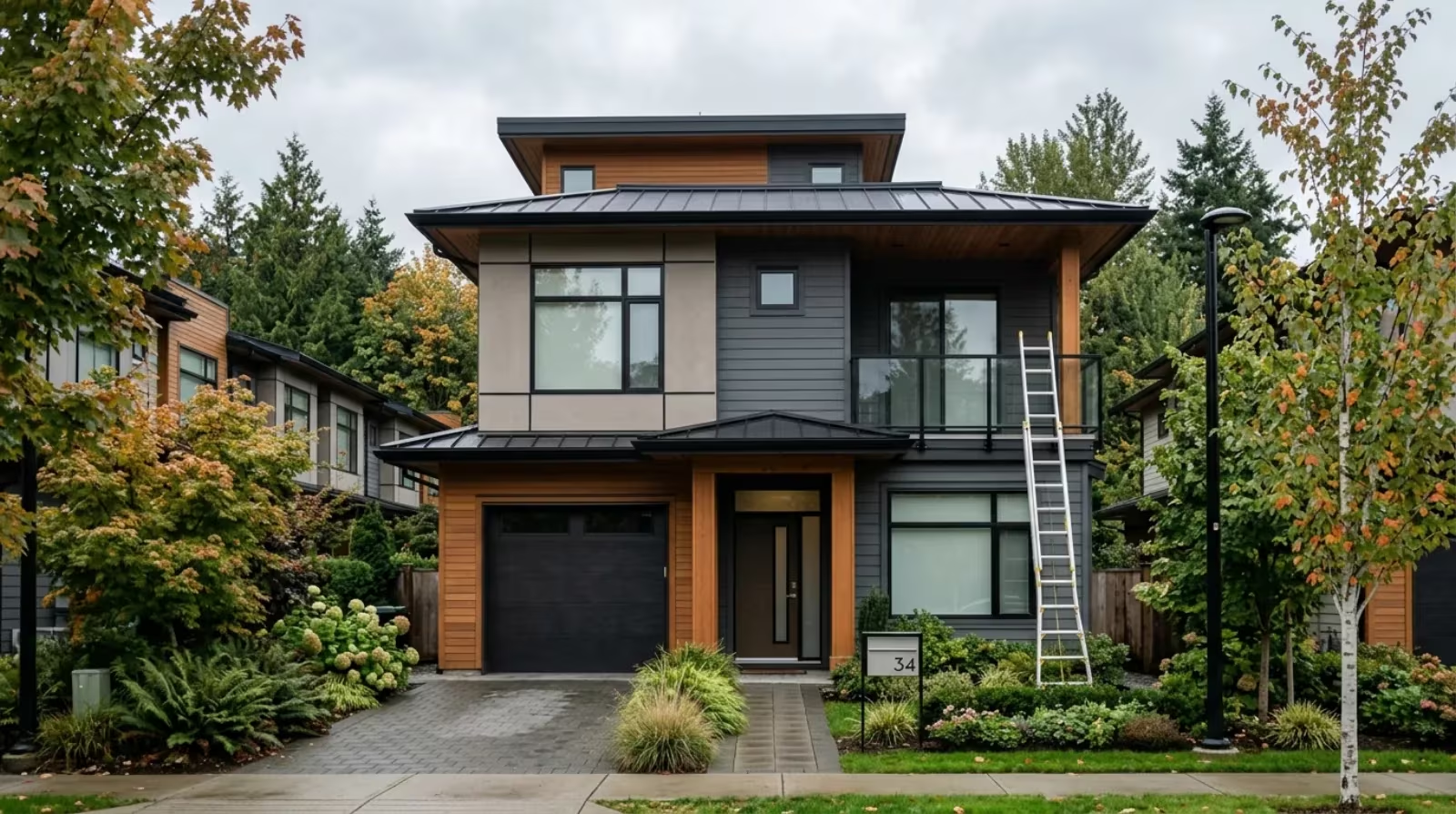

Older homes in the Fraser Valley are often the ones a first-time buyer can actually reach: bigger lots, established streets, prices that work. The catch is that a handful of specific building-condition issues change what those homes are worth to you, and most of them are invisible on a listing.
This is the FRIVE team's guide to the ones that matter. Some are expensive. Some are mostly noise that a nervous buyer over-weights. The difference is worth knowing before you write, not after.
What this hub covers
- Poly-B plumbing, the grey pipe in a generation of Fraser Valley townhouses, and why your insurer cares.
- Kitec plumbing, the recalled system that turns into a strata problem.
- Knob-and-tube and aluminum wiring, the two electrical issues that can make a home uninsurable.
- Galvanized and cast-iron plumbing, what corroding supply and drain lines actually cost.
- Asbestos in older homes, where it hides and when it matters.
- Buried heating oil tanks, the one that can outrun the value of the house.
- Radon testing, why the timeline does not fit a subject period.
- Leaky condos and rainscreen remediation, and why a repaired building can be the safer buy.
If the home you are looking at is a condo or townhouse, run the strata due-diligence guide alongside this one. The building's paperwork and the building's physical condition are two halves of the same question. For the process side, where these checks fit in the timeline, see how closing works in BC.
Start here: what a home inspection does not cover
This is the most useful thing on this page, and it catches nearly every first-time buyer.
A home inspection in BC is a visual, non-invasive examination. The inspector looks at what they can see and reach, and reports on it. That is the defined scope of the service, described in the BCFSA's Consumer Guide to Property Inspections. A good inspector is genuinely valuable and we recommend one on every purchase.
What they do not do: take samples for lab analysis, test the air, or scan the soil. Which means a standard inspection will not find asbestos, will not find radon, and will not find a buried oil tank. Three of the most consequential items on this list are each a separate service that you book and pay for yourself.
Buyers assume the inspection is a single comprehensive sweep. It is one part of due diligence, and knowing its edges is what lets you cover the rest.
The insurance category: Poly-B, Kitec, knob-and-tube, aluminum
Group these four together, because they share a failure mode that has nothing to do with the pipe or wire itself.
These issues rarely make a home unbuyable. They can make it uninsurable, and that is the part that ends deals. No lender advances mortgage funds without proof of property insurance. So an insurer's decline does not just mean a higher premium, it can collapse your financing condition and take the purchase with it.
Poly-B is a grey flexible plastic supply pipe used widely in Canadian homes built roughly between 1978 and 1998, which covers a large share of Fraser Valley townhouse stock. Insurer treatment varies: some decline it, some load the premium, some require replacement within a set window after closing.
Kitec was sold from the mid-1990s until its recall in 2005. Its brass fittings are prone to failure. In a condo the consequence is not just your unit, a failure floods the units below, and in a strata that produces an insurance claim, possibly a deductible chargeback, and pressure on everyone's premiums.
Knob-and-tube wiring appears in genuinely old housing stock and is the hardest of the four to insure. Many insurers decline it outright. Aluminum wiring, common in mid-1960s to mid-1970s construction, is usually insurable but often conditional on a licensed electrician's inspection and remediation of the connections.
The move on all four is the same and it is not complicated: call your insurance broker with the address while your subjects are still live. Not after. A ten-minute phone call in week one of your subject period is the cheapest insurance you will ever buy.
The liability category: buried oil tanks
This one deserves its own section because it is the only item on the list where the exposure can exceed the value of the improvement.
Many older Fraser Valley homes were heated with oil before converting to gas or electric, and the tank was frequently left in the ground rather than removed. Under BC's contaminated-sites framework in the Environmental Management Act regulations, responsibility for contamination generally attaches to the current owner of the property. On completion, that becomes you.
If the tank has leaked, the soil is contaminated, and remediation means excavation and disposal. Contamination does not respect property lines, so it can extend onto a neighbour's land and bring their claim with it.
A tank scan is a specialist service, quick, and cheap relative to what it protects against. On any Fraser Valley home old enough to have had oil heat, we treat it as standard during the subject period rather than optional.
The health category: radon and asbestos
Radon is a naturally occurring radioactive gas that accumulates indoors. Health Canada's guideline is 200 becquerels per cubic metre, with corrective action recommended when the average annual concentration in the normal occupancy area of a home exceeds it, per its guide for radon measurements in residential dwellings.
The awkward part is the timeline. A valid long-term test must run at least 91 days and should cover the heating season. That does not fit inside a seven-to-fourteen-day subject period, and no honest process can make it. For context on relative risk, HealthLink BC notes that BC's Northern and Interior health regions show the elevated concentrations, reporting 6 to 30 percent of tested homes above the guideline. The Fraser Valley is not among the regions flagged as high potential. Radon is still worth testing after you move in, because mitigation is a well-understood fix, but it is realistically a first-year-of-ownership task rather than a subject-removal one.
Asbestos is the opposite: not urgent, but expensive to get wrong during renovations. It was used in a long list of pre-1990 building materials, including vermiculite attic insulation, which Health Canada advised on in 2004. Undisturbed asbestos-containing material in good condition is generally left alone. The risk arrives when you start opening walls, and BC has specific requirements around asbestos and renovations. If your plan for a 1970s home involves taking out a wall in year one, budget for testing before demolition, not after.
The one that sounds worst and often is not
Buyers regularly tell us they will not look at a building that had a leaky-condo repair. We usually push back.
The BC building envelope failures of the 1980s and 1990s produced a wave of rainscreen remediation across the Lower Mainland. A building that has completed that work has had its envelope rebuilt to a better standard, the cost has been incurred, and the special levy that paid for it has typically been collected. Compared with an unrepaired building of the same vintage where the work is still ahead of the owners, the remediated one is frequently the safer purchase.
What matters is the documentation, and it lives in the strata records. Confirm the scope of the work, the year it completed, whether any warranty remains, and critically whether the special levy is fully paid or still being collected. Under the Strata Property Act, an unpaid levy portion follows the payment schedule, so who owes what depends on the dates. That is a Form B and minutes question, and it is answerable before you remove subjects.
An unrepaired building with a known envelope problem and a thin contingency reserve fund is the actual red flag. A repaired one with clean paperwork is often just a well-priced home.
How to use all of this without losing the house
The point of this list is not to make you afraid of anything built before 2000. Most of these issues are known, documented and solvable, and none of them is a reason on its own to walk away from a home that otherwise works for you.
The practical version is short. Book the inspection, and separately decide whether the property's age warrants an oil tank scan. Call your insurance broker with the address in the first days of your subject period, before anything else gets urgent. If the inspector flags Poly-B, aluminum wiring, or aging galvanized supply lines, get a written quote from a licensed trade rather than guessing at a number, because that quote is both your budget and your strongest basis for renegotiating the price. And on a strata, read what the minutes say about the envelope.
In our experience the buyers who end up happiest with an older Fraser Valley home are not the ones who found a place with no issues. They are the ones who knew exactly which issues they were taking on, and what each would cost, before the subjects came off.
If you are weighing an older home in Surrey, Langley, Abbotsford, Chilliwack, Mission or Maple Ridge and want a second read on what the inspection report is actually telling you, book a 20-minute chat with the FRIVE team. Bringing us the report before your subject deadline is far more useful than after.
This guide is general information, not a substitute for a professional inspection, an environmental assessment, or advice from your insurer, lawyer or a BC-licensed REALTOR®. Have your specific property assessed before making a decision.
Frequently asked questions
What are the biggest red flags when buying an older home in BC?
- The condition issues that most often change a BC purchase are Poly-B and Kitec plumbing, knob-and-tube and aluminum wiring, asbestos in pre-1990 materials, buried heating oil tanks, elevated radon, and unfinished building envelope repairs on a strata. Each one affects either insurability, the cost of the first few years of ownership, or both, which is why they surface during the subject period rather than after.
Is Poly-B plumbing a reason not to buy a home?
- Poly-B plumbing is rarely a reason to walk away on its own, but it is a reason to price the purchase differently and to call your insurer before removing subjects. Poly-B was used widely in Canadian homes built roughly between 1978 and 1998. Some insurers decline it, some charge more, and some require replacement, so confirm coverage while your subject conditions are still live.
Sources
- Radon in homes and other dwellings, HealthLink BC
- Guide for Radon Measurements in Residential Dwellings, Health Canada
- Radon, BC Centre for Disease Control
- Asbestos, renovations, public safety and tenancy in British Columbia, Government of British Columbia
- Health Canada advising Canadians about potential health risks posed by vermiculite insulation that may contain asbestos, Health Canada
- Environmental Management Act, Contaminated Sites Regulation, B.C. Reg. 375/96, Government of British Columbia
- Strata Property Act, B.C. Reg. 43/2000, Government of British Columbia
- Consumer Guide to Property Inspections, BC Financial Services Authority
Older homes and building condition
8 pieces that fit together. Read them in order, or jump to the one you need.
- Start here · you are hereThe Condition Problems That Change a Fraser Valley Offer
- GuideRadon Testing for Fraser Valley Home Buyers: What to Ask Before You Close
- GuideBuried Oil Tanks: The BC Liability That Follows the Property, Not the Person
- GuidePoly-B Plumbing in BC Homes: What Buyers Should Do When They Find It
- GuideKitec Plumbing in BC Condos: How to Spot It Before You Buy
- GuideLeaky Condo Era Buildings: How to Read a Rainscreen Remediation
- GuideAsbestos in Older Fraser Valley Homes: What Buyers Should Know
- GuideKnob-and-Tube and Aluminum Wiring: When Insurance Says No
Related guides
- Market InsightsAugust 2026 Fraser Valley Market Update: Sales Beat Last August, Barely
- Home Inspection & Due DiligenceRadon Testing for Fraser Valley Home Buyers: What to Ask Before You Close
- Neighbourhood GuidesSardis, Chilliwack: A First-Time Buyer's Guide to the Valley's Busiest Small-City Centre
- Mortgages & FinancingAssumable Mortgages in BC: Can You Take Over the Seller's Low Rate?
Found this useful? Share it.
A neighbour, a partner, a friend who's two FHSA contributions away, send it their way.