
Buyers who run into a wiring problem on an older home usually describe it afterwards as an insurance problem, and that is exactly right. Older wiring rarely stops a purchase directly. It stops the purchase by making the home uninsurable, which in turn undermines the mortgage.
The chain that catches people
Lenders require the property to be insurable. That is standard and nobody argues with it.
Many BC insurers will not write a new policy on a home with active knob-and-tube wiring. According to Canadian Home Inspection Services, insuring an older home routinely raises questions about wiring, and refusal on knob-and-tube is primarily a fire risk decision.
Put those two facts together and you get the situation we occasionally watch unfold. The buyer clears financing and relaxes. Then, close to completion, they discover that no insurer will cover the home. The lender will not fund an uninsurable property, and a deal that looked solid is suddenly in trouble with days to go.
At no point in that sequence did anybody say the word "wiring" until it was too late to do much about it.
What knob-and-tube is
Knob-and-tube is an early wiring method. Ceramic knobs hold the conductors away from the framing and ceramic tubes protect wires where they pass through wood. It was standard in its era and, importantly, it has no ground conductor.
You will see it in homes from the early twentieth century. In the Fraser Valley that means a relatively small slice of the housing stock, concentrated in older parts of established communities. It is much less common here than in the older neighbourhoods of Vancouver and New Westminster, but it does turn up.
Sometimes what an inspector finds is abandoned knob-and-tube left in place after a rewire. That is a different situation from active circuits, and it is worth establishing which one you have, because insurers ask.
What aluminum wiring is
Aluminum branch circuit wiring was used in some homes built in the 1960s and 1970s, when copper prices made aluminum attractive.
The concern is not the wire in the middle of a run. It is the connections. Aluminum expands and contracts more than copper with temperature changes, and it oxidizes differently. Over time, terminations can loosen or overheat if they were not made with compatible, approved methods.
Insurers generally want confirmation that aluminum wiring has been properly connected and inspected. That is a narrower requirement than "replace all of it," which is why an electrician's assessment matters here rather than an assumption about cost.
What a home inspection can tell you
A home inspection will cover the panel and whatever wiring is visible in the basement, attic, and crawlspace. Inspectors are generally good at recognizing both knob-and-tube and aluminum wiring where it is exposed.
What no inspection can do is see inside finished walls. Most of a home's wiring is hidden, so an inspection report describes what was visible rather than certifying the entire system. A home can have some updated circuits and some original ones, which is common in houses that have been renovated piecemeal over decades.
If wiring is flagged and you are proceeding, having a licensed electrician assess it is the logical next step. That gets you both a clearer picture and a real quote.
The panel matters too
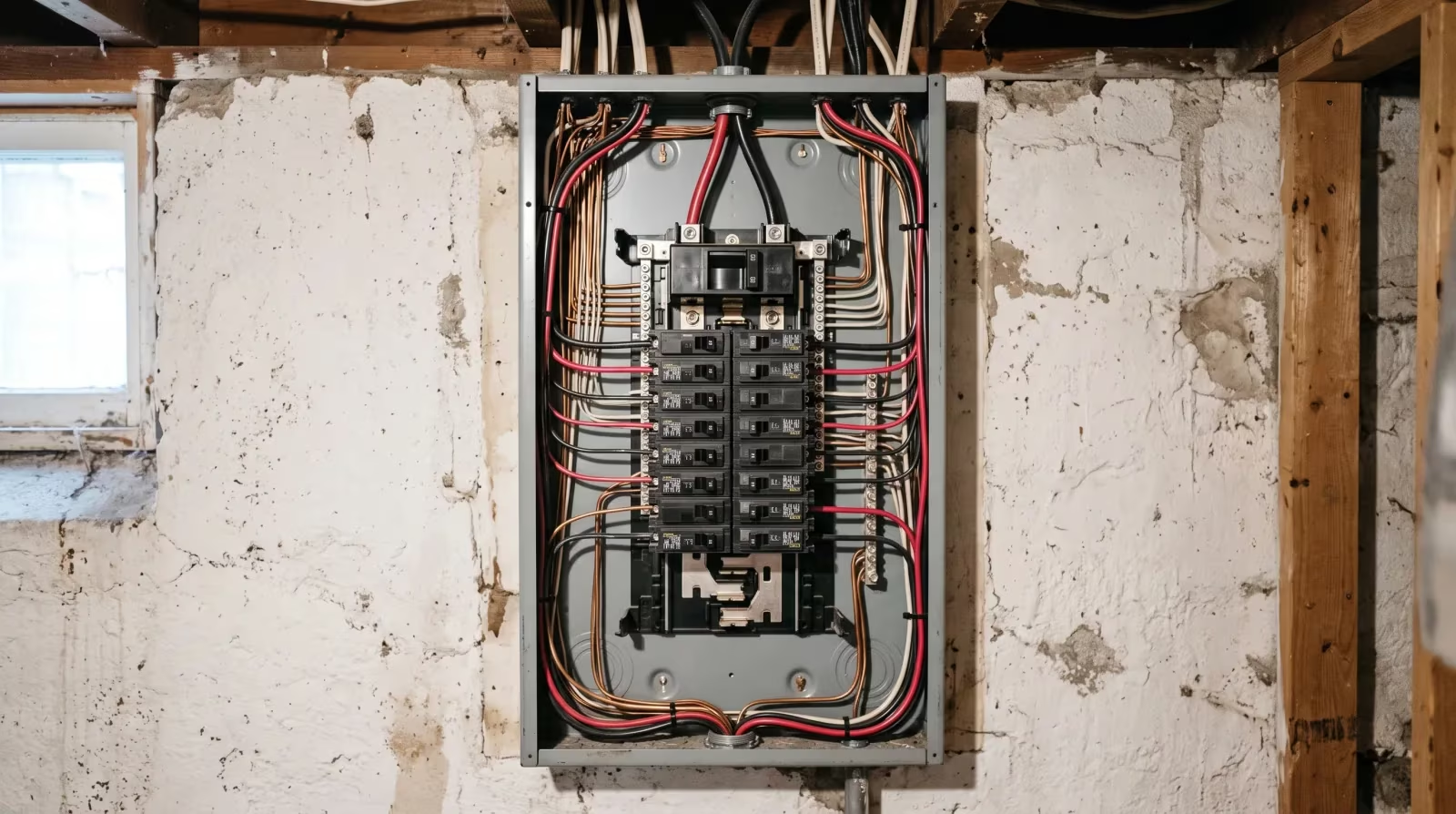
Buyers focus on the wiring and sometimes miss the panel. Insurers and inspectors look at panel type and capacity as part of the same overall picture, and an older or obsolete panel can create its own insurance requirement even when the branch wiring is acceptable.
Panel capacity also matters for what you plan to add. If you are thinking about a heat pump, EV charging, or a suite, the existing service may need upgrading regardless of the wiring question.
The one call to make during your subject period
We tell every buyer looking at an older home to do the same thing: call an insurance broker with the actual address before subject removal, and ask for the answer in writing.
Not a general question about knob-and-tube. The specific property. Will you write it, at what premium, and what do you require.
That single call converts a vague risk into a fact you can act on. If the answer is yes with conditions, you know your budget. If the answer is no, you have found out at a point where you still have options, which is the entire purpose of a subject period. Our subject removal guide covers how to protect enough time for this.
What remediation actually involves
For knob-and-tube, remediation usually means rewiring the affected circuits. The wire itself is not the expensive part. Access is. Walls and ceilings get opened where the electrician needs to run new cable, and then somebody has to patch, sand, and paint.
For aluminum wiring, a licensed electrician may address the connections using approved methods rather than replacing every run. That is generally a smaller job, though the scope depends on the home.
Either way, electrical work in BC is regulated and generally requires permits and qualified trades. Documented, permitted work is what satisfies an insurer. Undocumented work by an unlicensed person can leave you with the same insurance problem plus a safety issue.
How buyers usually handle it
In our experience, most buyers who find older wiring on a home they like still buy it. What changes is the sequence.
They get the insurance answer first, then an electrician's quote, and then they decide whether to ask for a price adjustment or simply plan the work for after completion. Which of those is available depends on how competitive the situation is rather than on how serious the issue is.
What we would not do is treat the wiring as a detail to sort out later. Our guide to closing costs on a first home covers the other money that arrives at completion, and an unplanned rewire on top of that is a rough first month.
The short version
Knob-and-tube and aluminum wiring are insurance questions before they are electrical questions, and insurance questions are financing questions. That chain is why older wiring deserves attention early rather than late.
Call a broker with the address. Get the answer in writing. If the wiring is flagged, get an electrician's assessment and quote. Then decide.
We are agents rather than electricians or insurance brokers, and none of this is professional advice on your specific home. What we can tell you is which older Fraser Valley homes tend to raise this and which call resolves it fastest.
Key takeaways
- Many BC insurers will not write a new policy on a home with active knob-and-tube wiring.
- Lenders require the property to be insurable, so an insurance refusal can undermine financing late in the process.
- Aluminum wiring concerns centre on connections, and insurers generally want it properly connected and inspected.
- A home inspection describes visible wiring only, since most of a home's wiring is inside finished walls.
- Get a written insurance answer for the specific address during your subject period.
Frequently Asked Questions
What is knob-and-tube wiring?
It is an early electrical wiring method that uses ceramic knobs to hold conductors away from framing and ceramic tubes where wires pass through wood. It has no ground conductor. It shows up in homes from the early twentieth century and is generally treated by insurers as a fire risk.
Will an insurer refuse a home with knob-and-tube?
Many BC insurers will not write a new policy on a home with active knob-and-tube wiring. Some will consider it if the wiring is confirmed inactive or has been replaced. Get a written answer for the specific address before you remove subjects.
Can knob-and-tube stop my mortgage?
Indirectly, yes. Lenders require the property to be insurable. If no insurer will cover the home because of the wiring, the financing can fall apart even though the lender never mentioned wiring in their conditions.
What is the problem with aluminum wiring?
Aluminum branch circuit wiring was used in some homes in the 1960s and 1970s. The concern is at connections, where expansion, contraction, and oxidation can cause loose or overheating terminations. Insurers generally require that it be properly connected and inspected.
How do I know which wiring a home has?
A home inspector will look at the panel and at visible wiring in the basement, attic, and crawlspace. Much of a home's wiring is inside walls and cannot be seen, so an inspection describes what is visible rather than certifying the whole system.
What does remediation involve?
For knob-and-tube it usually means rewiring the affected circuits, which involves opening walls and ceilings for access and then repairing the finishes. For aluminum wiring, a licensed electrician may address connections using approved methods rather than replacing all the wire.
Should the seller fix it before completion?
You can ask. Whether that is realistic depends on how competitive the situation is and on the seller's timeline. Many buyers instead negotiate on price and handle the work themselves after completion, once they have an electrician's quote.
Does an older panel matter too?
It can. Insurers and inspectors look at panel type and capacity as well as the wiring. An older or obsolete panel may need to be addressed for insurance even when the branch wiring is fine.
Can I do the electrical work myself?
Electrical work in BC is regulated and generally requires permits and qualified trades. Insurance and safety both depend on the work being done and documented properly, so this is not a place to save money on labour.
Is older wiring a reason to avoid older homes?
No. Plenty of older Fraser Valley homes have been updated already. The point is to confirm the wiring and the insurance answer during the subject period rather than assuming the home is insurable because it is currently occupied.
Sources
- Insuring an Older Home, Canadian Home Inspection Services
- Knob and Tube Wiring, Canadian Home Inspection Services
Verified September 1, 2026. General information only, not electrical, insurance, or lending advice. Insurer requirements vary by company and change over time. Get written confirmation for your specific property.
Related FRIVE guides
- Home inspection guide for BC first-time buyers, what the inspector can and cannot see
- Asbestos in older Fraser Valley homes, the other pre-1990 item to plan around
- Subject removal in BC, protecting time to get real answers
- Closing costs on a first home, what else lands at completion
- Electric baseboard vs heat pump, where panel capacity comes back into play
Next Steps: Work with FRIVE
Older homes across Mission, Abbotsford, and the established parts of Surrey often represent real value, and wiring is one of the reasons buyers hesitate. In our experience the buyers who do well make the insurance call in week one of the subject period instead of week three.
If you are considering an older home and want to know which questions to front-load, start a conversation with the FRIVE team or browse current Fraser Valley listings.
Sources
- Insuring an Older Home, Canadian Home Inspection Services
- Knob and Tube Wiring, Canadian Home Inspection Services
Older homes and building condition
8 pieces that fit together. Read them in order, or jump to the one you need.
- Start hereThe Condition Problems That Change a Fraser Valley Offer
- GuideRadon Testing for Fraser Valley Home Buyers: What to Ask Before You Close
- GuideBuried Oil Tanks: The BC Liability That Follows the Property, Not the Person
- GuidePoly-B Plumbing in BC Homes: What Buyers Should Do When They Find It
- GuideKitec Plumbing in BC Condos: How to Spot It Before You Buy
- GuideLeaky Condo Era Buildings: How to Read a Rainscreen Remediation
- GuideAsbestos in Older Fraser Valley Homes: What Buyers Should Know
- Guide · you are hereKnob-and-Tube and Aluminum Wiring: When Insurance Says No
Related guides
- Home ConditionPoly-B Plumbing in BC Homes: What Buyers Should Do When They Find It
- Home ConditionLegal Suite or Unauthorized Suite? What Buyers Should Check
- Home ConditionAsbestos in Older Fraser Valley Homes: What Buyers Should Know
- StrataLeaky Condo Era Buildings: How to Read a Rainscreen Remediation
Found this useful? Share it.
A neighbour, a partner, a friend who's two FHSA contributions away, send it their way.