
Buyers walking through an older Fraser Valley home often notice the water pressure before they notice anything else about the plumbing. Weak flow upstairs gets blamed on the fixture. Frequently the cause is the pipe, closing up from the inside where nobody can see it.
What galvanized pipe is
Galvanized steel pipe is water supply pipe coated with zinc to resist corrosion. It was the standard for residential supply lines for decades before copper and then plastic took over.
The zinc coating does its job for a long time, and then it stops. The interior surface corrodes and mineral deposits accumulate, narrowing the opening. A pipe that started with a full bore ends up with a much smaller channel for water to pass through.
The important detail is that this happens inside. A galvanized pipe can look completely sound from the outside while carrying a fraction of its original flow.
How to identify it
Look at exposed runs in a basement, crawlspace, or utility area.
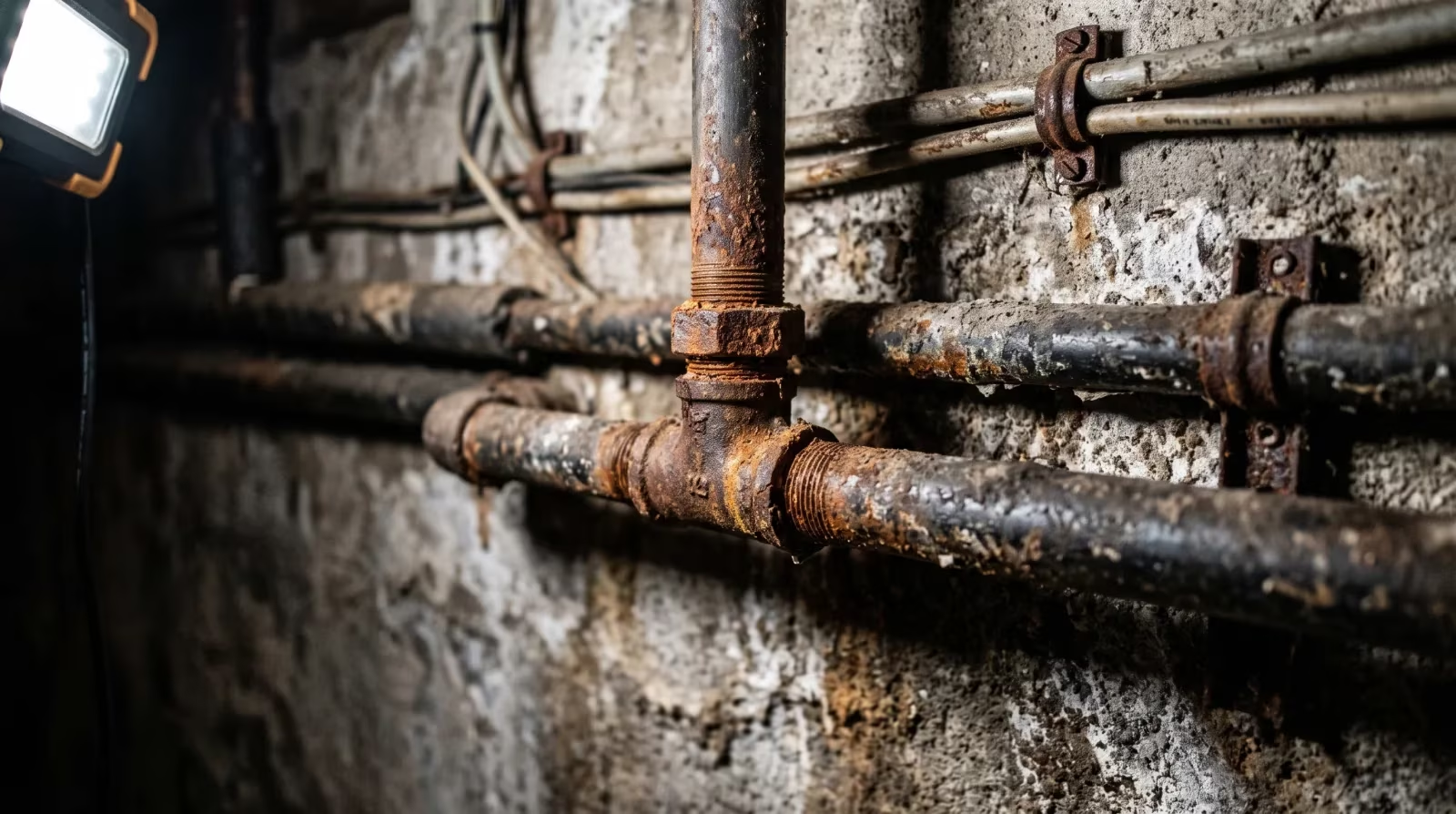
Galvanized pipe is dull grey steel with threaded connections. It is heavy and rigid compared to copper or plastic. A magnet sticks to it, which is the quickest way to distinguish it from copper.
Our guides to Poly-B and Kitec cover the other materials that raise questions in BC homes, from different eras and with different concerns.
The symptoms
Weak pressure, particularly at upstairs fixtures, and particularly when more than one fixture runs at once.
Discoloured or rusty water when the home has sat unused, such as after a vacation, which clears after running the tap.
Noticeably uneven flow between fixtures, where one bathroom performs and another does not.
Test this during a showing. Turn on an upstairs shower, then have someone run a tap or flush a toilet elsewhere. If the shower drops to a trickle, you have learned something useful in thirty seconds.
Cast iron is a different pipe with a different job
Cast iron was commonly used for drain, waste, and vent piping rather than for supply.
It handles waste water and it is considerably quieter than plastic, which is a genuine advantage in a house with bathrooms above living space. Owners who replace cast iron stacks with plastic sometimes regret the noise.
Over decades it corrodes, and it tends to fail at the bottom of horizontal runs where waste water sits. Cracks, holes, and heavy scaling are the eventual outcomes.
Because drain pipe is not under pressure, a failure is usually a slow leak rather than a sudden flood. That is better, and it also means the problem can go unnoticed longer.
What an inspection tells you
A home inspection will identify the material, note visible condition, and usually comment on water pressure.
What it cannot do is see inside the pipes or evaluate what is buried in walls. So the report describes rather than certifies, and a note about galvanized supply with reduced pressure is the inspector doing the job properly.
If plumbing is flagged and you are proceeding, a plumber's assessment gets you a real scope and a real number.
Insurance is worth a call
Insurers ask about plumbing materials and system age. Older systems can attract questions, a higher premium, or a higher water damage deductible.
As with older wiring, the chain runs from insurance to financing, because lenders require the property to be insurable. Call a broker with the specific address during your subject period.
What replacement involves
Running new supply lines, typically PEX or copper.
The pipe itself is a modest part of the cost. Access is the expensive part, because walls and ceilings have to be opened where the plumber needs to run new lines, and then patched, sanded, and painted.
When you get a quote, ask specifically whether drywall repair and paint are included. A low number that excludes the finishing work is not the number you will actually pay.
In an older home, this is also the moment to ask about asbestos, since opening walls in a pre-1990 house triggers the hazardous materials survey requirement.
Partial replacement is normal
Many older homes have mixed systems. A previous owner replaced the accessible runs in the basement and left what was buried in the walls.
That is workable and it is worth understanding. Ask which sections are original and which were replaced, so your plan reflects what actually remains rather than what is visible.
A plumber can usually tell you quickly, and it changes the scope substantially.
How buyers handle it
Most of the buyers we work with treat old plumbing as a budget item rather than a reason to walk away. Older Fraser Valley homes in Mission, Abbotsford, and the established parts of Surrey are frequently priced with this in mind.
What separates a good outcome from a bad one is finding out during the subject period. Our subject removal guide covers protecting the time, and first year owning covers how early costs stack up.
The short version
Galvanized supply pipe narrows from the inside and shows up as weak pressure upstairs and discoloured water after periods of disuse. Cast iron drain pipe corrodes over decades and tends to fail at the bottom of horizontal runs.
Test the pressure at a showing. Identify the material with a magnet on exposed runs. Get a plumber's assessment and an insurance quote during the subject period, and ask whether replacement quotes include the finishing work.
We are agents rather than plumbers or insurance brokers, and none of this is professional advice on a specific home.
Key takeaways
- Galvanized pipe corrodes internally, so it can look fine from outside while flow is badly restricted.
- Weak upstairs pressure and discoloured water after disuse are the common symptoms.
- A magnet sticks to galvanized steel, which distinguishes it from copper on exposed runs.
- Cast iron is drain and waste pipe, quieter than plastic, and tends to fail at the bottom of horizontal runs.
- Replacement cost is driven by wall access and finishing work, so ask whether quotes include drywall and paint.
Frequently Asked Questions
What is galvanized pipe?
Galvanized steel pipe is water supply pipe coated with zinc to resist corrosion. It was standard in older homes for decades. Over time the interior corrodes and mineral deposits build up, narrowing the opening and restricting flow.
How do I recognize it?
It is dull grey steel pipe with threaded connections, and it feels heavy and rigid compared with copper or plastic. Look at exposed runs in a basement or crawlspace. A magnet sticks to it, which distinguishes it from copper.
What are the symptoms of failing galvanized pipe?
Weak pressure, especially at upstairs fixtures and when more than one fixture runs. Discoloured or rusty water after the home has sat unused. Uneven flow between fixtures. The narrowing happens from the inside, so the pipe can look fine from outside.
What is cast iron used for?
Cast iron was commonly used for drain, waste, and vent piping rather than supply. It handles waste water and is notably quieter than plastic. It corrodes over decades and can develop cracks or holes, particularly at the bottom of horizontal runs.
Does a home inspection assess these?
An inspection identifies the material, notes visible condition, and often comments on water pressure. It cannot see inside the pipes or evaluate what is buried in walls, so it describes rather than certifies.
Can galvanized pipe be cleaned out rather than replaced?
Replacement is the usual approach for supply pipe that has significantly narrowed, because the corrosion is structural rather than a deposit that can simply be flushed. Ask a plumber about the specific system.
Does it affect insurance?
Insurers ask about plumbing materials and age. Older systems can attract questions, higher premiums, or a higher water damage deductible. Get a written quote for the specific address during your subject period.
What does replacement involve?
Running new supply lines, usually PEX or copper, which requires opening walls and ceilings for access and repairing the finishes afterwards. The finishing work is a real part of the cost and is sometimes quoted separately.
Should partial replacement worry me?
It is common in older homes, where a previous owner replaced accessible sections and left what was buried. Mixed systems are workable, and you want to know which sections remain original so you can plan.
Is old plumbing a reason to avoid a home?
For most buyers it is a budget item rather than a deal breaker. Older Fraser Valley homes are often priced accordingly. The buyers who struggle are the ones who assumed the pressure problem was a fixture rather than the pipe.
Sources
Verified September 1, 2026. General information only, not plumbing or insurance advice. Condition varies by property. Retain a licensed plumber and a licensed insurance broker for a specific home.
Related FRIVE guides
- Poly-B plumbing in BC homes, a different era and a different concern
- Kitec plumbing in BC condos, the orange and blue pipe
- Knob-and-tube and aluminum wiring, the same insurance chain
- Asbestos in older Fraser Valley homes, what opening walls triggers
- Home inspection guide, what your inspector reports
Next Steps: Work with FRIVE
We run the upstairs shower on older-home showings, which occasionally gets a look from the listing agent. It is thirty seconds and it tells you more about the plumbing than the rest of the tour combined.
If you are looking at older stock and want an honest read on what it would need, start a conversation with the FRIVE team or browse current Fraser Valley listings.
Sources
- Insuring an Older Home, Canadian Home Inspection Services
- BC Building Code, Province of British Columbia
Related guides
Found this useful? Share it.
A neighbour, a partner, a friend who's two FHSA contributions away, send it their way.