
Two identical townhouses in the same complex can be different purchases. One has been trouble-free. The other has had several water escapes and a nervous insurer. Nothing in the listing distinguishes them.
There is no lookup
Buyers often assume they can search a claims history the way they might search a title.
They cannot. Claims are recorded against policies and policyholders rather than published as a public record attached to an address.
What replaces that lookup is simpler and more useful: get your own insurance quote for the actual address during your subject period. That quote is the summary of how an insurer views the property, the building, and you.
Why the quote matters more than the history
Lenders require the property to be insurable. This is the same chain that catches buyers on older wiring, Poly-B plumbing, and oil tanks.
An insurance problem discovered late becomes a financing problem discovered late, usually in the final week when there is no time to solve it.
So the practical rule is the same regardless of what you are worried about. Call a broker with the real address in week one of your subject period, not week three. Get the answer in writing.
Why repaired damage still matters
Buyers sometimes reason that if past damage was repaired, it should be irrelevant.
Insurers price the likelihood of future claims. Repeated water escapes at the same property can indicate an underlying condition, and repairing a symptom does not always resolve a cause. A single incident from a burst supply line during a cold snap reads differently from three claims in six years.
The pattern is what draws attention, not any individual event.
Your own history travels with you
This surprises first-time buyers less than repeat buyers.
Your personal claims history follows you rather than the house. Claims on a previous home or a rental policy can affect your premium and your options on a new purchase.
If you have had claims, factor that into your budget rather than assuming a quote based on someone else's experience. Our guide to closing costs and the first year of ownership cover where insurance sits among the other costs.
What to ask the seller
Ask directly whether there have been any insurance claims on the property, what happened, and whether repairs were completed by licensed trades with documentation.
Sellers answer this more often than buyers expect, and documentation of a properly repaired issue is genuinely reassuring. A repair done well, with permits and receipts, is a better situation than an unexplained patch.
The property disclosure statement covers specified matters and is worth reading for what it says and what it leaves out.
Physical evidence
You can read a home for repair history without any documents.
Newer flooring in one area only. Fresh drywall or paint on a lower wall, or on a ceiling section. A hot water tank noticeably newer than the home. Repairs that stop at an odd boundary, because the repair followed the damage rather than the room.
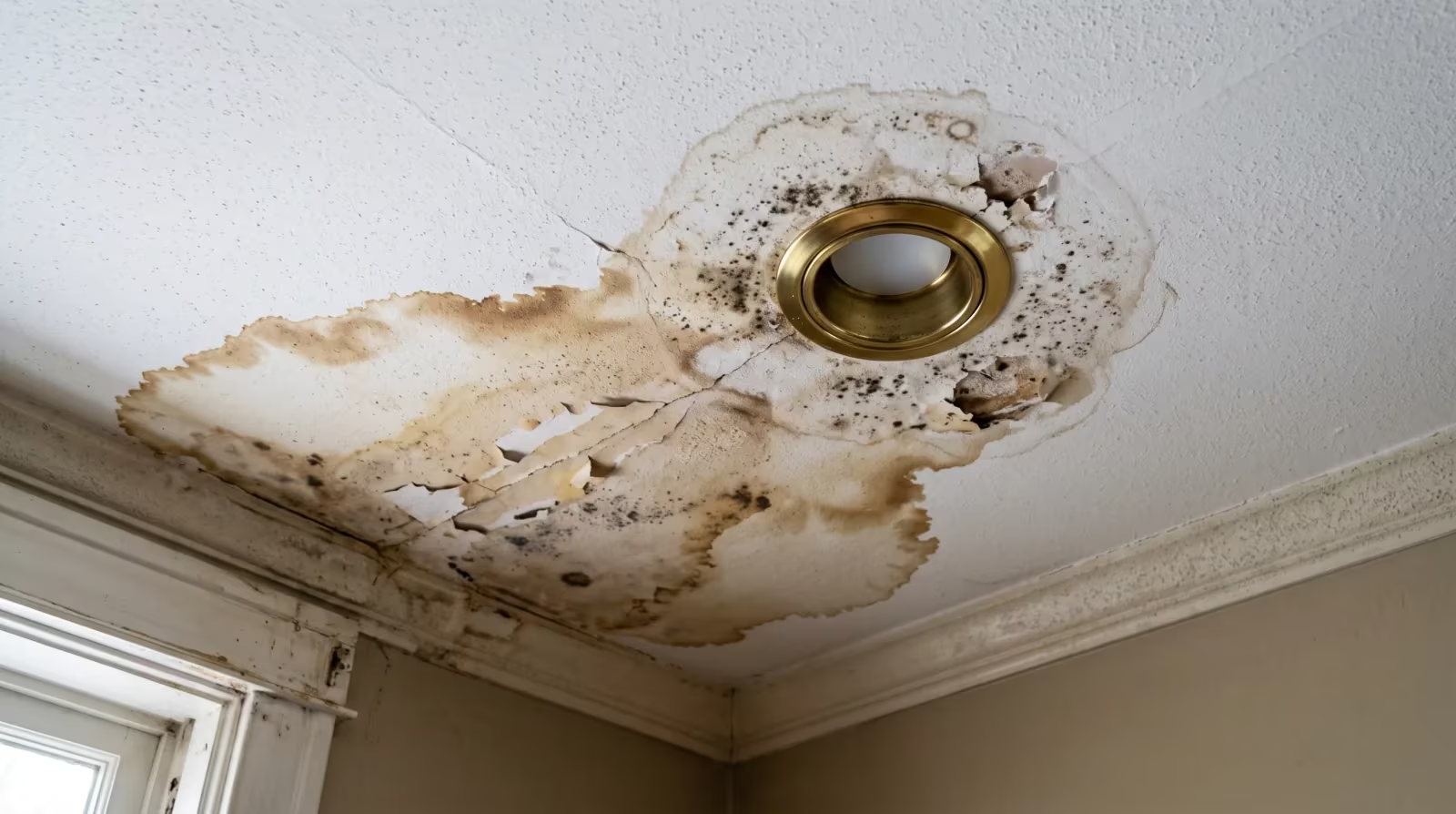
Staining on a ceiling near a bathroom above. A crawlspace or basement with a section of newer insulation. Our guides to crawlspace moisture and condensation and mould cover what to look for in the places most buyers skip.
None of these prove a claim. All of them justify a question.
In a strata, the history is the building's
This is a different analysis and it matters a great deal in the Fraser Valley, where much of the first-time buyer stock is strata.
Claims at the building level affect the strata corporation's insurance premium and deductible. A building with a poor claims record can face a rising premium and a much larger deductible, both of which flow to owners through strata fees.
The deductible matters personally, because after a loss originating in your unit you can be held responsible for it. Our guides to water damage and strata deductibles and strata insurance deductible chargebacks cover that exposure.
Read the minutes for a pattern of claims, and read the strata document package for the current insurance summary including the deductible amounts.
Location factors are separate
Some insurance considerations attach to where a property sits rather than to its history.
Flood exposure is the main one in parts of the Fraser Valley. Overland water coverage and sewer backup coverage are typically separate considerations from standard coverage. Our guide to flood risk covers the geography.
Ask your broker about these specifically rather than assuming a standard policy includes them.
The short version
There is no claims database for buyers, and there does not need to be. A real quote for the real address during your subject period tells you what you need to know.
Ask the seller directly, read the disclosure statement, look for physical evidence of past repairs, and in a strata read the minutes and the insurance summary. Remember that your own claims history travels with you.
Do the quote early, because the lender needs the property insurable and late surprises have no room to be solved.
We are agents rather than insurance brokers, and none of this is insurance advice. A licensed broker is the right person to quote and explain coverage for a specific property.
Key takeaways
- Claims are recorded against policies and policyholders rather than published against an address.
- A real quote for the actual address during the subject period is the practical substitute for a lookup.
- Repeated claims matter because insurers price future likelihood, and a repaired symptom is not always a resolved cause.
- Your personal claims history follows you to a new home.
- In a strata, building-level claims affect the premium and deductible that flow to owners.
Frequently Asked Questions
Does a property have an insurance claim history?
Claims are recorded against policies and policyholders rather than being a public record attached to an address. What matters for you is the quote you can obtain for the property, which is why getting a real quote during the subject period is the practical step.
Can I look up past claims on a house?
Not directly as a buyer. You can ask the seller, review the property disclosure statement, look for physical evidence of past repairs, and get your own insurance quote, which will reflect how insurers view the property and your own history.
Why do past claims matter if the damage was repaired?
Insurers price the likelihood of future claims. Repeated water escapes can indicate an underlying condition, and a repaired symptom does not always mean a resolved cause. The pattern is what draws attention.
What does my own claims history do?
Your personal history follows you rather than the house. Past claims on previous homes can affect your premium and options on a new one, which is worth knowing before you assume insurance will be routine.
What should I ask the seller?
Whether there have been any insurance claims on the property, what happened, and whether repairs were completed by licensed trades with documentation. A direct question often gets a direct answer.
What physical evidence suggests a past claim?
Newer flooring in one area only, fresh drywall or paint on a lower wall, replaced sections of ceiling, a newer hot water tank than the home's age suggests, and repairs that stop at an odd boundary.
How do strata claims affect me?
In a strata, claims history sits at the building level and affects the strata's insurance and deductible. That can mean higher strata fees and a larger deductible you could be responsible for after a loss originating in your unit.
When should I get an insurance quote?
During your subject period, using the actual address. Lenders require the property to be insurable, so an unexpected refusal or a high premium is something to discover before your dates pass.
Can a home be uninsurable?
Insurers can decline a risk. It is uncommon for ordinary homes, and it happens more often where there are known issues such as certain plumbing materials, older wiring, oil tanks, or a difficult claims pattern.
Does this apply to new homes too?
A new home has no claims history, which is one of its advantages. Your own history still applies, and location factors such as flood exposure affect coverage regardless of the building's age.
Sources
Verified September 1, 2026. General information only, not insurance advice. Underwriting practices vary by insurer and change over time. Speak with a licensed insurance broker about a specific property.
Related FRIVE guides
- Water damage and strata insurance deductibles, the building-level exposure
- Condo insurance vs strata insurance, which policy covers what
- Poly-B plumbing in BC homes, a common insurability question
- Flood risk in the Fraser Valley, location-based coverage
- Strata document review checklist, where the insurance summary sits
Next Steps: Work with FRIVE
The buyers who never have an insurance problem are the ones who made the call in the first few days of the subject period, when a difficult answer still had somewhere to go.
If you want help sequencing your due diligence so nothing lands late, start a conversation with the FRIVE team or browse current Fraser Valley listings.
Sources
- Insurance Bureau of Canada, Insurance Bureau of Canada
- BC Financial Services Authority, BC Financial Services Authority
Related guides
Found this useful? Share it.
A neighbour, a partner, a friend who's two FHSA contributions away, send it their way.