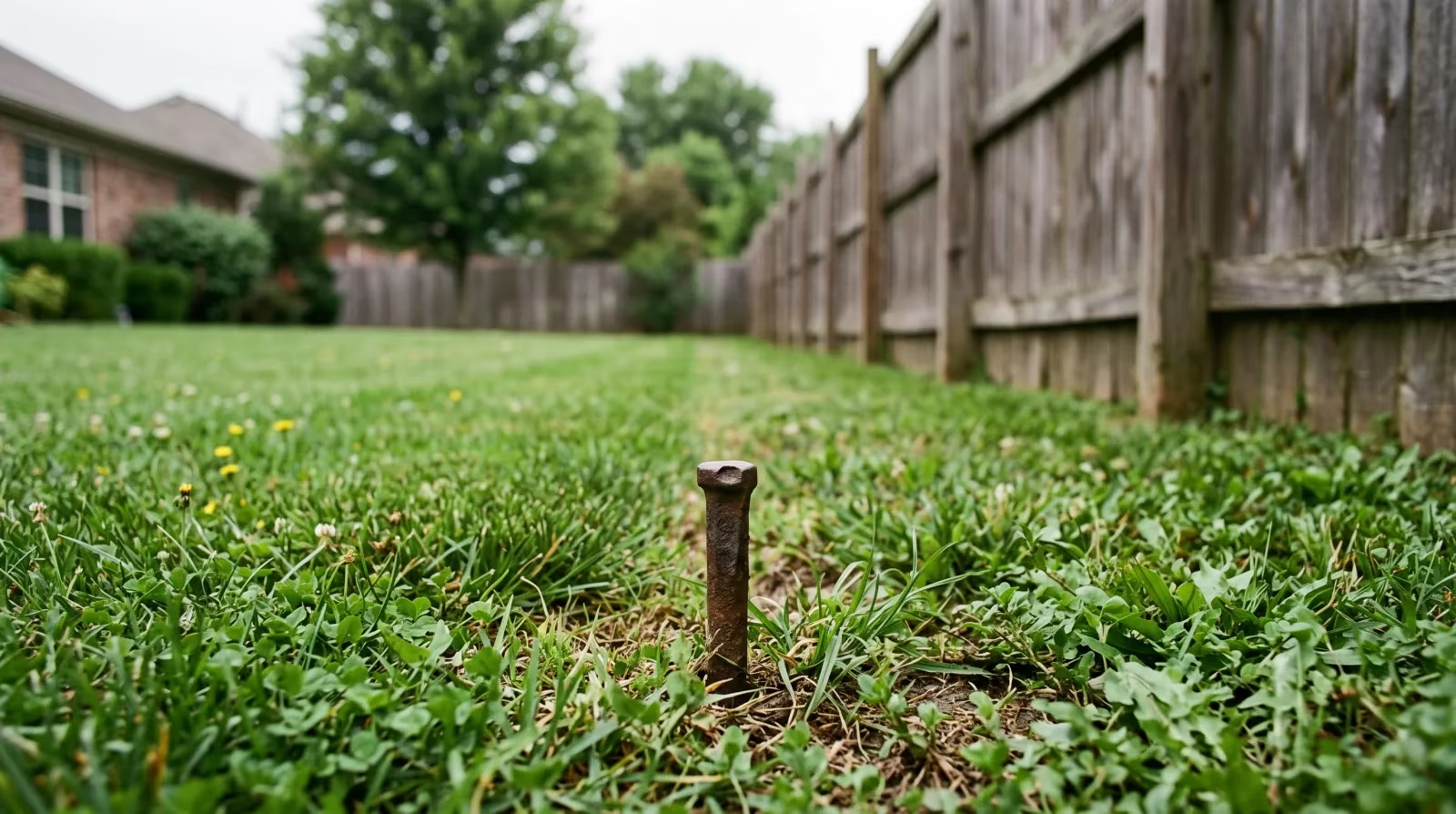

Most buyers assume the fence marks the property line. Occasionally it does. Fences tend to get built where the old fence was, or where the ground was easy to dig, or where two neighbours agreed something decades ago, and none of those methods produce a legal boundary.
BC does not require a survey
This surprises buyers coming from other provinces.
In BC, sellers are not required to provide a survey certificate as a condition of sale. Buyers frequently request one, and mortgage lenders sometimes require one as part of approval, but there is no automatic step in a standard residential transaction that establishes where the boundaries run.
So unless somebody orders a survey, most purchases complete without anyone confirming it. For the majority of properties that never causes a problem. For a minority it causes a significant one.
What a survey certificate shows
A survey certificate confirms the legal boundaries of a property and shows the location of improvements on it. In doing so it identifies encroachments, easements, rights of way, covenants, and registered charges affecting the parcel.
That last part is worth noting. A survey and a title search complement each other. The title search tells you what is registered against the property at the Land Title and Survey Authority. The survey tells you where those things physically sit and whether anything is where it should not be.
Our guide to easements and rights of way covers the registered interests in more depth, and title insurance covers a different product that buyers often confuse with a survey.
What an encroachment is
An encroachment is a structure that crosses the property line. A shed built a metre over. A driveway that widened over the years. A roof overhang. A retaining wall.
It can run either direction. Your structure onto a neighbour, or a neighbour's structure onto you. Both create the same category of problem, which is that something physical does not match what title says.
The practical consequence shows up when someone tries to sell, or build, or when a relationship between neighbours changes. An arrangement that worked informally for fifteen years can become a live dispute the moment one of the parties moves.
How BC law handles it
Section 36 of BC's Property Law Act sets out the remedies. On proof of an encroachment by a legal survey certificate, the Supreme Court may declare an easement, vest title to the land in the encroaching owner, or order removal of the encroachment.
Two things stand out for a buyer.
First, those are court outcomes. An unresolved encroachment can end up in litigation, which is expensive and slow relative to the size of most encroachments.
Second, the section works on proof by a legal survey certificate. The survey is the evidence, which is another reason the document matters beyond simply satisfying curiosity.
When a survey is worth ordering
We do not tell every buyer to order one. It is a real cost and for many purchases it adds little.
We do suggest it when you are buying a detached home or a bare land strata lot, particularly an older one. When structures sit visibly close to a boundary. When you plan to build, add a garage, or install a fence. When the lot is irregular in shape, which is common on creekside and hillside parcels in the Fraser Valley. And whenever something in the title search raises a question you cannot resolve on paper.
For a standard condo purchase it is generally unnecessary, because your strata lot boundaries are defined by the strata plan rather than by a lot survey. Boundary questions in a strata usually turn on the plan and the bylaws instead. Our guide to limited common property covers how that works for parking and storage.
Timing matters more than people expect
A survey takes time to arrange and complete. A BC Land Surveyor has to attend the property, do the work, and produce the certificate.
If you decide during your subject period that you want one, order it immediately rather than at the end of week one. Buyers who leave it late end up choosing between extending their dates and removing subjects without the answer, and neither is a good position.
Our subject removal guide covers protecting enough runway, and the week-by-week closing timeline shows where this fits alongside the inspection and financing.
If the survey finds something
This is the good outcome, even though it does not feel like one.
You now have a fact rather than an assumption, and you have it while you still have options. Depending on what the survey shows, the path forward might be a conversation with the seller, a price adjustment, a registered agreement between the parties, or in more serious cases a legal remedy.
What it should not be is an informal handshake with the neighbour that nobody writes down. That is how the current situation was probably created in the first place.
This is also one of the situations where legal advice earns its cost. Our guide on choosing a notary or lawyer covers the line between routine conveyancing and matters that need a lawyer, and a contested boundary sits firmly on the lawyer side.
The short version
BC does not require a seller to provide a survey certificate, so nobody confirms your boundaries unless you ask. A survey shows the legal boundaries, where improvements sit, and what registered interests affect the parcel.
Encroachments are resolved under section 36 of the Property Law Act, on proof by a legal survey certificate, with outcomes ranging from a declared easement to an order for removal.
Order one when you are buying detached property, when structures sit near a boundary, or when you plan to build. Order it early enough that the answer arrives before your dates do.
We are agents rather than surveyors or lawyers, and none of this is advice on a specific property. A BC Land Surveyor produces the certificate and your lawyer advises on what it means.
Key takeaways
- BC does not require sellers to provide a survey certificate as a condition of sale.
- A survey confirms legal boundaries and shows encroachments, easements, rights of way, covenants, and charges.
- Section 36 of the Property Law Act allows the Supreme Court to declare an easement, vest title, or order removal on proof of an encroachment.
- A fence is not evidence of a boundary, and assumptions about fence lines cause most of the surprises.
- Order early in the subject period, since surveys take time to arrange and complete.
Frequently Asked Questions
What is a survey certificate?
A survey certificate confirms the legal boundaries of a property and shows the location of improvements on it. It identifies encroachments, easements, rights of way, covenants, and registered charges affecting the property.
Does a BC seller have to provide one?
No. Unlike some other provinces, BC does not require sellers to provide a survey certificate as a condition of sale. Buyers frequently request one and mortgage lenders sometimes require it as part of approval.
What is an encroachment?
It is when a structure such as a shed, driveway, or roof overhang crosses the property line onto a neighbouring parcel, or from a neighbour onto yours. It can create disputes and complicate a future sale.
How are encroachments resolved in BC?
Section 36 of BC's Property Law Act provides that, on proof of an encroachment by a legal survey certificate, the Supreme Court may declare an easement, vest title to the land in the encroaching owner, or order removal of the encroachment.
Is the fence the property line?
Not necessarily, and this is the assumption that causes the most trouble. Fences get built where it was convenient rather than where the boundary runs. Only a survey establishes the actual line.
Do I need a survey for a condo purchase?
Generally not in the same way. A strata lot's boundaries are defined by the strata plan rather than by a lot survey. Boundary questions in a strata usually turn on the strata plan and bylaws instead.
When is a survey worth ordering?
When you are buying a detached home or a bare land strata lot, when structures sit close to a boundary, when you plan to build or fence, when the lot is irregular, or when anything in the title search raises a question.
Does title insurance replace a survey?
They do different things. Title insurance may provide coverage for certain title-related risks depending on the policy, while a survey tells you where the boundaries actually are. Read the policy and speak with your conveyancer about what is and is not covered.
How do I get a survey certificate?
A BC Land Surveyor prepares it. Your notary, lawyer, or agent can usually recommend one. Order early enough in your subject period that the result arrives before your dates.
What if the survey finds an encroachment?
You then have a real fact to work with, which is the point. Options range from negotiating with the seller, to registering an agreement, to seeking a legal remedy. That conversation belongs with your lawyer rather than being handled informally.
Sources
- Land Title and Survey Authority of British Columbia
- Property Law Act, Government of British Columbia
Verified September 1, 2026. General information only, not legal or survey advice. A BC Land Surveyor prepares survey certificates. Consult your notary or lawyer about title matters on your specific purchase.
Related FRIVE guides
- Easements and rights of way on your title, the registered interests a survey reveals
- Title insurance for BC home buyers, a different product that covers different risks
- Fences and property lines, the neighbour conversation that follows
- Notary or lawyer for your BC closing, when a boundary issue needs legal advice
- Subject removal in BC, leaving time to order and receive a survey
Next Steps: Work with FRIVE
Most Fraser Valley purchases never need a survey, and we will say so when that is our read. The ones that do need it tend to be obvious from the first showing: a shed near a line, an odd-shaped lot, a driveway that seems to serve two houses.
If you are unsure whether your purchase is one of them, start a conversation with the FRIVE team or browse current Fraser Valley listings.
Sources
- Land Title and Survey Authority of British Columbia, Land Title and Survey Authority of British Columbia
- Property Law Act, Government of British Columbia
Related guides
Found this useful? Share it.
A neighbour, a partner, a friend who's two FHSA contributions away, send it their way.