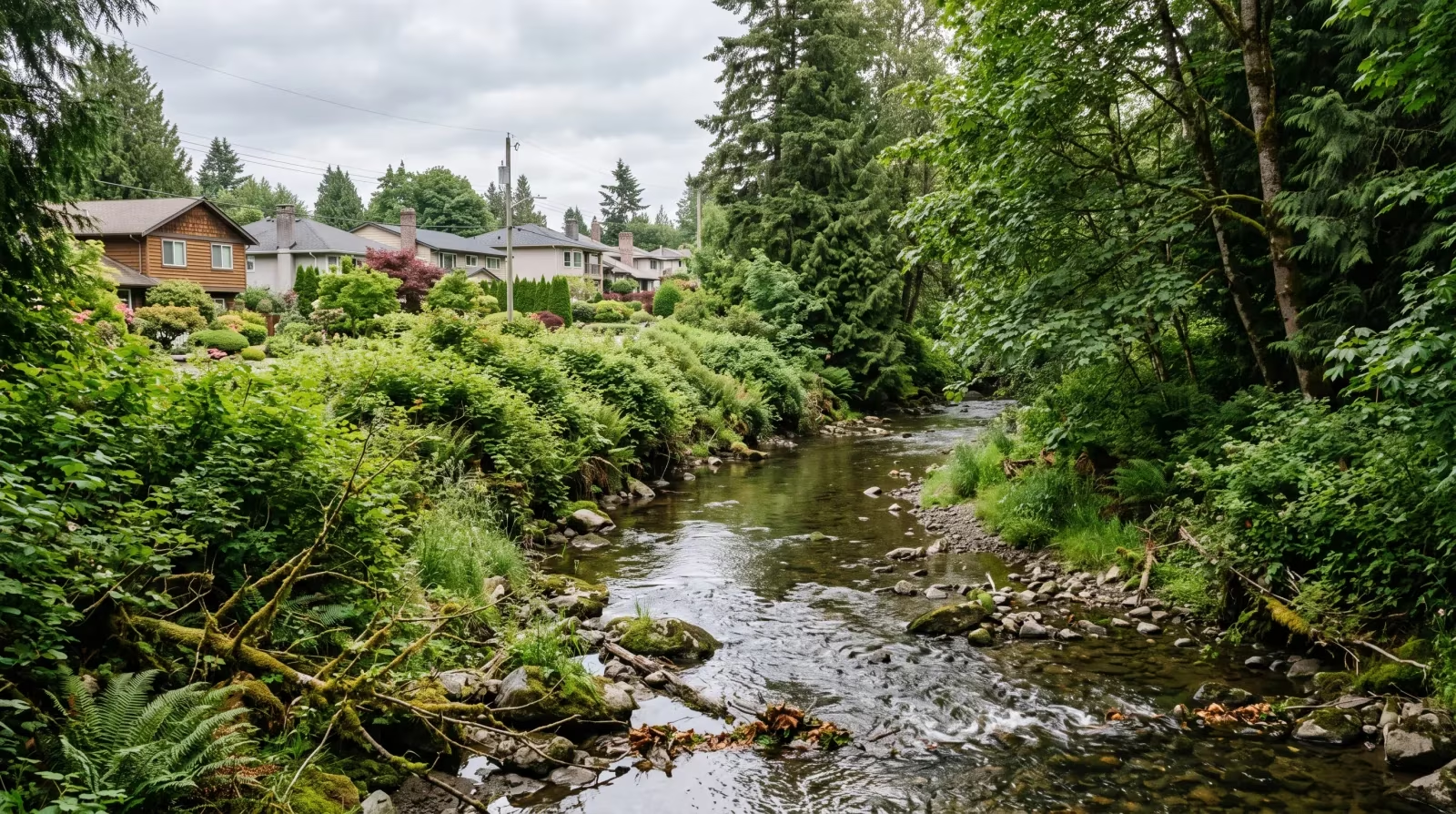

A creek along the back of a Fraser Valley lot usually sells the property. It brings mature trees, a green buffer instead of a neighbour's fence, and the sound of moving water. It also brings a layer of regulation that most buyers meet for the first time when they start planning an addition.
Why the province protects streamside land
Riparian areas are the vegetated strips alongside streams, rivers, creeks, lakes, ponds, and wetlands. They do measurable work: holding banks together, shading water to keep temperatures down, contributing nutrients, and providing habitat.
The Riparian Areas Protection Regulation protects those areas in the context of fish habitat. It was enacted under the Fish Protection Act in July 2004, and amendments to RAPR come into effect on January 1, 2027.
That last date is worth noting if you are planning work into next year, because the framework is changing.
The 30 metre trigger
Here is the number buyers need.
A RAPR assessment is triggered when proposed development is located within 30 metres of a watercourse, in a municipality that has adopted the regulation.
Read that carefully, because it is often misunderstood. Thirty metres is not an automatic no-build line. It is the distance at which somebody qualified has to assess the situation before development proceeds.
The assessment itself is what establishes the actual protected area.
What a SPEA is
The assessment establishes a Streamside Protection and Enhancement Area, or SPEA, and the setbacks that apply.
A Qualified Environmental Professional conducts the assessment, using either a simple or a detailed method, and documents the features, functions, and conditions that contribute to fish habitat. The resulting SPEA width depends on the specific watercourse and site conditions.
This is why no one can give you a reliable answer over the phone about how far back you can build. The number comes out of the assessment. Two properties on the same creek can land in different places.
Existing homes versus new development
This distinction resolves most buyer anxiety, so it is worth stating plainly.
A house that is already built and lawfully established near a creek is one situation. Proposed new development on that property is a different one. Buying the first does not automatically give you permission for the second.
So if you are buying a home to live in as it stands, riparian rules may never come up. If your reason for buying includes an addition, a detached shop, a pool, or significant landscaping near the water, the rules are directly relevant and belong in your research before you write.
Municipal rules stack on top
Local governments frequently have their own watercourse setback provisions in their zoning bylaws, and many designate development permit areas covering land near streams.
That means a property can face both provincial and municipal requirements. As with ALR land, you can need more than one authority to say yes, and the more restrictive requirement governs in practice.
Ask the local planning department directly about watercourse setbacks and whether the parcel sits in a development permit area. Municipal staff answer these questions routinely.
Vegetation is part of what is protected
Buyers sometimes look at an overgrown creek bank and see a weekend project that would open up a view.
The vegetation along a watercourse is part of what the regulation protects, so removal is generally restricted. Municipal tree bylaws may add another layer on top.
Clearing first and asking later is a genuinely expensive mistake. Ask the municipality before removing anything near a watercourse.
Riparian protection is not the same as flood risk
These two things live on the same properties and get confused constantly.
Riparian regulation is about habitat protection. Flood risk is about water arriving where you do not want it. A property can be affected by one, the other, or both.
If you are buying near water in the Fraser Valley, look at both questions separately. Our guide to flood risk in the Fraser Valley covers the second one, including what happened on Sumas Prairie and what buyers should check.
Insurance follows the flood question rather than the riparian one. Confirm overland water and sewer backup coverage for the specific address with a broker during your subject period.
What to check before you write
Four things, and all of them are answerable quickly.
Ask the municipality about watercourse setbacks and development permit area status for the parcel. Order a title search and look for registered covenants, which sometimes record exactly these restrictions. Establish whether the existing home and any outbuildings are lawfully established. And write down your actual plans for the property, then test each one against what you learn.
Our subject removal guide covers keeping enough time to do this, and survey certificates and encroachments covers the related question of where your boundaries actually sit, which matters more than usual on an irregular creekside lot.
The short version
RAPR protects streamside land for fish habitat, and an assessment is triggered when proposed development falls within 30 metres of a watercourse in a municipality that has adopted the regulation. A Qualified Environmental Professional establishes the SPEA and the setbacks that apply.
Buying an existing home near a creek is usually straightforward. Building near one is where the rules bite. Check your plans with the municipality before you commit, and remember that RAPR amendments take effect January 1, 2027.
We are agents rather than environmental professionals or planners, and none of this is advice on a specific parcel. Your local government and a Qualified Environmental Professional are the authorities here.
Key takeaways
- RAPR protects vegetated streamside areas for fish habitat and was enacted under the Fish Protection Act in July 2004.
- An assessment is triggered when proposed development is within 30 metres of a watercourse in a municipality that has adopted the regulation.
- A Qualified Environmental Professional establishes the Streamside Protection and Enhancement Area and its setbacks.
- An existing lawfully built home is a different situation from proposed new development.
- Municipal watercourse setbacks and development permit areas can apply on top of the provincial rules.
Frequently Asked Questions
What is the Riparian Areas Protection Regulation?
RAPR is a BC regulation that protects vegetated areas alongside streams, rivers, creeks, lakes, ponds, and wetlands because of their role in fish habitat. It was enacted under the Fish Protection Act in July 2004, and amendments come into effect on January 1, 2027.
How close to a creek does RAPR apply?
A RAPR assessment is triggered when proposed development is located within 30 metres of a watercourse in a municipality that has adopted the regulation. The 30 metre figure is the trigger for assessment rather than an automatic no-build line.
What is a SPEA?
A Streamside Protection and Enhancement Area. A RAPR assessment establishes the SPEA and the required setbacks from the watercourse. The actual protected width is determined by the assessment rather than being a single fixed number for every property.
Who does the assessment?
A Qualified Environmental Professional conducts the riparian assessment, using either a simple or a detailed method, and describes the features, functions, and conditions that contribute to fish habitat.
Does this stop me from buying the house?
Usually not. An existing home that is already built and lawfully established is a different situation from proposed new development. RAPR matters most when you plan to build, add on, or significantly change the property near the watercourse.
Can I clear vegetation along the creek?
Vegetation in a protected streamside area is part of what the regulation exists to protect, so removal is generally restricted. Check with your local government before removing anything, since municipal tree and watercourse bylaws may also apply.
Does every municipality apply RAPR?
The assessment trigger applies in municipalities that have adopted the regulation. Local governments may also have their own watercourse setback provisions in their zoning bylaws, so you can face both provincial and municipal requirements.
Will this affect my insurance?
Riparian protection and flood risk are separate questions, though they often appear on the same property. Confirm overland water and sewer backup coverage for the specific address with an insurance broker.
How do I find out if a property is affected?
Ask the local government's planning department about watercourse setbacks and any development permit area designation on the parcel. A title search may also reveal covenants registered against the property.
Is a creek property a bad purchase?
Many buyers value the greenbelt, the privacy, and the mature trees that come with a watercourse. The restriction matters if your plan involves building close to the water, so check your plan against the rules rather than assuming either way.
Sources
- Riparian Areas Protection Regulation, Province of British Columbia
- Riparian Areas Protection Regulation, BC Reg 178/2019
Verified September 1, 2026. General information only, not environmental, legal, or planning advice. Requirements vary by municipality and by site. Confirm with your local government and a Qualified Environmental Professional.
Related FRIVE guides
- Flood risk in the Fraser Valley, the separate water question on the same properties
- Tree bylaws in the Fraser Valley, what you can and cannot remove
- Survey certificates and encroachments, where your boundaries actually sit
- Buying in the Agricultural Land Reserve, another case where two authorities must agree
- Subject removal in BC, protecting time for municipal questions
Next Steps: Work with FRIVE
Creekside lots in Langley, Abbotsford, and Mission are some of the nicest places to live in the Fraser Valley, and the greenbelt behind them is usually permanent, which is worth something. The restriction only matters if your plan runs into it.
If you are looking at a property near a watercourse and want help checking what you can actually do with it, start a conversation with the FRIVE team or browse current Fraser Valley listings.
Sources
- Riparian Areas Protection Regulation, Province of British Columbia
- Riparian Areas Protection Regulation, BC Reg 178/2019, Government of British Columbia
Related guides
Found this useful? Share it.
A neighbour, a partner, a friend who's two FHSA contributions away, send it their way.