Condo-to-Townhouse Move-Up Guide: Fraser Valley
Most of the buyers the FRIVE team works with on the condo-to-townhouse step are in Whalley or Fleetwood condos and ready to trade up for ground-floor entry, a garage, and more room. The move-up math is straightforward on paper, but the transaction itself is harder than a first purchase because you're selling one place and buying another at the same time. Getting the sequence wrong is expensive. This guide covers how to structure the sale-and-purchase order, what bridge financing actually is, and how to read a depreciation report before you commit.

The move-up migration: Trading density for space
As families grow or adjust to permanent remote-work schedules, the limitations of vertical condo living become apparent. A 650-square-foot high-rise condo in Whalley or Metrotown starts to feel crowded when you add a baby, a dog, or a home office.
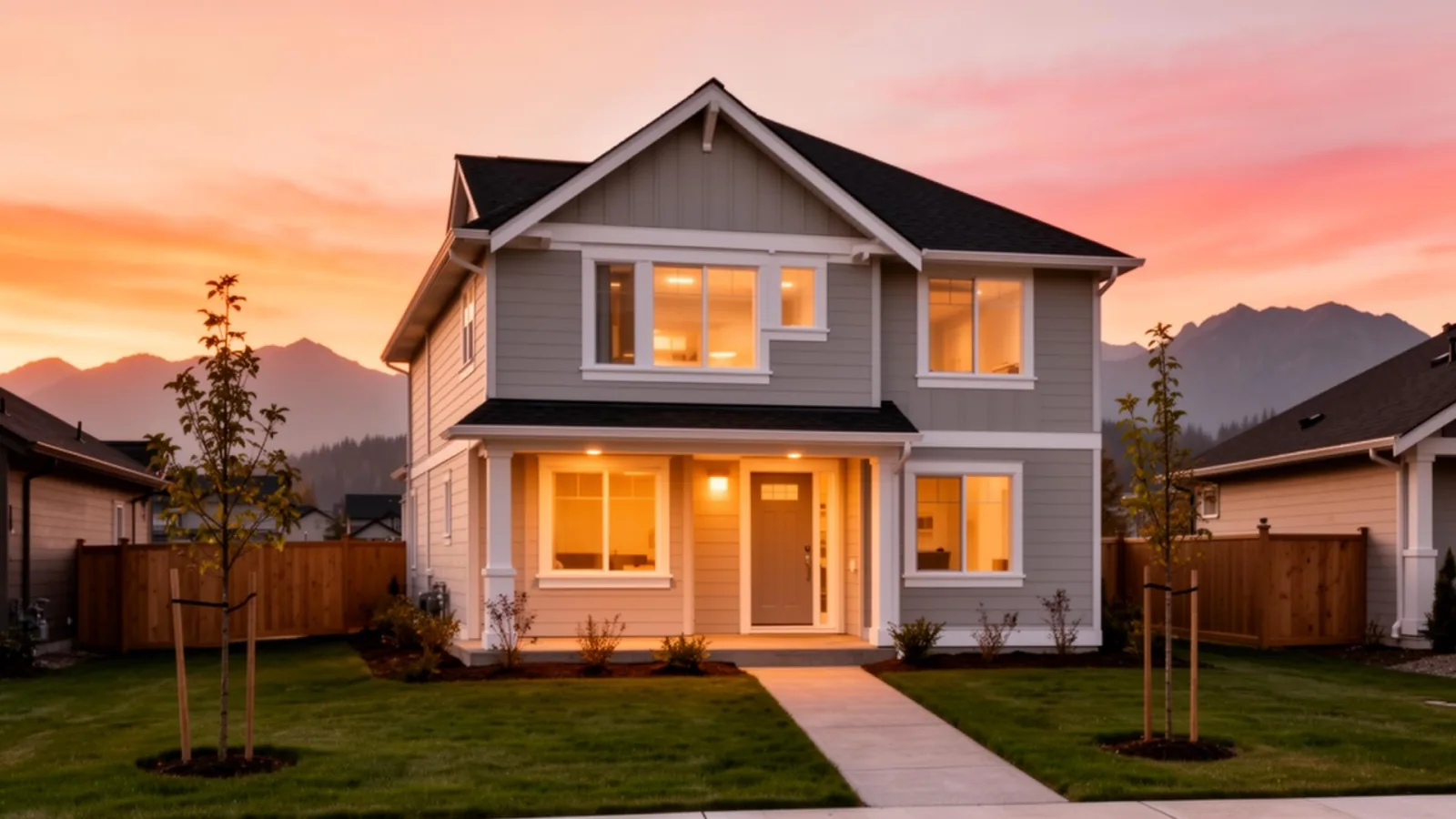
For these buyers, the Fraser Valley townhouse represents the ideal middle-density housing option. It offers a street-level front door, multi-level living, private laundry, a two-car garage, and a small backyard or patio, while remaining significantly more affordable than a single-family detached home.
However, the townhouse market operates under different supply, pricing, and structural conditions than the condo market. At FRIVE, we help families execute the complex transition of selling their current condo and buying a townhouse in Surrey, Langley, Cloverdale, or Abbotsford.
The math of concurrent transactions: Selling & buying
Unless you are a first-time buyer with substantial cash savings, purchasing a townhouse requires unlocking the equity built up in your current condo. This means you must coordinate a sale and a purchase simultaneously.
You have two primary paths when managing these timelines:
Option 1: Selling your condo first (Highly Recommended)
You list and sell your condo before writing an offer on a townhouse.
- The Benefits: You lock in your exact sale price, net proceeds (after commissions and legal fees), and completion date. Your bank can issue an unconditional pre-approval, allowing you to write strong, competitive townhouse offers with shorter financing subjects.
- The Risk: If you sell with a standard 60-day completion, you have a limited window to find and secure a townhouse. To mitigate this, we negotiate a longer completion date (90 to 120 days) on your condo sale, giving you ample time to shop.
Option 2: Buying your townhouse first
You write an offer on a townhouse that is conditional on the sale of your condo.
- The Benefits: You do not risk being homeless. You only sell your condo if you find a townhouse you love.
- The Risk: Sellers in hot markets rarely accept "Subject to Sale" offers. If they do, they usually demand a 72-hour clause, meaning if they receive another offer, you must remove your subject within 72 hours or walk away. This puts immense pressure on your condo sale.
- Condo Sale Price (Fleetwood, Surrey)
- $550,000
- Existing Mortgage to Pay Off / Port
- - $320,000
- Selling Costs (Commissions + Legal + Fees)
- - $22,000
- Net Equity Unlocked
- $208,000
- New Townhouse Purchase Price (Willoughby)
- $800,000
- Down Payment (using Net Equity)
- $160,000 (20%)
- New Uninsured Mortgage Balance
- $640,000
- Remaining Cash (held back for reserves)
- $48,000
Bridge financing and mortgage porting
Even with a coordinated sale and purchase, completion dates rarely line up perfectly on the exact same day. If your new townhouse closes on July 1st, but your condo sale does not complete until July 15th, you face a cash flow gap.
This is where **Bridge Financing** is used. Your lender will advance the equity from your condo sale (which is firmly contractually sold) for those 14 days, allowing you to close on the townhouse. Lenders typically charge a small administration fee (approx. $300 to $500) plus interest at prime plus 1 to 2% on the bridged amount.
If your existing mortgage has a low fixed interest rate, you will likely want to **port** the mortgage to avoid prepayment penalties. When porting, you move your existing balance and rate to the new property, and borrow any additional funds required (e.g., the $250,000 price gap) through a new mortgage segment at current market rates.
Townhouse strata due diligence: Reading the documents
Strata properties are collectively owned corporations. When you buy a townhouse, you are buying a share in a corporation that maintains the buildings, grounds, and common property. Conducting thorough due diligence on the strata documents is essential.
1. The Depreciation Report
Under the BC Strata Property Act, strata corporations must obtain a professional Depreciation Report every five years. This report is a comprehensive engineering audit that projects building maintenance requirements (roofing, gutters, windows, paving, painting) for the next 30 years and estimates the cost of those repairs.
Compare the report's recommendations with the strata's actual work history. If the report says the roofs are due for replacement in 2026, check the strata minutes to see if that work has been budgeted and approved.
2. The Contingency Reserve Fund (CRF)
The CRF is the strata's savings account for major, non-recurring capital repairs. A low CRF balance paired with upcoming major repairs is a red flag, as it increases the risk of a **Special Levy** (an immediate cash call where each unit owner must pay their share of the repair cost). We look for complexes with a CRF balance that matches the projections in the Depreciation Report.
3. Parking and Pets
Move-up families often have two cars and a dog. Many townhouse complexes restrict parking: garages may not fit large pickup trucks, and driveway parking may be limited to visitors. Strata bylaws also enforce pet restrictions, commonly limiting units to one dog or two cats, or placing height/weight caps on pets.
Transit corridors and commute planning
Moving further east into the Fraser Valley often increases commute times. Evaluating transport options is a critical part of the townhouse search:
- The Surrey-Langley SkyTrain Expansion: The Province of BC is extending the Expo Line by 16 kilometers from King George Station in Surrey to Langley City Centre. Target completion is late 2028 or 2029. Buying a townhouse near future stations in Fleetwood or Clayton Heights offers excellent long-term equity potential and future transit options.
- Highway 1 Corridors: Willoughby Heights (Langley) has grown rapidly due to its proximity to the 200th Street corridor and the Carvolth Exchange, which offers express bus service directly to Lougheed Town Centre Station. The widening of Highway 1 through Abbotsford is also under construction to improve traffic flow.
Half-duplexes are another option buyers in this position often overlook. Our condo vs. half-duplex comparison covers the price gap, what you actually own, and the strata trade-offs between the two.
Frequently asked questions
The questions we hear most often from first-time buyers in actual FRIVE meetings.
Is it better to sell my condo first or buy my townhouse first?
- In our experience, selling your condo first is almost always the safer move. Condos in the Fraser Valley are more sensitive to inventory fluctuations than townhouses. Selling first ensures you know your exact net proceeds and qualification limits before writing an offer. If you buy first, you run the risk of your condo not selling in time, forcing you to use expensive private lending or lose your deposit.
What is bridge financing and how does it work in BC?
- Bridge financing is a temporary short-term loan that 'bridges' the gap between the completion date of your new purchase and the completion date of your existing sale. If your townhouse purchase closes on June 1st and your condo sale closes on June 15th, the bank lends you the down payment amount for those 14 days. Lenders require a firm, unconditional contract of sale on your condo to approve a bridge loan.
Where these numbers come from
- 1BC Home Flipping Tax Province of British Columbia. Accessed August 29, 2026.
- 2Strata Property Act and Depreciation Reports Province of British Columbia. Accessed May 30, 2026.
- 3Surrey-Langley SkyTrain Project Timelines Ministry of Transportation and Infrastructure. Accessed May 30, 2026.
- 4Fraser Valley Real Estate Board (FVREB) Market Statistics Fraser Valley Real Estate Board. Accessed May 30, 2026.
- 5BC Strata Age and Rental Bylaw Changes (Bill 44 context) Province of British Columbia. Accessed May 30, 2026.
Tax thresholds, program limits, and rates change. We update this page when we notice a change. Before signing anything, verify the current figure with the linked source, or ask your mortgage broker.