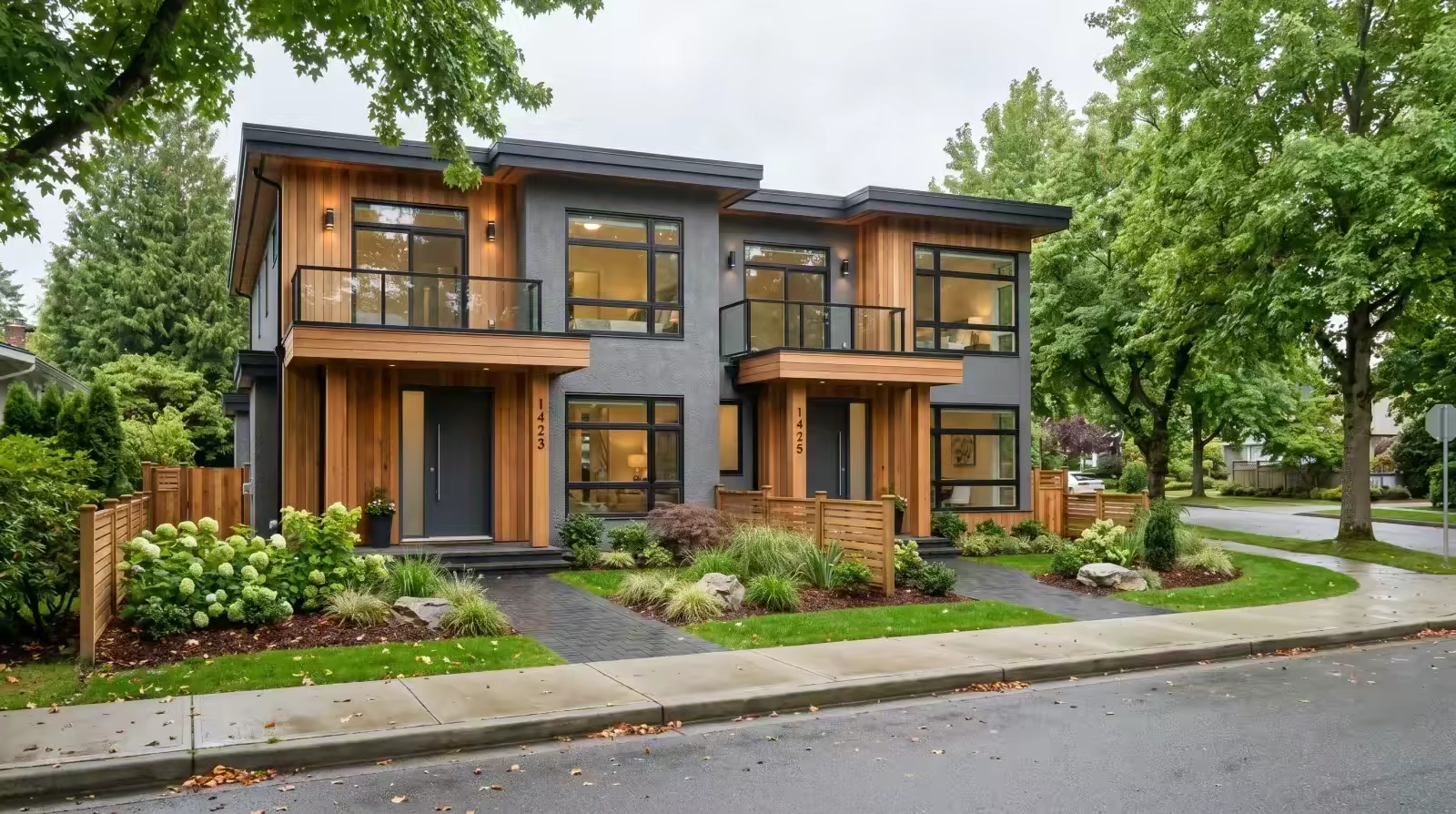

A half-duplex is the most misunderstood home type in the Fraser Valley, and at FRIVE, we spend more time explaining it than any other property type. Buyers see one and file it next to townhouses in their head, when in fact it can be a completely different kind of ownership, sometimes with no strata, no monthly fees, and no committee at all. For a first-time buyer weighing a condo against a half-duplex, the real differences in cost, control, and responsibility are bigger than the photos suggest. This is the comparison that rarely gets explained clearly.
What a half-duplex actually is
A half-duplex is one side of a building split into two separate homes that share a common wall. Each half is owned by a different person. The detail that changes everything is that a half-duplex may or may not be part of a strata.
Some half-duplexes are strata-titled, with a small strata that handles a few shared things and charges modest fees. Others sit on separate legal lots with no strata at all, meaning no fees, no shared reserve fund, and full responsibility for your own half (Government of British Columbia). Before anything else about a specific half-duplex, you need to know which of these it is, because it determines your costs and your obligations for as long as you own it.
The condo most first-time buyers start with
Most first-time buyers begin with a condo, so it's the natural point of comparison. A condo gives you a lower entry price, low day-to-day maintenance, and a strata that takes care of the roof, the building envelope, the grounds, and the shared systems. In exchange, you pay monthly strata fees, live with shared walls and often shared floors and ceilings, and accept the strata's bylaws, rules on pets, rentals, and more.
That bundle suits a lot of first-time buyers, especially those who want to get in at the lowest price and don't want to think about maintenance. Our guide to strata fees and our condo-versus-townhouse comparison cover that world in detail.
What the half-duplex offers instead
A half-duplex generally trades the condo's convenience for space and control.
On space, a half-duplex usually gives you more square footage and often a yard, closer to house living than a condo or even a townhouse. On price, it typically sits below a comparable fully detached house, because it shares a wall and often a smaller or shared lot. So it can be a path to house-like living at a price between a townhouse and a detached home.
On control, this is where the non-strata half-duplex stands apart. With no strata, there's no monthly fee, no committee, and far fewer rules about what you do with your own home. For buyers who chafe at strata governance, who don't want to ask permission to renovate or to keep a pet, that independence is a genuine draw.
The responsibility that comes with it
Independence has a flip side, and it's the part first-time buyers most often underestimate. On a non-strata half-duplex, you're generally responsible for maintaining your own half: your section of the roof, your exterior, your yard, and often coordinating shared elements with your neighbour. There's no strata quietly collecting fees and building a reserve fund for the day the roof needs replacing. That day still comes, and the bill is yours.
This is the trade in a sentence. A condo's strata fee is partly forced savings for big future repairs (the contingency reserve fund we describe in our explainer on the CRF). A non-strata half-duplex has no such mechanism, so you have to be the one who saves for the roof, the furnace, and the rest. Some buyers love that control; others find they'd rather have the strata handle it. Be honest about which kind of owner you are.
If the half-duplex is strata-titled, some shared maintenance may be handled by the small strata, and you'd review its documents like any condo. If it's non-strata, you'll instead want to understand any shared-wall or party-wall arrangement with the neighbour and have your lawyer review the title and easements. The due diligence is different, not absent.
Living with one shared wall versus several
There's a quality-of-life dimension to this comparison that doesn't always come up in the financial analysis. In a typical condo, you share walls with at least two neighbours, and potentially floors and ceilings above and below. Sound travels in multiple directions. The footsteps, the late-night TV, the early-morning conversation next door: these are part of the deal in most condos, and the degree to which you notice them depends on the building's construction and your specific unit's location.
In a half-duplex, you share one party wall. The other three sides of your home are yours alone. It sounds like a small distinction, but for many buyers it changes how the home actually feels. We've had buyers describe moving from a condo to a half-duplex as "finally having a home that feels like mine." That isn't about the square footage, the condo may have been larger. It's about the orientation of the space and the sense that what's on the other side of every wall is either outside or yours.
If noise sensitivity is something you know about yourself, it's worth weighting this difference properly rather than treating it as secondary. The sound situation in a half-duplex is inherently different from a condo because of the geometry of shared surfaces.
The building envelope question: don't skip the inspection
One thing buyers moving up from a condo sometimes miss about a half-duplex is that the building envelope, the shell of the building that keeps water out, is now mostly your problem. With a condo, the strata's depreciation report and the engineering history of the building tell a lot of the envelope story. With a half-duplex, especially a non-strata one, you're assessing the condition of a smaller building yourself, and the stakes are just as high.
Post-2000 construction is generally lower risk because building practices changed significantly after the leaky condo crisis of the 1990s. But half-duplexes built in the early-to-mid 1990s can carry the same envelope concerns as period condos, improper sealing, inadequate drainage, and cladding that traps moisture. A half-duplex from 1994 with no recent envelope work is a specific risk worth taking seriously.
The answer is a proper home inspection by an inspector who specifically reviews the building envelope. This is not the inspection to skip. We've seen buyers stretch their budget to land a 1995 half-duplex and then skip the inspection to compete against another offer. In a couple of those situations the envelope needed work that would have changed the offer terms significantly. Our home inspection guide covers what to look for and why skipping it under competitive pressure is one of the riskiest decisions a first-time buyer can make.
Resale: who you're selling to matters
One question we hear a lot is whether a half-duplex is harder to sell than a condo. In our experience, it depends on the location and the specific property, not on the type itself. A well-maintained half-duplex with a yard in a walkable part of Surrey or Abbotsford has a real buyer pool: families who want more space than a condo, buyers stepping up from a townhouse but not ready for a full detached price, and buyers relocating from markets where half-duplexes are the norm.
What is true is that a half-duplex has a narrower buyer pool than a condo at any given price. Condos in the sub-$700K range in the Fraser Valley get looked at by a lot of people, young couples, first-time buyers, downsizers. A half-duplex above that range appeals to a more specific buyer. That doesn't make it a bad resale, but it does mean you may spend more time on market waiting for the right buyer.
Freehold half-duplexes, the ones on their own separate lots with no strata, also tend to hold value well in our experience, partly because they're scarcer than condos and closer to full detached home ownership. We won't claim that as a guarantee, because resale always depends on the market at the time you sell. But in many Fraser Valley markets we've seen freehold half-duplexes compete well with detached homes precisely because buyers who can't quite reach a detached home price are very motivated to find one. That's the market dynamic, it's not a promise, but it's worth understanding as you think about the future.
How they compare, at a glance
| Condo | Half-duplex | |
|---|---|---|
| Entry price | Usually lowest | Typically higher than a condo, below detached |
| Space and yard | Smaller, rarely a private yard | More space, often a yard |
| Strata fees | Yes, monthly | Sometimes (strata-titled) or none (non-strata) |
| Maintenance | Handled by strata | Often your responsibility, especially non-strata |
| Control / rules | Bound by strata bylaws | More independence, especially non-strata |
| Forced savings | Reserve fund via fees | None on non-strata, you save for big repairs |
| Shared surfaces | Multiple walls, floor, ceiling | One party wall only |
Who each one suits
In our experience, a condo suits first-time buyers who want the lowest entry price, prefer not to manage maintenance, and are comfortable with strata life. A half-duplex suits buyers who want more space and a yard, value independence and control over their own home, and are willing, and financially ready, to take on more of their own upkeep, including saving for the big repairs themselves.
There's no universally better choice. There's the choice that matches how much responsibility you want to carry and how much space and control matter to you. The buyers who regret their decision are usually the ones who picked a non-strata half-duplex for the freedom and then weren't prepared for the maintenance, or picked a condo for the price and then chafed at the rules.
If you're torn between a condo and a half-duplex, reach out to the FRIVE team, we'll help you figure out which kind of owner you actually are before you choose, or browse current Fraser Valley listings to see both in your price range.
Frequently asked questions
What is a half-duplex?
- A half-duplex is one side of a building divided into two separate homes that share a common wall. Each half is owned separately. Unlike a typical condo or townhouse, a half-duplex may or may not be part of a strata, some are strata-titled, and some are separate legal lots with no strata at all. That distinction changes how it works.
Is a half-duplex cheaper than a detached house?
- Usually, yes. A half-duplex typically costs less than a comparable fully detached house because it shares a wall and often sits on a smaller or shared lot. It can be a way to get house-like space and a yard at a price between a townhouse and a detached home. Confirm current figures for your area.
Sources
- Strata housing, Province of British Columbia, Government of British Columbia
- Monthly Market Report, Fraser Valley Real Estate Board
Related guides
- First-Time BuyersWood-Frame vs Concrete Condos: What the Construction Type Means for Fraser Valley Buyers
- First-Time BuyersGifted Down Payments in BC: How the Gift Letter Works and What Lenders Need
- First-Time BuyersThe BC Speculation and Vacancy Tax: Why First-Time Buyers Must Declare (Even When They Owe Nothing)
- Financing & AffordabilityCMHC Premiums Explained: What Mortgage Default Insurance Actually Costs in BC
Found this useful? Share it.
A neighbour, a partner, a friend who's two FHSA contributions away, send it their way.