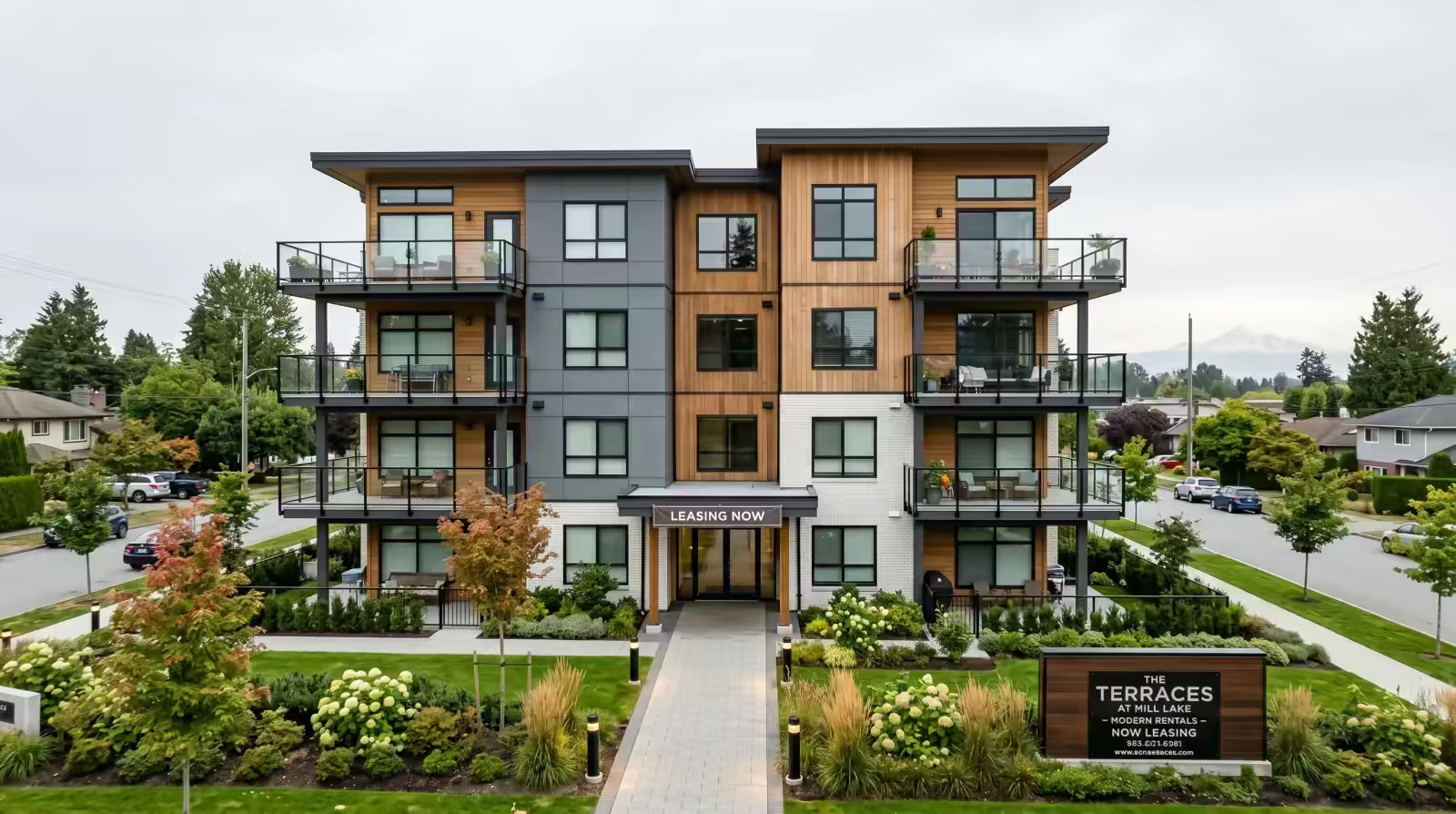

The most common way an owner-occupier in Abbotsford, Mission, or Chilliwack gets tangled in BC's Speculation and Vacancy Tax isn't by owing it, it's by forgetting to declare that they don't, and the FRIVE team flags this in every purchase in those cities. The tax is aimed at vacant homes and certain non-resident owners, and if you live in your home, you almost certainly owe nothing. But the exemption that protects you isn't automatic, you have to claim it, every year, by filing a declaration. Miss that, and the system can bill you anyway.
This is a plain-English guide to the Speculation and Vacancy Tax for first-time buyers. It's general information, not tax advice; confirm the current rules, rates, and deadlines with the Province or your accountant before relying on them.
What the tax is and where it applies
The Speculation and Vacancy Tax is a provincial tax on residential property in designated areas of BC, intended to discourage homes sitting empty and to address certain non-resident ownership (Government of British Columbia). It doesn't apply everywhere in the province, but it does apply across much of the region we work in.
Abbotsford, Mission, and Chilliwack are all designated taxable areas, alongside the Metro Vancouver municipalities and several others. So if you buy a condo or townhouse in those Fraser Valley cities, you're inside the tax's scope, which simply means you're part of the system and have to deal with the declaration. It does not mean you'll owe the tax.
Most owner-occupiers owe nothing
Here's the reassuring part. There's an exemption for a property that is your principal residence, and that exemption covers most owner-occupiers. If you buy a home in one of these cities and live in it, the tax is designed not to apply to you.
The rates exist for the people the tax is actually aimed at. For 2026, the rate is 1% of the property's assessed value for taxable Canadian citizens and permanent residents, and 3% for foreign owners and untaxed worldwide earners (sometimes called satellite families). For a first-time buyer living in their own home, the relevant number is usually zero, because the principal-residence exemption applies.
The catch: you must declare anyway
This is the single most important thing to take from this article, because it's where owner-occupiers get caught.
Every owner of residential property in a designated taxable area must file an annual declaration, typically due by March 31, even if they qualify for an exemption and owe nothing. The exemption is not applied automatically. The declaration is how you claim it.
If you don't declare by the deadline, you can be assessed the tax as though no exemption applies. For an owner-occupier, that means getting billed a tax you didn't actually owe, and then having to sort it out with the Province after the fact. It's an entirely avoidable headache, but only if you file on time.
The Province sends declaration information to owners ahead of the deadline. New owners are brought into the system, so when you complete on a home in one of these cities, make sure your contact information is current and watch for the declaration notice. We tell every buyer in Abbotsford, Mission, and Chilliwack the same thing: put the declaration deadline in your calendar the day you get your keys, and treat it as mandatory paperwork, like filing your taxes.
What happens if you miss the declaration deadline
Missing the deadline is not a theoretical risk. It's the most common way we hear about owner-occupiers running into this tax when they never should have.
The annual declaration typically has to be filed in the first few months of the year, generally by March 31, covering the previous calendar year. Miss it, and BC Revenue can automatically bill you at the applicable rate based on your property and status, without the exemption you're entitled to. For a Fraser Valley condo or townhouse, a tax assessed at 1% of the assessed value is real money. Getting it reversed requires demonstrating that you qualified for the exemption and following up directly with BC Revenue. The process works, but it takes time and effort that you wouldn't have needed if you'd filed on time.
The scenario that captures this clearly: a buyer closes on a Chilliwack townhouse in October. Moving in, getting settled, and adjusting to homeownership takes up the fall and winter. The following spring, a declaration deadline slips by unnoticed, maybe the Province's letter went to the old address, or it arrived during a busy week and got set aside. A few months later, an unexpected tax bill arrives. The buyer does qualify for the principal-residence exemption; they just didn't claim it. They have to go back to BC Revenue, provide proof that they lived in the home as their principal residence, and work through the correction. It's fixable, but it's an unnecessary scramble.
The straightforward way to avoid the whole problem: the moment you get your keys to a home in a designated city, add a recurring reminder for late February or early March to file your declaration. You can find the current declaration process on the Province's speculation tax page (gov.bc.ca). Don't wait for a letter to remind you. Treat it as reliably as a tax filing date, because that's exactly what it is.
Fraser Valley cities covered, don't assume you're outside the zone
Abbotsford, Mission, and Chilliwack are the three Fraser Valley cities in the designated taxable area that come up most often for our buyers. Surrey and Langley, as part of the Metro Vancouver area, are also covered under the tax. Some more rural or outlying areas are not included, but for anyone buying in the cities we primarily work with, assume you're inside the zone and file your declaration accordingly.
This matters more than it sounds, because some buyers make a geographic assumption that doesn't hold. The Speculation and Vacancy Tax is associated in public perception with Vancouver and the Lower Mainland. Chilliwack, by contrast, feels like a smaller, more rural city, and buyers sometimes assume that means it's outside the taxable area. It isn't. If you buy a townhouse in Sardis or a condo in Garrison Crossing, you're in Chilliwack, which is a designated taxable area, and you need to file.
The buyer scenario here is simple but instructive: someone buys a condo in a quieter part of Chilliwack and genuinely assumes they're too far from Vancouver for the tax to apply. They don't file. The bill arrives. When they call us, the first thing we have to clarify is that the tax coverage follows municipal boundaries, not proximity to the city core. Chilliwack is in, full stop. Confirm the current list of designated municipalities on the Province's speculation tax page (gov.bc.ca) for your specific address, particularly if you're buying in a smaller community and aren't sure whether it falls inside or outside the zone.
How it differs from other taxes you might hear about
It's easy to confuse this with other housing taxes, so a quick map. The Speculation and Vacancy Tax is provincial and administered by the BC government across designated areas. Some municipalities, the City of Vancouver is the well-known example, have their own separate empty homes tax. If you ever own in a city with its own municipal tax, you could have more than one declaration to make, so check both the provincial and municipal requirements for that property.
It's also separate from the BC home flipping tax, which applies to profit from selling or assigning a property held a short time, we cover that in our guide to assignment sales. And it's separate again from the property transfer tax you pay at closing, which has its own first-time buyer exemption. These taxes get lumped together in conversation, but they're distinct, with distinct rules.
What this means for your first purchase
If you're buying your first home in Abbotsford, Mission, or Chilliwack to live in, the practical picture is simple. You'll almost certainly qualify for the principal-residence exemption, so you won't owe the Speculation and Vacancy Tax. But you must file the annual declaration to claim that exemption, by the deadline, every year you own the home in a taxable area.
For buyers in our other coverage areas, check whether your specific city is a designated area, the list is set by the Province and is broader than just the big-city cores. When in doubt, confirm with the Province or your accountant.
This tax shouldn't change your decision to buy or where you buy. It's not a cost most owner-occupiers carry. It's a piece of annual administration that, handled on time, costs you nothing but a few minutes, and handled late, can cost you a tax bill you'll have to argue your way out of.
If you're buying in one of the designated Fraser Valley cities and want to make sure you've got the declaration and the other closing-time paperwork straight, reach out to the FRIVE team, we'll flag what to watch for, or browse current Fraser Valley listings to start your search.
Frequently asked questions
Does the BC Speculation and Vacancy Tax apply in the Fraser Valley?
- Yes, in the designated municipalities. Abbotsford, Mission, and Chilliwack are all designated taxable areas, along with Metro Vancouver municipalities and others. If you own residential property in one of these areas, you're within the tax's scope and must file an annual declaration, even if you qualify for an exemption and owe nothing.
Do I owe the Speculation and Vacancy Tax if I live in my home?
- No, an exemption covers a property that is your principal residence, which applies to most owner-occupiers in Abbotsford, Mission, and Chilliwack. The tax targets vacant homes and certain non-resident or satellite owners instead, with rates of 1% of assessed value for taxable Canadian citizens and permanent residents and 3% for foreign owners in 2026. You still must file a declaration every year, typically by March 31, to claim the exemption, since it isn't applied automatically and missing the deadline can mean getting billed as though you owed it.
Sources
- Speculation and vacancy tax, Province of British Columbia, Government of British Columbia
- Property Transfer Tax, Province of British Columbia, Government of British Columbia
Related guides
- First-Time BuyersYour Landlord Is Selling: Renter Rights in BC and What It Means If You Want to Buy Your First Home
- First-Time BuyersLive-Work Homes in the Fraser Valley: What First-Time Buyers Should Know
- First-Time BuyersSurrey Mayor Candidates 2026, Ranked for First-Time Home Buyers
- First-Time BuyersCanada's Foreign Buyer Ban in 2026: Who It Affects and Who It Doesn't
Found this useful? Share it.
A neighbour, a partner, a friend who's two FHSA contributions away, send it their way.