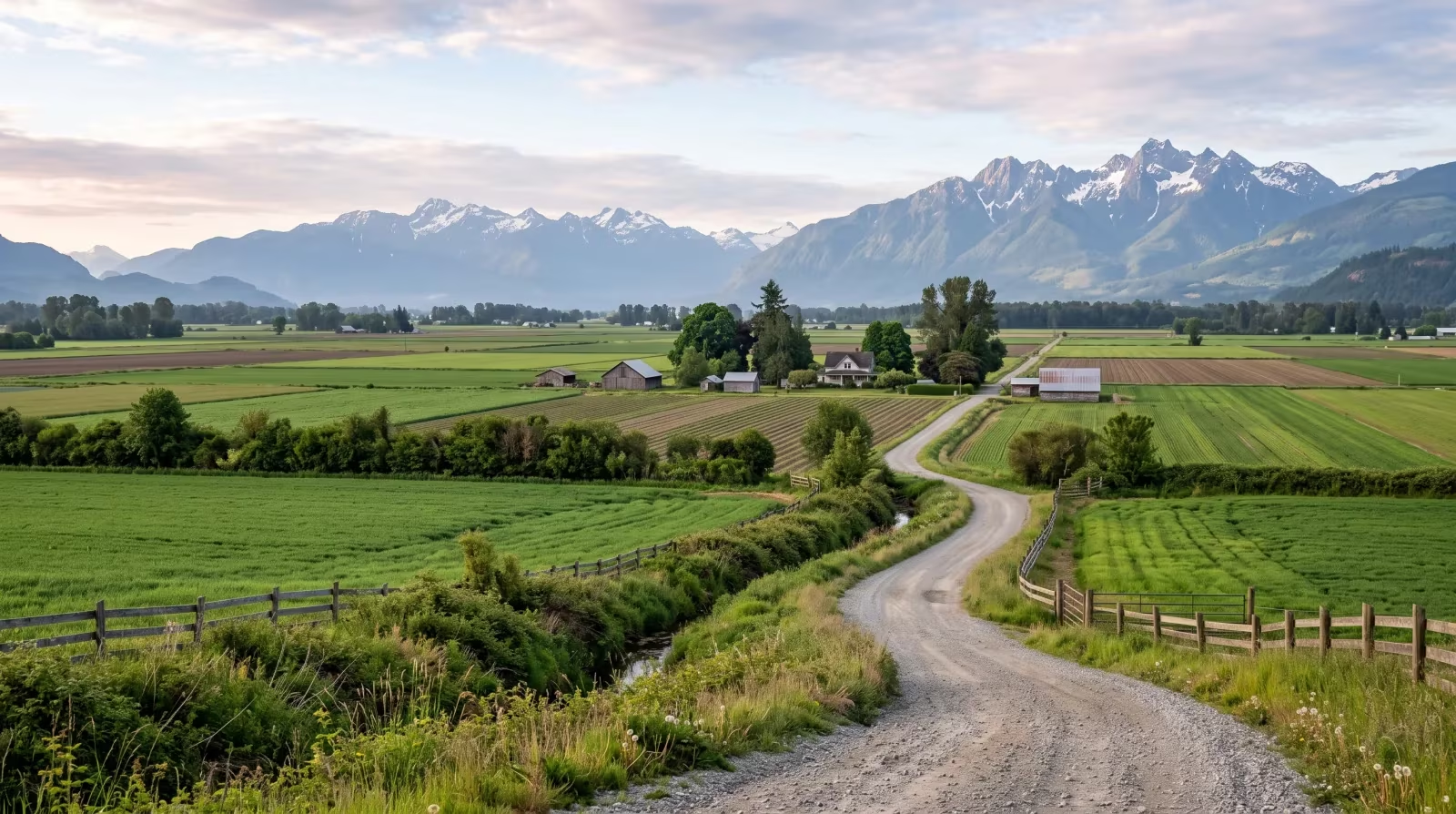

Acreage in the Fraser Valley looks like freedom until somebody reads the rules. A good portion of the farmland across Abbotsford, Chilliwack, Langley, and Mission sits inside the Agricultural Land Reserve, and the ALR shapes what you can build, how big, and whether you can ever divide the parcel.
What the ALR is
The Agricultural Land Reserve is a provincial land use designation that gives priority to agriculture. It is administered by the Provincial Agricultural Land Commission under the Agricultural Land Commission Act and the ALR Use Regulation.
For a buyer, the practical meaning is simple. Farming and related uses are what the land is protected for. Housing is permitted inside defined limits rather than as the primary purpose of the parcel.
That framing explains most of the specific rules that follow, and it is worth holding onto, because the rules make more sense when you read them as "housing is allowed, within limits" rather than as arbitrary restrictions.
The two approvals that both have to say yes
Here is the single most useful thing for a buyer to understand.
Local zoning and ALR rules are separate. According to the ALC's guidance on buying and owning land in the ALR, local zoning does not override ALR rules. Even where something is permitted by the municipality, it must also comply with ALR legislation.
We have watched buyers get comfortable after a friendly conversation at a city planning counter and then hit the provincial layer afterwards. A municipal yes is necessary and it is not sufficient.
So when you are checking whether you can do something on ALR land, you are checking twice.
What you can build
The ALC's housing in the ALR guidance sets out specific figures.
A principal residence must have a total floor area of 500 square metres or less. There is also a fill limit: no more than 1,000 square metres of fill for construction purposes.
For most first-time and move-up buyers, a 500 square metre cap is generous rather than restrictive. It becomes relevant for buyers planning something substantial, and it is a hard number rather than a guideline.
Second homes for family
This is the question we get most often, usually from buyers thinking about aging parents or adult children.
Properties may have one additional residence without ALC approval in defined circumstances. On properties of 40 hectares or less, the additional residence may be up to 90 square metres, provided the existing residence is 500 square metres or less. On properties larger than 40 hectares, the limit is up to 186 square metres.
A secondary suite is permitted where it is entirely contained within the principal residence. A separate detached dwelling is treated differently from a suite inside the house.
Local governments can apply further restrictions on top of the provincial rules, which brings us back to the two-approvals point.
If multi-generational living is your goal, our guide to multi-generational buying covers the wider question, and co-buying with family covers the ownership structure side.
Subdivision is tightly controlled
Buyers look at ten acres and see two five-acre parcels. The ALR generally does not.
Land can only be subdivided where permitted by regulation or approved by the Agricultural Land Commission. Approval is not a formality and should never be assumed as part of your purchase reasoning.
If your plan depends on subdividing, that plan needs verification before you write an offer, not after. A purchase premised on a subdivision that never gets approved is an expensive lesson.
Servicing changes too
Separate from the ALR rules themselves, rural Fraser Valley properties often come with different infrastructure than a suburban townhouse.
Many rely on a well for water and a septic system for waste rather than municipal services. Both need inspection before you buy and ongoing attention after. Our guides to well water flow and quality tests and septic inspections cover what those involve, and our rural buyer's guide to wells and septic covers the pair together.
Financing can also work differently. Acreage and agricultural property lending is not identical to standard residential lending, and not every lender treats it the same way. Talk to a mortgage broker with rural experience early rather than assuming your pre-approval transfers cleanly.
How to check before you commit
The sequence is straightforward.
Confirm whether the parcel is actually in the ALR. The ALC can confirm status if there is any uncertainty, and that is a free question with an expensive alternative.
Write down what you actually intend to do with the property. Build a house of a particular size, add a home for a parent, run a small operation, subdivide eventually. Then check each intention against both the ALR rules and local zoning.
Where the answer is unclear, get it in writing during your subject period. Our subject removal guide covers protecting enough time to do this properly.
Who ends up happy on ALR land
In our experience, the buyers who do well are the ones who wanted acreage for its own sake. Space, quiet, room for animals or a garden, a different pace than a townhouse complex. Those buyers fit comfortably inside the rules, because the rules permit a home and a life on the land.
The buyers who struggle are the ones whose numbers only worked if they could subdivide, or whose family plan required a detached second house that turns out not to be permitted. That disappointment is avoidable, and it is avoidable entirely at the research stage.
The short version
ALR land is ordinary to live on and specific to develop. A principal residence is capped at 500 square metres. One additional residence is permitted in defined circumstances at 90 or 186 square metres depending on parcel size. Suites are allowed inside the principal residence. Subdivision needs regulation or ALC approval.
Local zoning does not override any of it. Check both, in writing, before you remove subjects.
We are agents rather than land use planners or lawyers, and none of this is advice on your specific parcel. The ALC and your local government are the authorities, and your notary or lawyer should review title and any covenants before you complete.
Key takeaways
- The ALR is administered by the Provincial Agricultural Land Commission and prioritizes agricultural use.
- A principal residence is limited to 500 square metres of total floor area, with a 1,000 square metre fill limit for construction.
- One additional residence is permitted without ALC approval in defined circumstances, up to 90 square metres on parcels of 40 hectares or less and up to 186 square metres above that.
- A secondary suite is permitted when entirely contained within the principal residence.
- Local zoning does not override ALR rules, and subdivision requires regulation or ALC approval.
Frequently Asked Questions
What is the Agricultural Land Reserve?
The ALR is a provincial land use designation that prioritizes agriculture. It is administered by the Provincial Agricultural Land Commission under the Agricultural Land Commission Act and the ALR Use Regulation. A large share of Fraser Valley farmland sits inside it.
Can I build a house on ALR land?
Housing is permitted within limits. A principal residence on ALR land must have a total floor area of 500 square metres or less, and no more than 1,000 square metres of fill may be used for construction purposes.
Can I add a second home for family?
Properties may have one additional residence without ALC approval in defined circumstances. On properties of 40 hectares or less, an additional residence of up to 90 square metres is permitted if the existing residence is 500 square metres or less. On properties larger than 40 hectares the limit is up to 186 square metres.
Are secondary suites allowed in the ALR?
A secondary suite is permitted where it is entirely contained within the principal residence. A separate or detached dwelling is treated differently. Local governments can also apply further restrictions of their own.
Does local zoning override ALR rules?
No, and this is the point buyers most often get wrong. Even where something is permitted by local zoning, it must also comply with ALR legislation. You need both to say yes.
Can ALR land be subdivided?
Subdivision is tightly controlled. Land can only be subdivided where permitted by regulation or approved by the Agricultural Land Commission. Do not assume a large parcel can be split.
How do I confirm a property is in the ALR?
A potential purchaser should confirm whether the parcel is within the ALR and understand the permitted uses. If there is uncertainty about ALR status, the ALC can confirm it.
Do lenders treat ALR properties differently?
Acreage and agricultural property financing can differ from standard residential lending, and not every lender handles it the same way. Speak with a mortgage broker experienced with rural and acreage purchases early in your search.
What else changes on a rural Fraser Valley property?
Often the servicing. Many ALR properties rely on a well and a septic system rather than municipal water and sewer, which adds its own inspections and ongoing responsibilities to your purchase.
Is ALR land a bad purchase for a first-time buyer?
It is a different purchase rather than a worse one. Buyers who want acreage and understand the constraints can be very happy. Buyers who plan to subdivide, build large, or add detached housing for family need to verify what is actually permitted before they commit.
Sources
- Housing in the ALR, Provincial Agricultural Land Commission
- Buying and Owning Land in the ALR, Provincial Agricultural Land Commission
Verified September 1, 2026. General information only, not legal or land use advice. ALR rules are administered by the Provincial Agricultural Land Commission and can change. Confirm permitted uses for your specific parcel with the ALC and your local government.
Related FRIVE guides
- Well water and septic on rural Fraser Valley properties, how servicing changes outside city limits
- Septic system inspections, what to check before you buy
- Well water flow and quality tests, confirming the water supply
- SSMUH zoning in the Fraser Valley, how municipal density rules work elsewhere
- Co-buying with friends or family, the ownership side of a family plan
Next Steps: Work with FRIVE
Acreage in the Fraser Valley suits a particular kind of buyer, and the people who love it tend to love it a lot. The ones who run into trouble almost always had a plan that needed an approval nobody confirmed.
If you are looking at a rural property and want help checking what is actually permitted, start a conversation with the FRIVE team or browse current Fraser Valley listings.
Sources
- Housing in the ALR, Provincial Agricultural Land Commission
- Buying and Owning Land in the ALR, Provincial Agricultural Land Commission
Related guides
- Buying ProcessJoint Tenancy vs Tenancy in Common in BC: How You Hold Title Matters
- Buying ProcessFrom Accepted Offer to Keys: The BC Closing Timeline Week by Week
- Buying ProcessAppraisal vs Inspection in BC: Two Different Checks, Two Different Jobs
- Buying ProcessThe Builders Lien Holdback on a New BC Home
Found this useful? Share it.
A neighbour, a partner, a friend who's two FHSA contributions away, send it their way.