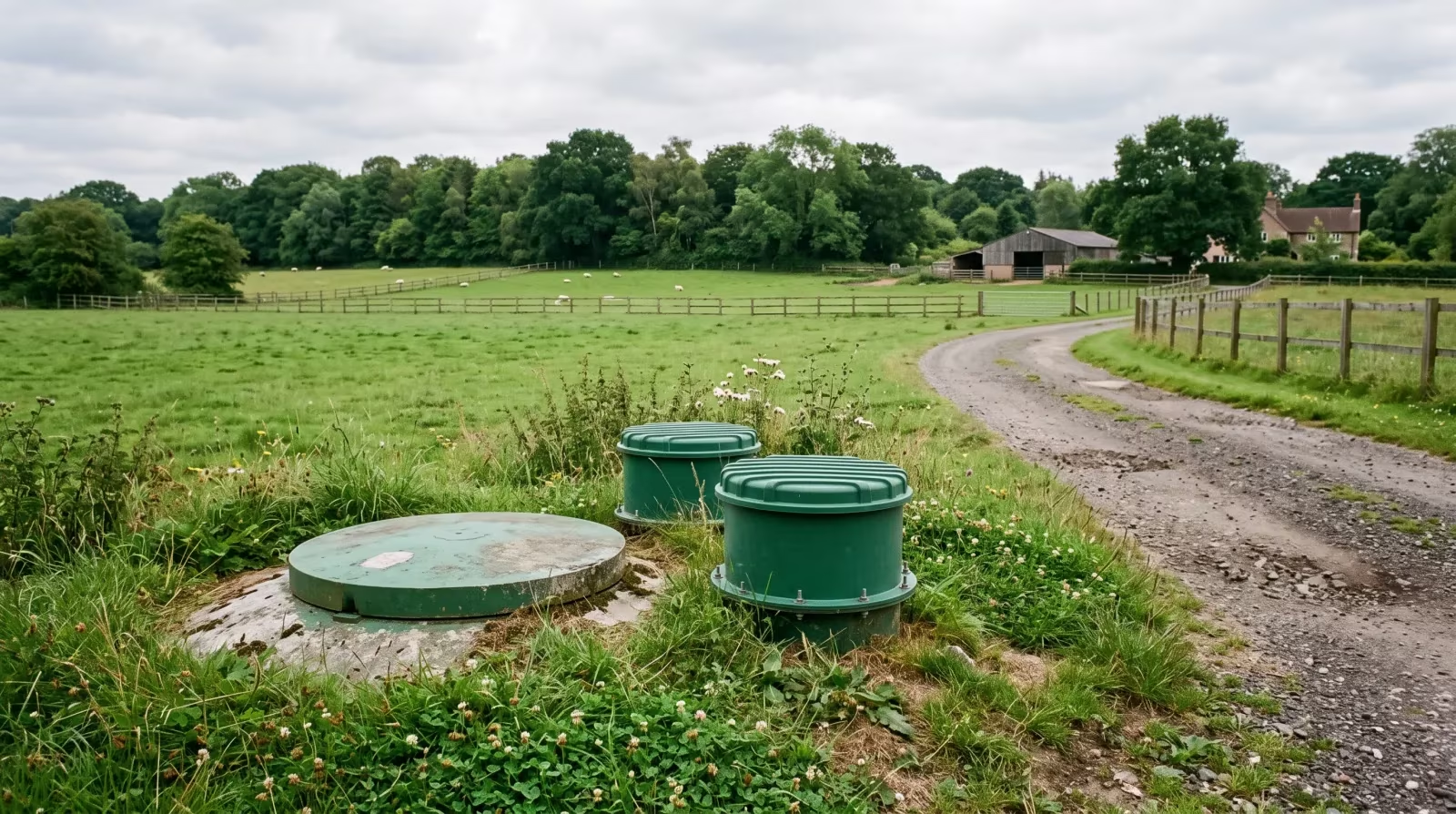

Buyers moving from a city townhouse to rural acreage bring a set of assumptions with them, and the most expensive one is that the home inspection covers everything. On a property with private services, it does not.
A separate inspection, by a different person
A standard home inspection does not assess a septic system. It is a separate service and it must be arranged specifically.
In BC, onsite sewerage work is framed by the Sewerage System Regulation, which uses the concept of an authorized person. That category includes registered onsite wastewater practitioners and professionals.
Ask about qualifications and registration before hiring someone. This is specialized work and the person doing it should be able to tell you exactly what they are registered to do.
What the inspection covers
A proper septic inspection locates the components, which on an older property is sometimes the first challenge.
It opens the tank and checks sludge and scum levels, assesses the condition of the tank and its baffles, evaluates the dispersal field, and reviews whatever records exist alongside the maintenance history.
None of that can be done by looking at the yard. That is why the assumption that a general inspection covers it is such a costly one.
The records to ask for
Three things.
A filing for the system with the health authority. The original design or as-built documentation. Maintenance records, including pump-out history.
Ask the seller and also check with the regional health authority. A property with complete records and a documented maintenance history is a very different purchase from one where nobody knows where the tank is.
Many BC onsite systems are required to have a maintenance plan, with owners expected to follow it. Ask whether one exists and whether it has been followed. That single question tells you a great deal about how the system has been treated.
Signs of trouble
While you walk the property, look for soggy ground or unusually green, lush grass over the dispersal field. Both suggest effluent reaching the surface.
Outdoor odours. Slow drains throughout the home rather than in one fixture. Sewage backing up.
Any of these warrant investigation before you remove subjects. Our subject removal guide covers protecting the time to arrange a specialist inspection, which takes longer to book than a general one.
It affects what you can build
This consideration surprises buyers and it deserves more attention than it gets.
The tank and the dispersal field occupy land that cannot be built on or driven over. Compaction damages a field, and building over one is not an option.
So if your plan for a rural property includes a shop, an addition, a pool, or a second driveway, get the system located before you design anything. The septic layout may decide where those things can go, or whether they can go anywhere.
The same logic applies alongside the other rural constraints. Our guides to the Agricultural Land Reserve and riparian setbacks cover the other layers that shape what a rural parcel allows.
Wells and septic together
Most properties with a septic system also have a well, and the two interact.
Setbacks between a dispersal field and a well are part of system design for good reason. Our guides to well water flow and quality testing and wells and septic on rural properties cover the water side.
Test both. They are separate inspections and they are both worth doing.
Financing and insurance
Lenders and insurers may ask about servicing on rural properties.
Confirm both during your subject period, exactly as you would for any property with private services. Our guide to insurance claim history covers why getting the quote early matters, and rural properties have more variables than suburban ones.
If a system has failed
Replacement is usually possible. What it costs and whether it is straightforward depends on soil conditions, lot size, setbacks from wells and watercourses, and the design required for the site.
Those variables are why a professional assessment before purchase is worth so much on rural property. A buyer who knows a replacement is likely can price it. A buyer who finds out in year one is dealing with a large unplanned expense and a household that still needs to use the plumbing.
The short version
A home inspection does not cover the septic system. Arrange a separate inspection by an authorized person during your subject period.
Ask for the health authority filing, the design or as-built documents, the maintenance plan, and the pump-out history. Walk the field looking for soggy ground and odours. Locate the system before planning any construction.
Test the well separately, and confirm financing and insurance for a property with private services.
We are agents rather than wastewater professionals, and none of this is a system assessment. An authorized person is the one who can tell you the condition of a specific system.
Key takeaways
- A standard home inspection does not assess a septic system, and a separate inspection is required.
- BC's Sewerage System Regulation frames this work around an authorized person, so check registration.
- Ask for the health authority filing, design or as-built documents, maintenance plan, and pump-out history.
- Soggy ground, unusually green grass over the field, odours, and slow drains throughout are warning signs.
- The tank and field occupy land that cannot be built on or driven over, which constrains future plans.
Frequently Asked Questions
Does a home inspection include the septic system?
Generally no. A standard home inspection does not assess a septic system. A septic inspection is a separate service performed by an authorized person, and it needs to be arranged specifically.
Who is qualified to inspect a septic system in BC?
BC's Sewerage System Regulation uses the concept of an authorized person, which includes registered onsite wastewater practitioners and professionals. Ask about qualifications and registration before hiring.
What does a septic inspection involve?
Locating the components, opening the tank for inspection, checking sludge and scum levels, assessing the condition of the tank and baffles, evaluating the dispersal field, and reviewing available records and the maintenance history.
How long does a septic system last?
It depends on the type, the soil, the installation quality, the household size, and how it has been maintained. A well-maintained system can serve for decades, and a neglected one can fail much sooner. An inspection tells you about the specific system.
What records should exist?
A filing for the system with the health authority, the original design or as-built documentation, and maintenance records including pump-out history. Ask the seller and check with the regional health authority.
What is a maintenance plan?
Many BC onsite systems are required to have a maintenance plan, and owners are expected to follow it. Ask whether one exists for the property and whether it has been followed, since that affects the system's condition and your obligations as owner.
What are signs of a failing system?
Soggy ground or unusually green grass over the dispersal field, odours outdoors, slow drains throughout the home, and sewage backing up. Any of these warrant investigation before you remove subjects.
How does a septic system affect what I can build?
The system and its field occupy land that cannot be built on or driven over, which constrains where an addition, garage, or pool can go. Get the system located before planning anything.
Does it affect financing or insurance?
Lenders and insurers may ask about servicing on rural properties. Confirm both during your subject period, as you would for any property with private services.
Can a failed system be replaced?
Usually, though cost and feasibility depend on soil conditions, lot size, setbacks from wells and watercourses, and the design required. This is why a professional assessment before purchase matters so much on rural property.
Sources
- Sewerage System Regulation, Government of British Columbia
- Onsite Sewage Systems, Province of British Columbia
Verified September 1, 2026. General information only, not a system assessment or regulatory advice. Requirements are administered by regional health authorities. Retain an authorized person for a specific property.
Related FRIVE guides
- Well water flow and quality tests, the other private service to check
- Well water and septic on rural properties, the pair together
- Buying in the Agricultural Land Reserve, rural land use constraints
- Riparian setbacks near creeks, setbacks that shape a rural lot
- Home inspection guide, what a general inspection does cover
Next Steps: Work with FRIVE
Rural properties in Mission, east Abbotsford, and the Chilliwack area come with a different due diligence list than a townhouse in Willoughby, and septic is the item buyers most often leave out.
If you are shopping outside municipal services and want a checklist that fits, start a conversation with the FRIVE team or browse current Fraser Valley listings.
Sources
- Sewerage System Regulation, Government of British Columbia
- Onsite Sewage Systems, Province of British Columbia
Related guides
Found this useful? Share it.
A neighbour, a partner, a friend who's two FHSA contributions away, send it their way.