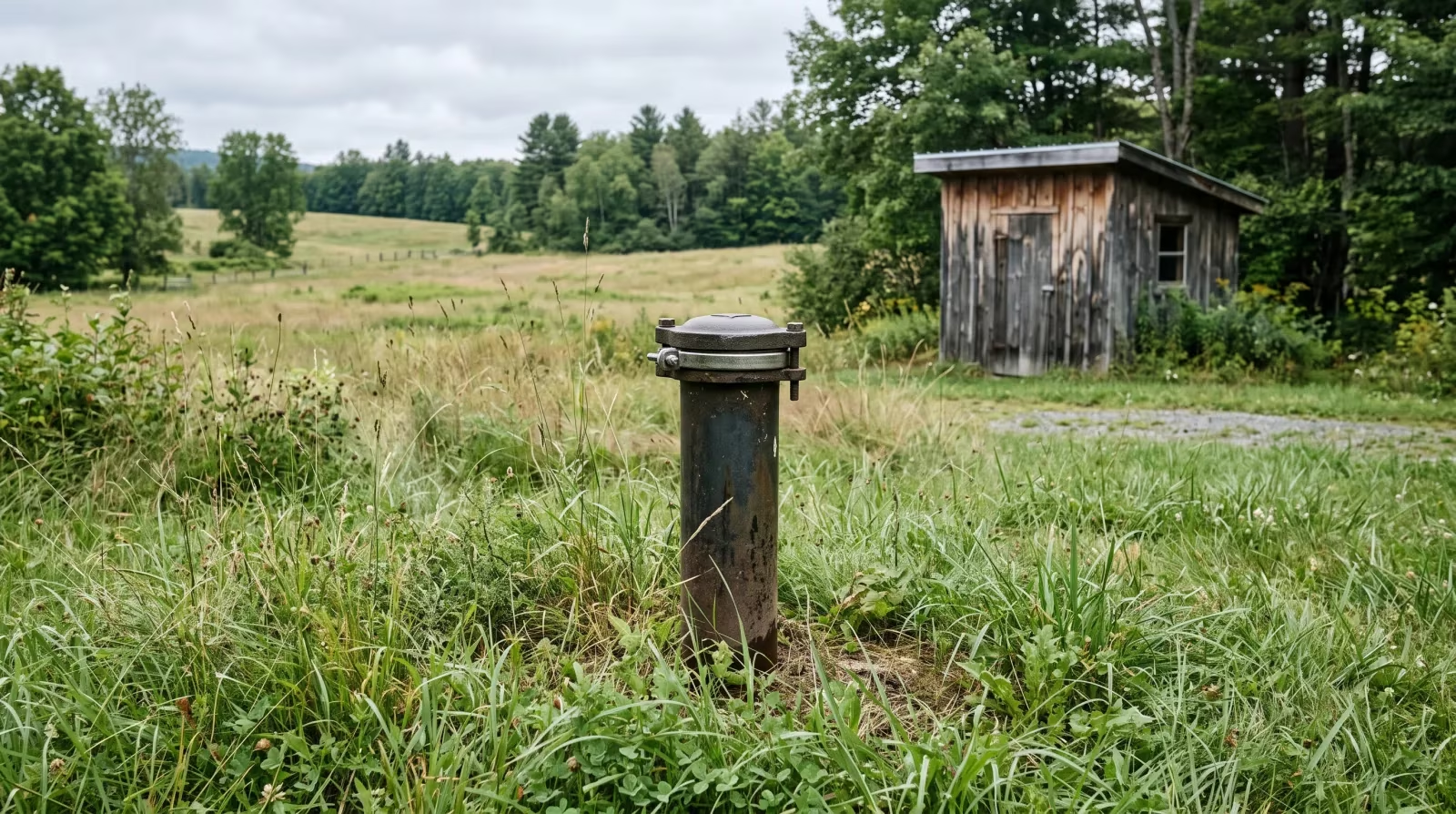

Buyers looking at rural Fraser Valley property tend to think of the well as one item on a list. It is really two questions with different answers, and neither is covered by a home inspection.
Quantity and quality are different tests
The first question is how much water the well produces. The second is whether that water is safe to drink.
A well can deliver plenty of water that needs treatment. It can also deliver clean water in quantities that will not comfortably serve a household. Those are different problems with different solutions, and testing one tells you nothing about the other.
Arrange both during your subject period. Our subject removal guide covers protecting enough time, and specialist testing takes longer to book than a general inspection.
What a flow test tells you
A flow or yield test measures how much water the well can sustainably deliver, usually expressed as a rate over a period of pumping.
Duration is the detail that matters. A well may deliver well for a short burst and struggle under sustained draw. A household running two showers and a dishwasher is a sustained draw, so a test that runs long enough to show performance over time is more useful than a brief one.
Ask what duration is being used and why.
Seasonal variation is real
Yields vary through the year, and late summer is typically the low period in our region.
A flow test in April tells you less than one in September. If you are testing in spring, ask the seller directly how the well performs in a dry August, and ask neighbours if you get the chance. Seasonal decline is normal rather than something to hide, and most rural owners will tell you honestly.
Yields can also decline over the longer term. That is one reason the well log, while useful, is background rather than a current measurement.
The well log
A well log records the well's construction, including depth, casing, and often the yield observed at the time of drilling.
BC's Water Sustainability Act brought groundwater into the provincial licensing framework, and there is a well registration system. The province maintains information on groundwater wells and aquifers.
Ask whether the well is registered and what documentation exists. A property with a proper log and registration is easier to understand than one where nobody knows the depth.
Water quality testing
Bacteriological testing for total coliforms and E. coli is the baseline. That is the test that answers the immediate safety question.
Beyond that, what to test for depends on local conditions. Nitrates, arsenic, manganese, iron, and hardness all come up in different areas for different reasons. Ask the lab what is recommended for that specific area rather than ordering a generic panel and hoping it covers the right things.
Testing is inexpensive relative to what it tells you, and relative to a treatment system installed for the wrong problem.
If the water needs treatment
Treatment systems address a wide range of issues, from disinfection through to filtration for specific contaminants.
What matters is knowing precisely what you are treating. A system sized and specified for the actual test results works. A general purpose system bought without testing may not address the real issue.
Ask about the equipment cost, the installation, and the ongoing maintenance, because filters and disinfection systems need servicing and consumables. That is a recurring cost in your ownership budget rather than a one-time purchase.
The septic relationship
Have the septic system located as well, because the relationship between a dispersal field and a well is a water safety matter.
Setbacks between the two are part of onsite system design under BC's regulatory framework. Our guide to septic inspections covers that side, and wells and septic on rural properties covers the pair together.
On a rural property, testing both is standard practice rather than excessive caution.
Other rural considerations
Well and septic sit alongside the other things that make rural purchases different.
Land use rules through the Agricultural Land Reserve, riparian setbacks where there is a watercourse, and financing that works differently on acreage. Talk to a mortgage broker with rural experience early.
Lenders and insurers may ask about servicing. Confirm both during your subject period.
The short version
Test flow and test quality. They answer different questions and a home inspection covers neither.
Pay attention to test duration and to the season. Ask for the well log and registration. Start water quality testing with bacteriological analysis and add parameters based on local advice. Locate the septic field too.
Then price any treatment based on actual results rather than assumption.
We are agents rather than hydrogeologists or water quality professionals, and none of this is a technical assessment. Qualified testing professionals and your regional health authority are the sources for a specific property.
Key takeaways
- Flow testing and water quality testing answer different questions and both are needed.
- A home inspection does not test a well, so arrange testing separately.
- Test duration matters, because sustained delivery differs from a short burst of good flow.
- Late summer is typically the low yield period, so consider when the test is being run.
- Locate the septic dispersal field as well, since setbacks from the well are a water safety matter.
Frequently Asked Questions
What are the two tests a well needs?
A flow or yield test, which measures how much water the well produces over time, and a water quality test, which analyzes what is in the water. They answer different questions and you want both.
Does a home inspection cover the well?
No. Well testing is a separate service arranged specifically. A home inspector may note the visible equipment, and that is different from testing yield or analyzing water quality.
What does a flow test measure?
How much water the well can sustainably deliver, usually expressed as a rate over a period of pumping. A short burst of good flow is different from sustained delivery, which is why the duration of the test matters.
What should water quality testing look for?
Bacteriological testing for total coliforms and E. coli is the baseline. Depending on the area, testing may also cover nitrates, arsenic, manganese, iron, hardness, and other parameters. Ask the lab what is recommended locally.
Is well water registered in BC?
BC's Water Sustainability Act brought groundwater into the licensing framework, and there is a provincial well registration system. Ask whether the well is registered and what documentation exists.
What is a well log?
A record of the well's construction, including depth, casing, and often the yield observed at the time of drilling. It is useful background, and it describes the well as built rather than its current performance.
Can a well run dry?
Yields can decline, and seasonal variation is normal, with late summer typically being the low period. That is why the timing of a flow test matters and why asking the seller about seasonal performance is worthwhile.
What if the water quality test fails?
Treatment systems address many issues, from disinfection through to filtration for specific contaminants. What matters is knowing what you are treating, what the equipment costs, and what ongoing maintenance it needs.
Does the well affect insurance or financing?
Lenders and insurers may ask about servicing on rural properties. Confirm both during your subject period as you would for any property with private services.
How close can a septic field be to a well?
Setbacks between a dispersal field and a well are part of onsite system design under BC's regulatory framework. Have both systems located, since their relationship matters for water safety.
Sources
- Water Sustainability Act, Government of British Columbia
- Groundwater Wells and Aquifers, Province of British Columbia
Verified September 1, 2026. General information only, not a water quality or hydrogeological assessment. Testing recommendations vary by area. Consult qualified testing professionals and your regional health authority.
Related FRIVE guides
- Septic system inspections, the other private service
- Well water and septic on rural properties, the pair together
- Buying in the Agricultural Land Reserve, rural land use rules
- Mortgage broker vs bank, financing acreage
- Subject removal in BC, leaving time for specialist testing
Next Steps: Work with FRIVE
Rural buyers who test properly rarely regret the few hundred dollars it costs. The ones who skip it are the ones calling a well driller in August of their first year.
If you are looking outside municipal services and want a due diligence list that matches, start a conversation with the FRIVE team or browse current Fraser Valley listings.
Sources
- Water Sustainability Act, Government of British Columbia
- Groundwater Wells and Aquifers, Province of British Columbia
Related guides
Found this useful? Share it.
A neighbour, a partner, a friend who's two FHSA contributions away, send it their way.