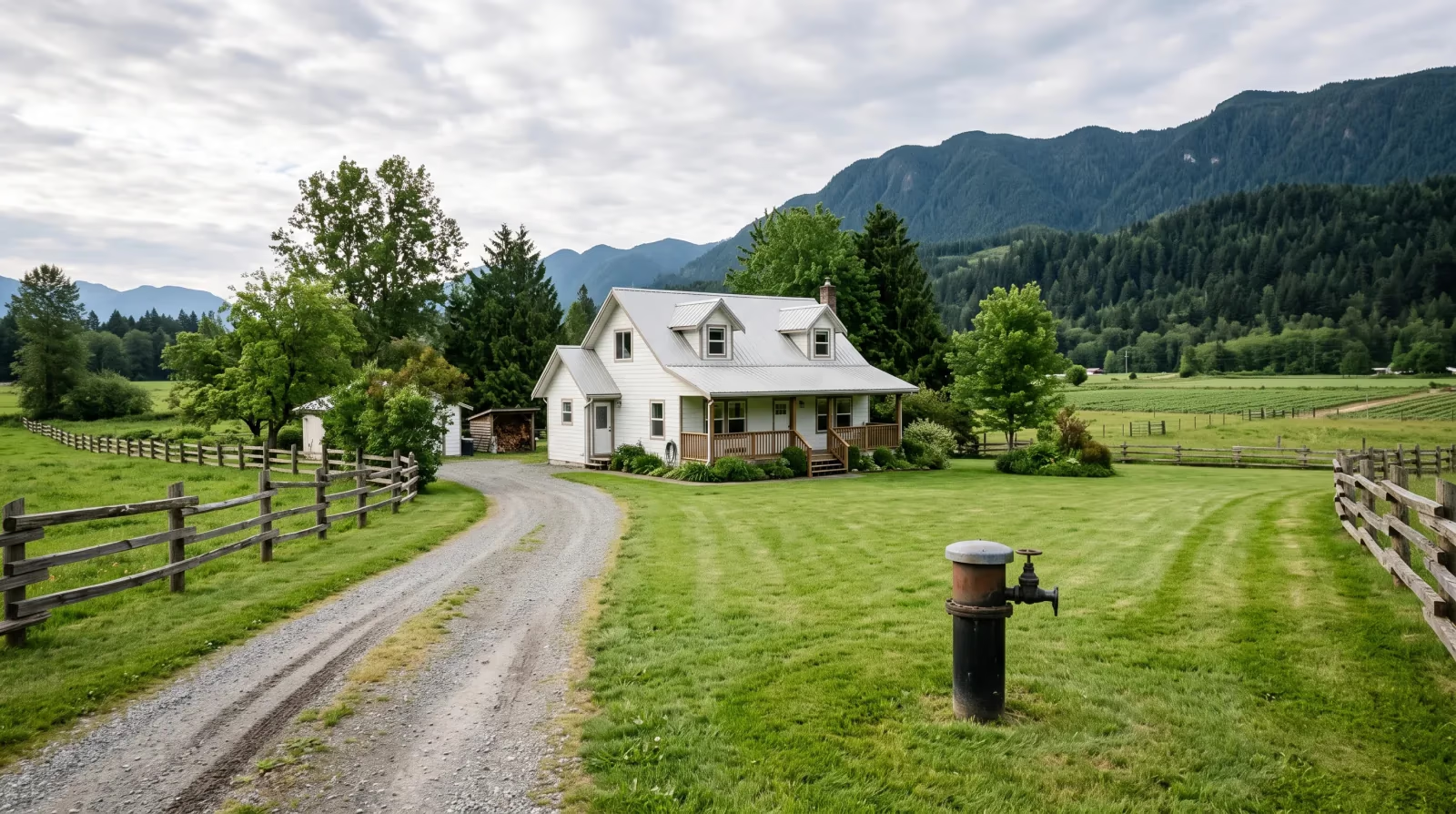

Once you look at homes outside municipal service areas around Mission, Abbotsford, Chilliwack, Maple Ridge, or rural Langley, you start seeing properties on a private well and an onsite septic system. Buyers are usually drawn by the land and the price per square foot. What they don't always register is that they're also taking on a small water supply and a small wastewater treatment system, both of which are theirs to maintain, and neither of which gets proper attention in a standard home inspection.
The mental shift: you own the utilities now
On a municipal connection, water arrives treated and wastewater leaves to be treated somewhere else. Both are somebody else's responsibility, funded through utility charges.
On a well and septic property, that responsibility is yours. The well is your water supply, and its quality and quantity are your problem. The septic system treats your household wastewater on your own land, and if it fails you pay to replace it. Neither has a utility to call.
That's not a reason to avoid rural property. Plenty of buyers we work with are perfectly happy with the trade. It's a reason to run a different due-diligence checklist than the one you'd use on a Willoughby townhouse, and to build enough time into your subject period to actually complete it.
What to check on the well
Fraser Health publishes specific guidance for people buying a home with a well. It's short, practical, and worth reading in full. The main pieces follow.
Get the well driller's log. This is the record created when the well was drilled. It shows the depth, what the drill passed through, how much water the well produced, and what materials it was built with. Ask the seller for it. It tells you about the part of the asset you cannot see, which is nearly all of it.
Test the water for potability. Fraser Health directs buyers to contact a laboratory for a potability test, and to use only labs approved by the Provincial Health Officer. Labs typically supply a collection kit with instructions, or you can hire a professional to collect the sample properly. Sample collection technique matters, since a contaminated sample from a dirty tap tells you about the tap.
Test the yield, not just the quality. These are separate questions and buyers conflate them constantly. A well can produce perfectly clean water and still not produce enough of it. Fraser Health recommends a well yield test by a qualified professional, measuring output in litres per minute, and suggests comparing that against household need using a planning figure of roughly 490 litres per person per day.
Check what's near the well. Fraser Health advises that potential contamination sources, including septic fields and livestock areas, sit a minimum of 100 feet (30 metres) away. On a property with animals or a neighbouring farm operation, walk the distances rather than assuming.
Inspect the wellhead. Look for adequate casing height above grade, no visible damage, a secure cap, and ground sloping away so surface water doesn't pool around it. Water pooling at a wellhead is a direct route for surface contamination to reach your drinking water.
Talk to the neighbours. Fraser Health suggests this and it's genuinely useful. Neighbours on the same aquifer will tell you whether wells in the area run low in late summer, or whether anyone has had quality problems. It's the kind of information no report will give you.
What to check on the septic system
The septic side has a rule that shapes everything else. Under BC's Sewerage System Regulation, only an Authorized Person may design, install, repair, maintain, or inspect a sewerage system. An Authorized Person means a Professional Engineer or a Registered Onsite Wastewater Practitioner (ROWP).
That matters for two reasons. It tells you who to hire for a proper inspection, and it gives you a question to ask about the system's history: was past work done by an Authorized Person, and is there documentation? A system repaired by an unqualified party is a system with an unknown condition and a paper trail problem.
If a house has indoor plumbing and is not connected to community sewer, it must have an onsite system compliant with the regulation. Ask for the filing or permit documentation, maintenance records, and the date the tank was last pumped. Ask where the tank and drain field actually are, and get that marked, because you'll want to know before you plan a driveway, a shed, or a garden.
Arrange a separate septic inspection. This is the part buyers skip and shouldn't. A general home inspection is not a septic inspection, and most inspectors explicitly exclude it from their scope. Our home inspection guide covers what a standard inspection does include, and septic isn't on that list in any meaningful way. Replacing a failed system is a large expense, which makes it exactly the kind of thing you want assessed before subjects come off rather than after.
Warning signs you can notice yourself at a showing: drains that run slowly throughout the house, sewage smells outside near the field, and grass over the drain field that's unusually lush or wet compared to the rest of the lawn. Any of those justify a professional look.
Financing and insurance need early warning
Tell your mortgage broker at the outset that the property runs on well and septic. Some lenders want documentation, commonly a potability test result or confirmation that the septic system functions, before they'll fund.
This is a timing problem more than a difficulty problem. Lab turnaround on a water test takes time, and a septic inspection needs to be booked with a qualified professional who may not be available tomorrow. A lender requirement that surfaces two days before your subject-removal deadline turns a manageable request into a crisis. Our closing timeline guide shows where financing normally sits in the sequence, and on a rural property you want to be running ahead of that.
Insurance deserves the same early call. Ask your broker what they need to know about the water source and wastewater system before quoting.
What this looks like in the Fraser Valley
Rural and semi-rural properties around Mission, Abbotsford, Chilliwack, Maple Ridge, and the rural edges of Langley commonly run on well and septic. That's where buyers find larger lots and, often, a different price per square foot than they'd see in a serviced subdivision.
The trade is real in both directions. You get land and quiet. You take on utility responsibility, a longer commute in most cases, and a due-diligence list with items that don't exist in town. Our Mission first-time buyer guide and Chilliwack guide cover the broader picture of buying in those markets, including the commute question that usually decides it.
One more thing worth knowing if you're looking at low-lying rural land in the eastern valley: water table and flooding are separate considerations from well and septic, but they interact. A high water table affects how a septic system performs. Our Fraser Valley flood risk guide covers that side.
Building the right subject period
The practical takeaway is about time. On a serviced townhouse, a one-week subject period can be enough. On a well-and-septic property you're coordinating a lab test, a yield test, a septic inspection by an Authorized Person, a general home inspection, and possibly extra lender requirements on top.
Ask your agent to negotiate a subject period that fits that reality. A seller who understands why you need the extra days will usually accommodate it, particularly in a market where buyers have room to negotiate. Rushing this list is how people end up owning a well that runs dry in August.
We're agents, not water quality or wastewater professionals. Use Fraser Health's published guidance as your reference, hire the qualified people for the actual assessments, and treat their reports as the answer rather than anything you read here.
Key takeaways
- On a well and septic property, water supply and wastewater treatment become your responsibility, with no utility to call.
- Fraser Health recommends a potability test through a Provincial Health Officer approved lab, a well yield test, the driller's log, and a minimum 100 foot (30 metre) separation from contamination sources.
- Water quality and water quantity are separate questions. Test both.
- In BC, only an Authorized Person (Professional Engineer or ROWP) may inspect or work on a sewerage system, and a general home inspection does not cover septic.
- Tell your mortgage broker and insurance broker early, and negotiate a longer subject period than you'd need on a serviced property.
Frequently Asked Questions
What should I test when buying a home with a well?
Fraser Health recommends contacting a certified laboratory for a potability test on the drinking water. Use only labs approved by the Provincial Health Officer. Beyond water quality, have a qualified professional run a well yield test to confirm the well produces enough water for the household.
How far should a well be from a septic field?
Fraser Health advises that potential contamination sources, including septic fields and livestock areas, be a minimum of 100 feet (30 metres) from the well. Confirm the actual separation on the specific property rather than assuming it meets the recommendation.
What is a well yield test?
It measures how many litres per minute the well can produce, which tells you whether supply meets household demand. Fraser Health uses a planning figure of roughly 490 litres per person per day. A qualified professional should perform the test.
What is a well driller's log and why does it matter?
It is the record created when the well was drilled, showing depth, soil and rock composition, water production volume, and construction materials. Request it from the seller. It tells you what you are actually buying rather than what is visible at the surface.
Who is allowed to work on a septic system in BC?
Under the Sewerage System Regulation, only an Authorized Person may design, install, repair, maintain, or inspect a sewerage system. An Authorized Person is a Professional Engineer or a Registered Onsite Wastewater Practitioner (ROWP). Ask for credentials before hiring anyone.
Does a standard home inspection cover the septic system?
Usually not in any meaningful way. A general home inspection is not a septic inspection, and inspectors typically exclude it. Arrange a separate inspection by an Authorized Person, because replacing a failed system is a large expense.
Can I get a mortgage on a property with a well and septic?
Yes, though some lenders ask for documentation such as a potability test or confirmation the septic system functions. Tell your mortgage broker early that the property is on well and septic so any lender requirements surface before your subject-removal deadline.
How often should well water be tested after I move in?
Test regularly rather than only at purchase, since water quality changes over time. Bacteria and nitrates are common parameters, and the appropriate schedule depends on the well and local conditions. Fraser Health's environmental health officers can advise on a specific property.
What are the warning signs of a failing septic system?
Slow drains throughout the house, sewage odours near the field, unusually lush or wet patches over the drain field, and backups. Any of these on a showing warrants a professional septic inspection before you go further.
Are wells and septic systems common in the Fraser Valley?
On rural and semi-rural properties, yes. Homes outside municipal service areas around Mission, Abbotsford, Chilliwack, Maple Ridge, and rural Langley commonly rely on a private well and an onsite sewerage system rather than municipal water and sewer.
Should I ask where the tank and drain field are located?
Yes, and get it documented. You need to know before planning a driveway, outbuilding, or garden, since driving over or building on a drain field can damage it. The seller or the system's records should be able to show you the layout.
Sources
- Fraser Health - Buying a home with a well
- Fraser Health - Regulatory requirements for onsite sewerage systems
- Fraser Health - Onsite sewerage systems
Data verified August 31, 2026. Health authority guidance and regulations change. Consult Fraser Health, a certified laboratory, and an Authorized Person about a specific property.
Related FRIVE guides
- Home inspection guide for BC first-time buyers, what a general inspection covers and what it leaves out
- Mission BC first-time buyer guide, the market where rural-edge listings come up most often
- Chilliwack first-time buyer guide, pricing and commute realities at the east end of the valley
- Flood risk in the Fraser Valley, how water table and flooding affect low-lying rural land
- Subject removal in BC, how to build a condition period long enough for rural due diligence
Next Steps: Work with FRIVE
Rural-edge properties in the Fraser Valley can be very good buys, and the extra homework is manageable once you know what's on the list. What causes trouble is treating a well-and-septic property like a serviced one and discovering the difference after possession.
If you're looking outside the municipal service areas and want help scoping the due diligence, get in touch with the FRIVE team, start a conversation or browse current Fraser Valley listings. We'll help you build a subject period that fits what the property actually needs.
Sources
- Buying a home with a well, Fraser Health
- Regulatory requirements for onsite sewerage systems, Fraser Health
- Onsite sewerage systems, Fraser Health
Related guides
- Home Inspection & Due DiligenceFormer Grow-Op Homes in BC: Why the Discount Is Bigger Than It Looks
- Home Inspection & Due DiligenceBuried Oil Tanks: The BC Liability That Follows the Property, Not the Person
- Home Inspection & Due DiligenceRadon Testing for Fraser Valley Home Buyers: What to Ask Before You Close
- Hub - Closing the DealFrom Accepted Offer to Keys: How Closing Actually Works in BC
Found this useful? Share it.
A neighbour, a partner, a friend who's two FHSA contributions away, send it their way.