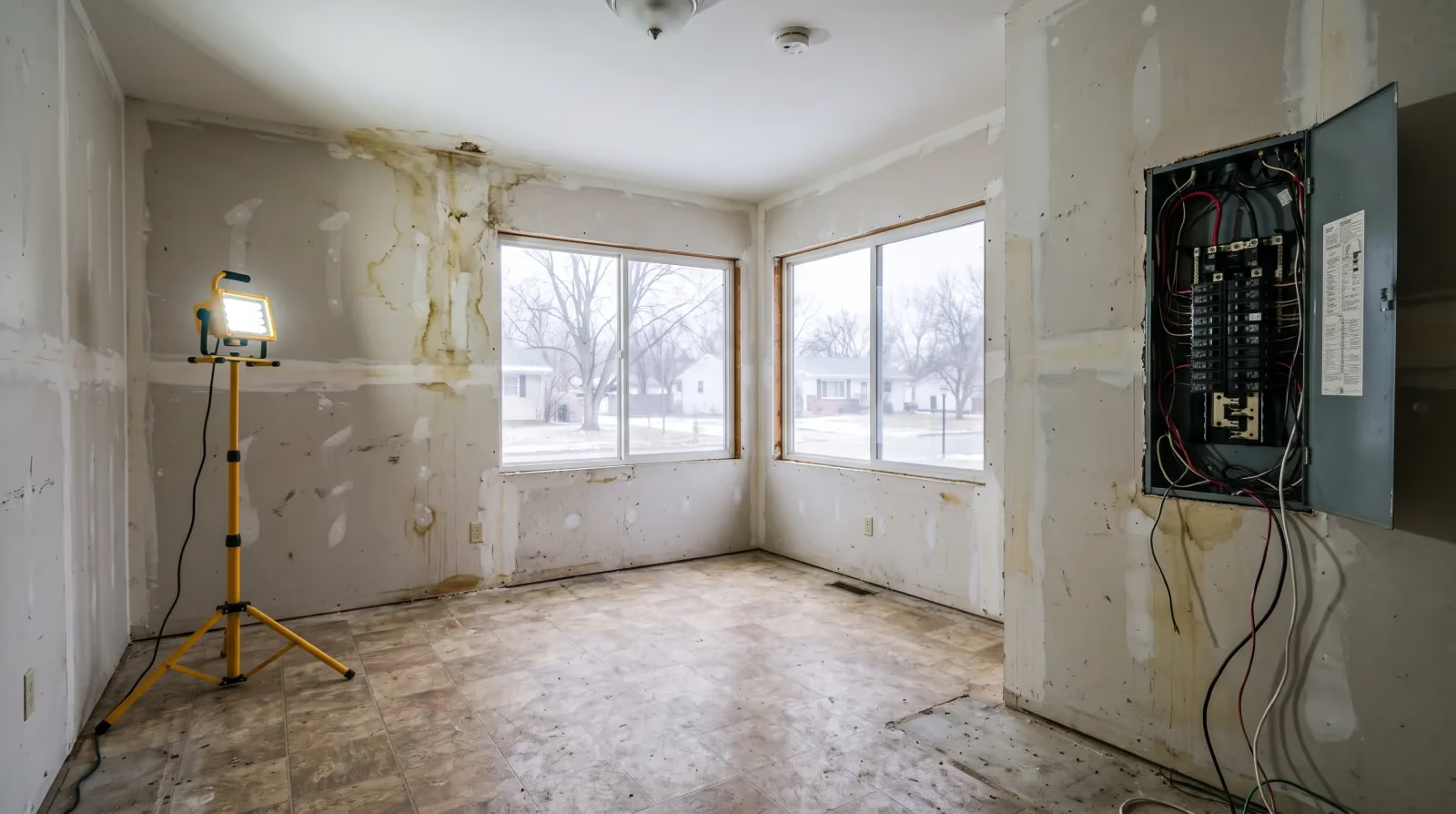

Every so often a listing comes up priced well under everything comparable around it, and the reason turns out to be a former grow operation in the property's history. Buyers ask us a reasonable question about these: if the damage has been properly repaired, why is it still cheap? The answer is that the physical repairs and the market constraint are two different things, and only one of them can be fixed.
What actually happened to the building
Cannabis cultivation at scale inside a house does specific things to it. Sustained high humidity over months or years drives moisture into building materials. Ventilation gets modified or defeated to control odour and climate. Electrical systems get altered, frequently without permits, to carry loads the house was never wired for.
The result is usually moisture damage and mould inside wall assemblies, plus unpermitted electrical work. Almost none of that is visible at a showing. A house can be freshly painted, cleanly staged, and still be carrying every one of these problems behind the drywall.
This is why a standard walkthrough is worthless as an assessment here, and why buyers who rely on how a place looks get into trouble.
The disclosure obligation, and what it means long-term
In British Columbia the Property Disclosure Statement includes a question asking whether the seller is aware that the premises have been used to grow cannabis other than as permitted by law, or to manufacture illegal substances. A seller cannot misrepresent what they know.
The important consequence is that this history travels. Each time the property changes hands, the disclosure goes to the next buyer. Remediation repairs the building. It does not erase the question on the form or the answer to it.
That single fact drives everything else in this article. The BC Financial Services Authority publishes guidelines for real estate professionals on residential cannabis properties, and BCREA has published practice guidance for licensees on these transactions. Both exist because these files carry obligations that ordinary transactions don't.
Our general Property Disclosure Statement guide covers how the form works. This is the item on it with the longest tail.
Financing is the first wall you hit
Buyers usually assume the obstacle will be the condition of the house. More often it's the mortgage.
Many lenders decline former grow-op properties outright. Not price them differently, decline them. Others will consider the file but require additional inspections before committing. Some financial institutions apply scrutiny even where cannabis growing was legal, requiring further property inspection.
What this means practically: do not treat a financing condition as a formality here. Tell your mortgage broker the property's history at the very start of the conversation, before you write, and get confirmation that a specific lender will fund this specific property. A pre-approval issued against your income tells you nothing about whether a lender will accept this house as security. Our guide on pre-qualification versus pre-approval explains why those are different animals, and this is a case where the distinction bites hard.
Build a longer financing condition than you normally would, because your broker may need to approach several lenders in sequence.
Insurance is the second wall, and it feeds back into the first
Some insurers have a blanket prohibition on insuring properties where cannabis has been cultivated. Others will consider them with conditions.
Here's the chain that catches people. Your lender requires property insurance as a condition of funding. If you cannot obtain insurance, you cannot satisfy the lender. An insurance refusal therefore becomes a financing failure, usually discovered late, because buyers tend to handle insurance in the final week before completion.
On a property like this, call your insurance broker the day you learn the history. Ask directly whether they will quote it, what documentation they need, and whether remediation records change their answer. Do it before your subject removal date, not after. Our closing timeline guide shows where insurance normally falls in the sequence, and this is a situation to run well ahead of that.
What proper remediation looks like on paper
If you're going forward, the documentation package is the whole ballgame. Ask for all of it:
The scope of work performed, in detail. The credentials of the contractors who did it. Municipal permits pulled for the electrical and any structural work, with final inspections signed off. Air quality testing results. Mould clearance documentation from a qualified party.
A statement that "it was all remediated" carries no weight. Neither does a stack of receipts without permits. What you want is a file that a future lender, insurer, and buyer can review and accept, because you will need exactly that when you sell.
Have your own inspector review the package rather than accepting the seller's summary of it. And arrange a targeted inspection beyond the standard one: someone qualified to assess moisture levels, mould, and the electrical system specifically. Concerns on these properties centre on mould growth, excess moisture, and alterations to the electrical system, and a general inspection is not built to evaluate those in depth. Our home inspection guide covers what a standard inspection does and doesn't reach.
Why the discount does not disappear
This is the part we want first-time buyers to sit with.
The reason the property is cheap is that the pool of people who can buy it is small. Buyers who can't secure financing are out. Buyers who can't get insurance are out. Buyers who simply won't consider the history are out. What remains is a narrow group, and narrow demand produces a lower price.
None of those constraints lift because you completed the remediation. The disclosure still goes to the next buyer. The lenders still decline. The insurers still hesitate. When you sell, you're selling into the same small pool that let you buy cheaply, and you'll grant a similar discount on the way out.
So the discount is not a mispricing you spotted. It's the market pricing a permanent constraint accurately. That can still be a sensible purchase for the right person: someone with cash rather than lender dependence, a long holding period, and a clear-eyed view of the exit. It's rarely the right purchase for a first-time buyer using standard financing who expects to move up in a few years, which describes most of the people we work with.
What we'd tell a buyer considering one
Get the full remediation file before you get emotionally attached. Call your mortgage broker and your insurance broker before you write, not after. Arrange a specialized inspection, not just a general one. And run the numbers on selling in five or seven years, assuming a similar discount applies, before you decide the entry price is a bargain.
If any of those steps produce a shrug or a delay from the seller's side, take the shrug seriously. On a property with this history, a seller who cannot produce documentation is telling you what the documentation would say.
If you've already bought and discovered the history afterward, talk to a BC lawyer promptly. Whether you have recourse depends on what was disclosed, what the seller knew, and your contract terms, and there are time limits involved. That's a legal question and we're not the right people to answer it.
Key takeaways
- The physical damage from a grow operation is remediable, but the disclosure carries forward to every subsequent sale.
- Many lenders decline these properties outright, so confirm a specific lender will fund the specific home before removing your financing condition.
- Some insurers will not write a policy at all, and an insurance refusal becomes a financing failure.
- Demand the complete remediation package: scope, credentials, permits with final inspections, air quality results, and mould clearance.
- The discount persists at resale because the constraints on the buyer pool do not go away.
Frequently Asked Questions
What is a former grow-op property?
A home previously used to cultivate cannabis, typically outside what was permitted by law, often with modified electrical systems, defeated ventilation, and sustained high humidity. The physical legacy is usually moisture damage, mould, and unpermitted electrical work rather than anything visible at a showing.
Does a seller have to disclose a former grow operation in BC?
The Property Disclosure Statement includes a question asking whether the seller is aware the premises have been used to grow cannabis other than as permitted by law, or to manufacture illegal substances. A seller cannot misrepresent what they know, and the disclosure carries forward to later sales.
Can I get a mortgage on a former grow-op home?
It is harder. Many lenders decline these properties outright, and those that will lend may require additional inspections or price the loan differently. Confirm with your mortgage broker that a specific lender will fund the specific property before you remove your financing condition.
Can I insure a former grow-op property?
Some insurers decline to write policies on properties where cannabis has been cultivated. Because your lender requires insurance to fund, an insurance refusal becomes a financing failure. Contact your insurance broker as soon as you learn the history, not after subject removal.
What does remediation of a grow-op involve?
Typically removal of contaminated building materials, mould remediation, correction of unpermitted electrical and ventilation work, and air quality verification. The work should be done by qualified professionals with permits, and the documentation is what future buyers and lenders will want to see.
How do I know if remediation was done properly?
Ask for the complete package: scope of work, contractor credentials, municipal permits and final inspections, air quality testing results, and mould clearance documentation. A verbal assurance that it was fixed is not evidence. Have your own inspector review the file.
Should I get a special inspection?
Yes. Beyond a standard home inspection, arrange for someone qualified to assess moisture, mould, and the electrical system specifically. Concerns include mould growth, excess moisture, and alterations to the electrical system, and these need targeted examination.
Does the stigma go away after remediation?
Not in practice. The disclosure travels with the property to each subsequent sale, so the constraint on financing, insurance, and the buyer pool persists after the physical repairs are complete. Plan on facing the same obstacles when you sell.
Is the discount worth it?
Sometimes, for a buyer with the cash, tolerance for a smaller lender pool, and a long holding period. It rarely works for a first-time buyer relying on standard financing and expecting to resell within a few years. Run the numbers on exit, not just entry.
What if I discover the history after buying?
Speak to a BC lawyer promptly. Whether you have recourse depends on what was disclosed, what the seller knew, and the terms of your contract. This is a legal question with real time limits, so do not wait to get advice.
Does this apply to homes where cannabis was grown legally?
Personal cultivation permitted by law is a different situation from an illegal operation, and the disclosure question is framed around growing other than as permitted by law. Even so, some financial institutions apply extra scrutiny where any cultivation occurred. Ask your broker about the specific circumstances.
Sources
- BC Financial Services Authority - Cannabis (Residential) Guidelines
- British Columbia Real Estate Association - Four or More? Practice Tips for Transactions Involving Cannabis Properties
Data verified August 31, 2026. This is general information, not legal advice. Lender and insurer policies vary and change. Consult a BC lawyer, your mortgage broker, and your insurance broker about a specific property.
Related FRIVE guides
- Property Disclosure Statement explained, the form where this history surfaces
- Home inspection guide for BC first-time buyers, and why a general inspection isn't enough here
- Pre-qualification vs. pre-approval, why an approval on you isn't an approval on the property
- Subject removal in BC, building conditions long enough to survive a difficult financing search
- Buried oil tanks and BC liability, another property history that follows the title
Next Steps: Work with FRIVE
We're not going to tell you a former grow-op is never worth buying. For a buyer with cash and patience, the discount can be genuine value. We will tell you that it's the wrong first home for most of the first-time buyers we work with, and that the reasons have more to do with lenders and insurers than with mould.
If you're looking at one of these listings and want a straight assessment before you get attached, get in touch with the FRIVE team, start a conversation or browse current Fraser Valley listings. We'll walk you through what to ask for and tell you honestly whether the numbers work.
Sources
- Cannabis (Residential) Guidelines, BC Financial Services Authority
- Four or More? Practice Tips for Transactions Involving Cannabis Properties, British Columbia Real Estate Association
Related guides
- Home Inspection & Due DiligenceBuried Oil Tanks: The BC Liability That Follows the Property, Not the Person
- Home Inspection & Due DiligenceRadon Testing for Fraser Valley Home Buyers: What to Ask Before You Close
- Home Inspection & Due DiligenceWells and Septic Systems: What Changes When You Buy Outside the Sewer Line
- Neighbourhood GuidesBuying Near a Rail Line in the Fraser Valley: Noise, Setbacks, and Resale
Found this useful? Share it.
A neighbour, a partner, a friend who's two FHSA contributions away, send it their way.