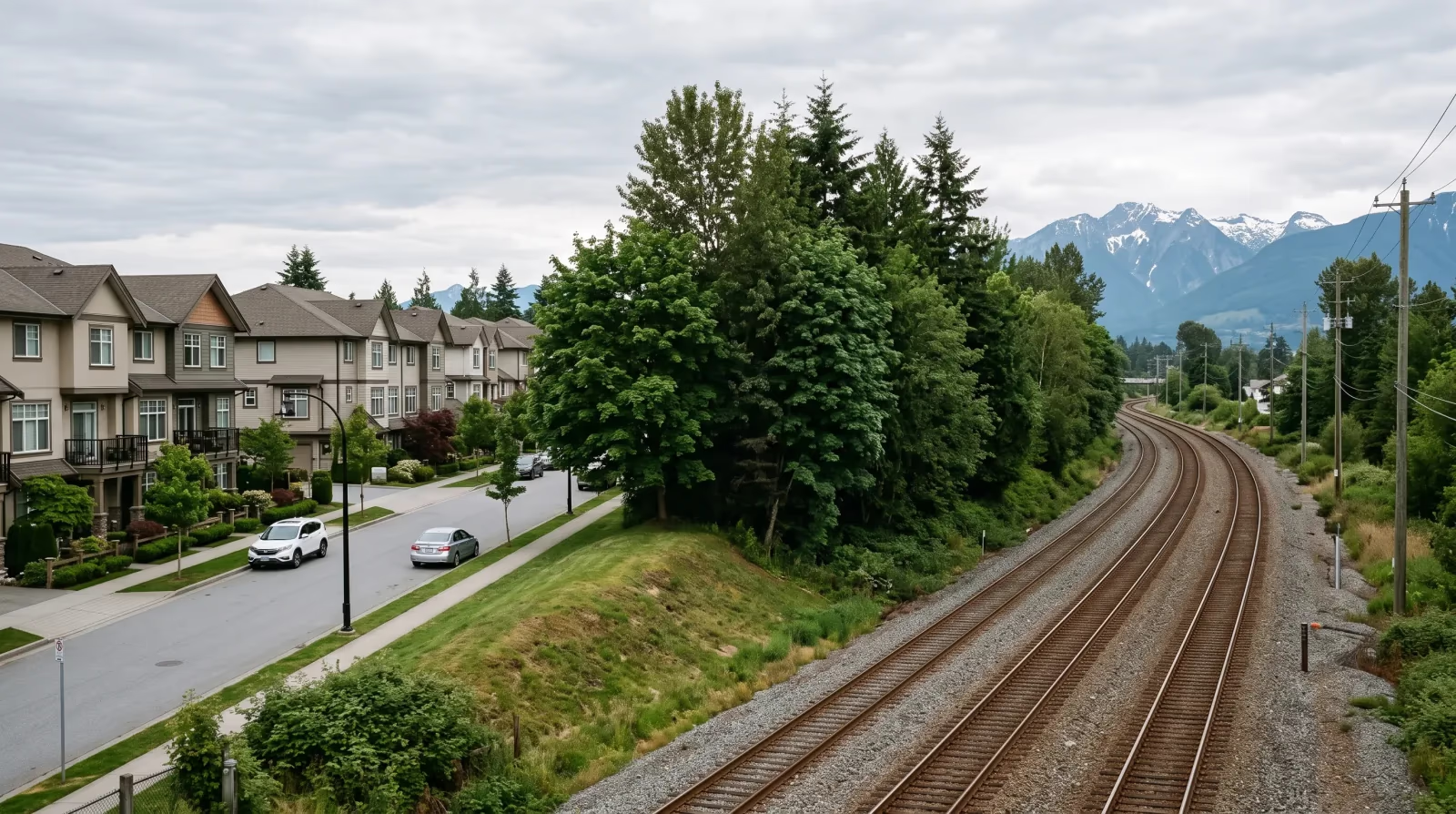

Freight rail runs through the middle of this region. Corridors cut through Surrey, Langley, Abbotsford, Mission, and Chilliwack, and plenty of housing sits within earshot of them. Those homes frequently list below comparable properties a few streets away, which is what brings first-time buyers to them in the first place. The discount is real. Whether it's a good deal depends on questions most buyers never think to ask during a Sunday afternoon showing.
There is an actual national standard for this
Most buyers assume rail proximity is a purely subjective matter of noise tolerance. There's more structure to it than that.
The Federation of Canadian Municipalities and the Railway Association of Canada jointly publish Guidelines for New Development in Proximity to Railway Operations. For principal main lines, the guidelines establish a minimum 30 metre setback and a 2.5 metre high berm as best practice, with the setback measured from the rail property line to the face of the building.
The berm does two jobs. It reduces wheel and rail noise, and it provides protection against the physical components of a derailment. On sites too tight for an earthen berm, the guidelines contemplate alternatives: a ditch acting as an inverted berm, or a deflection or crash wall.
These are guidelines rather than binding national law. Close to 60 municipalities across Canada have adopted all or parts of them, so how much force they carry depends on the local government that approved the development you're looking at.
For a buyer, this converts a vague worry into a checkable question. Standing in a rail-adjacent townhouse complex, you can ask: how far is the building face from the rail property line, and is there a berm, wall, or ditch between them? A complex built to that standard is a materially different proposition from one where the back fence sits against the right-of-way.
Noise and vibration are not the same problem
Buyers use "noise" as a catch-all and then get surprised after moving in. Separate the two.
Noise travels through air. It's the horn, the wheels on rail, the coupling clatter in a yard. Noise responds to distance, barriers, berms, building orientation, and window quality. It's the problem that mitigation is good at.
Vibration travels through ground and structure. You feel it more than hear it, as a low rumble or a faint shake in the floor. Vibration does not respond to better windows or more insulation, which is why a buyer who solves for noise can still be unhappy.
When you visit a rail-adjacent home, try to be inside while a train actually passes, and stand still. That minute will tell you more than any amount of reading. Notice whether glassware moves, whether you feel it through the floor, and how long the passage takes.
The crossing usually matters more than the track
This is the detail buyers most often miss, and it can be the difference between tolerable and miserable.
Train horns are routinely sounded on approach to public grade crossings as a safety requirement. Where whistle cessation is in place, that stops, but cessation requires a formal process involving the municipality and the railway rather than something that happens by default.
So the practical question is not only "how far am I from the tracks" but "how far am I from the nearest crossing, and is whistling in effect there?" A home 200 metres from a track with no nearby crossing can be quieter than one 400 metres away but directly in line with a crossing approach. Look at a map, find the crossings near the property, and ask the municipality about the whistle status.
How to assess it honestly before you offer
The single biggest mistake is judging rail noise from one showing. Freight doesn't run on a commuter schedule, and a quiet Sunday at 2pm proves nothing about a Tuesday at 3am.
Go back. Go at night. Go early in the morning. If you're serious about a property, sit in your car outside it at 11pm on a weeknight and see what happens. It feels excessive and it's the most useful hour you'll spend on the decision.
Talk to neighbours. Ask how many trains pass in a day, whether horns sound, and whether it changes seasonally. People living there will tell you plainly, and they'll mention things that don't occur to you to ask.
Check the listing history if the home has been on and off the market before. A rail-adjacent property that has sold several times in a short span is telling you something about how owners feel after living there.
What it means for resale
Here's the part to think about hardest, because it outlasts your own noise tolerance.
Some buyers filter out rail-adjacent listings entirely. They never see the photos, never book a showing, and no amount of berm or triple glazing changes that. That constraint doesn't lift while you own the home. The smaller buyer pool that produced your discount is the same pool you sell into later.
In practice a narrower pool tends to mean a longer time on market and less competitive pricing when you sell. If you're planning to stay ten years and raise a family there, that's a reasonable trade for getting into a neighbourhood you otherwise couldn't afford. If this is a two-year starter home you expect to flip into a townhouse, weigh it more carefully. Our guide on signs it's time to move up covers how that timeline usually plays out.
The honest framing: the discount you collect buying is roughly the discount you grant selling. What you're really buying is use of the difference in the meantime.
Where this shows up in the Fraser Valley
Rail corridors run through most of the cities we work in, so this comes up in Surrey, Langley, Abbotsford, Mission, and Chilliwack alike. Specific alignments vary and municipal treatment of the guidelines varies with them, which is why we'd point you to the municipality and the property rather than to a generalization about a city.
What we will say from experience is that newer developments built with the setback-and-berm approach feel noticeably different from older housing that predates the guidelines and sits close to the right-of-way. When you're comparing two rail-adjacent options at similar prices, the design difference is often the deciding factor.
If you're weighing rail proximity against other neighbourhood trade-offs, our city comparisons work through the broader picture: Surrey vs. Langley, Langley vs. Abbotsford, and Abbotsford vs. Chilliwack.
Questions worth asking before you write
Ask the municipality whether the development was required to meet the FCM/RAC guidelines, and whether a noise and vibration study was completed. Ask what mitigation was required and whether it was verified as built.
Ask the seller, through your agent, how they've found the noise. The Property Disclosure Statement may not squarely cover it, but the question is fair and the answer, or the reluctance to answer, is informative.
Ask your mortgage broker and insurance broker about the specific property. Standard residential financing and insurance are generally available near rail corridors, but it's a cheap call to make early rather than a surprise to discover late.
And ask yourself the question nobody else can answer: are you the kind of person who stops noticing background noise after a month, or the kind who notices it more? We've watched both types buy the same complex with opposite outcomes. Be honest with yourself about which one you are, because that's the variable no guideline addresses.
Key takeaways
- The FCM and Railway Association of Canada guidelines establish a minimum 30 metre setback and 2.5 metre berm as best practice for principal main lines, adopted in whole or part by close to 60 Canadian municipalities.
- Noise and vibration are separate problems. Vibration travels through structure and is not fixed by windows.
- Distance to the nearest grade crossing often affects horn noise more than distance to the track.
- Visit repeatedly, including at night, before deciding. One afternoon showing is not evidence.
- Rail proximity narrows the buyer pool at resale, so the buying discount tends to become the selling discount.
Frequently Asked Questions
Is it a bad idea to buy a house near train tracks?
Not automatically. Rail proximity affects noise, vibration, and the buyer pool at resale, and it often comes with a lower price. Whether the trade works depends on the corridor's traffic, how the development was designed, and how sensitive you are to noise.
What setback do the national guidelines recommend from a rail line?
The FCM and Railway Association of Canada Guidelines for New Development in Proximity to Railway Operations establish a minimum 30 metre setback and a 2.5 metre high berm as best practice for principal main lines, measured from the rail property line to the building face.
What is a berm and why does it matter?
A berm is a raised earthen mound between the rail corridor and the development. Combined with the setback it provides protection against the physical components of a derailment and reduces wheel and rail noise. Crash walls or ditches are sometimes used as alternatives on constrained sites.
Are the railway proximity guidelines legally binding?
They are guidelines rather than national law, developed jointly by the Federation of Canadian Municipalities and the Railway Association of Canada. Close to 60 municipalities across Canada have adopted all or parts of them, so their force depends on the local government.
How do I judge rail noise before making an offer?
Visit at different times, including at night, since freight movements are not limited to daytime hours. A single afternoon showing tells you almost nothing. Ask neighbours how often trains pass and whether horns are sounded near the property.
Do trains sound their horns at all crossings?
Horns are routinely sounded on approach to public grade crossings unless whistle cessation is in place, which requires a formal process involving the municipality and the railway. Proximity to a crossing often matters more for noise than proximity to the track itself.
Does living near a rail line affect resale value?
It narrows the buyer pool, because some buyers filter out rail-adjacent listings entirely. A smaller pool generally means a longer sale and less competitive pricing. The discount you receive buying is usually the discount you grant selling.
Does rail proximity affect getting a mortgage or insurance?
Standard residential financing and insurance are generally available for homes near rail corridors. Ask your mortgage broker and insurance broker about the specific property early, as you would with any feature that could prompt a lender question.
Should I get a noise assessment?
For a purchase decision, repeated personal visits at varied times are usually more practical than a formal study. Where a development was built under municipal requirements, ask whether a noise and vibration study was done and whether mitigation was required.
Is vibration a separate issue from noise?
Yes. Vibration travels through ground and structure rather than air, so it is felt more than heard and is not addressed by windows or insulation. Ask specifically about vibration when visiting, and stand still inside the home while a train passes if you can.
Can a strata do anything about rail noise?
Very little about the trains themselves, since the corridor is not the strata's property. What a strata can influence is building maintenance that affects sound transmission, such as window and door condition. Review the strata's depreciation report to see what is planned.
Sources
- Federation of Canadian Municipalities and Railway Association of Canada - Guidelines for New Development in Proximity to Railway Operations, 2013
- Federation of Canadian Municipalities - Land use planning around rail corridors: railway proximity guidelines
Data verified August 31, 2026. Municipal adoption of proximity guidelines and whistle cessation status vary by location. Confirm details with the relevant municipality for a specific property.
Related FRIVE guides
- Surrey vs. Langley for first-time buyers, how the two markets compare on price and commute
- Langley vs. Abbotsford, trade-offs further east along the corridor
- Property Disclosure Statement explained, what a seller has to tell you and what they don't
- Signs it's time to move up, useful if resale timing factors into your decision
- Commuting from the Fraser Valley to Vancouver, the other location trade-off that decides most purchases
Next Steps: Work with FRIVE
A rail-adjacent home can be the thing that gets a first-time buyer into a neighbourhood that would otherwise be out of reach. It can also be the thing they regret every night for three years. The difference usually comes down to homework nobody enjoys doing: going back at odd hours and being honest about what you hear.
If you're weighing a property near a rail corridor, get in touch with the FRIVE team, start a conversation or browse current Fraser Valley listings. We'll go stand there with you at an inconvenient hour and give you a straight read.
Sources
- Guidelines for New Development in Proximity to Railway Operations, Federation of Canadian Municipalities and Railway Association of Canada (2013)
- Land use planning around rail corridors: railway proximity guidelines, Federation of Canadian Municipalities
Related guides
- Neighbourhood GuidesBest Neighbourhoods in Surrey for First-Time Buyers (2026)
- Neighbourhood GuidesFleetwood, Surrey: A First-Time Buyer's Guide to the Fraser Valley's Three-Station SkyTrain Neighbourhood
- Neighbourhood GuidesClayton, Surrey: A First-Time Buyer's Guide to the Fraser Valley's SkyTrain Townhouse Corridor
- Home Inspection & Due DiligenceWells and Septic Systems: What Changes When You Buy Outside the Sewer Line
Found this useful? Share it.
A neighbour, a partner, a friend who's two FHSA contributions away, send it their way.