
Radon comes up in maybe one conversation in fifty with first-time buyers, which is out of proportion to how much it matters. It's a gas you cannot see or smell, it gets into homes through the foundation, and Health Canada identifies it as the second leading cause of lung cancer in Canada after smoking. It's also one of the cheaper things to test for and usually one of the more fixable things you'll find. The awkward part for buyers is timing.
What radon actually is
Radon forms as uranium in soil and rock breaks down naturally. It's everywhere in the ground at low levels. Outdoors it disperses into the air and is not a concern. Indoors it can accumulate.
It enters buildings through the parts of a foundation that touch soil: cracks in a slab or foundation wall, sump pits, floor drains, gaps around service pipes, and unfinished crawlspace floors. Once inside, it concentrates in the lowest occupied levels, which is why basements and ground-floor rooms read higher than upper floors.
The BC Centre for Disease Control and HealthLink BC both publish plain-language explanations worth reading if you want the health background in more depth than we cover here.
The number that matters: 200 Bq/m³
Health Canada's guideline is 200 becquerels per cubic metre. When the average annual radon concentration in the normal occupancy area of a home exceeds that, Health Canada recommends remediation.
Two things about that number are easy to misread. It's a guideline for action rather than a legal limit, so nobody is going to stop a sale over it. And it's an annual average, not a maximum. A single reading on a single winter day tells you very little, because radon concentrations move around a lot depending on weather, season, and how the house is being ventilated.
Guidance in BC also distinguishes urgency by level: homes between 200 and 600 Bq/m³ are generally recommended for remediation within two years, and homes above 600 Bq/m³ within one year. So a result above the guideline is a matter to plan and budget for, not an emergency to solve before you take possession.
Why the 91-day rule wrecks the normal buying timeline
Health Canada's measurement guide recommends a long-term test of at least 91 days to get a valid estimate of the annual average. That is the honest test. Anything shorter is a screen.
Now look at a typical Fraser Valley purchase. Subject removal usually runs a week or two, sometimes a bit longer on a complicated file. There is no version of a standard subject period that accommodates a three-month test. The timelines simply do not overlap, and no amount of clever contract drafting changes the physics of the measurement.
This is the practical bind, and it's worth being straight about it rather than pretending there's a tidy answer. Buyers have three realistic options, and each has a real drawback.
Ask the seller for existing results. If the home has been tested, ask for the report, when it was done, and where in the home the detector sat. This costs nothing and occasionally produces a useful answer. Most of the time the seller has never tested.
Run a short-term test during subjects. A short test can flag a home with a very high level, which is genuinely useful information. It cannot confirm a home is fine, because a low short-term reading during a mild, well-ventilated week does not rule out a high winter average. Understand what you're getting.
Test properly after you move in. This is what most buyers end up doing, and it is not a bad outcome. You own the home, you can run the detector through the full heating season when levels tend to be highest, and you get a real number. The cost of a long-term kit is small relative to everything else in a purchase.
We'd rather a buyer plan honestly for the third option than write a condition that cannot be satisfied.
Where the home sits matters more than the neighbourhood
Buyers sometimes ask us whether a particular Fraser Valley city is a radon area. That framing doesn't hold up well. Radon risk exists across British Columbia but is not distributed evenly, and the geology directly beneath an individual home is the primary driver.
That means two houses on the same street can read differently. Neighbourhood-level generalizations, including any you'll find on contractor marketing pages, are not a substitute for testing the actual home. Fraser Health's indoor air quality page is the right regional starting point for local guidance.
Construction matters too. A home with a full basement or a slab in contact with soil has more pathways for entry than an upper-floor apartment several storeys off the ground. If you're buying a townhouse with a ground-level slab, or a basement-entry home, or a home with a crawlspace, radon is worth taking seriously. If you're buying a fourth-floor condo, it's a much smaller concern.
What mitigation involves
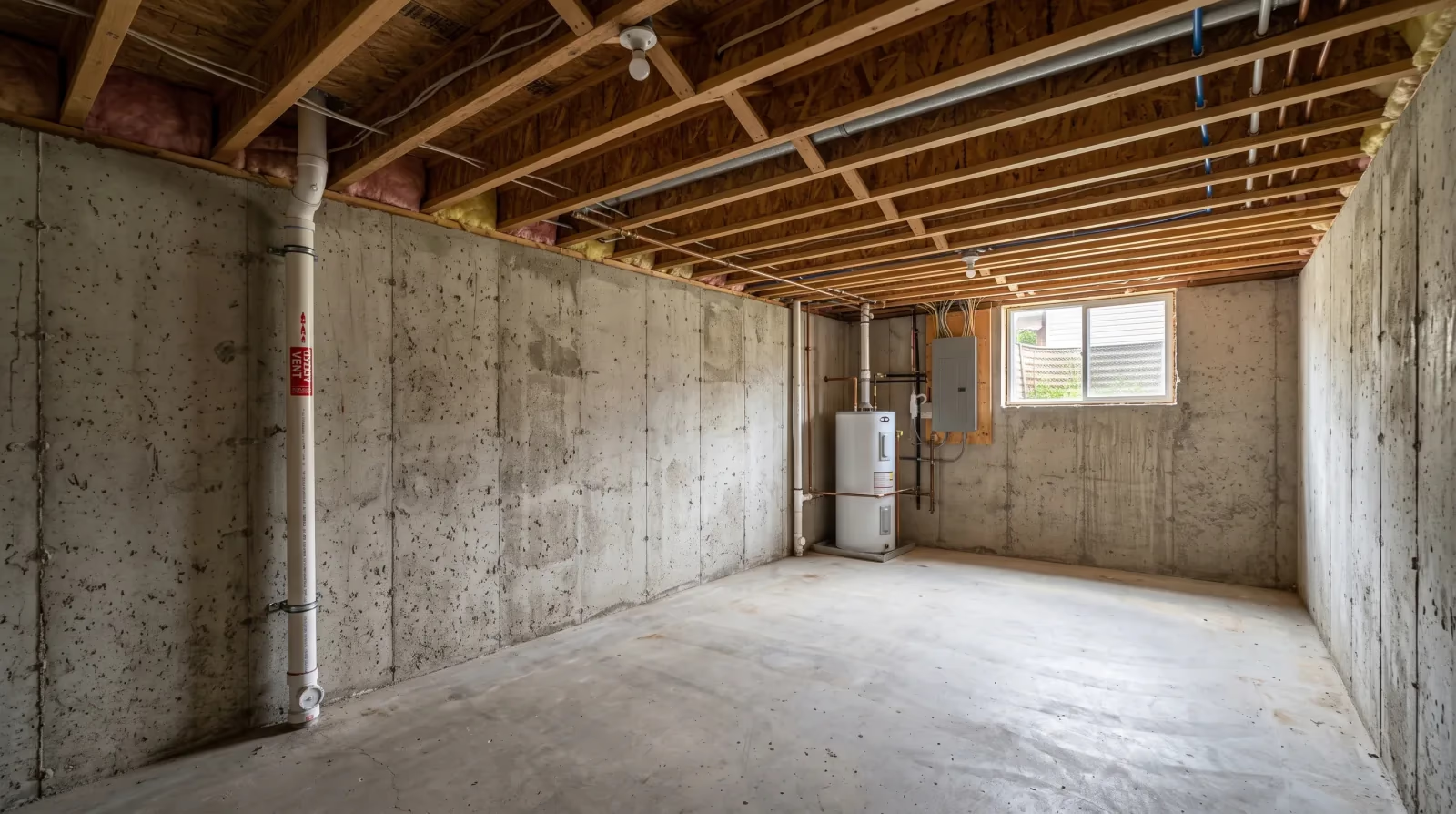
The reassuring part of radon is that it responds well to a known fix. The standard approach is sub-slab depressurization: a pipe drawing air from beneath the foundation slab, with a fan venting it above the roofline so the gas discharges outside instead of entering the living space. If you look at the photo at the top of this post, that white pipe running up the foundation wall is the visible part of such a system.
Costs vary with foundation type, home size, and how much reduction is needed, so the right move is a quote from a certified radon mitigation professional on the specific property rather than a number from an article. What we can say is that this is established, routine work rather than experimental, and that it's usually a smaller number than the structural surprises buyers actually fear.
For newer homes, ask whether rough-in for a radon system was installed during construction. Where that exists, adding active mitigation later is simpler and cheaper than retrofitting a home with nothing in place.
How this fits into your due diligence
Radon belongs alongside your other inspection-stage questions rather than in a category of its own. A home inspection will not measure radon, since that requires a separate detector left in place over time, but a good inspector can point out the foundation conditions that create entry pathways.
The Property Disclosure Statement is worth reading carefully here. A seller cannot misrepresent what they know. But a seller who has never tested has nothing to disclose, and that is the common case. Read silence on radon as "no test was done," not as reassurance.
If you're buying a strata property, radon sits in an interesting spot, because remediation on a ground-contact unit may involve common property and therefore strata approval. Our guide to strata approval for renovations covers how that process works, and it's worth understanding before you assume you can install a system on your own timeline.
What we'd actually tell a buyer
If you're buying a ground-contact home in the Fraser Valley, ask the seller whether they've tested, and get a long-term kit going in your first autumn in the house. That's most of the job. The test is inexpensive, the answer is definitive, and if the number comes back high you have a well-understood fix available and time to arrange it.
What we would not do is let radon become the thing that stops you from buying a home that otherwise works. It's a measurable, fixable condition. That puts it in a very different category from a failing building envelope or a strata with no money in its reserve fund, both of which are harder to solve and far more expensive.
Talk to your doctor if you have specific health concerns, and to a certified radon professional about testing and mitigation on a particular property. We're agents, not health or environmental professionals, and this is one of those topics where the specialists genuinely know more than we do.
Key takeaways
- Health Canada recommends remediation above an annual average of 200 Bq/m³ in the normal occupancy area of a home.
- A valid test takes at least 91 days, which does not fit inside a normal subject-removal period.
- Radon risk varies house by house based on geology and construction, so neighbourhood generalizations are unreliable.
- Ground-contact homes, basements, and crawlspaces carry more risk than upper-floor apartments.
- Mitigation through sub-slab depressurization is established work. Get a quote on the specific property from a certified professional.
Frequently Asked Questions
What is radon and why does it matter when buying a home?
Radon is a radioactive gas that forms naturally as uranium in soil and rock breaks down. It seeps into buildings through foundation cracks, sumps, and gaps around pipes. You cannot see or smell it. Health Canada identifies it as the second leading cause of lung cancer in Canada after smoking.
What is Health Canada's radon guideline?
Health Canada recommends remediation when the average annual radon concentration in the normal occupancy area of a dwelling exceeds 200 becquerels per cubic metre (Bq/m³). This is a guideline for action, not a legal limit, and it is based on a long-term average rather than a single reading.
How long does a proper radon test take?
Health Canada recommends a long-term test of at least 91 days for a valid estimate of the annual average. Radon levels swing daily and seasonally, so a short test taken over a few days cannot reliably tell you what a home's yearly average is.
Can I do a radon test during a subject-removal period?
Not a long-term one. A standard subject period is far shorter than 91 days, so buyers usually have to choose between a short-term screening test, asking the seller for existing test results, or accepting that they will test properly after moving in.
Does the Fraser Valley have a radon problem?
Radon risk exists across British Columbia but is not evenly distributed, and the geology beneath an individual home is the main driver. That means neighbourhood-level generalizations are unreliable. The only way to know a specific home's level is to test that home.
How much does radon mitigation cost?
It varies with the home's construction, foundation type, and the level being reduced, so ask a certified mitigation professional for a quote on the specific property rather than relying on a general figure. The standard approach, sub-slab depressurization, is a well-established fix.
Do condos and townhouses have radon risk?
Ground-contact units carry more potential exposure than upper-floor units, because radon enters from the soil beneath a building. A townhouse with a slab or basement, or a ground-floor condo, is worth testing. An upper-floor apartment is generally lower risk.
Is a seller required to disclose radon levels in BC?
The Property Disclosure Statement asks sellers about their awareness of various property conditions, and a seller cannot misrepresent something they know. But a seller who has never tested has nothing to disclose. Silence on radon usually means no test was done, not that levels are low.
Can I make my offer conditional on a radon test?
You can write conditions as you and your agent see fit, though a 91-day test does not fit inside a normal subject period. Some buyers negotiate a holdback or a post-closing arrangement instead. Discuss the wording with your agent and lawyer or notary before writing it.
Should radon change whether I buy a house?
Rarely on its own. Radon is measurable and usually fixable, which puts it in a different category from problems that cannot be corrected. Treat a high reading as a cost to understand and negotiate, not automatically as a reason to walk away.
Where in the home should the detector go?
In the lowest lived-in level, in a room used regularly, away from drafts, exterior doors, and heat sources. A detector in an unused corner of a sealed utility room does not tell you what the people in the house are actually breathing. Follow the kit's placement instructions.
Sources
- Health Canada - Guide for radon measurements in residential dwellings (homes)
- BC Centre for Disease Control - Radon
- HealthLink BC - Radon in homes and other dwellings
- Fraser Health - Indoor air quality
Data verified August 31, 2026. Radon guidelines and testing recommendations are set by health authorities and may change. Consult a certified radon measurement or mitigation professional about a specific property.
Related FRIVE guides
- Home inspection guide for BC first-time buyers, what a standard inspection does and does not cover
- Property Disclosure Statement explained, how to read what a seller has and has not told you
- Subject removal in BC, how conditions work and why timelines matter
- Strata approval for renovations, relevant if mitigation touches common property
- First-year budget for a condo or townhouse, where a test kit and possible mitigation fit in
Next Steps: Work with FRIVE
Most buyers never think about radon, and most of the time it turns out fine. We mention it because it's cheap to check and the fix is well understood, which makes it one of the easier things to handle well if you know about it early.
If you're looking at a ground-contact home anywhere in the Fraser Valley and want to think through your due-diligence list, get in touch with the FRIVE team, start a conversation or browse current Fraser Valley listings. We'll help you sort the real risks from the ones that just sound alarming.
Sources
- Radon, BC Centre for Disease Control
- Guide for radon measurements in residential dwellings (homes), Health Canada
- Radon in homes and other dwellings, HealthLink BC
- Indoor air quality, Fraser Health
Older homes and building condition
8 pieces that fit together. Read them in order, or jump to the one you need.
- Start hereThe Condition Problems That Change a Fraser Valley Offer
- Guide · you are hereRadon Testing for Fraser Valley Home Buyers: What to Ask Before You Close
- GuideBuried Oil Tanks: The BC Liability That Follows the Property, Not the Person
- GuidePoly-B Plumbing in BC Homes: What Buyers Should Do When They Find It
- GuideKitec Plumbing in BC Condos: How to Spot It Before You Buy
- GuideLeaky Condo Era Buildings: How to Read a Rainscreen Remediation
- GuideAsbestos in Older Fraser Valley Homes: What Buyers Should Know
- GuideKnob-and-Tube and Aluminum Wiring: When Insurance Says No
Related guides
- Home Inspection & Due DiligenceBuried Oil Tanks: The BC Liability That Follows the Property, Not the Person
- Home Inspection & Due DiligenceFormer Grow-Op Homes in BC: Why the Discount Is Bigger Than It Looks
- Home Inspection & Due DiligenceWells and Septic Systems: What Changes When You Buy Outside the Sewer Line
- Neighbourhood GuidesSardis, Chilliwack: A First-Time Buyer's Guide to the Valley's Busiest Small-City Centre
Found this useful? Share it.
A neighbour, a partner, a friend who's two FHSA contributions away, send it their way.