
Buyers who hear the word Kitec often know one thing about it: there was a class action. That memory tends to soften the news, because it sounds like somebody else already paid for the problem. For anyone buying today, that is the part worth correcting first.
The settlement is closed
A settlement in the Kitec litigation was approved in 2011, and homeowners could apply for a share of the fund. According to CBC's reporting on the settlement, even owners who had not experienced a leak were able to apply.
Claim submissions closed on January 9, 2020.
So if you buy a home with Kitec in it now, the replacement cost is yours. There is no fund to apply to and no adjustment coming from anywhere. That single fact is why Kitec belongs in your subject period rather than in your someday pile.
What Kitec is and how to spot it
Kitec is a plumbing system built from polyethylene pipe with an aluminum layer, usually joined with brass fittings. It carried hot and cold water and was also used in in-floor heating. It went into homes and buildings between 1995 and 2007 and was recalled in 2005.
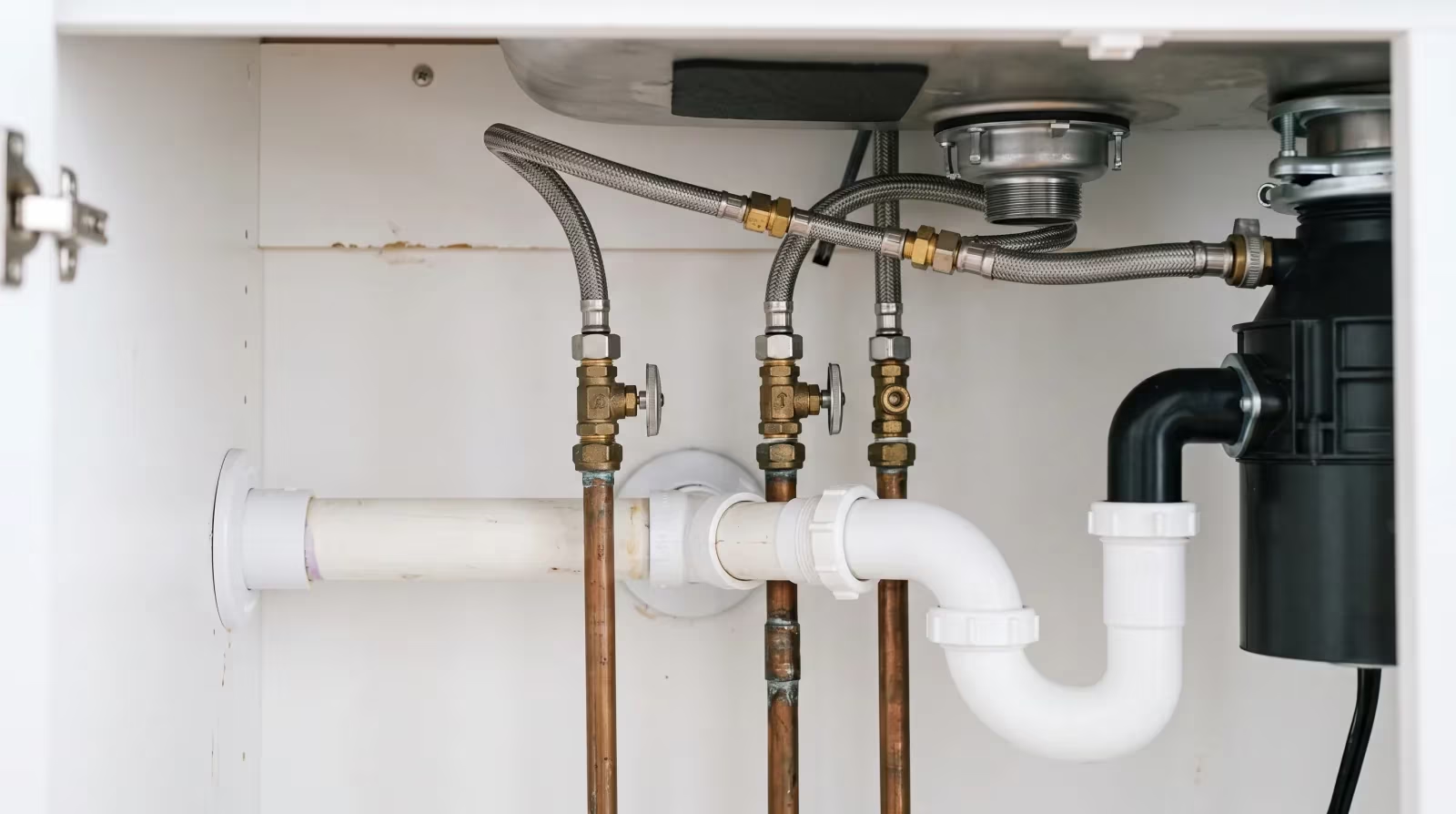
The easiest visual clue is colour. Kitec pipe is typically bright orange or bright blue, with brass fittings at the connections. Look under sinks at the shutoff valves, at the hot water tank, and at the manifold if the unit has one.
Colour is a clue rather than proof. Not every orange or blue pipe in a BC home is Kitec. A home inspector or a plumber can confirm what you are actually looking at, and in a condo where most of the plumbing is behind drywall, a short visible run at a shutoff valve may be all the evidence there is.
The reported failure mode involved corrosion, particularly at the brass fittings, which could restrict flow and eventually lead to failure. Hot water and local water chemistry were factors.
Why an insurer cares more than an inspector
A home inspection tells you the material is present and describes its visible condition. It does not predict when a fitting will corrode through, and no inspection can.
Insurers respond to that uncertainty the same way they respond to Poly-B: by pricing it. In our experience buyers see a range of outcomes, from a normal policy, to a higher water damage deductible, to a request that the plumbing be replaced.
This matters more than it first appears because your lender requires the property to be insurable. A plumbing question that goes unanswered can become a financing question in the last week before completion, which is the worst possible time to discover it.
Call an insurance broker with the actual unit address during your subject period, and ask for the answer in writing. Our guide on condo insurance versus strata insurance explains which policy is doing what, which helps when you are reading the quote.
In a strata, find out whose pipe it is
This is where a condo purchase differs from a detached house, and where most of the money actually sits.
The strata plan and the bylaws define the boundary between your strata lot and common property. Pipe inside your unit may be your responsibility. Pipe in the building risers is generally the strata's. That boundary determines who writes the cheque, and it varies between buildings.
Then there is the timing question. A building-wide replacement is usually funded from the contingency reserve fund or through a special levy. Which one it is depends on how much the strata has saved and how big the job is.
The minutes are where you find this out. A strata that has quoted a replacement and is planning for it reads very differently from one where the topic appears every eighteen months and gets tabled. Our strata council minutes red flags guide covers how a deferred repair looks in writing, and the depreciation report should tell you what the building expects to spend and when.
Ask directly: does this building have Kitec, has any of it been replaced, has a replacement been quoted, and what is in the reserve fund. Get answers traceable to documents rather than to a friendly conversation at the front door.
What a buyer should actually do
The sequence we use with our buyers is short.
Confirm the material during the inspection. Get an insurance quote in writing for the real address. If Kitec is present and you are proceeding, get a plumber to look at it and quote replacement. Read the strata minutes and the depreciation report specifically for plumbing.
Then decide with numbers. Sometimes that means proceeding at the agreed price with a plan to replace in a couple of years. Sometimes it means a price conversation. What is available depends on how competitive the situation is, which is a market question rather than a plumbing one.
Our strata document review checklist covers the wider package, and the subject removal guide covers how to keep enough time to get these answers before your dates run out.
The honest summary
Kitec is not a reason to avoid an entire era of buildings. It is a known material with a known history, and it is manageable when you find it early.
What makes it different from other plumbing questions is that the compensation route closed in 2020. Whatever the pipe costs to deal with, it comes out of your budget, which is exactly why it belongs in the conversation before you remove subjects rather than after.
We are agents, not plumbers or insurance brokers. What we can tell you is which questions have answers inside a subject period, and all four of these do.
Key takeaways
- Kitec was installed from 1995 to 2007 and recalled in 2005, and the class action claim deadline passed on January 9, 2020.
- Look for bright orange or blue pipe with brass fittings at shutoffs, the hot water tank, and any manifold.
- Insurers may apply a higher water damage deductible or ask for replacement, and lenders require the home to be insurable.
- In a strata, the plan and bylaws decide whether the pipe is yours or common property.
- The minutes and depreciation report show whether a building-wide replacement is planned, quoted, or repeatedly deferred.
Frequently Asked Questions
What is Kitec plumbing?
Kitec is a plumbing system made of polyethylene pipe with an aluminum layer, typically joined with brass fittings. It was used for hot and cold water lines and for in-floor heating. It was installed between 1995 and 2007 and recalled in 2005 after corrosion and failure problems.
How do I identify Kitec in a condo?
Look for bright orange or blue pipe with brass fittings at shutoff valves under sinks, at the hot water tank, and at the manifold if the unit has one. The colours are the usual giveaway, though not every orange or blue pipe is Kitec. A home inspector or plumber can confirm.
Can I still claim money from the Kitec class action?
No. A settlement was approved in 2011 and claim submissions closed on January 9, 2020. A buyer who discovers Kitec today has no route to that fund, which means replacement is a cost you carry.
Why did Kitec fail?
The reported problem involved corrosion, particularly at the brass fittings, which could restrict flow and lead to failure. Hot water and water chemistry were contributing factors. It was recalled in 2005 and is no longer installed.
Does Kitec affect insurance in BC?
It can. Insurers treat known problem plumbing as a water damage risk, so you may see a higher premium, a higher water damage deductible, or a request for replacement. Get a written quote for the specific address before you remove subjects.
Who pays to replace Kitec in a strata building?
It depends on whether the pipe is inside your strata lot or is common property, which the strata plan and bylaws define. A building-wide replacement is usually funded from the contingency reserve fund or through a special levy, so check the minutes for whether it has been quoted or deferred.
Is Kitec the same as Poly-B?
They are different products from different eras. Poly-B is grey polybutylene used from the late 1970s into the mid 1990s. Kitec is orange and blue, has an aluminum layer and brass fittings, and was used from 1995 to 2007. Both are on insurer watch lists.
Should I get a plumber to look at it specifically?
If a home inspection flags Kitec and you are proceeding, yes. A home inspection identifies the material and visible condition. A plumber can assess the installation and quote replacement, which is the number you actually need for your decision.
Does Kitec always need to be replaced right away?
Not necessarily, and plenty is still in service. The practical pressure usually comes from insurers rather than from an immediate failure risk, so the timeline often follows what your insurance requires rather than what the pipe is doing today.
What should I ask the strata about Kitec?
Ask whether the building has it, whether it has been replaced in whole or in part, whether a replacement has been quoted, and what the contingency reserve fund holds. The answers should be traceable to minutes and the depreciation report rather than a verbal assurance.
Sources
- Kitec Plumbing: Appearance, Issues and Insurance, Square One Insurance
- Why you might want to file a claim under the Kitec settlement, CBC News
Verified September 1, 2026. General information only, not insurance, legal, or plumbing advice. Insurer treatment varies by company. Confirm the plumbing material and strata responsibility for your specific property.
Related FRIVE guides
- Poly-B plumbing in BC homes, the other plumbing material insurers ask about
- Strata document review checklist, what to read before subject removal
- Strata depreciation reports, where planned building work should appear
- Strata contingency reserve fund, whether the building can absorb a big repair
- Subject removal in BC, keeping enough time to get real answers
Next Steps: Work with FRIVE
Kitec is one of those items where the building's paperwork tells you more than the pipe does. A strata that has already dealt with it is a different purchase from one still deciding, even when the two units look identical on the listing.
If you are looking at a condo from that era and want a read on what the minutes are actually saying, start a conversation with the FRIVE team or browse current Fraser Valley listings.
Found a condo or townhouse you like?
Let the FRIVE team request and review the strata package for you. We'll go through the Form B, depreciation reports, and council minutes, and let you know if we spot any red flags, like upcoming special levies or restrictive rules. Completely free, no obligation, no pressure.
Sources
- Kitec Plumbing: Appearance, Issues and Insurance, Square One Insurance
- Why you might want to file a claim under the Kitec settlement, CBC News
Older homes and building condition
8 pieces that fit together. Read them in order, or jump to the one you need.
- Start hereThe Condition Problems That Change a Fraser Valley Offer
- GuideRadon Testing for Fraser Valley Home Buyers: What to Ask Before You Close
- GuideBuried Oil Tanks: The BC Liability That Follows the Property, Not the Person
- GuidePoly-B Plumbing in BC Homes: What Buyers Should Do When They Find It
- Guide · you are hereKitec Plumbing in BC Condos: How to Spot It Before You Buy
- GuideLeaky Condo Era Buildings: How to Read a Rainscreen Remediation
- GuideAsbestos in Older Fraser Valley Homes: What Buyers Should Know
- GuideKnob-and-Tube and Aluminum Wiring: When Insurance Says No
Related guides
- Home ConditionAsbestos in Older Fraser Valley Homes: What Buyers Should Know
- Home ConditionPoly-B Plumbing in BC Homes: What Buyers Should Do When They Find It
- Home ConditionLegal Suite or Unauthorized Suite? What Buyers Should Check
- Buying ProcessNotary or Lawyer for Your BC Closing? How First-Time Buyers Should Decide
Found this useful? Share it.
A neighbour, a partner, a friend who's two FHSA contributions away, send it their way.