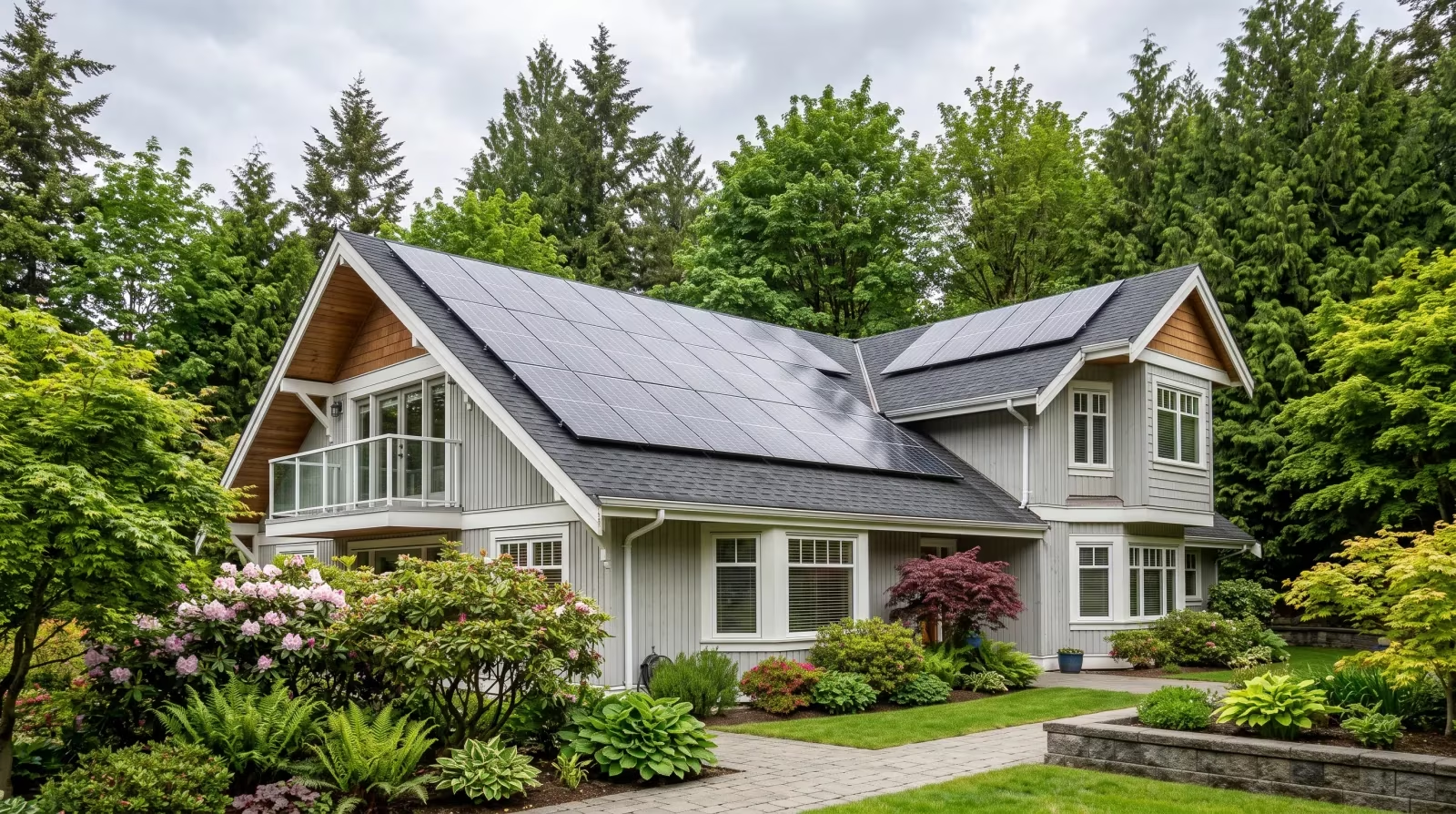

Solar panels on a listing photo read as a straightforward benefit. Whether they are one depends entirely on an arrangement you cannot see from the street.
Ownership is the first question
Panels on a roof fall into a few categories, and they are very different purchases.
Owned outright, meaning the previous owner paid for the system and it transfers with the home. You have inherited an asset.
Financed, meaning there may be a loan associated with the installation, possibly registered against the property. You need the terms.
Leased or under another arrangement, meaning you may be assuming an ongoing obligation rather than acquiring equipment.
Same panels, same roof, three different transactions. Ask the seller directly which one applies, and verify rather than relying on the answer alone.
How to verify
Your notary or lawyer orders a title search from the Land Title and Survey Authority as part of conveyancing.
Ask them specifically to identify anything registered that relates to the solar installation, and to obtain the underlying documents rather than only the registration summary. Our guide to easements, rights of way, and covenants explains why the registered document matters more than the line on the title search.
If there is a financing or lease agreement, read it before you remove subjects. The terms determine whether this is a benefit or an obligation, and the answer sometimes changes what you are willing to pay.
Net metering
BC Hydro operates a net metering program that allows a customer with an eligible generating system to send surplus electricity to the grid and receive credit.
Do not assume an existing arrangement transfers automatically to a new owner. Contact BC Hydro about the specific account and installation to confirm what is required when ownership changes.
Do that during your subject period. It is a phone call, and it is far better made before completion than after.
The roof underneath
This is the practical question buyers most often skip.
Panels are mounted on the roof. When the roof is replaced, the panels have to come off and go back on, which adds cost to a job that was already expensive.
So ask the age of both. A recently installed system on a recently replaced roof is a clean situation. New panels on a twenty-year-old roof means you may face removal and reinstallation sooner than you would like, and that cost belongs in your planning.
Ask your home inspector to comment on the roof and on any visible penetrations or flashing associated with the mounting. Roof penetrations done poorly are a water entry path.
Permits
Ask the municipality for permit and inspection history for the address.
Solar installation involves regulated electrical work, and an unpermitted installation can create insurance and safety questions. This is the same principle that applies to an unpermitted suite: the quality of the visible finish tells you nothing about whether it was inspected.
Insurance
Disclose the installation to your insurer and confirm the coverage terms in writing.
Insurers ask about roof-mounted equipment and about the electrical work behind it. A system the insurer does not know about can create problems at claim time, and our guide to insurance claim history covers why getting the quote early matters generally.
In a strata
If you are buying a townhouse or condo, the roof is generally common property.
That means panels required strata approval, typically through a general meeting resolution, and there should be a record of it. If panels are already installed, confirm the strata approved them and on what terms, including who is responsible for maintenance and for the roof beneath them.
Read the bylaws and the minutes. An installation the strata never approved is a problem you would be inheriting. Our strata document review checklist covers the full package.
Does it add value
Owned panels in good condition, on a roof with plenty of life left, are attractive to buyers who value them.
Leased or financed systems are more complicated, because a future buyer is being asked to assume an obligation rather than receive a benefit. Some buyers decline that, which narrows your pool when you eventually sell.
That is worth thinking about now rather than in five years. Ownership status shapes both what you are buying and what you will be selling.
The paperwork to request
Ask the seller for installation documents, warranty information, permits and inspection records, the net metering agreement, and any financing or lease agreement.
If the seller can produce all of it, that is reassuring and it makes your verification quick. If none of it exists, that absence is itself information worth weighing.
The short version
Establish whether the panels are owned, financed, or leased, and get the underlying documents through your conveyancer. Confirm with BC Hydro what happens to the net metering arrangement on a change of ownership.
Ask the age of the roof, check permits with the municipality, disclose to your insurer, and in a strata confirm the installation was approved.
We are agents rather than electricians, lawyers, or insurance brokers, and none of this is professional advice on a specific installation.
Key takeaways
- Owned, financed, and leased panels are three different purchases, so establish which one applies first.
- Ask your conveyancer to identify anything registered on title relating to the solar installation.
- Confirm with BC Hydro what happens to a net metering arrangement when ownership changes.
- Roof age matters, because panels must be removed and reinstalled when a roof is replaced.
- In a strata the roof is generally common property, so the installation required approval.
Frequently Asked Questions
What is the first thing to check about solar panels on a home?
Whether they are owned outright, financed with a loan, or covered by a lease or similar arrangement. Owned panels transfer with the home. A financing or lease arrangement may involve payments you assume or a registration against title.
How do I find out if there is financing registered?
Your notary or lawyer orders a title search, which shows what is registered against the property. Ask them specifically to identify anything related to the solar installation and to obtain the underlying documents.
What is net metering?
Net metering lets a customer with an eligible generating system send surplus electricity to the grid and receive credit. BC Hydro operates a net metering program with its own eligibility rules and application process.
Does the net metering agreement transfer to me?
Do not assume it does. Contact BC Hydro about the specific account and installation to confirm what is required when ownership changes, and do it during your subject period rather than after completion.
How does the roof age matter?
Panels sit on the roof and have to come off if the roof is replaced, which adds cost. New panels on an old roof mean you may face removal and reinstallation sooner than you would like. Ask the age of both.
Was the installation permitted?
Ask the municipality for permit and inspection history. An electrical installation of this kind is regulated work, and an unpermitted installation can create insurance and safety questions.
Do I need to tell my insurer?
Yes. Disclose the installation and confirm coverage terms in writing. Insurers ask about roof-mounted equipment and about the electrical work behind it.
Can I have solar on a strata townhouse or condo?
The roof is generally common property, so installing panels requires strata approval and typically a general meeting resolution. If panels are already installed, confirm the strata approved them and on what terms.
Do panels add value?
Owned panels in good condition on a suitable roof can be attractive to buyers. Leased or financed systems are more complicated because a buyer is assuming an obligation, which some buyers decline. Ownership status shapes the effect.
What paperwork should I request?
Installation documents, warranty information, permits and inspection records, the net metering agreement, and any financing or lease agreement. If the seller cannot produce these, treat that as information.
Sources
Verified September 1, 2026. General information only, not legal, electrical, or insurance advice. Program rules and agreements vary. Confirm details with BC Hydro, your municipality, and your conveyancer.
Related FRIVE guides
- Easements, rights of way, and covenants, reading what is registered on title
- Heat pump rebates in BC, the other energy upgrade to check
- Legal or unauthorized suite, why permit history matters
- Renovating with strata approval, the common property question
- Home inspection guide, what to ask about the roof
Next Steps: Work with FRIVE
Solar is still uncommon enough on Fraser Valley resale homes that many buyers have never had to ask these questions. The good news is that all of them are answerable inside a normal subject period.
If you are looking at a home with panels and want help working through the checks, start a conversation with the FRIVE team or browse current Fraser Valley listings.
Sources
- Net metering, BC Hydro
- Land Title and Survey Authority of British Columbia, Land Title and Survey Authority of British Columbia
Related guides
Found this useful? Share it.
A neighbour, a partner, a friend who's two FHSA contributions away, send it their way.