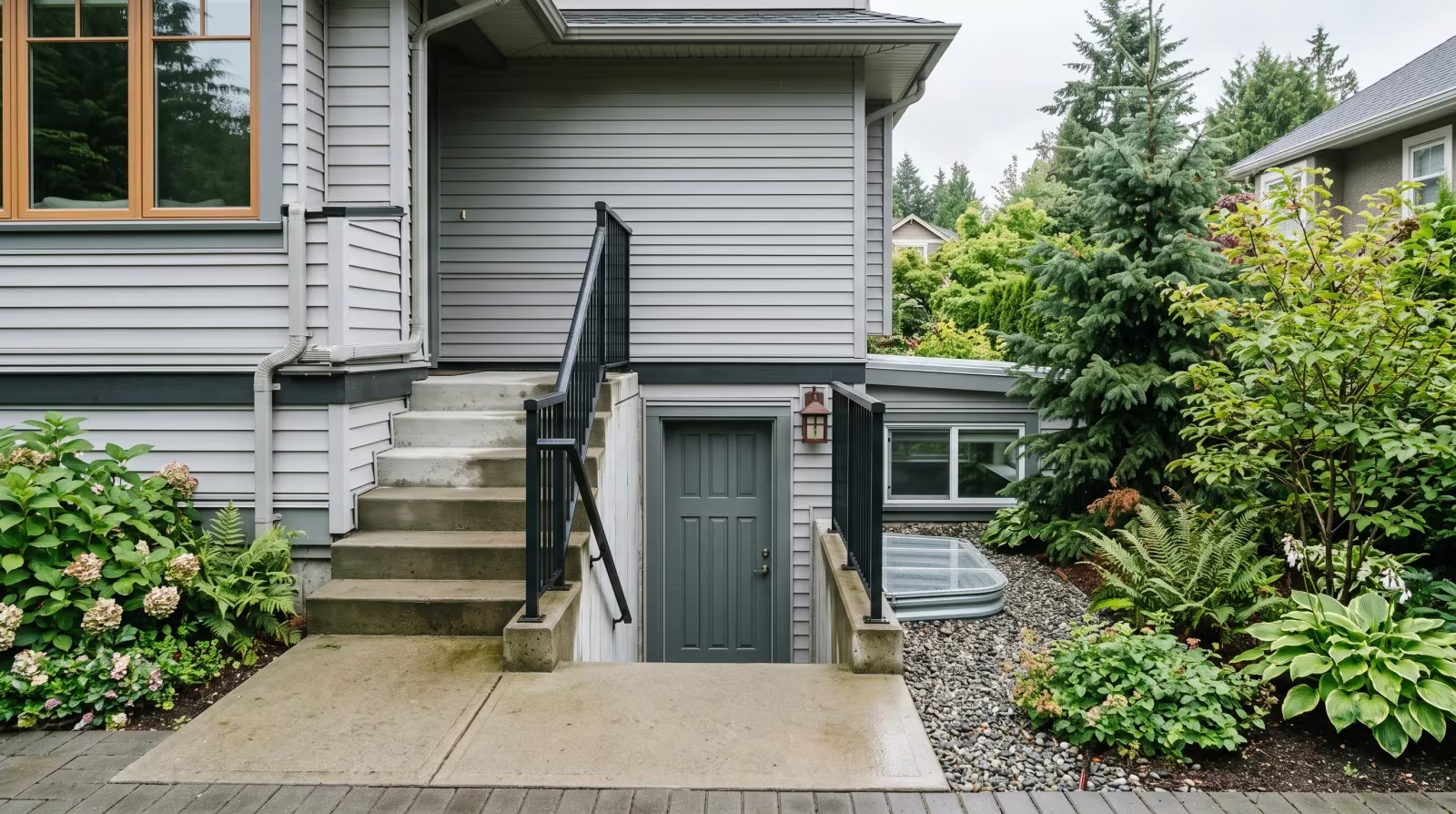

A separate entrance down the side of the house, a tidy kitchen downstairs, and a tenant already paying rent. For a lot of Fraser Valley first-time buyers, that is the difference between qualifying and not qualifying. It is worth knowing whether the suite was ever permitted before you build your budget on it.
What the new rules did and did not do
There is a widespread misunderstanding right now, so it is worth clearing up first.
BC's small-scale multi-unit housing legislation, introduced through Bill 44, the Housing Statutes (Residential Development) Amendment Act, in 2023, requires local governments to permit secondary suites and accessory dwelling units province-wide in single family residential zones where three to six unit zoning is not required. Local governments were required to update their bylaws by June 30, 2024 under Bill 44, and Bill 25 in 2025 added further requirements with bylaw updates due by June 30, 2026.
That legislation changed what is permitted going forward. It did not retroactively legalize suites that were built without permits.
A suite constructed by a previous owner without a building permit or inspections is still an unpermitted suite. Lenders, insurers, and municipalities treat it as one, regardless of how the zoning has changed around it.
Our guide to SSMUH zoning in the Fraser Valley covers the wider density picture these bills created.
What actually makes a suite legal
The requirements are specific and physical, which is helpful, because it means you can look for them.
The BC Building Code requires a minimum ceiling height of 2.0 metres over at least 50 percent of the suite's floor area, and no less than 1.95 metres in any area. That single requirement disqualifies a lot of older basements where the ceiling was already low before someone framed and drywalled it.
Beyond height, a legal suite needs a separate entrance, fire-rated separation between the suite and the main home, hardwired interconnected smoke alarms, and either a window or door providing egress directly to the outdoors. Mechanical ventilation requirements apply, and upgrading to a larger electrical service is a common requirement during legalization.
Municipal zoning adds its own layer: parking, maximum suite size relative to the house, and owner occupancy provisions in some places.
Finishes tell you nothing
This is the part buyers find hardest to accept.
A suite can have quartz counters, new flooring, and a beautifully tiled bathroom and still have never been inspected. Conversely, a plain suite with builder-grade everything can be fully permitted.
Quality of finish and legality are unrelated. The only reliable answer comes from the municipality.
Ask the local government for the permit and inspection history for the address. Municipal staff handle these requests routinely and the record is definitive. If a suite was permitted, there will be a permit and there will be inspections signed off.
Why lenders care
If you are counting on rental income to qualify, this matters directly.
Lender policies vary. Some will consider rental income only from a permitted suite. Some apply a discount to the income regardless. Some decline to count suite income at all on certain products.
The problem arises when a buyer builds their affordability assumption on suite income, gets a pre-approval that does not account for the suite's status, and then finds out during financing that the income will not be counted the way they expected.
Talk to a mortgage broker about this specifically and early. Our guides to GDS and TDS ratios and pre-approval versus approval explain how income assumptions flow into what you can borrow, and why a pre-approval is a planning number rather than a guarantee.
Why insurers care
Insurers ask about suites and about how many households occupy the home. A suite that the insurer does not know about can create a genuine problem at claim time, which is exactly when you least want one.
Disclose the suite. Get the terms in writing. If the suite is unpermitted, ask the insurer directly how that affects coverage rather than hoping the question does not come up.
The municipal enforcement question
A municipality can require an unpermitted suite to be brought into compliance or removed, and complaints are a common trigger.
That risk transfers to you when you buy. The previous owner's years of trouble-free operation do not carry any protective weight, and a neighbour dispute two years from now can start the process.
This is not a reason to panic. Many Fraser Valley homes have unpermitted suites and most operate without incident. It is a reason to price the risk rather than ignore it.
What legalizing involves
If you want to bring a suite into compliance, the work depends entirely on what exists.
Common items include fire separation between the suite and the main dwelling, addressing ceiling height where possible, egress windows or doors, hardwired interconnected smoke alarms, ventilation, and sometimes an electrical service upgrade. A building permit and inspections are part of the process.
Some suites can be legalized with modest work. Others cannot, usually because of ceiling height, which is difficult and expensive to change. Getting a read on which category a specific suite falls into is worth doing before you commit.
If the home is older, our guides to asbestos and older wiring cover items that frequently surface during this kind of work.
How to handle it as a buyer
Three steps, all inside your subject period.
Ask the municipality for permit and inspection history on the address. Ask your mortgage broker whether your lender will count the income given that status. Ask your insurance broker how the suite affects your policy.
Then decide with real information. Buyers regularly proceed on homes with unpermitted suites, and that can be a reasonable decision. What we would avoid is treating the rental income as certain when the suite's status has never been checked.
Our property disclosure statement guide covers what a seller does and does not have to tell you, which is relevant here, and subject removal covers protecting time to get these answers.
The short version
Small-scale multi-unit housing legislation requires local governments to permit secondary suites province-wide, and it did not legalize suites built without permits.
A legal suite meets specific requirements: 2.0 metres of ceiling height over at least half the floor area and never below 1.95 metres, a separate entrance, fire separation, interconnected smoke alarms, egress, and ventilation. Finishes tell you nothing about any of it.
Ask the municipality for the permit history, ask your broker about the income, and ask your insurer about coverage. Then decide.
We are agents rather than building officials, lenders, or insurance brokers, and none of this is professional advice on a specific property. Your municipality holds the definitive record.
Key takeaways
- SSMUH legislation requires local governments to permit secondary suites province-wide, and it does not legalize existing unpermitted suites.
- The BC Building Code requires 2.0 metres of ceiling height over at least 50 percent of the suite and never less than 1.95 metres.
- Quality of finish is unrelated to whether a suite was permitted and inspected.
- Lender treatment of suite income varies, so confirm before relying on it to qualify.
- A municipality can require an unpermitted suite to be brought into compliance or removed, and that risk transfers with the property.
Frequently Asked Questions
What makes a suite legal in BC?
A legal secondary suite is one that was permitted and inspected, and that complies with the zoning and the BC Building Code requirements for suites, including separate entrance, ceiling height, fire separation, interconnected smoke alarms, egress, and ventilation.
Did BC's new housing legislation legalize existing suites?
No. Small-Scale Multi-Unit Housing legislation requires municipalities to permit secondary suites in most single family and duplex zones, but a suite built without permits remains unpermitted. Insurers and buyers treat it that way.
What are the main building code requirements?
The BC Building Code requires a minimum ceiling height of 2.0 metres over at least 50 percent of the suite's floor area and no less than 1.95 metres in any area. A suite also needs a separate entrance, fire-rated separation, hardwired interconnected smoke alarms, and egress directly to the outdoors.
When did municipalities have to update their bylaws?
Bill 44, the Housing Statutes (Residential Development) Amendment Act, introduced the requirements in 2023, and local governments were required to update their bylaws by June 30, 2024. Bill 25 in 2025 added further requirements, with bylaw updates due by June 30, 2026.
Will a lender count suite income if the suite is unauthorized?
Policies vary by lender. Some will consider rental income only from a permitted suite, some apply a discount, and some decline to count it. Confirm with your mortgage broker for your specific lender before you rely on that income to qualify.
Does an unauthorized suite affect insurance?
It can. Insurers ask about suites and about the number of units in a home, and a suite the insurer does not know about can create problems at claim time. Disclose it and get the policy terms in writing.
Can the city make me remove a suite?
A municipality can require an unpermitted suite to be brought into compliance or removed, particularly following a complaint. That risk transfers with the property when you buy it.
How do I check whether a suite was permitted?
Ask the local government for the permit and inspection history for the address. Municipalities handle these requests routinely and the record is the only reliable answer, since a well-finished suite tells you nothing about whether it was inspected.
What does legalizing a suite involve?
It depends on what is already there. Common items include fire separation, ceiling height, egress windows or doors, interconnected smoke alarms, ventilation, and sometimes an electrical service upgrade. A building permit and inspections are part of the process.
Should I avoid homes with unauthorized suites?
Many Fraser Valley homes have them and plenty of buyers proceed. What matters is pricing the situation honestly rather than assuming the rental income is dependable and the arrangement carries no risk.
Sources
- Small-Scale Multi-Unit Housing, Province of British Columbia
- Secondary Suite Building Code and Zoning Requirements, City of Nanaimo
Verified September 1, 2026. General information only, not legal, lending, insurance, or building code advice. Requirements vary by municipality. Confirm permit status and code requirements with your local government.
Related FRIVE guides
- SSMUH zoning in the Fraser Valley, what the density legislation changed
- Mortgage broker vs bank, who can tell you how income will be treated
- GDS and TDS ratios, how income flows into what you can borrow
- Property disclosure statement in BC, what a seller must tell you
- Buying a tenanted property in BC, what changes when someone is already living there
Next Steps: Work with FRIVE
Suite income is doing real work for a lot of Fraser Valley first-time buyers, and we are not going to pretend otherwise. We would rather you knew whether the income is dependable before it becomes the reason you qualified.
If you are looking at a home with a suite and want help checking its status, start a conversation with the FRIVE team or browse current Fraser Valley listings.
Sources
- Small-Scale Multi-Unit Housing, Province of British Columbia
- Secondary Suite Building Code and Zoning Requirements, City of Nanaimo
Related guides
Found this useful? Share it.
A neighbour, a partner, a friend who's two FHSA contributions away, send it their way.