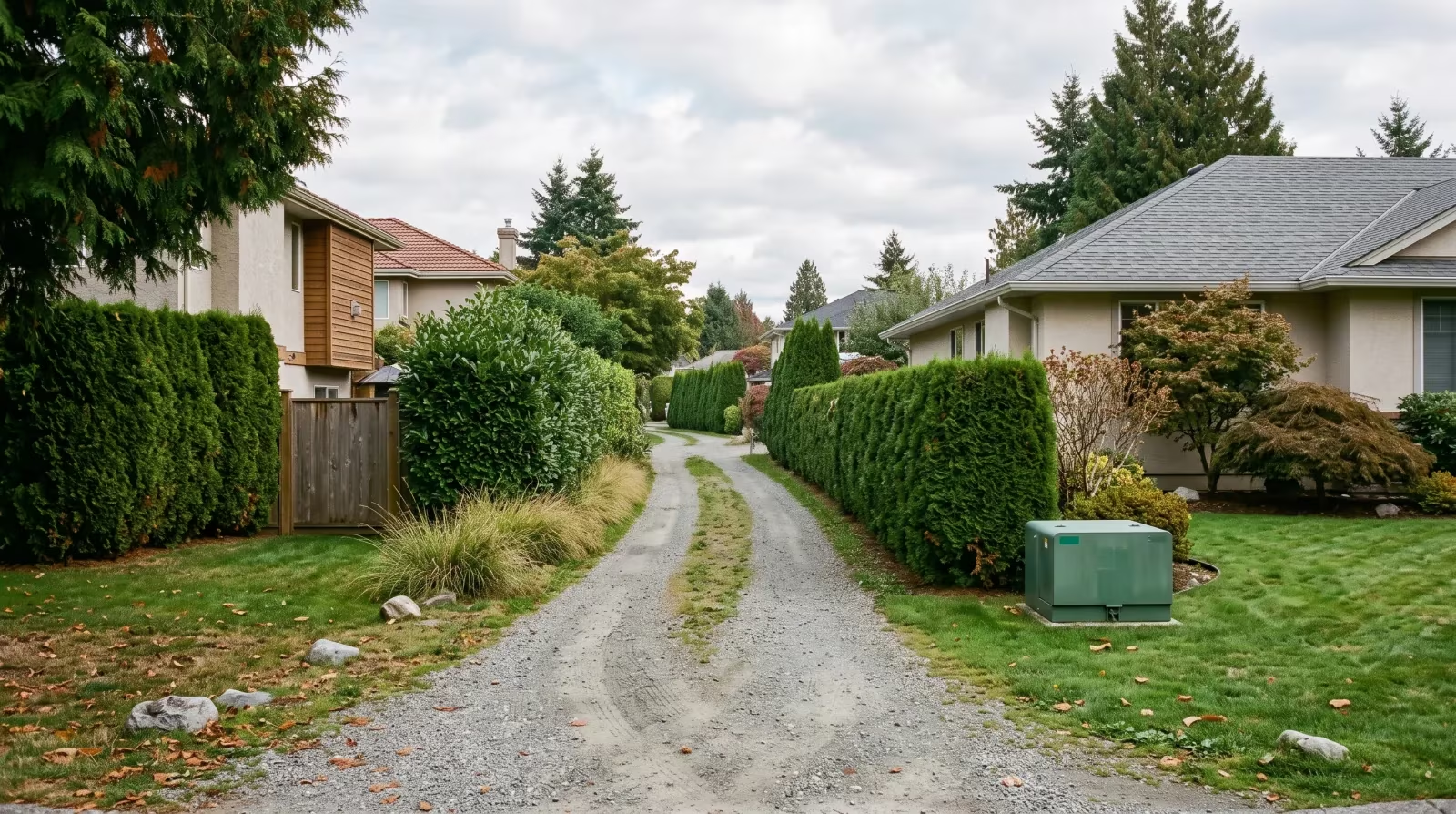

When a buyer says their title search came back clean, they usually mean nothing alarming appeared. Most residential titles in BC carry several registrations, and the useful skill is telling the routine ones apart from the ones that will affect your plans.
What is registered and where it lives
Title to land in BC is administered through the Land Title and Survey Authority. Your notary or lawyer orders a title search as part of conveyancing, and it lists what is registered against the property.
Here is the part buyers miss. The title search lists charges by registration number and type. The actual terms live in the underlying registered documents.
So a title search showing a statutory right of way tells you one exists. It does not tell you where it runs, how wide it is, or what it prevents. For that, you need the document, and you should ask your conveyancer for copies of anything that might matter.
Easements
An easement is a registered interest in land that gives one property owner certain rights to use the land of another for a specific purpose. Rights of access, or the right to install and maintain drainage works and pipes, are common examples.
The classic residential situation is a shared driveway or a drainage line crossing the back of several lots. One property is burdened by the easement, another benefits from it, and the arrangement runs with the land rather than with the people, so it survives every sale.
Statutory rights of way
A statutory right of way, usually shortened to SRW, is a specific form of easement between a property owner and an authorized legal entity such as a local government or a utility provider.
These appear on a large share of ordinary residential titles. A municipal storm sewer crossing a corner of the lot. A hydro or gas utility corridor. Sanitary sewer lines.
Seeing one is not a warning sign. Seeing one is Tuesday. What matters is where it sits.
What they actually restrict
For most homeowners, an easement or SRW does not interfere with ordinary use of the yard. You can walk on it, mow it, and generally live around it without noticing.
What they typically restrict is building permanent structures over the affected area, and sometimes planting large trees, because the holder needs to be able to access and maintain whatever is underneath. If a utility has to excavate to repair a line, a garage sitting on top is a problem for everyone.
So the question is never really "does this property have an easement." It is "where is it, and does it sit where I wanted to build."
Covenants are a separate thing
Buyers often lump these together, so it is worth separating them.
A covenant is a different type of registration that can restrict how land is used or built on. Section 219 covenants in favour of a government body are common in newer Fraser Valley subdivisions and may address building envelopes, flood construction levels, tree retention, or geotechnical requirements.
A covenant restricting where you can build is functionally similar to an easement in its effect on your plans, even though the legal mechanism differs. Both belong in the same review.
Properties near watercourses often carry covenants related to riparian setbacks, and properties in flood-prone areas may carry flood construction level requirements. Our flood risk guide covers the wider context in the valley.
Where a survey earns its cost
A title search tells you what is registered. A survey certificate shows where those interests sit physically in relation to the buildings, fences, and driveways on the property.
Put together, they answer the practical question. If an SRW runs along the side yard and you were planning a detached shop there, the survey is what makes that conflict visible before you own the land rather than after you have paid for drawings.
For a routine purchase where you plan no changes, the title search alone is often enough. For a purchase where your plans involve building, get both.
The conversation to have with your conveyancer
This takes five minutes and buyers almost never do it.
Once your offer is firm and you have retained a notary or lawyer, tell them what you actually intend to do with the property. Add a garage. Extend the deck. Put in a pool. Build a suite. Plant a hedge along the back.
Then ask whether anything registered on title conflicts with those plans.
Your conveyancer is reading these documents anyway. Giving them your intentions turns a routine title review into a useful one, and it costs nothing extra.
Easements in a strata
If you are buying a condo or townhouse, the analysis shifts. Your unit boundaries come from the strata plan rather than a lot survey, and access and use questions inside the complex are governed by the bylaws and by limited common property designations.
The strata corporation's own title can still carry easements and SRWs affecting the common property, which is worth a look in a bare land strata where owners have more individual land.
Can an easement be removed
Sometimes, with the agreement of the party who benefits from it and through a legal process. It is not something to plan around.
Treat what is registered on title as part of what you are buying. If your purchase only makes sense on the assumption that a registered interest can be discharged, get legal advice before you remove subjects rather than after.
The short version
Almost every BC title carries registrations, and most of them are routine utility and drainage matters that will never affect you. Easements give someone rights over part of your land for a specific purpose. Statutory rights of way are that arrangement with a government or utility. Covenants restrict use and construction.
The title search names them. The registered documents explain them. A survey shows where they sit. Tell your conveyancer your plans and ask whether anything on title gets in the way.
We are agents rather than lawyers, and none of this is legal advice about your title. Your notary or lawyer reviews the registered documents and advises on what they mean for your purchase.
Key takeaways
- A title search lists charges by number, while the terms live in the underlying registered documents you should request.
- An easement gives rights to use part of your land for a specific purpose, and runs with the land through every sale.
- A statutory right of way is that arrangement with a local government or utility, and is common on ordinary titles.
- These usually restrict permanent structures over the affected area rather than everyday use of the yard.
- Tell your conveyancer your building plans so they can check for conflicts while you still have subjects in place.
Frequently Asked Questions
What is an easement?
An easement is a registered interest in land that gives one property owner certain rights to use the land of another for a specific purpose, such as access or the right to install and maintain drainage works and pipes. It is registered on the certificate of title.
What is a statutory right of way?
A statutory right of way, often shortened to SRW, is a specific form of easement between a property owner and an authorized legal entity such as a local government or a utility provider. It is common and appears on many ordinary residential titles.
Do easements stop me from using my yard?
Usually not for ordinary use. What they typically restrict is building permanent structures over the affected area and sometimes planting large trees, because the holder needs access to maintain what is underneath. Read the registered document to see the actual terms.
How do I find out what is on a title?
Your notary or lawyer orders a title search from the Land Title and Survey Authority as part of conveyancing. Ask for copies of the registered documents themselves, since the title search lists charges by number and the terms live in the underlying documents.
Is an easement a reason not to buy?
Rarely on its own. Most residential easements are routine utility and drainage matters. It becomes a real issue when the affected area sits exactly where you planned to build a garage, an addition, or a pool.
What is a covenant?
A covenant is another type of registration that can restrict how land is used or built on. Section 219 covenants in favour of a government body are common and may address things like building envelopes, flood construction levels, or tree retention.
Can an easement be removed?
Sometimes, with the agreement of the party who benefits from it, and through a legal process. It is not something a buyer should assume can be arranged. Treat what is registered as what you are buying.
Does a survey show easements?
A survey certificate shows where registered interests sit physically in relation to the improvements on the property, which is why a survey and a title search work well together when an easement matters to your plans.
Who maintains the area under an easement?
It depends on the terms of the registered document. Often the owner maintains the surface while the holder has rights to access and repair what is underneath, and the holder may restore the surface after work. Read the document rather than assuming.
When should I raise this with my conveyancer?
As soon as your offer is firm. Give your notary or lawyer your plans for the property, so they can tell you whether anything registered on title conflicts with what you intend to do.
Sources
- Land Title and Survey Authority (LTSA) Information, BC Financial Services Authority
- Land Title and Survey Authority of British Columbia
Verified September 1, 2026. General information only, not legal advice. Registered interests vary by property and their terms are set out in the registered documents. Consult your BC notary or lawyer.
Related FRIVE guides
- Survey certificates and encroachments, where registered interests physically sit
- Title insurance for BC home buyers, what it does and does not cover
- Notary or lawyer for your BC closing, who reviews your title
- Riparian setbacks near creeks, a common source of registered covenants
- Strata bylaws vs rules, how use is governed inside a strata
Next Steps: Work with FRIVE
The buyers who get surprised by an easement are almost always the ones with plans. They bought the lot for the side yard, and the side yard turned out to have a sewer line under it.
If you are buying with a project in mind, start a conversation with the FRIVE team or browse current Fraser Valley listings, and we will make sure the title review happens with your plans on the table.
Sources
- Land Title and Survey Authority (LTSA) Information, BC Financial Services Authority
- Land Title and Survey Authority of British Columbia, Land Title and Survey Authority of British Columbia
Related guides
Found this useful? Share it.
A neighbour, a partner, a friend who's two FHSA contributions away, send it their way.