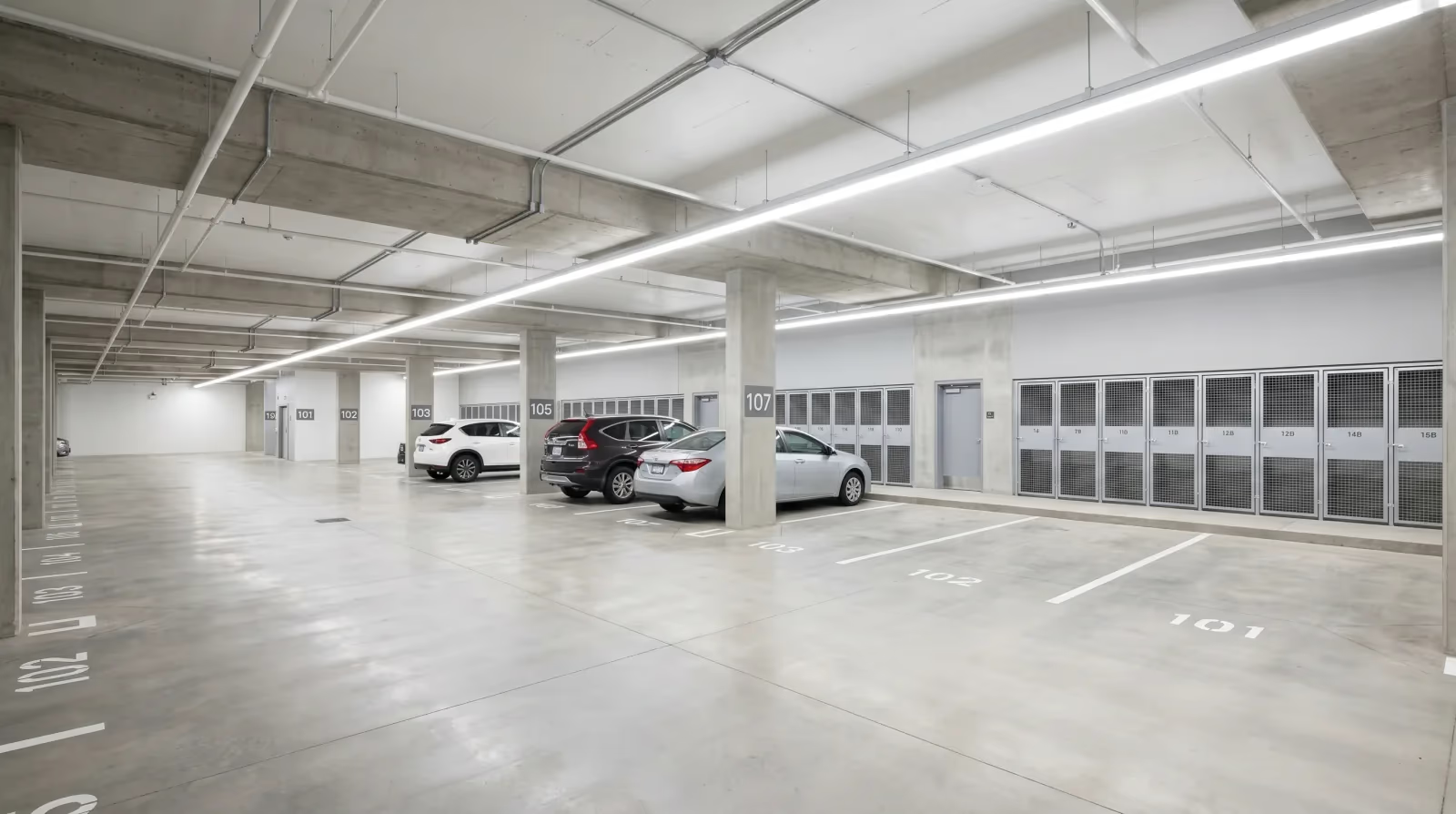

"Does it come with parking?" is the question most first-time condo buyers the FRIVE team works with remember to ask. "Is the parking actually mine, and what can I do with it?" is the better one, and the one that catches people out after they've moved in. In a great many BC condos, the parking stall and storage locker aren't owned the way your unit's interior is. They're often limited common property, a designation with real consequences for what you can rely on, sell, or rent. The details are small print, and skipping them is how buyers discover their second-car or bike-storage plan doesn't work.
This is a plain-English guide to parking and storage in BC stratas and what to check before you buy.
What "limited common property" means
In a strata, there's your strata lot (essentially your unit's interior) and there's common property (the shared parts, hallways, lobby, grounds). Limited common property, or LCP, sits in between: it's common property that the strata has designated for the exclusive use of one or more specific units (Government of British Columbia).
Parking stalls, storage lockers, balconies, and patios are commonly LCP. So your balcony is yours to use exclusively, but technically it's common property designated to your unit, not part of your unit's interior in the same way. The same is true of many parking stalls and lockers. You have exclusive use, but how you got that use, and what you can do with it, depends on the specific arrangement.
That nuance is the root of nearly every parking-and-storage surprise.
Is the stall actually yours?
Here's where buyers assume too much. Depending on the building, a parking stall might be limited common property assigned to your unit (exclusive use, technically common property), part of the unit's title in some arrangements, or simply rented or assigned by the strata. Each of these gives you a different level of security and different rights.
A stall designated as LCP for your unit is reasonably secure, it's allocated to your unit. An informally assigned stall that the strata could reallocate is less so. So "the unit comes with parking" can mean several different things, and the difference matters if you're counting on that specific stall. Before you buy, confirm exactly how the stall is designated, not just that one exists. Our strata documents review checklist covers pulling the strata plan and bylaws where this is spelled out.
Can you sell it or rent it?
This trips up buyers with specific plans. If your stall is limited common property tied to your unit, it generally stays with the unit, you usually can't simply sell it separately to someone else, because it's not a freely transferable asset of its own. Renting it to another owner in the building may be permitted or may be restricted by the strata's bylaws.
So if your plan involves selling an unneeded stall, renting one out for income, or acquiring a second stall from a neighbour, don't assume any of it is possible. Check the stall's designation and the bylaws first. The answer varies by building, and finding out after you own the unit is too late to change your plan.
Storage: confirm, don't assume
Storage follows the same logic and deserves the same scrutiny. The storage that "comes with" a unit might be a locker assigned as limited common property, a separate arrangement, or access to a first-come shared room, and some units have no dedicated storage at all.
For a first-time buyer in a smaller condo, storage is often more important than expected: bikes, seasonal items, the things that don't fit in a one-bedroom. So ask specifically what storage is included, how it's designated, and whether it's guaranteed to you, and verify it in the documents rather than taking a listing's word for it. "Storage locker" on a feature sheet doesn't tell you whether it's securely yours or a spot in a shared room that fills up.
Not every condo has parking at all
One more assumption to drop: not all condos come with a parking stall. Smaller units, transit-oriented buildings, and some older buildings may include no parking, limited parking, or parking only by separate arrangement. As cities encourage density near transit, parking-light buildings are more common.
If you rely on a car, or two, never assume a unit includes a stall, let alone two. Confirm whether parking is included, how many stalls, and how they're designated. A great-priced condo near the SkyTrain corridor might come with one stall or none, which is fine if you're car-light and a problem if you're not. Know before you offer.
Where to find the details
All of this is knowable before you buy. The strata plan shows how stalls and lockers are allocated and which are limited common property. The bylaws and rules govern what you can do with them. The disclosure information and your agent's confirmation with the strata or listing fill in the rest. Have your lawyer or notary verify the specifics during due diligence, because it genuinely affects what you're buying.
This is the same documents review you should be doing anyway for the building's finances, our guides to the depreciation report and the contingency reserve fund cover that side. Add parking and storage designation to the list. It takes a few extra minutes and saves a real headache.
EV charging and parking stalls
For buyers who drive an electric vehicle now, or who plan to make the switch in the next few years, the parking question goes one layer deeper. It's not just "do I have a stall?" It's "can I actually charge in that stall?"
BC strata legislation now gives owners the right to install EV charging in their own designated stall, which is genuinely useful progress. But the right to install and the practical ability to install are two different things. The right means the strata can't simply refuse; it doesn't mean your specific stall has the electrical infrastructure in place to support a Level 2 charger without significant work. Some stalls sit next to an existing panel with spare capacity and can be upgraded relatively straightforwardly. Others are on a floor or in a section of the parkade where running a circuit would require major electrical work, potentially involving the whole building rather than just your stall. The cost difference between those two situations can be substantial.
Before you buy, if EV charging is important to your plan, it's worth asking the strata or property manager specifically about the status of EV charging infrastructure in the building, not just whether it's permitted, but whether it's been done before and what the process looks like. Some buildings have already coordinated a building-wide EV charging upgrade and have ready stalls; others are at the beginning of that process. Our guide to EV charging laws and readiness reports in BC strata buildings covers this in more detail.
We've seen this trip buyers up in a specific way. A buyer in a newer Langley condo was reassured by her agent that "stratas have to allow EV charging now", which is true, and stopped there. She bought a stall, assumed it would be straightforward to add a Level 2 charger, and then discovered the parkade layout meant her stall was the farthest from any panel. Getting a circuit run to it required going through the strata's EV charging process, waiting for an engineering assessment, and contributing to a shared cost for the run. It got resolved, but it took longer and cost more than she'd expected. Knowing to ask the question upfront would have given her a clearer picture before she bought.
Visitor parking and what the strata rules actually say
If you're buying a unit that comes with one stall but you have a second car, or if you regularly host overnight guests who drive, the visitor parking situation is worth examining before you make an offer. Visitor parking rules are one of the more common sources of friction in Fraser Valley stratas, and the written rules often differ from what buyers assume they'll find.
Strata bylaws typically restrict how visitor parking can be used: time limits, overnight rules, and restrictions on owners using visitor stalls for a second vehicle are common. In theory, those rules are designed to keep visitor stalls available for actual visitors. In practice, enforcement varies widely by building. Some stratas actively ticket and tow; others are more relaxed. But as a buyer, you can't assume the current relaxed enforcement will continue, bylaws are enforceable even when they haven't been.
The minutes are worth reading for this. Parking disputes, owners using visitor stalls as overflow, short-term rental guests parking in the wrong spots, debates over enforcement, tend to show up in strata minutes if they've been an issue. If a building has had recurring arguments about visitor parking over the past couple of years, the minutes will tell you. That's useful information for a buyer deciding whether their second car or regular overnight guests are going to cause headaches.
We've had a buyer discover this the uncomfortable way. He bought a one-stall unit in a Cloverdale mid-rise with a second car, operating on the assumption that visitor parking was deep enough to handle the overflow without issues. The building had about eight visitor stalls for a building of that size. The strata's bylaws limited visitor parking to 48 hours and prohibited owners from using visitor stalls at all. Enforcement had been inconsistent historically, the prior owner had used visitor parking freely. Six months after he moved in, the council voted to start enforcing the bylaw actively, including ticketing. He had to rethink the second car situation, which he would have factored into his buying decision had he known. The documents were there to check; he just hadn't thought to look at the parking bylaw specifically.
The strata documents package available during your subject period includes the bylaws and the most recent two years of minutes. Parking shows up in both. Ask your agent to flag anything related to parking enforcement, second-vehicle situations, and visitor stall use when they're reviewing the package. It's a quick scan that answers a question buyers often only think to ask after they've moved in.
The takeaway
Parking and storage in a BC condo are often limited common property, exclusive to use, but not owned like your unit, with rules about transfer and security that buyers routinely overlook. Before you offer, confirm whether the stall is actually secured to your unit, whether you can sell or rent it, whether your storage is guaranteed, and whether the unit includes parking at all. It's unglamorous small print, but it's the difference between a plan that works after move-in and one that quietly doesn't.
If you'd like help confirming the parking and storage situation on a condo you're considering, reach out to the FRIVE team, we check this as part of the document review for our buyers, or browse current Fraser Valley listings to start your search.
Found a condo or townhouse you like?
Let the FRIVE team request and review the strata package for you. We'll go through the Form B, depreciation reports, and council minutes, and let you know if we spot any red flags, like upcoming special levies or restrictive rules. Completely free, no obligation, no pressure.
Frequently asked questions
What is limited common property in a BC strata?
- Limited common property (LCP) is common property in a strata designated for the exclusive use of one or more specific strata lots, rather than shared by everyone. Parking stalls, storage lockers, balconies, and patios are often LCP. You have exclusive use of it, but it isn't owned like your unit's interior.
Is my condo parking stall actually mine?
- It depends on how the stall is set up. It may be limited common property assigned to your unit (exclusive use, but technically common property), part of the unit's title in some arrangements, or rented/assigned by the strata. Each arrangement has different rules about transfer and security. Confirm exactly how a specific stall is designated before buying.
Sources
- Strata housing, common property and limited common property, Province of British Columbia, Government of British Columbia
- Form B: Information Certificate, Province of British Columbia
Related guides
- First-Time BuyersTraditional Strata vs. Bare Land Strata: What BC Townhouse Buyers Must Check
- First-Time BuyersCo-Buying a Home in the Fraser Valley: Joint Tenancy vs. Tenancy in Common for Family & Friends
- First-Time BuyersBuying a Pre-Sale Condo or Townhouse in the Fraser Valley: REDMA, Disclosures, and Completion Risks
- First-Time BuyersRent vs Buy in the Fraser Valley: An Honest Framework for 2026
Found this useful? Share it.
A neighbour, a partner, a friend who's two FHSA contributions away, send it their way.