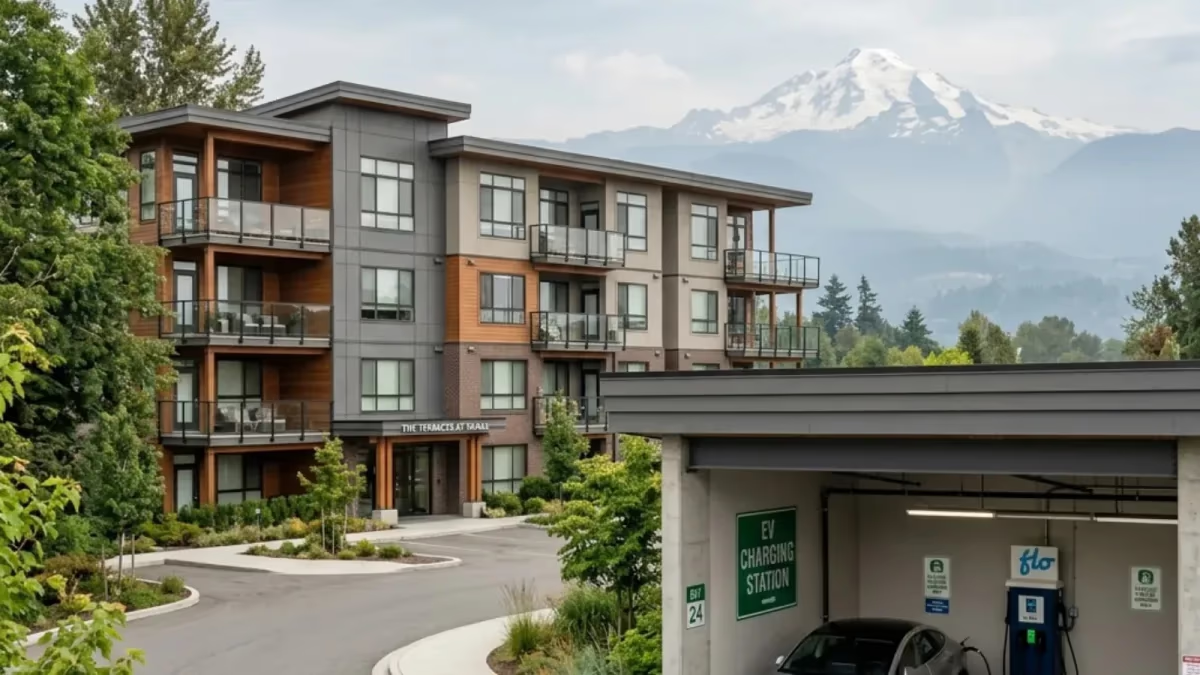

Electric vehicles are becoming the standard on Fraser Valley roads, but if you are buying a condo or a townhouse, plug-in parking is not guaranteed. We work with buyers in Surrey, Langley, and Abbotsford who are excited to go electric, only to realize that retrofitting a charger in an older parkade or townhouse garage can be an administrative nightmare.
Fortunately, the Province of British Columbia has introduced sweeping changes to the Strata Property Act under Bill 22 to make EV charging installations easier. The core of this legislation is a looming deadline for strata corporations to obtain a professional Electrical Planning Report (EPR).
If you are shopping for a home, you need to understand how these new laws protect you, what to look for in strata documents, and how to verify if a building has the electrical headroom to support your car.
The New Law: Mandatory Electrical Planning Reports
To address the growing demand for EV charging and home heat pumps, the BC government now requires strata corporations with five or more lots to obtain an Electrical Planning Report (EPR). This report must be completed by a qualified professional, such as an electrical engineer, and provides a detailed audit of the building’s current electrical capacity, energy usage, and the path to adding charging infrastructure.
The deadline to obtain this report depends entirely on where the strata is located. Under BC regulations, the deadlines are:
- December 31, 2026: For strata corporations located within the Metro Vancouver Regional District, the Fraser Valley Regional District, and the Capital Regional District (excluding islands only accessible by air or water).
- December 31, 2028: For strata corporations in all other areas of British Columbia.
For buyers in Surrey, Langley, Maple Ridge, and Abbotsford, the December 31, 2026 deadline is rapidly approaching. Stratas that fail to secure this report in time will be in breach of the Strata Property Act.
When you review strata documents for a prospective purchase, asking for the EPR (or checking the minutes to confirm they have commissioned one) should be at the top of your list.
Strata Voting Rules: Lowering the Barrier to EV Charging
Historically, one of the biggest hurdles to installing EV chargers in strata developments was the voting threshold. Under original strata rules, major decisions regarding common property or spending from the Contingency Reserve Fund (CRF) required a three-quarters (75%) majority vote at an Annual General Meeting (AGM) or Special General Meeting (SGM). Getting 75% of owners to agree on EV charging, especially those who did not own electric cars, was notoriously difficult.
Bill 22 changed this dynamic by lowering the voting threshold to a simple majority (50% + 1) for several important EV-related items:
- CRF Spending for EV Infrastructure: Strata corporations can now approve expenditures from their Contingency Reserve Fund by simple majority vote, provided the funds are used for the installation of EV charging infrastructure or to pay for the Electrical Planning Report itself.
- Bylaws Granting Exclusive Use: A strata council can pass a simple majority vote to assign common property parking stalls to specific owners for the purpose of EV charging, or to establish user fees for charging electricity.
This shift in voting power makes it much easier for strata councils to pass EV-friendly initiatives. It prevents a small minority of resistant owners from blocking modernization projects that protect the building's long-term resale value.
Requesting a Charger: The "Unreasonable Refusal" Rule
The most significant change for individual owners is how the strata must handle charger requests. Once a strata corporation has obtained its Electrical Planning Report, or once the legal deadline to obtain it has passed, the rules regarding owner-installed chargers shift.
Under the updated Strata Property Act, an owner can submit a formal request to the strata council to install an EV charger at their parking space. Once the request is received:
- No Unreasonable Refusal: The strata corporation cannot unreasonably refuse the owner's request if the installation conforms to the guidelines set out in the building’s EPR and meets standard safety regulations.
- Conditions Apply: The strata can place reasonable conditions on the approval. These typically include requiring the owner to use a licensed electrician, install a specific type of charger that works with the building’s energy management system, obtain proper permits, and sign an alteration agreement (assumption of liability).
- Cost Responsibility: The individual owner is responsible for the cost of the charger and the electrical run from the panel to their stall, unless the strata has already installed "EV-ready" infrastructure to the spot.
EPR vs. EV Ready Plan: What is the difference?
It is important not to confuse an Electrical Planning Report (EPR) with an EV Ready Plan.
An EPR is a mandatory, legislated requirement under the Strata Property Act to assess overall electrical capacity.
An EV Ready Plan is a voluntary, highly detailed plan that maps out how a strata corporation will supply a Level 2 charging outlet to every residential parking stall in the complex. While not legally mandatory, having an EV Ready Plan is highly recommended because it makes the strata corporation eligible for thousands of dollars in BC Hydro rebates to help fund the backbone infrastructure.
Strata Document Auditing: The EV Checklist
When we walk our buyers through strata documents, we don't just look for leak histories and CRF balances. If you drive an electric vehicle, you must audit the documents for EV readiness. Here is what to check:
1. The Form B Information Certificate
The Form B is the standard information certificate provided by the strata property manager. Look at the parking section. It will state whether the parking stall assigned to the unit is:
- Part of the Strata Lot: (Common in townhouses with private garages).
- Limited Common Property (LCP): (Common in condos, where the space is common property but designated for your exclusive use).
- Common Property assigned by lease or license: (Owned by the strata, and council controls allocation).
If the stall is common property or LCP, you must obtain permission from the strata council to install a charger. The Form B will also disclose if there are any outstanding strata fines or alteration agreements registered against the unit regarding previous electrical work.
2. Council and AGM Minutes
Grep the last two years of meeting minutes for terms like "EV", "electric vehicle", "BC Hydro", "electrical planning report", and "EPR".
- Have they ordered the EPR? If the building is in Surrey or Langley and the minutes show no discussion of hiring an engineer for the EPR, the strata is lagging behind. This could lead to a rush-job expense or legal non-compliance by the end of 2026.
- Is there an EV Ready Plan? Look to see if they have applied for BC Hydro infrastructure rebates. If they have an active rebate application, it means the council is proactive.
- Are there user fee disputes? Check if the minutes mention arguments over how EV owners are charged for electricity. Some older stratas charge a flat fee (e.g., $30/month), which can lead to friction between owners. Proactive stratas install networked chargers that track exact kilowatt-hour usage and bill the owner directly.
3. Strata Bylaws and Rules
Read the filed bylaws. Specifically look at the sections governing parking, common property alterations, and utilities.
- Is there an EV charging bylaw? A well-run strata will have a dedicated EV bylaw outlining the request process, acceptable charger brands, installation standards, and how electricity costs are recovered.
- Are alterations restricted? Look for strict rules on running wires through common property walls or slabs. In condo parkades, running a wire from the electrical closet to your stall requires drilling through concrete, which must be approved by the strata.
Townhouses vs. Condos: Different EV Realities
The physical structure of your home changes how EV charging is handled.
Townhouse Garages
If you are buying a townhouse in Willoughby (Langley) or Clayton Heights (Surrey) with a private, attached garage, the process is usually simpler. Your garage outlets are often wired directly to your individual unit’s electrical panel.
- Headroom Check: The main check here is panel capacity. Many older townhouses have 100-amp panels. If you have an electric range, dryer, and air conditioning, adding a 40-amp EV charger might overload the system. An electrician may need to install a load-management device (load miser) that pauses vehicle charging when heavy appliances are running.
- Bylaw Check: Even though the garage is yours, the exterior walls and concrete slab are often common property. You may still need council approval to drill through the wall to mount an exterior charger if you plan to park on the driveway.
Condo Parkades
In a low-rise or high-rise condo building, parking is almost always located in a shared underground parkade.
- Infrastructure Costs: You cannot simply plug into a standard 120-volt outlet in the parkade. Those outlets run on common utility power, and using them to charge your car is considered "stealing" electricity from the strata.
- Load Sharing: Underground parkades require a centralized load-sharing system. Because dozens of cars may plug in at once, a smart system must throttle charging speeds to prevent blowing the building's main transformer. The strata will require you to purchase a compatible smart charger (such as a Flo or ChargePoint unit) that integrates with their network.
The Cost: Who Pays?
Unless you are buying into a brand-new building that was pre-wired for EV charging from day one (mandatory under many municipal building codes since 2018), retrofitting carries costs:
- Individual Path: If you are the first in your row of parking stalls to install a charger, you may have to pay for the core infrastructure, such as an electrical sub-panel or conduit runs, which can run from $2,500 to $8,000+.
- Centralized Path: If the strata council has adopted an EV Ready Plan, they will use CRF funds (often subsidized by BC Hydro rebates of up to $80,000 per building) to install the core conduit and panels throughout the parkade. Once that is complete, the individual owner only pays a smaller fee (typically $1,500 to $2,500) to pull the wire from the nearby junction box to their stall and mount the charger.
In our experience, buying into a strata that has already completed its EPR and has an active EV Ready Plan is usually the easier route if you plan to charge an EV at home. It typically saves money on installation costs and reduces the chance of pushback from the strata council when you ask to plug in.
EV Strata Checklist for Buyers
- Check the Deadlines: Strata buildings in Metro Vancouver and the Fraser Valley must have their Electrical Planning Reports completed by December 31, 2026.
- Look for Proactive Councils: Review meeting minutes to ensure the strata council is actively planning for the EPR and has discussed EV Hydro rebate programs.
- Read the Bylaws: Look for a dedicated EV charging bylaw that outlines cost recovery and alteration requirements.
- Understand Stall Ownership: Verify whether your assigned parking stall is Limited Common Property (LCP) or common property, as this changes your alteration rights.
- Assess Panel Capacity: In townhouses, check whether the unit panel has the electrical capacity to handle a Level 2 charger without an expensive upgrade.
Frequently Asked Questions
What is the deadline for BC stratas to get an Electrical Planning Report?
Strata corporations with five or more lots located in Metro Vancouver, the Fraser Valley Regional District, and the Capital Regional District must obtain their report by December 31, 2026. For stratas in other areas of British Columbia, the deadline is December 31, 2028.
Can a BC strata council refuse my request to install an EV charger?
Once the strata has obtained its Electrical Planning Report (or the deadline to get one has passed), the council cannot unreasonably refuse a request to install a charger that meets safety standards and conforms to the EPR guidelines. However, they can place reasonable conditions on the approval.
Who pays for the installation of an EV charger in a condo parkade?
Unless the strata has already paid to run infrastructure to your stall, you are responsible for the cost of running electrical conduit from the building's electrical room to your parking space, obtaining permits, and purchasing the charger. This cost can range from $2,000 to over $8,000.
What voting threshold is needed to approve strata EV charging upgrades?
Under Bill 22, strata corporations can approve expenditures from the Contingency Reserve Fund (CRF) for EV infrastructure planning and installation by a simple majority (50% + 1) vote, lowering the barrier from the traditional three-quarters (75%) majority requirement.
Can I plug my EV into a standard wall outlet in my strata parkade?
No. Standard wall outlets in strata parkades run on common utility power paid for by all owners. Plugging your vehicle into these outlets without permission and an agreed-upon billing arrangement is generally prohibited and can result in strata fines.
What is the difference between an Electrical Planning Report and an EV Ready Plan?
An Electrical Planning Report is a legally mandated study of a strata's overall electrical system capacity. An EV Ready Plan is a voluntary, detailed engineering strategy to run charging outlets to every parking stall, which is required to qualify for BC Hydro rebates.
Do newly built townhouses in Surrey and Langley have EV charging?
Under municipal building bylaws adopted in Surrey and Langley around 2018, developers must construct all new residential parking spaces with a Level 2 EV charging outlet or a complete rough-in (conduit and panel space) to facilitate easy installation.
What is an alteration agreement (Assumption of Liability) for strata EV chargers?
This is a legal document signed by the owner and the strata corporation. It states that the owner is responsible for all costs related to the installation, maintenance, operation, and future removal of the charger, and must carry personal liability insurance covering the modification.
How does a strata track and bill electricity costs for EV charging?
Modern stratas install smart, networked chargers that measure exact energy usage. The charging network bills the owner directly for the electricity used and reimburses the strata. In older systems, stratas may charge a flat monthly fee, though this often leads to owner disputes.
Can I charge my EV using my unit's electricity in a townhouse?
If you have an attached private garage, the electrical outlets in that garage are typically wired directly to your unit’s individual panel. In this case, you pay for the electricity on your personal BC Hydro bill, meaning no cost recovery by the strata is necessary.
Sources
- Government of British Columbia - Strata electrical planning reports and EV charging
- BC Hydro - EV charger rebates for strata apartments and townhomes
- BC Financial Services Authority - Strata Property Act Information and Amendments
- Appraisal Institute of Canada & Strata Property Amendment Act (Bill 22) Regulations
Data verified May 28, 2026. Strata bylaws and electrical standards vary by building and municipality. Consult a licensed electrical contractor and review specific strata documentation before making financial decisions.
Related FRIVE guides
- Fraser Valley condo strata due diligence guide, the full checklist covering every strata document and risk to review before your subjects come off
- Strata special levies: what they are and how to spot them, how to find capital-project surprises before you're bound to pay them
- BC condo water deductibles and Section 158 liability, the other hidden strata risk that can cost as much as an EV retrofit
- Condos for sale in Surrey, BC, filter by building age to find stratas most likely to have EV infrastructure already in place
- Townhomes for sale in Langley, BC, newer Willoughby and Walnut Grove complexes where EV-ready stalls are increasingly standard
Next Steps: Work with FRIVE
The FRIVE team helps buyers navigate the complexities of strata ownership across the Fraser Valley. We know the Langley and Surrey townhouse complexes in detail, including which stratas have proactive councils, healthy reserve funds, and ready EV infrastructure.
If you are looking for an EV-friendly home in the Fraser Valley, get in touch with the FRIVE team, start a conversation or browse current Fraser Valley listings. We will never pressure you to buy a home that doesn't fit your life.
Found a condo or townhouse you like?
Let the FRIVE team request and review the strata package for you. We'll go through the Form B, depreciation reports, and council minutes, and let you know if we spot any red flags, like upcoming special levies or restrictive rules. Completely free, no obligation, no pressure.
Sources
- Strata electrical planning reports and EV charging, Government of British Columbia
- EV charger rebates for strata apartments and townhomes, BC Hydro
- Strata Property Act Information and Amendments, BC Financial Services Authority (BCFSA)
- Strata Property Amendment Act (Bill 22) Regulations, Government of British Columbia
Related guides
- First-Time BuyersWood-Frame vs Concrete Condos: What the Construction Type Means for Fraser Valley Buyers
- First-Time BuyersCondo or Half-Duplex? The First-Time Buyer Comparison Nobody Explains
- First-Time BuyersGifted Down Payments in BC: How the Gift Letter Works and What Lenders Need
- First-Time BuyersCommuting From the Fraser Valley to Vancouver: A Realistic Breakdown
Found this useful? Share it.
A neighbour, a partner, a friend who's two FHSA contributions away, send it their way.