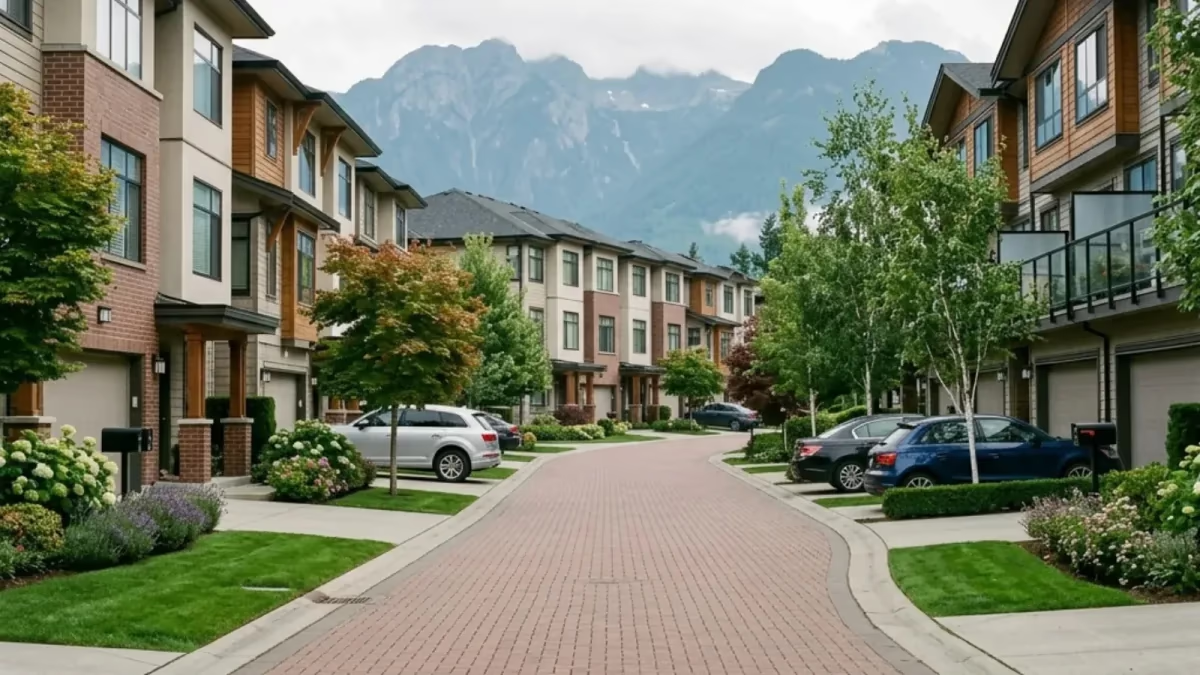

The FRIVE team works with a lot of first-time buyers trying to decide between condo and townhouse, and the strata structure underneath each one matters more than most buyers realize. For many first-time buyers in Langley, Surrey, and Abbotsford, a townhouse is the ideal middle ground. It gives you more space than a condo, a private entrance, and often a backyard for a dog, all without the price tag of a single-family detached home.
However, when you start browsing townhouse listings, you will run into a major structural variance that you cannot see from the driveway. Many townhouse complexes in the Fraser Valley are registered as Bare Land Stratas, while others are Traditional Building Stratas.
While both are governed by the BC Strata Property Act, they operate in completely different ways regarding what you own, what your strata fees pay for, who maintains the building, and how you must insure your home.
If you are shopping for a townhouse, here is the FRIVE team's breakdown of the differences between traditional and bare land stratas, and what you must check before writing an offer.
The Core Difference: Building vs. Land
The legal distinction between the two strata types comes down to how the property was subdivided when it was registered at the Land Title Office.
1. Traditional Strata (Building Strata)
In a traditional building strata, the strata plan divides the building into individual strata lots. As an owner, you own the interior space of your unit (typically measured from the center of the drywall inward).
The building structure itself, including the roof, siding, windows, foundation, balconies, and common yards, is classified as common property or limited common property (LCP).
The strata corporation owns these structural elements and is legally responsible for maintaining, repairing, and insuring them.
2. Bare Land Strata
In a bare land strata, the strata plan divides the land itself into individual lots. As an owner, you own the entire physical lot, which includes the land and the entire dwelling built upon it.
The strata corporation only owns the shared common infrastructure that sits outside the individual lots, such as the private roads, street lighting, community sewage pumps, visitor parking, and shared entrance gates.
In short: in a traditional strata, you own a box of air inside a building that the strata maintains. In a bare land strata, you own a house and its land, but you share a private road system with your neighbors.
Maintenance Boundaries: Who Pays for the Roof?
The difference in legal ownership creates completely different maintenance responsibilities.
Traditional Strata Maintenance
In a traditional townhouse complex, the strata corporation manages the exterior building envelope. Your strata fees pay for a shared pool of funds, the Contingency Reserve Fund (CRF), which is used to repair or replace:
- Roofs and gutters.
- Exterior siding, paint, and trim.
- Windows and sliding doors.
- Decks, balconies, and patios.
- Central boilers and shared utility lines.
- Landscaping in all front and back yards.
If your unit needs a new roof, the strata hires the contractor and pays the bill from the CRF. If the CRF is underfunded, all owners are assessed a prorated special levy to cover the cost, regardless of whose unit is directly under the leak.
Bare Land Strata Maintenance
In a bare land strata, the strata corporation is not responsible for your building. You are 100% responsible for the maintenance and repair of your home’s exterior, just like a homeowner in a standard detached subdivision.
You must pay out-of-pocket to:
- Replace your roof and gutters when they age.
- Paint or repair your own siding.
- Replace drafty windows or doors.
- Maintain your own yard, deck, and driveway.
Because the strata corporation only maintains the common roads and shared services, bare land strata fees are typically much lower than traditional strata fees.
However, you must budget for future exterior maintenance yourself. If your roof begins to leak, you cannot call the property manager to fix it; you must hire your own contractor and pay the entire bill yourself.
The Insurance Split: Condo Policy vs. House Policy
Because the ownership of the building structure differs, your insurance obligations change completely.
- Traditional Strata Insurance: The strata corporation is legally required to carry a master insurance policy that covers the full replacement value of the entire building structure. As an owner, you only need to buy a personal "condo owner" policy (HO6). This policy covers your personal belongings, liability, unit improvements, and potential strata deductible assessments.
- Bare Land Strata Insurance: The strata corporation’s master policy only insures the common property assets (like a clubhouse or entrance gate). You must buy a complete homeowner’s property insurance policy that covers the full replacement cost of your entire dwelling, just like a single-family house.
If you fail to secure proper homeowner’s insurance on a bare land strata townhouse, you have no coverage if your home is damaged by fire, wind, or water.
Mortgage Lender Rules: The Bank's Requirements
When you apply for a mortgage on a traditional strata townhouse, the lender will ask for the strata’s master insurance certificate to confirm the building is insured.
With a bare land strata, the bank views the property as a detached home with a shared road.
- Proof of Insurance: Before releasing mortgage funds, the lender will require you to provide a copy of your personal homeowner’s insurance policy binder, showing that the dwelling structure is fully insured for replacement value with the lender registered as the loss payee.
- Strata Financials: Lenders will still review the bare land strata's financial health, but their focus shifts. Instead of looking at building maintenance plans, they will check if the strata has enough reserves to maintain the shared private roads, streetlights, and community utility systems. If the private roads need repaving and the strata has no reserves, a massive special levy will be coming for all owners.
How to Identify a Bare Land Strata
You cannot tell the difference between a traditional and bare land strata simply by looking at the townhouse row. Many bare land developments look identical to traditional complexes.
To verify the strata type, you must check the strata documentation:
- Check the Strata Plan Number: A traditional strata plan number in BC usually starts with alphabetical prefixes like LMS, EPS, BCS, or LMS followed by numbers. A bare land strata plan will be explicitly registered at the Land Title Office, and the strata plan document itself will have "Bare Land Strata Plan" printed clearly on the first page.
- Review the Form B: The Form B Information Certificate will state your unit entitlement and outline what common property or LCP is assigned to your lot. It will also note if there are specific bylaws outlining owner maintenance obligations.
- Read the Bylaws: In a bare land strata, the bylaws will often contain clauses clarifying that owners are responsible for the repair, maintenance, and insurance of all buildings and structures located on their individual strata lots.
Summary Checklist for Townhouse Buyers
- Request the Strata Plan: Always ask your realtor to pull the original strata plan from the Land Title Office to verify if it is registered as bare land.
- Compare Strata Fees: If a townhouse has unusually low strata fees (e.g., $150/month compared to $400/month for similar units), it is highly likely a bare land strata.
- Confirm Insurance Quotes: Get an insurance quote for a full "homeowner" policy rather than a "condo" policy before removing subjects.
- Audit Road and Utility Reserves: Review the meeting minutes to check the condition of the private roads and shared sewer/water infrastructure.
- Budget for Exterior Repairs: If buying bare land, establish a personal maintenance fund to cover future roofing, siding, and window replacement.
Frequently Asked Questions
What is a bare land strata in BC?
A bare land strata is a type of subdivision where owners own their individual lot and the building on it, while sharing ownership of common infrastructure, such as private roads, streetlights, visitor parking, and shared utility lines.
What is the difference between a bare land strata and a traditional strata?
In a traditional strata, the strata corporation owns and maintains the building structure, exterior, and common grounds. In a bare land strata, the individual owner is responsible for maintaining, repairing, and insuring their own dwelling, while the strata only manages common infrastructure.
Are bare land strata fees lower than traditional strata fees?
Yes, bare land strata fees are typically much lower because they do not cover building maintenance, roof replacement, exterior painting, landscaping of individual yards, or building structure insurance.
Do I need house insurance for a bare land strata townhouse?
Yes. Unlike a traditional condo or townhouse where the strata master policy covers the building, a bare land strata owner must purchase a comprehensive homeowner's policy that insures the physical dwelling structure for full replacement value.
Can a bare land strata restrict pets or rentals?
Yes, bare land stratas are governed by the BC Strata Property Act and can pass bylaws restricting pets, short-term rentals, or other activities on the property, provided the bylaws conform to provincial laws (such as Bill 44's removal of rental restrictions).
Who maintains the roof on a bare land strata townhouse?
The individual owner is responsible for maintaining, repairing, and replacing the roof on a bare land strata townhouse. The strata corporation has no obligation to repair or maintain individual dwellings.
Do lenders require a depreciation report for bare land stratas?
Yes, under BC strata regulations, bare land stratas are required to obtain a depreciation report unless they have fewer than five lots or have passed a annual resolution to waive the requirement. Lenders will review the report to assess the health of shared infrastructure.
What happens if the private roads in a bare land strata need repaving?
The strata corporation is responsible for maintaining the shared private roads. If the road needs repaving, the cost will be paid from the Contingency Reserve Fund (CRF) or funded by a special levy assessed to all owners based on unit entitlement.
Can I paint my bare land strata townhouse any color I want?
Generally no. Even though you own the building, bare land stratas almost always have design guidelines or bylaws requiring owners to obtain council approval before changing the exterior color, siding, or roof materials, to maintain a uniform appearance in the development.
How do I know if a townhouse is bare land strata?
You can confirm by checking the strata plan registered at the Land Title Office, which will display "Bare Land Strata Plan" on the title page. The bylaws will also state that owners must maintain and insure their own dwellings.
Sources
- Government of British Columbia - Bare land strata regulations and guidelines
- Condominium Home Owners Association of BC (CHOA) - Bare land strata maintenance and insurance issues
- BC Financial Services Authority (BCFSA) - Strata Property Act regulatory updates
- Land Title and Survey Authority of British Columbia (LTSA) - Strata plan filing records
Data verified May 28, 2026. Strata bylaws, maintenance bounds, and lending rules are complex and building-specific. Consult a licensed BC real estate lawyer or notary public before finalizing your purchase.
Related FRIVE guides
- Fraser Valley condo strata due diligence guide, the full strata review checklist, covering depreciation reports, CRF, bylaws, and Form B for both strata types
- Strata contingency reserve fund explained, why the CRF balance matters differently for bare-land vs traditional strata
- Strata special levies and how to spot them early, bare-land stratas can levy owners for repairs that never show up on the traditional CRF radar
- Townhomes for sale in Langley, BC, mix of traditional and bare-land strata townhouse complexes
- Townhomes for sale in Surrey, BC, browse current listings with strata details on each property page
Next Steps: Work with FRIVE
The FRIVE team specializes in townhouse purchases across Surrey, Langley, and Abbotsford. We know how to read strata plans, identify bare land structures, and ensure you budget correctly for future maintenance costs.
If you are shopping for a townhouse in Langley or Surrey, get in touch with the FRIVE team, start a conversation or browse current Fraser Valley listings. We will help you find a townhouse that you can manage with confidence.
Found a condo or townhouse you like?
Let the FRIVE team request and review the strata package for you. We'll go through the Form B, depreciation reports, and council minutes, and let you know if we spot any red flags, like upcoming special levies or restrictive rules. Completely free, no obligation, no pressure.
Sources
- Bare land strata regulations and guidelines, Government of British Columbia
- Bare land strata maintenance and insurance issues, Condominium Home Owners Association of BC (CHOA)
- Strata Property Act regulatory updates, BC Financial Services Authority (BCFSA)
- Strata plan filing records, Land Title and Survey Authority of British Columbia (LTSA)
Related guides
- First-Time BuyersRent vs Buy in the Fraser Valley: An Honest Framework for 2026
- First-Time BuyersBaseboard Heat vs Heat Pump: What Fraser Valley Condo Buyers Should Check
- First-Time BuyersLeasehold vs Freehold in BC: The Ownership Difference That Changes Everything
- First-Time BuyersCo-Buying a Home in the Fraser Valley: Joint Tenancy vs. Tenancy in Common for Family & Friends
Found this useful? Share it.
A neighbour, a partner, a friend who's two FHSA contributions away, send it their way.