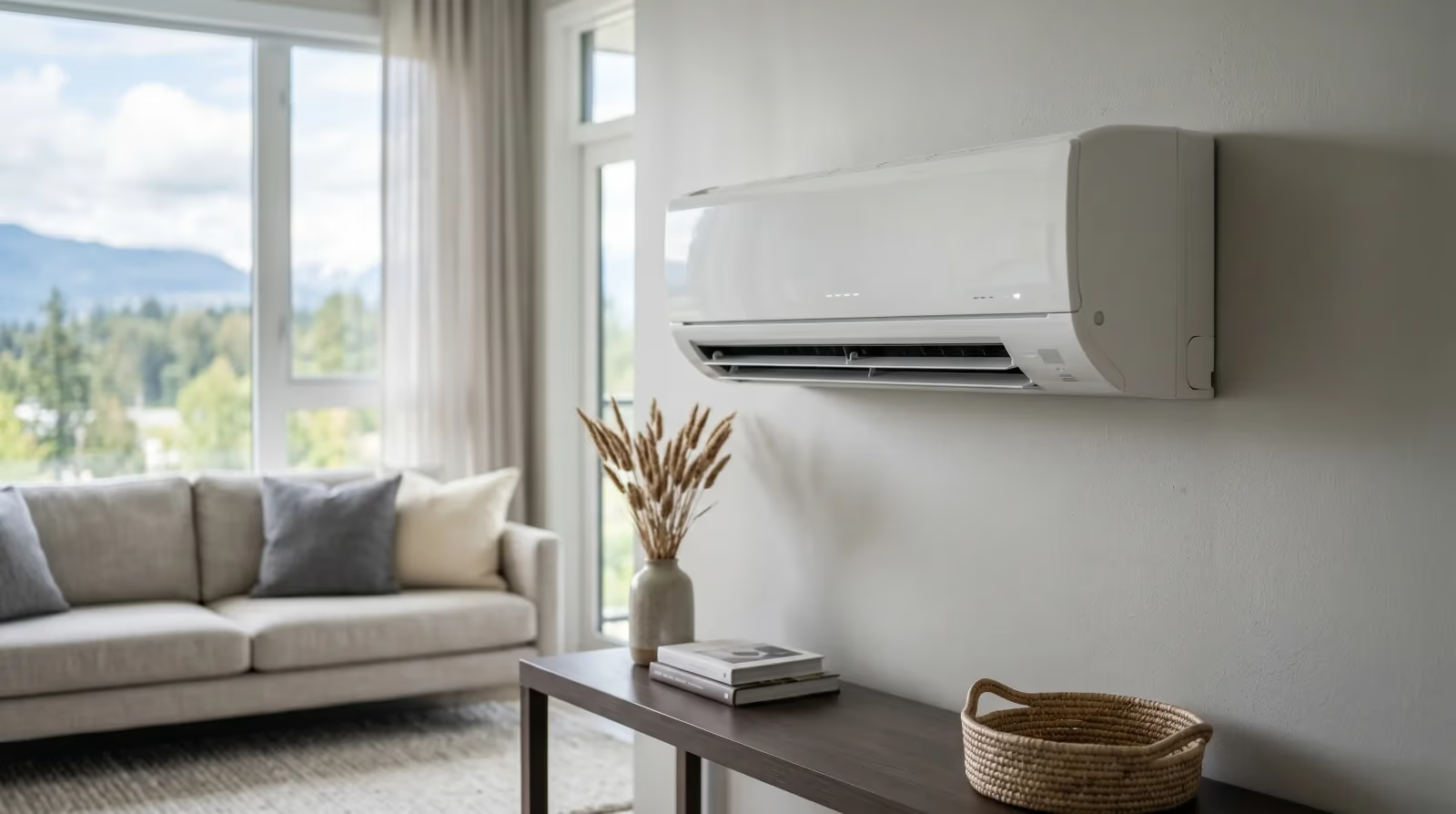

How a condo heats and cools used to be a footnote in a home search, it's moved up the list for the buyers the FRIVE team works with across the Fraser Valley. Most older condos out here run on electric baseboard heat, which does one job, heat, and does nothing on a hot July afternoon. Newer buildings increasingly come with heat pumps that handle both heating and cooling. For a first-time buyer, "how does this place handle summer?" has quietly become a real question, not an afterthought.
This is a plain-English guide to the difference between baseboard heat and heat pumps, and what to check before you buy.
The two systems, briefly
Electric baseboard heaters warm a room using electric resistance elements along the base of the wall. They're simple, reliable, and common in older condos. Their limitation is right there in the design: they only heat. When the summer sun hits a west-facing unit, baseboard heat offers nothing.
A heat pump works differently, it moves heat rather than generating it purely through resistance, and the same unit can heat in winter and cool in summer (Government of British Columbia, Better Homes BC). That dual function is the headline difference, and it's why newer buildings increasingly include them. A ductless mini-split heat pump, with an indoor head unit and an outdoor compressor, is a common form in condos.
Why this matters more than it used to
For years, a Fraser Valley condo buyer could reasonably treat cooling as a non-issue. That's changed. The region has seen summers with periods of significant heat, and a home without cooling can become genuinely uncomfortable, and for vulnerable people, even unsafe, during a heat event. Upper-floor and sun-facing units feel it most.
So the calculus has shifted. A west-facing one-bedroom with baseboard-only heat might be perfectly pleasant nine months of the year and miserable for the weeks that matter most. We're not saying avoid baseboard condos, plenty are excellent homes, but we are saying that checking how a unit handles summer heat now belongs in your due diligence, alongside the strata documents and the inspection.
The trap: can you even add cooling later?
Here's the part that catches first-time buyers. If you buy a baseboard-only condo and decide you want cooling, you can't always just install it. Adding cooling, a portable unit, a window unit, or a mini-split heat pump, can run into strata bylaws and rules about exterior or balcony alterations, and sometimes approval requirements.
A mini-split, for instance, needs an outdoor compressor somewhere, and many stratas have rules about what can be mounted on the building exterior or placed on a balcony. A window unit might be restricted by bylaws about exterior appearance. So before you assume "I'll just add AC," check the strata bylaws and rules and ask what's actually permitted. Our strata documents review checklist covers reading the bylaws, and this is one more reason to read them carefully. The answer might be straightforward, or it might mean cooling isn't easily an option, and you want to know which before you buy, not after your first heat wave.
What running costs actually look like, and why baseboard surprises buyers
Running costs are where baseboard heat catches buyers off guard, especially in their first January in a drafty older building.
Electric baseboard is resistance heating: every unit of electrical energy it consumes produces roughly one unit of heat. That's the least efficient way to heat electrically. A heat pump, by contrast, moves heat rather than generating it, so for every unit of electricity it consumes, it typically delivers more than one unit of heat. In mild weather the ratio can be quite favourable, in colder conditions it narrows, but even then heat pumps generally outperform resistance elements on efficiency. Exact figures depend on the specific unit, the building's insulation, and electricity rates, check current BC Hydro rate tiers directly on their website rather than relying on any number here, since rates change.
Here's a buyer scenario we've seen play out more than once. A couple is deciding between two similarly priced condos with similar strata fees. One is a 2009 building with baseboard heat; the other is a 2021 building with a ductless heat pump. They go with the older unit because the strata fees are slightly lower and the layout is better. Their first November hydro bill comes in noticeably higher than they expected, and their first January bill is higher still, the building has single-pane windows and older insulation, and the baseboards work hard. The strata fee difference doesn't come close to covering the monthly hydro gap. This isn't hypothetical; it's the conversation we end up having in the spring.
The point isn't that baseboard condos are a bad buy, plenty are solid homes with good value. The point is that comparing two units without factoring in likely operating costs is an incomplete comparison. If you can get hydro bills from the current owner through your realtor, or at least get a sense of the building's insulation and window quality, do it. Your realtor or building strata may be able to provide historical utility information from the current owner. Cross-reference what you learn with the strata fees post at strata fees explained for the full ownership-cost picture.
BC Hydro rebates and adding a heat pump after purchase
If you buy a baseboard-only condo and the strata allows alterations, it may be possible to add a ductless mini-split heat pump to your unit after purchase. This is a real option some buyers pursue, and there is government rebate support available to offset the cost.
The BC government runs the Better Homes BC program, which offers rebates for heat pump installation in homes that qualify. For current rebate amounts, eligibility requirements, and whether your building type and tenure qualify, check betterhomesbc.ca directly, program details and available funding can change, so confirm what's current before planning around a specific dollar figure. Your installer can also walk you through available incentives at the time you're ready to proceed.
The strata piece is the critical gate. Even with available rebates, adding a mini-split requires strata approval in most cases, you're altering common property or the building envelope when you run refrigerant lines or mount an outdoor unit. The strata may have a standard process for this, may require an engineer's review, or may simply not permit it in certain buildings. Check the bylaws and ask the strata before assuming the rebate path is open to you.
This parallel, a buyer wanting to add EV charging and needing strata approval, is a similar situation. Our BC strata EV charging guide walks through how that strata approval process typically works, and much of the same logic applies to heat pump additions. The lesson in both cases: confirm the strata's position before you factor the upgrade into your purchase plan.
New buildings versus older buildings: the growing divide
The difference between a 2010 condo and a 2022 condo isn't just aesthetics and finishes. In many cases, it's the entire heating and cooling approach.
BC's Step Code, the province's energy-efficiency standard for new construction, has progressively tightened over the years. Buildings constructed under more recent steps of the code are generally better insulated, have better windows, and often have heat recovery ventilation. Heat pumps have become increasingly standard in new construction across the Fraser Valley, both because newer energy codes make them the sensible choice and because buyers now expect cooling.
An older building, by contrast, may have minimal insulation by today's standards, electric baseboard throughout, and no mechanical ventilation. Adding central cooling to that kind of building as a strata-level project would be a major undertaking, typically requiring common-area work, significant strata votes, and substantial cost.
For a first-time buyer comparing a 2015 building and a 2023 building at similar price points, the heating and cooling system is one of the genuinely material differences. The 2023 building likely has a heat pump, better insulation, and lower heating costs. The 2015 building may have baseboard heat with some improvements, or it may have already added mini-splits to some units. Neither is automatically better value, the price has to reflect the difference, but treating them as equivalent on the comfort and cost side is not accurate.
When we're walking a buyer through two condos in different building vintages, the heating question comes up early. It's not a minor checkbox. It's part of what you're actually buying.
What to check before you buy
A short list for any condo you're considering. What heating system does the unit have? Does it include any cooling? How old and what condition is the equipment? And what are the strata's rules on adding or altering heating and cooling? For a sun-facing or top-floor unit especially, think about summer performance, and if the unit has no cooling, fold the realistic cost and feasibility of adding it into your budget and your decision.
If you're looking at a unit with a heat pump, modern mini-splits are generally quiet indoors, with the outdoor compressor producing some noise, worth a question about placement and any strata restrictions if that matters to you.
The takeaway
Baseboard heat isn't a dealbreaker, and a heat pump isn't a requirement. But how a Fraser Valley condo handles summer is now a legitimate part of the decision, not a detail to discover after you move in. Know what system a unit has, whether it cools, and, if it doesn't, whether the strata will let you add cooling. That's a small amount of homework that saves a hot, frustrated summer down the road.
If you want help weighing the heating and cooling setup on a condo you're considering, reach out to the FRIVE team, we'll help you ask the right questions of the strata, or browse current Fraser Valley listings to start.
Frequently asked questions
What is the difference between baseboard heat and a heat pump?
- Electric baseboard heaters warm a room using electric resistance elements and only provide heat. A heat pump moves heat in or out of a space and can both heat in winter and cool in summer, often more energy-efficiently. Baseboard is common in older condos; heat pumps are increasingly standard in newer buildings.
Do older Fraser Valley condos have air conditioning?
- Many older Fraser Valley condos were built with electric baseboard heat and no built-in cooling, so they don't have air conditioning unless an owner added it. Newer buildings more often include heat pumps that cool as well as heat. If summer comfort matters to you, check specifically whether a unit has any cooling before buying.
Sources
- Heat pumps, Government of British Columbia, Government of British Columbia (Better Homes BC)
- Strata electrical planning reports and EV charging, Government of British Columbia
Related guides
- First-Time BuyersFirst-Time Home Buyers in the Fraser Valley: Why Now, and Why Here
- First-Time BuyersBest Schools in the Fraser Valley: A Buyer's Guide for Families
- First-Time BuyersParking and Storage in BC Condos: The Small Print That Trips Up Buyers
- First-Time BuyersLeasehold vs Freehold in BC: The Ownership Difference That Changes Everything
Found this useful? Share it.
A neighbour, a partner, a friend who's two FHSA contributions away, send it their way.