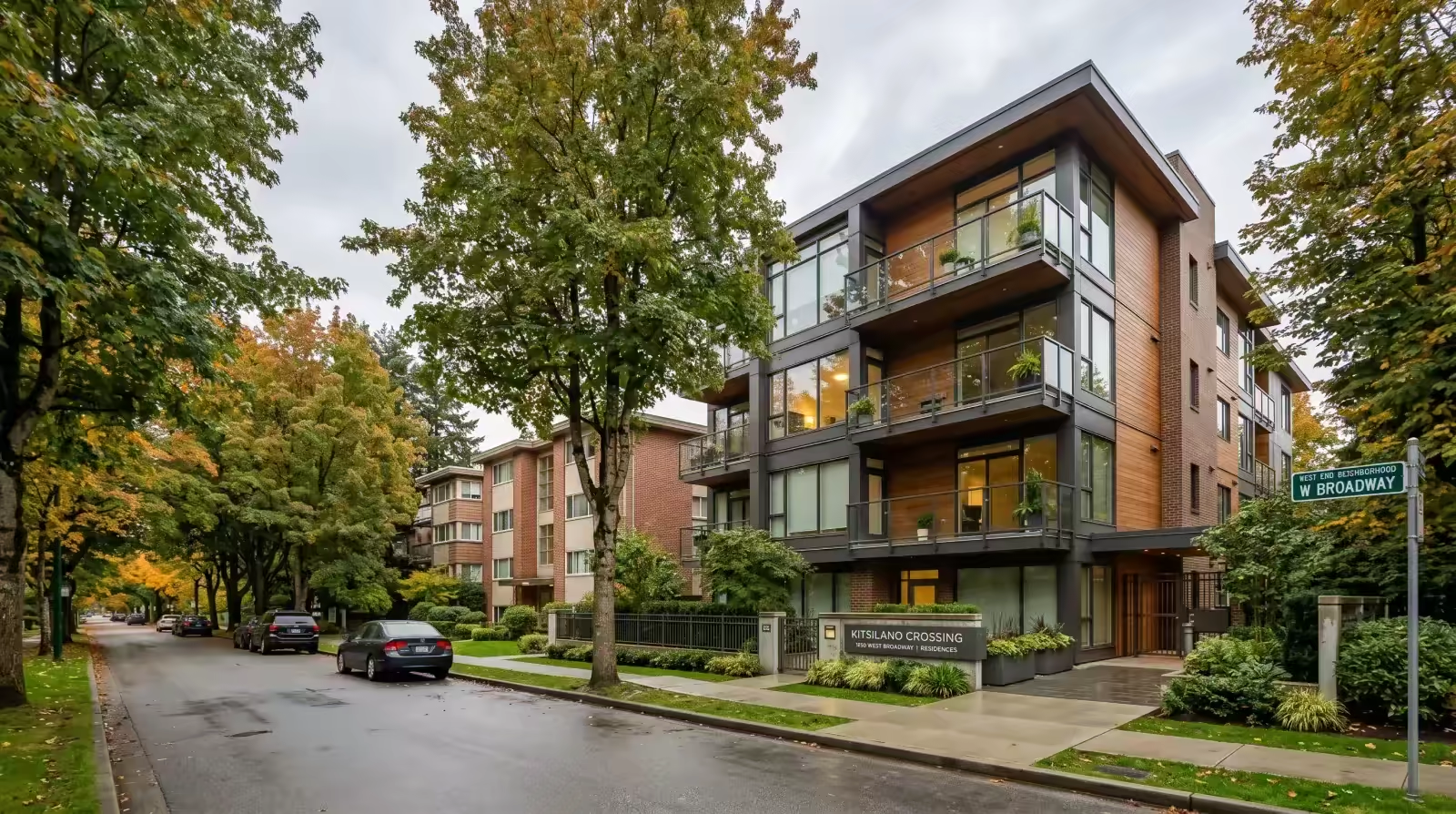

A leasehold condo can look like the standout deal of your whole search, same building, same neighbourhood, noticeably lower price. It's one of the first things the FRIVE team flags when a buyer brings one to us. Then you notice the word "leasehold" in the listing, and if you know what it means, a different set of questions opens up. The leasehold-versus-freehold distinction is one of the most important things a first-time buyer can understand, because the lower price isn't a discount on the same thing. It's the market pricing a clock that's running in the background.
This is a plain-English guide to the difference. It's general information, not legal advice, and leasehold is genuinely one of those areas where you must have a lawyer review the actual documents before you commit.
The core distinction
With freehold ownership, you own the home and the land it sits on, indefinitely. That's what most people picture when they think of buying a home, and it's what most BC properties are.
With leasehold, you own the home, or the right to occupy it, but you lease the land from its owner for a set term. You don't own the ground underneath. And critically, that lease has an expiry date (Government of British Columbia). What happens at expiry depends entirely on the lease's terms, which is why those terms matter so much.
That single difference, owning the land forever versus leasing it for a finite term, drives everything else about how a leasehold behaves.
Why it's cheaper, and why that matters
Leasehold properties typically cost less than comparable freehold homes, and first-time buyers are naturally drawn to that lower entry price. But it's important to understand what the discount represents. You're paying less because you own less: no land, and a finite term rather than perpetual ownership.
As the remaining lease shortens, the discount usually deepens, because the property becomes progressively harder to finance and resell. A lease with ninety years left behaves quite differently from one with thirty-five left. The price gap to freehold isn't a bargain the market overlooked, it's the market accurately pricing the lease. Going in understanding that protects you from treating a leasehold like a freehold with a coupon attached.
Not all leaseholds are built the same: prepaid versus registered leases
There's a further distinction within leaseholds that changes what you're actually buying, and it doesn't always get explained in a listing. Some leaseholds are long-term prepaid ground leases, often 99 years or similar at inception, with a meaningful amount of time remaining. The ground rent was paid upfront. Your ongoing costs look similar to a normal strata condo: mortgage, strata fees, and property taxes. At 70+ years remaining, this kind of leasehold functions almost like freehold in practice. You can get reasonable financing, buyers understand the product, and the clock feels distant.
Other leaseholds are shorter, or carry ground rent that escalates over time, or have terms that make the renewal question much more uncertain. These are fundamentally different purchases, and the fact that both use the word "leasehold" doesn't make them comparable.
To see this concretely: imagine two leasehold condos on the same street in the same building type. One has 73 years remaining at a fixed prepaid ground rent. The other has 23 years remaining with an escalating rent clause. The price difference between those two units is not just about their age or condition, it reflects the profoundly different risk profile of the two leases. The first buyer has something close to a normal condo purchase. The second buyer is looking at an asset that will become progressively harder to finance and resell, and that an increasing number of buyers and lenders will decline. Your lawyer must read the actual lease documents before you can compare these properties honestly.
Financing is more complicated
Here's a practical hurdle first-time buyers don't always anticipate: financing a leasehold can be more complex than financing a freehold home, and lenders pay close attention to the remaining lease term.
A longer remaining lease is generally easier to finance. A short remaining term can make mortgages harder to obtain, or can limit your amortization, because the lender is lending against an asset with a built-in expiry. This is exactly the kind of thing to confirm with a mortgage broker before you fall for a specific unit, our comparison of brokers and banks is a good starting point, and for a leasehold, a broker who has handled them is worth seeking out. Don't assume the financing will work the way it would on a freehold condo.
Prepaid versus non-prepaid
There's a further distinction within leaseholds that changes your monthly budget. In a prepaid leasehold, the lease was paid upfront for its full term, so there's no ongoing land-lease payment, your costs look closer to a normal condo. In a non-prepaid leasehold, you make ongoing lease payments on top of your mortgage and strata fees.
Those are very different cost structures, and a property that looks affordable on price can carry a meaningful ongoing lease payment that reshapes your monthly numbers. Always confirm which type you're looking at, and fold any ongoing lease payment into your budget alongside the mortgage and strata fees. Our explainer on strata fees covers the other recurring costs.
The leasehold renewal risk
This is the question buyers sometimes skip because it feels theoretical until it isn't. When a leasehold lease approaches expiry or actually expires, what happens depends entirely on the specific lease and the lessor, the entity that owns the ground. There is no automatic right of renewal at the same terms in most BC leasehold situations. The lessor holds the cards. They might renew; they might not; they might renew at substantially higher ground rent.
The real-world risk isn't about what happens on the final day of the lease. It's about what happens years before that, as the clock winds down. As the remaining term shortens, your condo can become very difficult to sell. Buyers won't want a 15-year lease. Lenders won't finance it. The market for your unit narrows to cash buyers, who demand a steep discount precisely because of the lease. This can happen well before the lease actually expires, in some situations, a property becomes practically unsaleable long before the technical end date.
We've seen buyers understand the lease intellectually, "yes, it expires in 2058", without internalizing what that means for resale over the next decade. If you plan to own for five years and the lease has fifty left, the residual term isn't your immediate problem. But if the plan changes and you need to sell in year twelve instead, you need to know where the market turns on that lease. Talk to a lawyer and a broker who have experience with these specific situations, not just with leaseholds in general.
BC leasehold and First Nations land: a specific due diligence path
A meaningful share of leasehold residential property in BC sits on First Nations reserve or treaty land. This isn't unusual, some of these properties are well-structured, long-term, and represent real homes that people have owned and lived in for decades. But the legal and financing framework is different, and it matters.
Financing on First Nations leasehold land involves different rules than standard BC leasehold financing. CMHC has programs specifically designed for on-reserve housing, and the band's lease terms and any band-specific approval processes affect both the purchase process and how future financing and resale work. A buyer who approaches this kind of property with the same checklist as a downtown Vancouver leasehold condo is missing critical context.
We won't invent specifics here, because the details vary significantly by band, by the specific lease, and by how the property is titled. What we'll say is this: if you're looking at a leasehold property on First Nations land, find a real estate lawyer with specific experience in that kind of transaction. Not a generalist. Not someone who has "done a few leaseholds." Someone who knows the specific framework. Get that advice before the offer stage, not after. The right lawyer will tell you exactly what questions to ask and what documents to read.
What happens at expiry
This is the question with the biggest stakes, and the honest answer is: it depends on the lease. Some leases may be renewed or extended, sometimes at renegotiated terms. In other cases, the land reverts to the owner at expiry. The outcomes vary widely and carry major financial consequences.
Because of that, reviewing the actual lease document with a lawyer isn't optional on a leasehold purchase, it's the whole ballgame. You need to know the remaining term, what happens at the end, whether and how it can be extended, and on what terms. A lawyer reading the specific lease is the only way to answer those questions for a property you're serious about. Our guide to subject removal explains how your conditions give you the time to do this review properly.
Appreciation works differently
One more thing first-time buyers often assume incorrectly: that a leasehold will build wealth the way a freehold does. Freehold value includes the land, which tends to appreciate over time. Leasehold value is tied to a depreciating lease term, so as the lease shortens, the value can stagnate or even decline rather than climb. A leasehold is not a smaller version of the same wealth-building bet, it's a different one, often closer to paying for a place to live for a defined period than to building long-term equity in land.
Who leasehold suits
In our experience, leasehold can make sense for a buyer who fully understands the lease terms, is looking at a property with a long remaining lease, and values the lower entry price for their particular time horizon and situation. For someone who needs to keep costs down and has a clear, possibly shorter, ownership window in mind, it can be a reasonable path.
It's riskier for buyers who don't grasp the lease implications, who expect freehold-style appreciation, or who haven't confirmed the financing. The leasehold that goes wrong is almost always the one bought without reading the lease.
If you're looking at a leasehold property and want help understanding what you're actually buying, reach out to the FRIVE team, we'll make sure you've got the right lawyer and broker looking at the lease before you decide, or browse current Fraser Valley listings to compare with freehold options.
Frequently asked questions
What is the difference between leasehold and freehold?
- With freehold ownership, you own the home and the land it sits on indefinitely. With leasehold, you own the home (or the right to occupy it) but lease the land from the owner for a set term. When the lease ends, the arrangement depends on its terms. Most homes in BC are freehold; leaseholds are a minority with specific considerations.
Why are leasehold properties cheaper?
- Leasehold properties typically cost less than comparable freehold homes because you don't own the land and the lease has a finite term. The lower price reflects that reduced ownership and the eventual lease expiry. As the remaining lease shortens, the discount usually deepens, because the property becomes harder to finance and resell.
Sources
- Buying a leasehold property, Province of British Columbia, Government of British Columbia
- Land Title and Survey Authority, leasehold title registration, Land Title and Survey Authority of British Columbia (LTSA)
Related guides
- First-Time BuyersBest Schools in the Fraser Valley: A Buyer's Guide for Families
- First-Time BuyersParking and Storage in BC Condos: The Small Print That Trips Up Buyers
- First-Time BuyersRent vs Buy in the Fraser Valley: An Honest Framework for 2026
- Hub - BC Buyer ProgramsIs There a First-Time Home Buyer Grant in BC? What Actually Exists in 2026
Found this useful? Share it.
A neighbour, a partner, a friend who's two FHSA contributions away, send it their way.