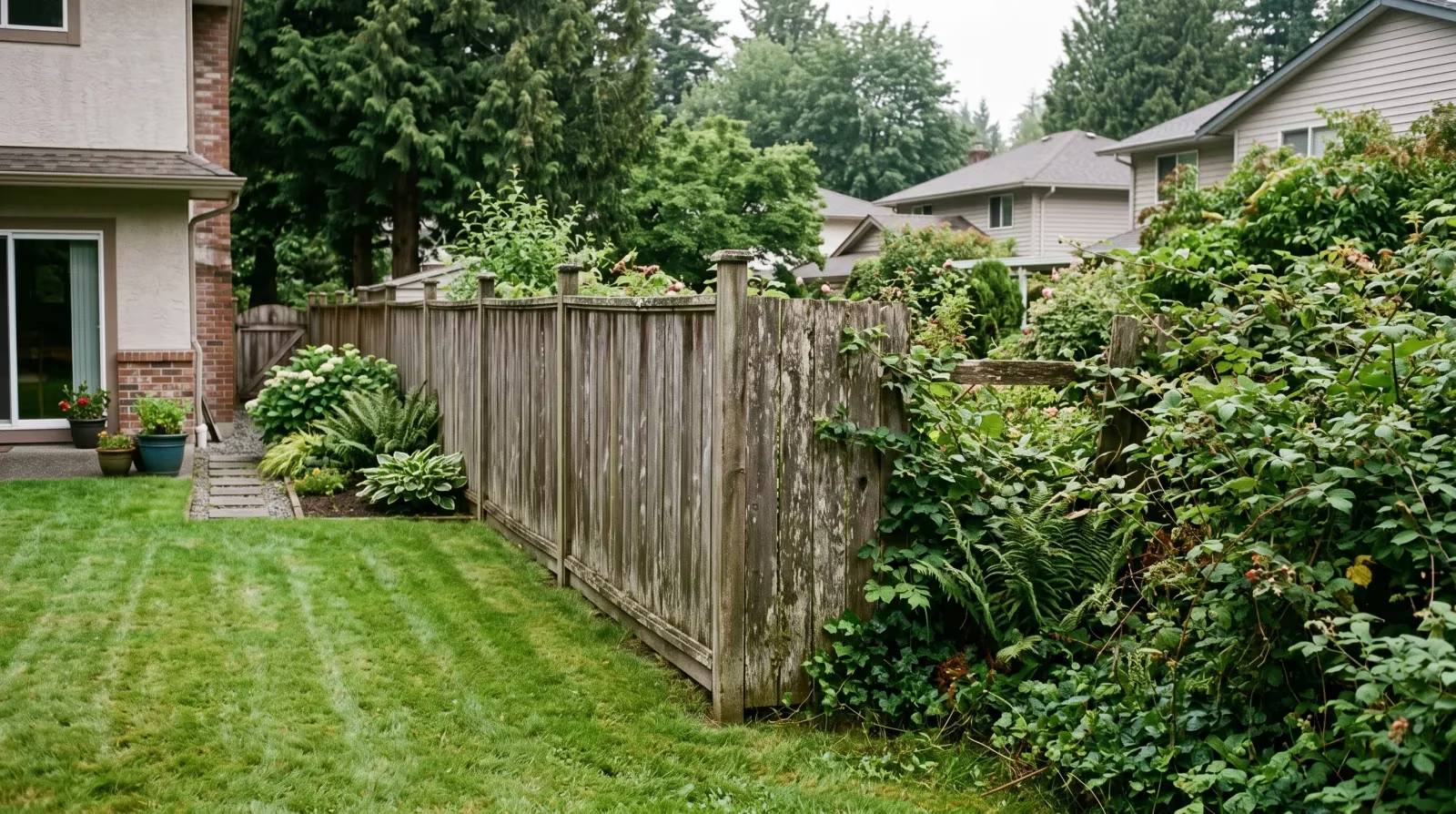

A fence dispute sounds like a small thing until you are living beside one. What makes them persistent is that they are rarely about the fence itself. They are about a boundary nobody ever confirmed and an understanding between two previous owners that was never written down.
The fence is not evidence
Fences end up where they end up for practical reasons. The ground was easier to dig. The old fence was there. Two neighbours agreed something reasonable one afternoon and built it.
None of those methods produce a legal boundary, and a fence that has stood for thirty years is not more accurate for having stood a long time.
The only thing that establishes a boundary is a survey certificate prepared by a BC Land Surveyor, confirming the legal boundaries and showing where improvements actually sit. Our guide to survey certificates and encroachments covers what the document does and when it is worth ordering.
You inherit the situation
This is the part buyers should internalize.
A boundary disagreement attaches to the properties rather than to the people involved. When you buy, you step into whatever situation exists, including tension that predates you by years.
The previous owners may have had a comfortable understanding that worked fine. Understandings do not transfer. A new owner on either side can reasonably take a different view, and the absence of documentation means there is nothing to point to.
What to look for at a showing
Some visual signals are worth noticing, and they take seconds.
A fence sitting at an odd angle relative to the house or to the street. A section that is clearly newer than the rest, which sometimes marks where a disagreement was resolved by one party rebuilding. A shed, garage, or driveway running right up to a boundary. And the clearest signal of all, two parallel fences a short distance apart, each built by a neighbour who declined to accept the other one.
None of these prove a problem. All of them justify a question.
The question to ask
Ask the seller directly whether there has ever been a disagreement with a neighbour about the boundary, the fence, or access.
Sellers answer this more often than buyers expect. The property disclosure statement covers specified matters, and a direct question can surface things a form does not.
If you get the chance to speak with a neighbour, that conversation is useful too. Neighbours are frequently candid, and a boundary dispute is rarely a secret to the people living beside it.
If a fence encroaches
Section 36 of BC's Property Law Act provides that on proof of an encroachment by a legal survey certificate, the Supreme Court may declare an easement, vest title to the land in the encroaching owner, or order removal of the encroachment.
Those are court outcomes. None of them are quick, and the legal cost can exceed the value of the strip of land in dispute several times over.
Which is exactly why the useful moment is before you buy, while a survey is a modest expense and you still have subjects in place. Our subject removal guide covers protecting the time.
Municipal fence rules
Separate from the boundary question, municipalities regulate fences.
Height limits are common, often different for front yards than back yards. Corner lots frequently have sightline requirements so that fences do not block visibility at intersections. Materials may be restricted in some zones.
Check the local bylaw before building or replacing anything. This is the same municipal layer that governs tree removal, and the rules differ between Fraser Valley cities.
Who pays for a shared fence
There is no automatic split in the way people sometimes assume.
Cost sharing between neighbours is a matter of agreement. If you reach one, write it down, because a verbal agreement about a fence has a short life expectancy and does not survive either party selling.
A short written note signed by both owners, setting out who paid what and where the fence sits relative to the boundary, costs nothing and prevents the exact situation described throughout this article.
Fences in a strata
If you are in a townhouse complex, the analysis changes.
Fencing is usually governed by the bylaws and may be common property or limited common property. Installing or altering a fence generally requires strata approval regardless of which side you live on.
That is more restrictive and considerably simpler, because the strata rather than the two of you decides.
What not to do
Do not move a fence to where you believe the line is before anyone has measured. That single action converts a manageable conversation into a dispute with a history, and it puts you in the position of having acted first.
Establish the boundary. Then talk. Then, if it is contested, get legal advice. Our guide on notary versus lawyer covers when a matter moves beyond routine conveyancing, and a contested boundary is squarely in lawyer territory.
The short version
The fence tells you nothing about the boundary. A survey certificate does. Disputes attach to properties and transfer to you when you buy.
Look for the visual signals at showings, ask the seller a direct question, and order a survey when something looks off. Check municipal rules before building, put any cost sharing in writing, and in a strata check the bylaws first.
We are agents rather than surveyors or lawyers, and none of this is advice on a specific boundary. A BC Land Surveyor establishes the line and your lawyer advises on a dispute.
Key takeaways
- A fence is not evidence of a boundary regardless of how long it has stood.
- Boundary disputes attach to the properties and transfer to a new owner.
- Odd angles, newer sections, structures near the line, and double fences are worth a question.
- Section 36 of the Property Law Act allows the court to declare an easement, vest title, or order removal on proof of encroachment.
- Municipal bylaws regulate fence height and placement, and strata bylaws govern fencing in a complex.
Frequently Asked Questions
Is the fence always on the property line?
No. Fences get built where it was convenient, where a previous fence stood, or where two neighbours agreed informally. Only a survey by a BC Land Surveyor establishes the actual boundary.
Who owns a fence between two properties?
It depends on where the fence sits and how it was built and paid for. A fence entirely on one side belongs to that owner, while a fence built jointly on the line is a shared arrangement. Records are often nonexistent, which is where disputes begin.
Do I inherit my neighbour's dispute when I buy?
Practically, yes. A boundary disagreement attaches to the properties rather than to the people, so a conflict that existed before you bought is waiting for you afterwards. Ask about it before you write.
How do I find out where the boundary actually is?
Order a survey certificate from a BC Land Surveyor. It confirms the legal boundaries and shows where structures sit, which is what turns an argument into a fact.
What if a fence encroaches?
Section 36 of BC's Property Law Act allows the Supreme Court, on proof of encroachment by a legal survey certificate, to declare an easement, vest title in the encroaching owner, or order removal. Legal advice is appropriate before taking any action.
Are there municipal rules about fences?
Yes. Municipalities regulate fence height, materials, and placement, particularly for front yards and corner lots where sightlines matter. Check the local bylaw before building or replacing anything.
Who pays for a shared fence?
There is no automatic split. Cost sharing is a matter of agreement between neighbours, and an agreement that is not in writing tends not to survive a change of ownership. Put it in writing if you reach one.
What about fences in a strata?
Fencing in a strata is usually governed by the bylaws and may be common property or limited common property. Installing or changing a fence generally requires strata approval regardless of which side of it you live on.
Should I raise fence questions before buying?
Yes, especially where a fence sits at an odd angle, appears newer than the rest, or where a shed or driveway runs close to a boundary. Those are the visual signals of a boundary that has never been confirmed.
Can I just move the fence to where I think the line is?
That is how disputes escalate. Establish the boundary with a survey first, then discuss it with your neighbour, and get legal advice if the situation is contested.
Sources
- Property Law Act, Government of British Columbia
- Land Title and Survey Authority of British Columbia
Verified September 1, 2026. General information only, not legal or survey advice. Boundary and encroachment matters depend on the facts of each property. Consult a BC Land Surveyor and a lawyer.
Related FRIVE guides
- Survey certificates and encroachments, the document that settles a boundary
- Easements and rights of way, what else affects your land
- Tree bylaws in the Fraser Valley, the other municipal layer on your yard
- Property disclosure statement in BC, what a seller must tell you
- Notary or lawyer for your BC closing, when a dispute needs legal advice
Next Steps: Work with FRIVE
We ask about neighbour relationships on nearly every detached showing, because it is one of the few things that genuinely affects daily living and never appears in a listing.
If you want a second opinion on a property where something about the fence line looks off, start a conversation with the FRIVE team or browse current Fraser Valley listings.
Sources
- Property Law Act, Government of British Columbia
- Land Title and Survey Authority of British Columbia, Land Title and Survey Authority of British Columbia
Related guides
Found this useful? Share it.
A neighbour, a partner, a friend who's two FHSA contributions away, send it their way.