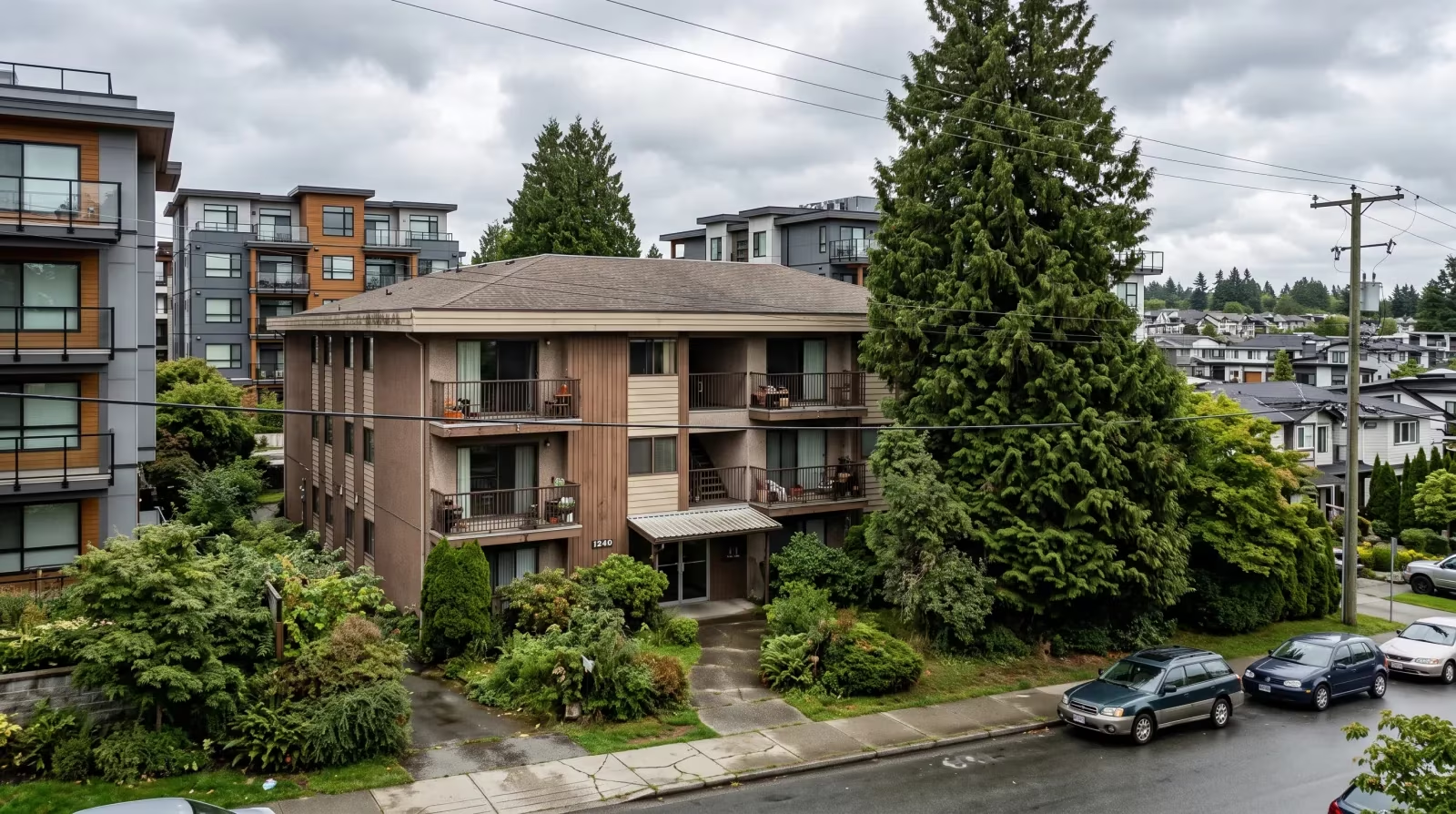

Buyers looking at older Fraser Valley condo buildings occasionally ask what happens if the whole building gets sold to a developer. It is a fair question, and the answer changed meaningfully in 2016.
What changed in 2016
Before that year, dissolving a strata corporation in BC required a unanimous vote. Any single owner could stop the process, which meant wind-ups were rare.
In July 2016, amendments to the Strata Property Act lowered the voting threshold from unanimous to 80%.
That single change made wind-ups a live possibility for buildings where the land is worth considerably more than the structure sitting on it.
How the 80% actually works
The detail here matters, and it catches people.
The termination resolution requires 80% approval of all registered owners. It is not a quorum vote and it is not 80% of the owners present at the meeting or holding proxies.
So an owner who stays home has effectively voted no. That threshold is genuinely demanding, and it is one reason wind-ups take time to assemble.
For strata corporations with fewer than five lots, the requirement is effectively unanimous, and those small stratas may choose whether to apply for a court order.
Court approval
Passing the vote is not the end of the process.
According to the province's guidance on terminating a strata corporation, once a resolution is approved by at least 80% of eligible voters, strata corporations with five units or more must apply to the BC Supreme Court to approve the winding up and cancellation.
The court's role is a genuine review rather than a rubber stamp. It has also confirmed wind-ups over the objections of a minority group, which means that if you are among the 20% who voted no, the process can still proceed.
The timeline is slow
Voluntary winding up, from initial exploration through finalizing the sale and owners moving out, can take up to 18 months or longer.
That length is worth understanding for two reasons. First, nothing happens suddenly, so an owner who reads their minutes will see it coming. Second, it means an extended period of uncertainty for owners who are trying to plan their own lives around the outcome.
Which buildings are candidates
The profile is fairly consistent.
An older, lower-density building on a large or well-located site, particularly where current zoning or an area plan would permit substantially more density than exists today. Proximity to transit and to newer development are common indicators.
In the Fraser Valley, that means keeping an eye on older walk-ups near the Surrey Langley SkyTrain corridor and in town centres where the surrounding blocks are visibly redeveloping. Our guide to SSMUH zoning covers the wider density picture, and development next door covers reading redevelopment pressure generally.
None of this means such a building will be wound up. Most will not. It means the conversation is more likely to start there than in a fifteen-year-old townhouse complex on a modest lot.
What to read in the strata documents
The minutes are where this appears first, and usually long before any vote.
Look for discussion of land value or appraisals being commissioned. Approaches from developers or realtors representing land assembly interests. Legal or consulting costs being incurred for something other than routine business. The formation of an owner committee to explore options.
Our strata council minutes red flags guide covers reading minutes generally, and the strata document review checklist covers the full package. This is one more thing to read for.
An additional signal worth noticing: a building facing large deferred repairs, with a thin contingency reserve fund, sometimes finds a wind-up more attractive than a special levy. When the depreciation report shows major work coming and the fund cannot cover it, owners start doing different math.
The question a buyer should actually ask
Not "will this building be wound up." Nobody knows.
The useful question is: if it were, would my share of the proceeds buy me a comparable home in a place I want to live.
For some buyers the answer is genuinely yes, and a wind-up would be a reasonable outcome. For others, particularly buyers who bought a modestly priced older unit precisely because it was affordable, the proceeds might not replace what they had in the same area. That is the scenario worth thinking through in advance.
It is also worth remembering that your share is based on unit entitlement rather than on what you paid, so owners in the same building can be affected quite differently.
Should this change your purchase
For most buyers, no. Older buildings offer real value in the Fraser Valley, and the possibility of a wind-up is speculative for the large majority of them.
What it should change is your reading. Spend the extra ten minutes on the minutes looking specifically for this. If nothing appears, you have confirmed something useful. If something does appear, you have found it before you owned the unit rather than at your first annual general meeting.
The short version
Since July 2016 a BC strata can be terminated on an 80% vote of all registered owners rather than a unanimous one, with court approval required for stratas of five or more lots. The process typically takes 18 months or longer.
Older buildings on valuable sites are the likely candidates. The minutes will show early signs. Ask yourself whether your share of a sale would replace your home before you buy into a building that fits the profile.
We are agents rather than lawyers, and nothing here is legal advice about a specific strata. A BC lawyer is the right person to advise on a termination process affecting a building you own or are buying into.
Key takeaways
- July 2016 amendments lowered the wind-up threshold from unanimous to 80% of all registered owners.
- The 80% is of all owners rather than of those attending, so not voting counts against the resolution.
- Stratas with five or more lots must apply to the BC Supreme Court for approval after the vote passes.
- The full process commonly takes 18 months or longer from exploration to owners moving out.
- Older buildings on large or well-located sites are the usual candidates, and the minutes show early signs.
Frequently Asked Questions
What is a strata wind-up?
It is the termination of a strata corporation, after which the property is typically sold as a whole, often to a developer, and the proceeds are distributed to owners. The strata plan is cancelled and individual strata lots cease to exist as separate titles.
What is the 80% threshold?
In July 2016 amendments to the Strata Property Act lowered the voting threshold for dissolving a strata corporation from unanimous to 80%. The termination resolution needs 80% approval of all registered owners, not 80% of those present at the meeting.
Does the court have to approve it?
For strata corporations with five or more lots, once a termination resolution is approved by at least 80% of eligible voters, the strata must apply to the BC Supreme Court to approve the winding up and cancellation.
What about small stratas?
For strata corporations with fewer than five lots, the requirement for an 80% vote to terminate is effectively unanimous. Those stratas may choose whether to apply for a court order.
How long does a wind-up take?
Voluntary winding up, from initial exploration through to finalizing the sale and owners moving out, can take up to 18 months or longer. It is a long process rather than a sudden event.
Can I be forced out if I vote no?
If the resolution passes at 80% and the court confirms it, the wind-up proceeds even though some owners objected. The BC Supreme Court has confirmed windings up over the objections of a minority group.
Is a wind-up good or bad for me as an owner?
It depends on the sale price, your unit's share of the proceeds, and what replacement housing costs. Some owners do well. Others find the proceeds do not buy an equivalent home in the same area. It is worth thinking through before you buy into a candidate building.
How do I know if a building is a wind-up candidate?
Look for an older building on a large or well-located site, especially where the land could support much more density than the existing building. Read the minutes for any mention of land value appraisals, developer approaches, or owner committees exploring options.
Should I avoid buildings that might be wound up?
Not necessarily. Some buyers are comfortable with the possibility, particularly if the numbers could work in their favour. What matters is buying with your eyes open rather than being surprised at an annual general meeting.
Where would this show up in the strata documents?
Minutes of general meetings and council meetings are the main place. Look for discussion of land value, approaches from developers, legal or appraisal costs being incurred, or the formation of an exploratory committee.
Sources
- Termination (winding up) a strata corporation, Province of British Columbia
- Strata Property Act, Government of British Columbia
Verified September 1, 2026. General information only, not legal advice. Strata termination is a court-supervised process with significant consequences for owners. Consult a BC lawyer about a specific building.
Related FRIVE guides
- Strata council minutes red flags, where early signals appear
- Strata document review checklist, the full package to request
- Strata depreciation reports, what major work is coming
- Development next door, reading redevelopment pressure in a neighbourhood
- Surrey Langley SkyTrain buying guide, where density pressure is strongest
Next Steps: Work with FRIVE
Older buildings are where a lot of Fraser Valley first-time buyers find something they can actually afford, and we are not going to talk anyone out of that. We would rather you knew what the minutes were telling you.
If you are looking at an older building and want a second read on the documents, start a conversation with the FRIVE team or browse current Fraser Valley listings.
Found a condo or townhouse you like?
Let the FRIVE team request and review the strata package for you. We'll go through the Form B, depreciation reports, and council minutes, and let you know if we spot any red flags, like upcoming special levies or restrictive rules. Completely free, no obligation, no pressure.
Sources
- Termination (winding up) a strata corporation, Province of British Columbia
- Strata Property Act, Government of British Columbia
Related guides
Found this useful? Share it.
A neighbour, a partner, a friend who's two FHSA contributions away, send it their way.