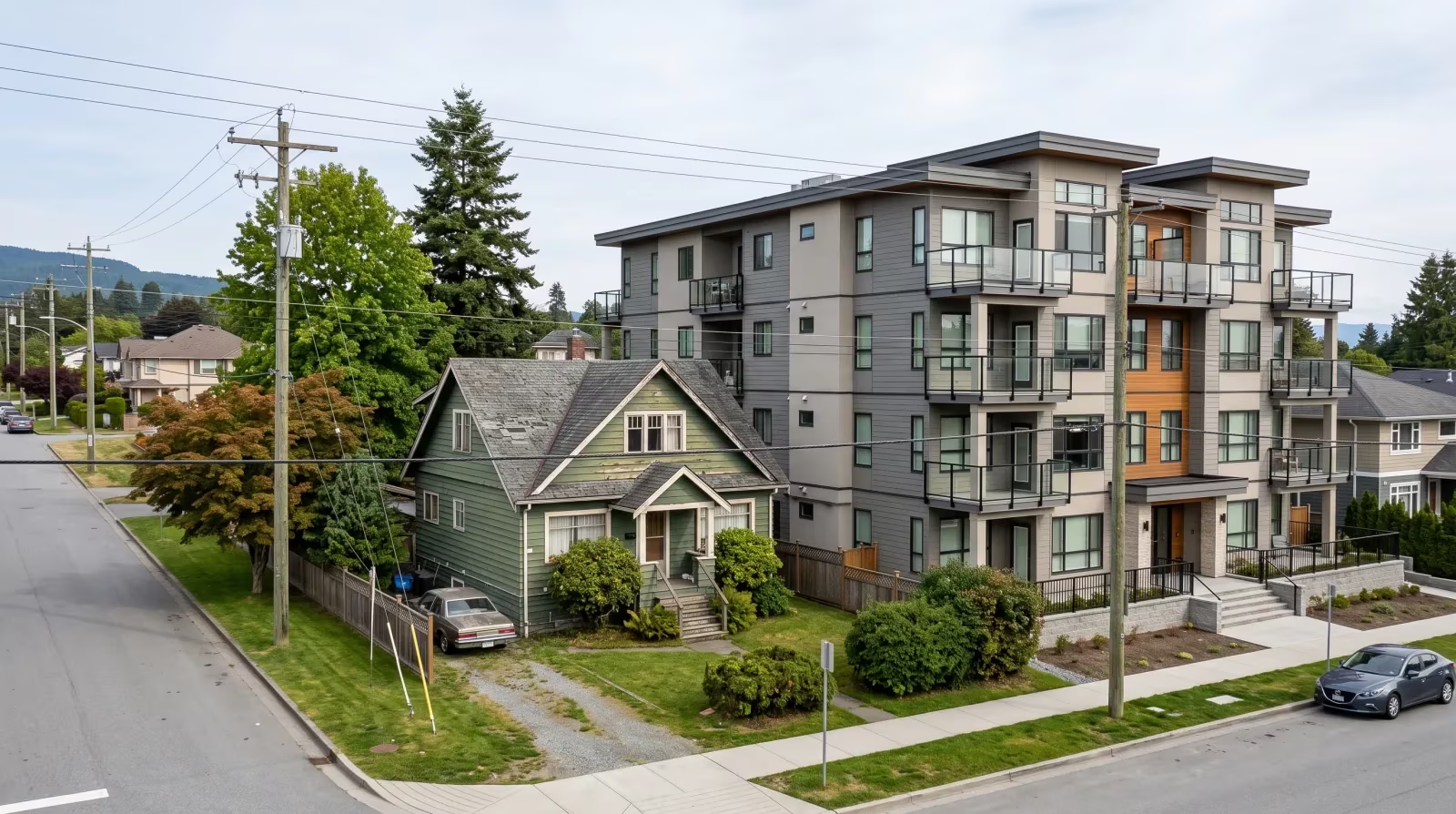

Buyers fall in love with what they can see from the kitchen window. The field, the tree line, the low building across the street that lets the afternoon light through. Almost nobody checks whether any of it is permanent.
The two documents that answer most of it
Start with zoning. The zoning of the neighbouring parcels tells you what is permitted on them right now, which sets a floor on what could appear without any application at all.
Then read the Official Community Plan designation for the area. An OCP is a municipality's long-range land use policy document, adopted under the Local Government Act. It sets out intended future land use and guides council when rezoning applications come forward.
The gap between those two documents is where the information lives. A parcel zoned single family today but designated for higher density in the OCP is telling you where the municipality expects that block to go.
Active applications
Most Fraser Valley municipalities publish current development and rezoning applications on their websites, frequently on a map you can browse by area.
Spend fifteen minutes on that map for the blocks around a home you are serious about. Planning department staff also answer these questions directly and are generally helpful.
If there is a development notice sign posted on a nearby lot, photograph it. The sign usually states what is proposed and how to comment, and the file number lets you look up the details.
What SSMUH changed
This is newer and it matters.
BC's small-scale multi-unit housing legislation required local governments to permit more units on many single family lots. Our guide to SSMUH zoning in the Fraser Valley covers the framework.
The practical consequence for this question is significant. The older house beside you may be replaceable with several units without any rezoning application, which means no application to find in a database and no public hearing to attend. It is simply permitted.
So checking active applications is necessary and no longer sufficient. Check what the zoning already allows.
Timelines
Rezoning applications generally move slowly. Larger ones commonly take a year or more from submission through public hearing to adoption, and construction follows after that.
That is worth knowing in both directions. An application you find today is unlikely to change your outlook next month. It is also unlikely to disappear because you did not like it.
Development is not automatically bad
We want to be balanced here, because buyers sometimes treat any nearby development as a negative.
New development brings amenities, services, and often transit investment. Density near a home can support local businesses and improve walkability. In areas around the Surrey Langley SkyTrain corridor, proximity to planned development has been a reason buyers want to be there rather than a reason to avoid it.
It also brings construction periods measured in years, more traffic, changed sightlines, and sometimes shadowing.
Which of those matters depends on what you value about the specific location. A buyer who chose the home for quiet and a long view feels differently from a buyer who chose it for the commute.
Views are rarely protected
Say this plainly, because it causes real disappointment.
Unless a registered covenant or a physical constraint like a park, a watercourse, or a steep slope protects it, a view across neighbouring land can be built out. Our guide to easements, rights of way, and covenants covers how to check what is actually registered, and riparian setbacks covers one of the constraints that does tend to hold.
Price a view as something you enjoy while it lasts rather than as something you have bought.
The profile that redevelops
If you want a shorthand for what changes, it is consistent.
Older, lower-density buildings on large or well-located sites, especially where the OCP designates higher density and transit is nearby. That is the same profile that makes a condo building a candidate for a strata wind-up, and the same logic applies to a block of older houses.
Being next to that profile is not a reason to avoid a home. It is a reason to know what you are next to.
A short research routine
Before you write on a home you care about, do this.
Look up the zoning of the parcels around it. Read the OCP designation for the area. Search the municipality's development application map for the surrounding blocks. Note any development signs nearby and look up the files. Ask the planning department if anything is unclear.
Twenty minutes, no cost. Our subject removal guide covers protecting time for anything that needs a follow-up call.
The short version
What gets built around a home is usually knowable before you buy. Zoning tells you what is permitted now, the OCP tells you the intended direction, and the application map tells you what is already in motion.
SSMUH means some density needs no application at all, so check permissions rather than only applications. Views are rarely protected, and development nearby cuts both ways depending on what you wanted from the location.
We are agents rather than planners, and none of this is planning advice. Your municipality's planning department is the authority on a specific parcel.
Key takeaways
- Zoning shows what is permitted now, and the Official Community Plan shows the municipality's intended direction.
- Most Fraser Valley municipalities publish active development applications online, often on a map.
- SSMUH means additional units may be permitted on nearby lots without any rezoning application.
- Rezoning applications commonly take a year or more, so nothing changes overnight.
- Views are rarely protected unless a covenant or a physical constraint secures them.
Frequently Asked Questions
How do I find out what could be built next door?
Check the current zoning of the neighbouring parcels and the municipality's Official Community Plan designation for the area. Zoning tells you what is permitted now, and the OCP tells you what the city intends over the longer term.
What is an Official Community Plan?
An OCP is a municipality's long-range land use policy document. It sets out intended future land use for areas of the city, and it guides council decisions on rezoning applications. A parcel zoned single family today may be designated for higher density in the OCP.
Where do I find active development applications?
Most Fraser Valley municipalities publish current development and rezoning applications on their websites, often with a map. Planning departments also answer these questions directly.
What do the signs on empty lots mean?
A development notice sign posted on a property indicates an application is in progress and usually lists what is proposed and how to comment. Photograph the sign and look up the file number on the city's website.
Does new development always reduce value?
No. Nearby development can add amenities, transit, and demand that support values, and it can also bring construction disruption, changed views, and more traffic. The effect depends on what is built and what you value about the location.
How long does a rezoning take?
It varies widely by municipality and by application. Larger applications commonly take a year or more from submission through public hearing to adoption, so an application you find today is generally not something that changes next month.
Can I object to a proposal?
Municipal processes typically include opportunities for public input, and rezoning applications generally go to a public hearing. Being a new owner does not exclude you, though it also does not guarantee an outcome.
Does SSMUH change what my neighbours can build?
BC's small-scale multi-unit housing legislation required local governments to permit more units on many single family lots. That means the house next door may be replaceable with several units without a rezoning at all.
Should views affect what I pay?
Views are rarely protected. Unless a covenant or a physical constraint guarantees it, a view across a neighbouring property can be built out. Price a view as something you enjoy rather than something you own.
What if I am buying next to an older low-density building?
In a well-located area with higher density designated in the OCP, that is exactly the profile that eventually redevelops. It may be years away, and it is worth knowing about before you buy rather than discovering it later.
Sources
- Local Government Act, Government of British Columbia
- Small-scale, multi-unit housing, Province of British Columbia
Verified September 1, 2026. General information only, not planning or legal advice. Zoning, OCP designations, and applications change. Confirm with the municipality governing the specific property.
Related FRIVE guides
- SSMUH zoning in the Fraser Valley, what is permitted without a rezoning
- Strata wind-ups in BC, the same redevelopment pressure inside a building
- Surrey Langley SkyTrain buying guide, where change is concentrated
- Easements, rights of way, and covenants, what is registered on title
- Riparian setbacks near creeks, one of the few constraints that holds
Next Steps: Work with FRIVE
We check the development map for every serious showing, and it changes the conversation more often than buyers expect. Sometimes it is reassuring. Occasionally it reframes the whole decision.
If you want that research done on a home you are considering, start a conversation with the FRIVE team or browse current Fraser Valley listings.
Sources
- Local Government Act, Government of British Columbia
- Small-scale, multi-unit housing, Province of British Columbia
Related guides
Found this useful? Share it.
A neighbour, a partner, a friend who's two FHSA contributions away, send it their way.