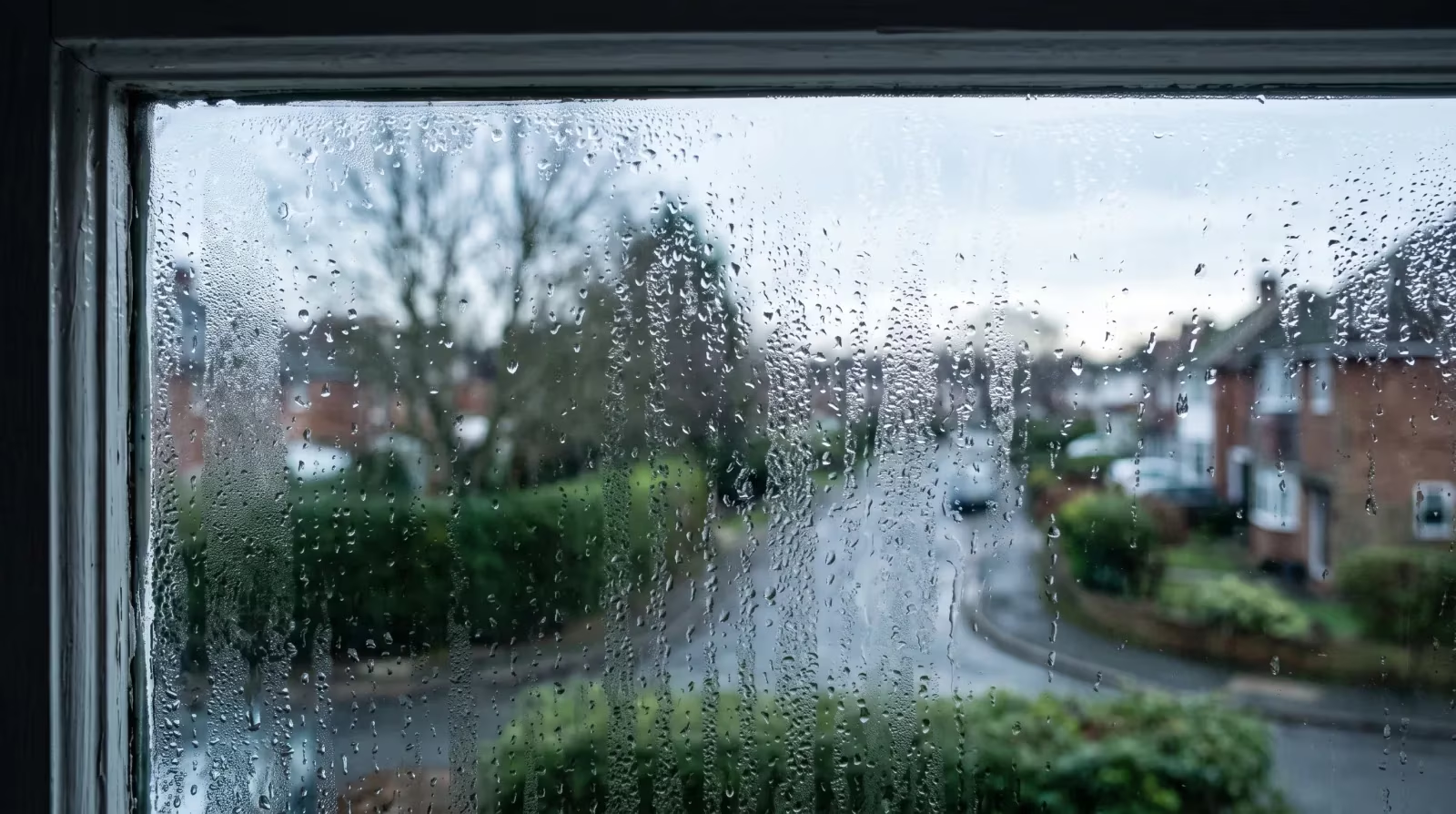

Every November, condo owners across the Fraser Valley wake up to water running down the inside of their windows and wonder whether they bought a defective home. Most of the time the building is fine and the physics are working exactly as physics does.
Why it happens here
Two conditions combine in our climate for a large part of the year: humid air outside and cool surfaces inside.
Meanwhile, a household produces a surprising volume of moisture indoors. Showers, cooking, dishwashing, laundry, houseplants, and simply breathing. Two people asleep in a closed bedroom overnight release a meaningful amount of water vapour into that room.
Warm air holds more moisture than cool air. When the moist indoor air reaches the coldest surface available, it releases that moisture as liquid. In a condo, the coldest surfaces are usually the window glass, the window frames, and the corners of exterior walls.
That is condensation. It is not a leak, and the water did not come from outside.
Ventilation and habits before defects
Before anyone concludes the building has a problem, three things are worth checking, because they explain most cases.
Do the bathroom fans actually work? Turn each one on. Listen to it. Hold a tissue against the grille and see whether it holds. A fan that spins without moving air, or that vents into an attic instead of outside, leaves the moisture in the building.
Is laundry being dried indoors? Drying racks in a condo put every litre of water from that load into the air.
Are interior doors kept closed? A closed bedroom with no air movement gets colder and holds more moisture at the window than a room with air circulating.
Newer, more airtight buildings often include a heat recovery ventilator, which exchanges stale indoor air for fresh outdoor air while recovering heat. Modern construction needs mechanical ventilation because it does not leak air the way older buildings did. An HRV that is switched off, or whose filters have never been cleaned, will produce exactly the symptoms people blame on windows.
When it is worth investigating further
Some patterns do point past habits.
Moisture appearing in the middle of walls rather than at windows. Staining at the base of exterior walls. A musty smell in a closet on an exterior wall. Water pooling on sills consistently despite good ventilation habits. Mould returning quickly after cleaning.
Those are worth a closer look, because they can indicate something in the building rather than in the household. In an older building they can point toward building envelope questions, and in a ground-oriented townhouse they can point toward a crawlspace issue.
The responsibility question
This is where money enters, and where the answer is less clean than either side would like.
Under the Strata Property Act and a building's bylaws, responsibility depends on where the problem originates. Issues within a private strata lot generally fall to the owner. Common property issues generally fall to the strata.
In practice, moisture problems often involve both. BC tribunal decisions have apportioned responsibility between a strata corporation and an owner where each contributed, rather than assigning it entirely to one side. Disputes of this kind are commonly heard by the Civil Resolution Tribunal.
For a buyer, the practical takeaway is that a moisture problem in a condo is rarely a clean "the strata will handle it" situation. Read the bylaws for how your specific building divides responsibility.
What to check as a buyer
During a viewing, look at window frame corners and sills for black spotting. Check the base of exterior walls. Open closets on exterior walls and use your nose. Notice if one wall has been freshly painted when nothing else has.
Turn on every bathroom and kitchen fan. This takes thirty seconds and tells you a lot.
Then read the documents. Repeated discussion of moisture, window replacement, ventilation upgrades, or envelope investigation in the minutes is worth taking seriously. Our strata council minutes red flags guide covers reading for patterns rather than single entries, and the depreciation report should show whether windows and ventilation systems are approaching replacement.
Our strata document review checklist covers the full package.
The insurance angle
Coverage for mould depends on the policy and on the cause.
Mould that results from a sudden covered water escape, like a burst supply line, is generally treated differently from mould that develops from ongoing humidity, which is often excluded. Our guide to condo insurance versus strata insurance covers which policy responds to what, and water damage and strata deductibles covers the deductible question that follows a claim.
Read your policy and ask your broker directly rather than assuming.
What to actually do about it
If you own a unit with condensation, the fixes are mostly behavioural and inexpensive.
Run bathroom fans during showers and for a stretch afterwards. Use the kitchen fan when cooking. Keep interior doors open so air moves. Avoid drying laundry indoors. Use the ventilation system the unit has, and clean its filters. Consider a dehumidifier in a unit that stays damp.
If those changes do not resolve it over a season, that is when a specialist look is justified. A general home inspection notes visible evidence rather than performing moisture diagnostics, so a qualified professional is the next step.
The short version
Condensation in a BC condo is usually a humidity and ventilation situation rather than a building defect. Check the fans, the laundry habits, and the air movement before blaming the windows.
Watch for moisture away from windows, staining at the base of walls, and musty closets, because those patterns suggest something else. Responsibility between owner and strata depends on where the problem originates and can be shared.
We are agents rather than building scientists or insurance brokers, and none of this is a diagnosis. If a unit shows signs of a persistent problem, get a qualified professional to look before you commit.
Key takeaways
- Condensation forms when moist indoor air meets cold surfaces, which in a condo means windows and exterior wall corners.
- Bathroom and kitchen fans, indoor laundry drying, and closed interior doors explain most cases.
- Moisture away from windows, staining at wall bases, and musty closets suggest a building issue worth investigating.
- Responsibility divides by where the problem originates, and BC tribunal decisions have apportioned it between owner and strata.
- Mould coverage depends on the cause, and ongoing humidity is often treated differently from a sudden water escape.
Frequently Asked Questions
Why do BC condos get so much condensation?
Our climate combines high humidity with cool surfaces for much of the year. Indoor moisture from cooking, showering, laundry, and simply breathing condenses on the coldest surfaces in the home, which are usually windows and exterior wall corners.
Is condensation on windows a building defect?
Often it is a ventilation and humidity issue rather than a defect. Persistent condensation, water pooling on sills, or moisture appearing in the middle of walls rather than at windows is worth investigating further, because that pattern can point to something in the building.
Who is responsible for mould in a strata, the owner or the strata?
It depends on where the problem originates. Issues within a private strata lot generally fall to the owner, while common property issues generally fall to the strata. Responsibility can also be shared where both contributed, and BC tribunal decisions have apportioned it between the parties.
What should I look for during a viewing?
Black spotting in window frame corners and on sills, staining at the base of exterior walls, a musty smell in closets on exterior walls, fresh paint on only one wall, and bathroom fans that either do not run or are not vented properly.
Do bathroom fans matter that much?
Yes. A fan that runs but vents into an attic or does not move enough air leaves the moisture in the building. Turn every fan on during a viewing and listen. It is one of the simplest things to check and one of the most commonly wrong.
What is an HRV and why do newer units have them?
A heat recovery ventilator exchanges stale indoor air for fresh outdoor air while recovering heat. Newer, more airtight construction needs mechanical ventilation because it does not leak air the way older buildings did.
Can I fix condensation myself?
Often yes, with better ventilation habits: running bathroom and kitchen fans during and after use, keeping interior doors open for air movement, avoiding drying laundry indoors, and using the ventilation system the unit has. A dehumidifier helps in some units.
Where would a building-wide moisture problem show up?
In the strata minutes and in the depreciation report. Repeated discussion of moisture, window replacement, ventilation upgrades, or envelope investigation is worth reading closely before you buy.
Should I get a specialist inspection?
If you see signs of a persistent problem, or the minutes suggest a building-wide issue, having a qualified professional look at it is reasonable. A general home inspection notes visible evidence but does not perform moisture diagnostics.
Does insurance cover mould?
Coverage depends on the policy and the cause. Mould resulting from a sudden covered water escape is treated differently from mould resulting from ongoing humidity, which is often excluded. Read your policy and ask your broker directly.
Sources
Verified September 1, 2026. General information only, not a building, health, or insurance assessment. Responsibility depends on the bylaws and the facts of each case. Consult qualified professionals about a specific property.
Related FRIVE guides
- Condo insurance vs strata insurance, which policy responds
- Water damage and strata insurance deductibles, what a claim costs you
- Crawlspaces and moisture in townhouses, the ground-oriented version of this question
- Leaky condo era buildings, when moisture points at the envelope
- Strata council minutes red flags, reading for patterns
Next Steps: Work with FRIVE
We look at window corners on every condo showing, and it takes about four seconds per window. It is one of the more reliable tells about how a unit has been lived in and how the building performs.
If you want a second set of eyes on a unit you are considering, start a conversation with the FRIVE team or browse current Fraser Valley listings.
Found a condo or townhouse you like?
Let the FRIVE team request and review the strata package for you. We'll go through the Form B, depreciation reports, and council minutes, and let you know if we spot any red flags, like upcoming special levies or restrictive rules. Completely free, no obligation, no pressure.
Sources
- Strata Property Act, Government of British Columbia
- Civil Resolution Tribunal, Civil Resolution Tribunal of British Columbia
Related guides
Found this useful? Share it.
A neighbour, a partner, a friend who's two FHSA contributions away, send it their way.