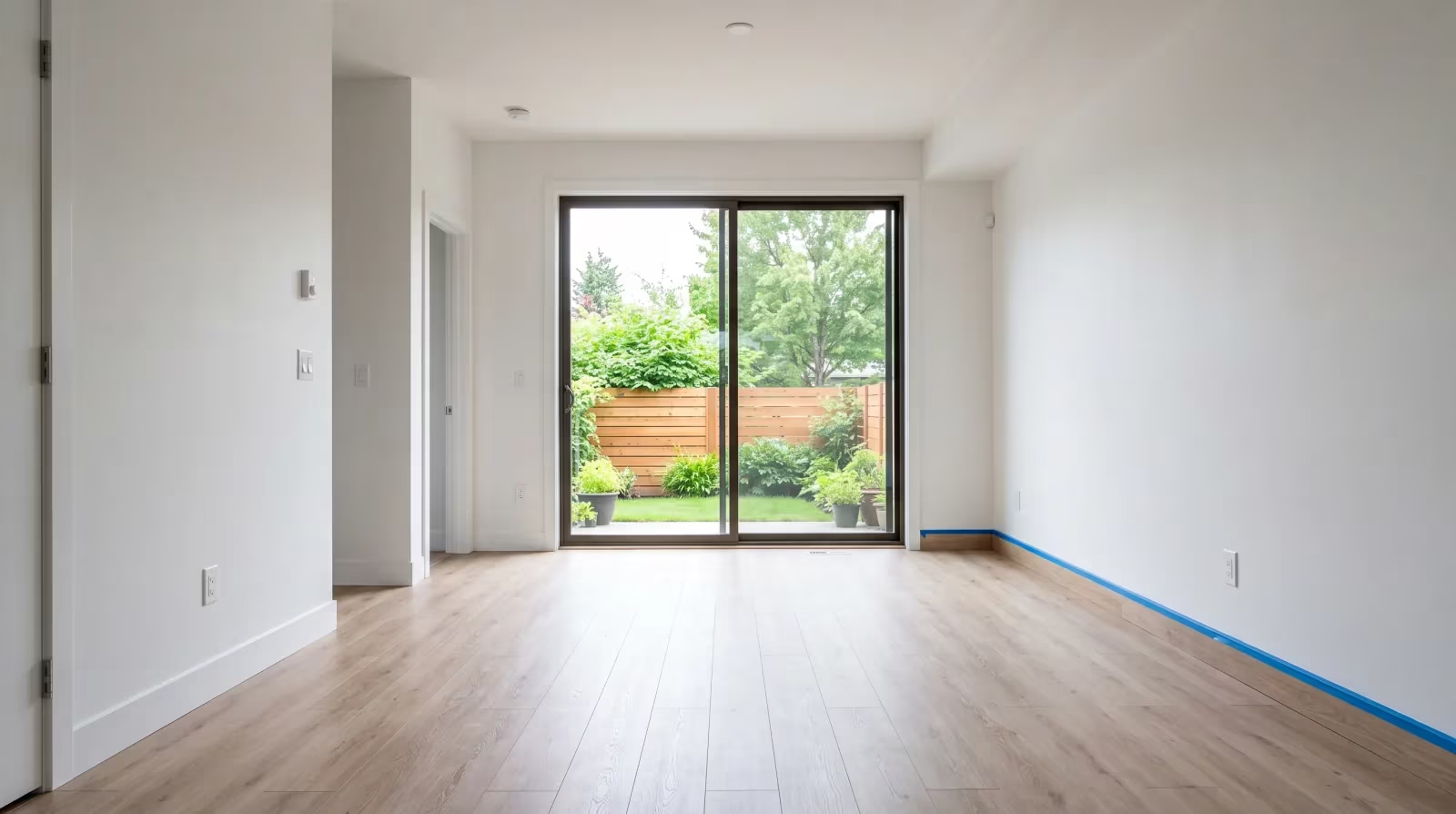

The walkthrough of a brand new home takes about an hour, and it produces a document you may be relying on two years later. Buyers arrive excited, the place is clean and finished, and the natural instinct is to nod at everything and get the keys.
What the walkthrough is for
When you take possession of a new home, you walk through it with the developer or builder and create a deficiency list: a written record of every incomplete or defective item you observe.
That list does real work. It establishes what was wrong at possession, in writing, before you moved furniture in and before anyone can suggest the damage happened afterwards.
The distinction matters because a scratch on a floor at possession and a scratch on a floor three weeks later look identical. Only the documentation separates them.
When your warranty clock starts
Timing here is worth understanding, because it is not the date you think.
Warranty coverage begins upon occupancy, the occupancy permit, or transfer of ownership, whichever comes first. For a speculative detached home or a strata unit, coverage begins at first occupancy or the transfer of title, whichever comes first.
That means the coverage periods under BC's 2-5-10 new home warranty start running from that point rather than from when you notice a problem. Our full guide covers what falls into each period.
How to make the list useful
The difference between a list that works and one that produces arguments is specificity.
"Scratches on floor" is something to debate later. "Living room, hardwood, three scratches approximately 15 cm long near the patio door" with a photograph attached is something to fix.
Write down the room, the specific item, and the nature of the problem. Take photographs of anything questionable, even things you are not sure count. Photographs cost nothing and they resolve disputes that words alone will not.
What to bring
A phone or camera. A notepad or a printed checklist. A phone charger, which is the fastest way to test every outlet in the home. And another person, so one of you can look while the other writes.
Two sets of eyes genuinely find more than one set, particularly when one of them is excited about the new place and the other is not.
What to actually check
Operate everything you can operate.
Every tap, hot and cold. Every toilet. Every window and door, opened, closed, and latched, checking that they sit square and lock properly. Cabinet doors and drawers. Closet doors. The heating system, and cooling if there is any.
Look at surfaces at an angle rather than straight on, because that is how you see drywall imperfections and paint coverage problems. Check floors near walls and doorways where installers work fast. Look under sinks for staining that suggests a leak during construction.
Outside, if you have exterior areas: the patio or balcony surface, railings, exterior doors, and any landscaping the contract included.
In a strata, walk the common areas you have access to and note anything obviously incomplete, though those items go to the strata rather than into your own list.
Hiring someone
Some buyers hire a home inspector for a new home walkthrough. On a detached home in particular, this is worth considering.
An inspector looks at hundreds of homes a year and knows where builders run out of time. A first-time buyer is looking at their first new home ever, in a state of understandable excitement. Our home inspection guide covers the general service, and a new home walkthrough is a variation on it.
The cost is small against what an undocumented defect can become.
If something is wrong at possession
Whether you can refuse to complete because of deficiencies is a contract question, not a practical one. Speak with your lawyer before taking any position on completion, because refusing to complete when you are not entitled to has serious consequences.
Our guide on notary versus lawyer covers when a purchase moves beyond routine conveyancing, and a dispute at completion is exactly that situation.
More commonly, buyers complete and pursue the deficiency list afterwards, which is what the list is designed for.
Making a warranty claim later
If the builder does not resolve something, the warranty is the next step. Claims often go through the builder first, and the warranty responds when the builder will not or cannot remedy a covered defect.
To file, you generally need a written claim to the warranty provider including photographs, a detailed written description, the date of first occupancy, the purchase agreement, and any correspondence with the builder.
Read that list again and notice how much of it is documentation you either created at the walkthrough or did not. If a warranty provider denies a claim you believe is legitimate, a dispute can be raised through BC Housing's Homeowner Protection Office.
Keep every email. Builders change staff, companies restructure, and a friendly verbal promise from someone who has since moved on is worth nothing.
Two different holdbacks
Buyers on new construction hear the word holdback twice and often merge them.
A deficiency holdback, where one is negotiated, relates to incomplete work in your own home. A builders lien holdback protects the title against claims by unpaid trades and operates under the Builders Lien Act.
They are separate arrangements with separate purposes and separate release conditions. Ask your conveyancer which ones apply to your purchase.
The short version
The deficiency walkthrough is an hour of work that protects two years of ownership. Be specific, photograph everything questionable, operate every fixture, and bring a second person.
Warranty coverage starts at occupancy, occupancy permit, or transfer of ownership, whichever comes first. Keep your documentation from that moment forward, because a claim is only as strong as the record behind it.
We are agents rather than lawyers or warranty providers, and none of this is advice about your contract. BC Housing administers the Homeowner Protection Office, and your lawyer advises on your specific agreement.
Key takeaways
- The deficiency list records what was wrong at possession, in writing, before anyone can attribute it to you.
- Warranty coverage begins at occupancy, the occupancy permit, or transfer of ownership, whichever comes first.
- Specific entries with photographs resolve disputes that vague entries create.
- Operate every fixture, and bring a charger to test outlets and a second person to help.
- A warranty claim needs photographs, a written description, the occupancy date, the purchase agreement, and correspondence with the builder.
Frequently Asked Questions
What is a deficiency walkthrough?
It is a walkthrough of your new home with the developer or builder before or at possession, where you record every incomplete or defective item you find. The result is a written deficiency list, and it becomes your most important document in the first two years of ownership.
When does my new home warranty start?
Coverage begins upon occupancy, the occupancy permit, or transfer of ownership, whichever comes first. For a speculative detached home or a strata unit, coverage begins at first occupancy or the transfer of title, whichever comes first.
What should I bring to the walkthrough?
A phone or camera for photos, a notepad or checklist, a phone charger to test outlets, and ideally another person. Photographs of anything questionable are what turn a disputed item into a documented one later.
How detailed should the list be?
More detailed than feels comfortable. Write down the room, the specific item, and the nature of the problem. Vague entries create arguments later, while precise entries with photographs generally do not.
Can I refuse to complete if there are deficiencies?
That depends entirely on your contract, and it is a legal question rather than a practical one. Speak with your lawyer before taking any position on completion, since refusing to complete has serious consequences if you are wrong.
What if the builder will not fix something?
The warranty exists for that situation. Claims often go through the builder first, and the warranty responds when the builder will not or cannot remedy a covered defect. Keep your correspondence.
How do I make a warranty claim?
File a written claim with the warranty provider including photographs, a detailed written description, the date of first occupancy, the purchase agreement, and any correspondence with the builder.
What if my claim is denied?
If a warranty provider denies a claim you believe is legitimate, a dispute can be raised through BC Housing's Homeowner Protection Office. Keep records from the beginning, because a claim is much easier to argue with documentation.
Should I hire a professional for the walkthrough?
Some buyers hire an inspector for a new home walkthrough, particularly on a detached home. An experienced eye finds things a first-time buyer will not, and the cost is small relative to what an undocumented defect can become.
Is the deficiency list the same as a builders lien holdback?
No. A deficiency holdback, where negotiated, relates to incomplete work in your home. A builders lien holdback protects title against claims by unpaid trades and is governed by the Builders Lien Act. They are separate.
Sources
Verified September 1, 2026. General information only, not legal or warranty advice. Warranty terms and claim procedures vary by provider and policy. Read your own warranty documents and consult your lawyer about your contract.
Related FRIVE guides
- New home warranty in BC, what the 2-5-10 periods actually cover
- Builders lien holdback, the other holdback on a new build
- Closing day in BC, what happens when you complete
- Home inspection guide, hiring an experienced eye
- Buying a presale condo or townhouse, how presale timelines work
Next Steps: Work with FRIVE
We attend these walkthroughs with our buyers and the pattern is consistent: the people who write everything down have an easy year two, and the people who nodded along have a frustrating one.
If you are completing on a new build in the Fraser Valley and want someone in the room taking notes with you, start a conversation with the FRIVE team or browse current Fraser Valley listings.
Sources
- Homeowner Protection Office, BC Housing
- Home Warranty Insurance Claims, BC Housing
Related guides
Found this useful? Share it.
A neighbour, a partner, a friend who's two FHSA contributions away, send it their way.