
A wood stove reads as a feature in a listing photo. To an insurer it reads as a solid-fuel appliance, and that difference can put your insurance on the critical path of your purchase.
Why this is an insurance question first
A wood-burning appliance is a fire risk whose safety depends on correct installation and adequate clearances.
That makes it an underwriting question rather than only a comfort question. In our experience insurers commonly ask about wood stoves, inserts, and fireplaces during the application, and some ask for a specialist inspection report before binding coverage.
Confirm this with your own insurance broker on the specific property. Policies and requirements differ between insurers, and the answer for your file is not something an article can supply.
The practical consequence is the sequence. If your insurer wants a report and you find that out three days before completion, you have a problem. Get the insurance conversation started early.
What a general home inspection actually does here
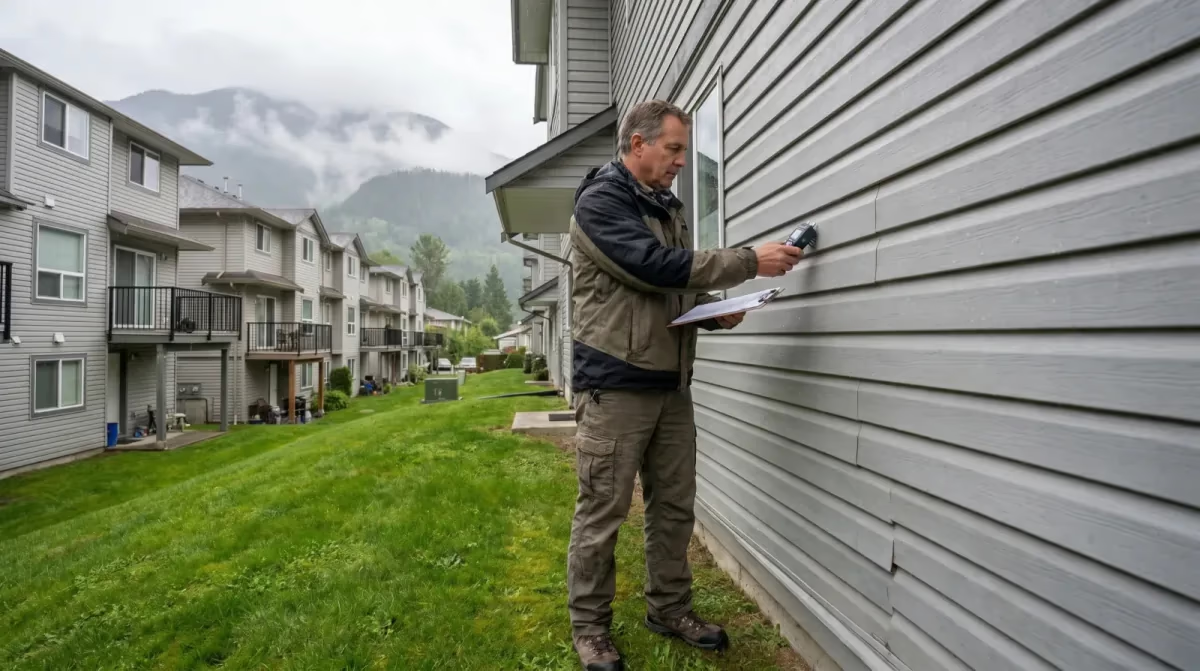
Your home inspector will look at the appliance and the visible chimney and note concerns.
That is a visual assessment rather than a specialist evaluation, and it is the correct limit of the service. Our home inspection guide covers the scope generally, and the appraisal versus inspection guide covers what each professional is actually for.
Anything the inspector flags is a referral to a qualified specialist, in the same way a drainage concern leads to a drain scope and an electrical concern leads to a licensed electrician.
Questions for the seller
Ask for documents rather than reassurance.
When was the appliance installed, and by whom? Was the installer qualified? Do permits exist? When was the chimney last swept and inspected, and by whom?
Installation requirements are municipal and provincial and they vary, so ask your municipality what applied at the time of installation and what is on file for the address. Our property disclosure statement guide covers where some of this should be recorded by the seller.
If a previous owner installed it themselves with no paperwork, nobody signed off on it. That is a condition question and potentially an insurance question, and the time to raise it is during your subject period.
Gas appliances are a different conversation
A gas fireplace raises servicing and permit questions rather than the solid-fuel ones.
Ask when it was last serviced and by whom, and whether the installation was permitted. Our oil furnace conversion guide covers the related paper trail on heating changes in older homes, where conversions have often happened more than once.
In a strata, check who owns the chimney
Do not assume the appliance and its chimney are entirely yours.
In most BC stratas, building exteriors are common property, and a chimney may fall into that category. Our limited common property guide covers the categories, and under section 71 of the Strata Property Act altering common property in a way that significantly changes its use or appearance requires a 3/4 vote.
So if your plan involves changing or removing a wood-burning appliance in a strata unit, read the bylaws and ask the strata first. Our renovating a condo guide covers the approval path.
If you plan to remove it
Removal is often straightforward and it is not automatically cheap.
There is the appliance, the flue, what gets left behind in the wall, and how the chimney is capped or removed. If removal is part of why you are comfortable with the property, get a quote during your subject period rather than assuming a figure.
The same logic applies to the underground oil tank question on older Fraser Valley homes, where the cost of dealing with a legacy system is frequently larger than buyers expect.
Fitting this into a subject period
Book the specialist early.
Specialist visits take longer to schedule than a general inspection, and our subject removal guide covers why protecting enough time matters. A short subject period negotiated to win a competitive situation is exactly where buyers run out of runway on this.
Our older home red flags guide covers the wider list of items that need a specialist rather than a generalist, and planning them together is more efficient than discovering them one at a time.
We are agents rather than inspectors, insurance brokers, or installers, and none of this is a technical assessment. Your insurance broker, your municipality, and a qualified specialist are the right sources for a specific property.
Key takeaways
- A wood-burning appliance is an insurance question as much as a condition question, and it can sit on your purchase's critical path.
- A general home inspection is a visual assessment. Anything flagged calls for a qualified specialist.
- Ask the seller for installation dates, installer details, permits, and recent sweep or inspection records.
- In a strata, a chimney may be common property, so read the bylaws before planning changes.
- Book specialist visits early, because they take longer to schedule than a general inspection.
Frequently Asked Questions
Does a general home inspection cover a wood stove?
A home inspector will look at the appliance and the visible chimney and note concerns, which is a visual assessment rather than a specialist evaluation, and that is the correct limit of the service rather than a shortcoming. Anything the inspector flags is a reason to bring in a qualified specialist, in the same way a drainage concern leads to a scope or an electrical concern leads to a licensed electrician. A general inspection tells you whether to ask further questions, not the final answer on the appliance.
Will my insurer ask about a wood-burning appliance?
In our experience insurers commonly ask about wood stoves, inserts, and fireplaces during the application process, and some ask for a specialist inspection report before they will bind coverage at all. That makes this an underwriting question rather than only a comfort question, since a solid-fuel appliance is a fire risk whose safety depends on correct installation and adequate clearances. Confirm the requirement with your own insurance broker on the specific property rather than assuming, and start that conversation early in your subject period.
Why do insurers care?
A solid-fuel appliance like a wood stove or fireplace insert is a fire risk whose safety depends entirely on correct installation and adequate clearances from combustible materials. That makes it an underwriting question rather than simply a comfort feature, so the insurer wants evidence that a competent installer set it up properly before they will bind coverage. If your insurer wants a specialist inspection report and you find that out three days before completion, you have a real problem, so start the insurance conversation early.
What should I ask the seller?
Ask when the wood-burning appliance was installed, whether a qualified installer put it in, whether permits exist for the installation, and when the chimney was last swept and inspected and by whom. Ask for documents rather than reassurance, since verbal answers are hard to rely on later. If a previous owner installed it themselves with no paperwork, nobody signed off on it, which is a condition question and potentially an insurance question worth raising during your subject period.
Does a wood stove need a permit in BC?
Installation requirements for a wood stove or fireplace insert are set at both the municipal and provincial level, and they vary depending on when and where the appliance was installed. Ask your municipality what applied at the time of installation and what documentation is on file for the specific address, rather than assuming the requirement was the same as it is today. This is one more question worth resolving during your subject period rather than after completion.
What if the appliance was installed without paperwork?
If a wood-burning appliance was installed without permits or documentation, nobody with authority signed off on the work, which makes it both a condition question and potentially an insurance question rather than a minor gap. Insurers who ask for a specialist inspection report may treat an undocumented installation more cautiously, and your municipality may have no record of what was actually done. Raise it during your subject period rather than after completion, when your options are far more limited.
Does a decorative gas fireplace raise the same issues?
A decorative gas fireplace raises its own servicing and permit questions rather than the solid-fuel fire-risk questions that apply to a wood stove or insert. Ask when it was last serviced and by whom, and whether the original installation was permitted, since gas appliances still need proper installation and upkeep even without the same clearance and chimney concerns. This is a smaller conversation than a wood-burning appliance but still worth having before you remove subjects.
Can I just remove the wood stove after I buy?
Often yes, and removal is not automatically cheap even when it sounds straightforward. There is the appliance itself, the flue, what gets left behind in the wall, and how the chimney is capped or removed once the stove is gone. If removal is part of why you are comfortable with the property, get a quote during your subject period rather than assuming a figure, since the real cost can be larger than buyers expect.
How does this fit into my subject period?
Book any wood stove or chimney specialist early, since specialist visits take longer to schedule than a general home inspection and a short subject period negotiated to win a competitive situation is exactly where buyers run out of runway on this. Plan the specialist alongside your other due diligence, since insurance, permits, and chimney condition can all take time to confirm. Starting this conversation in week one of your subject period rather than week three gives everyone more room to respond.
In a strata, who is responsible?
In most BC stratas, building exteriors are common property, and a chimney may be part of that common property. Responsibility depends on the specific strata plan and bylaws, so ask the strata and read the bylaws before you assume the wood-burning appliance and its chimney are yours to change. Under BC's Strata Property Act, altering common property in a way that results in a significant change in its use or appearance requires a three-quarters vote.
Sources
Verified September 12, 2026. General information only, not a technical or insurance assessment. Consult your insurance broker, your municipality, and a qualified specialist about a specific property.
Related FRIVE guides
- Home inspection guide, the scope and its limits
- Older home red flags, the wider specialist list
- Underground oil tanks, another legacy system with real cost
- Oil furnace conversion, the heating paper trail
- Subject removal, protecting time for specialists
Next Steps: Work with FRIVE
If a Fraser Valley home you like has a wood stove, start the insurance conversation in week one of your subject period rather than week three.
Start a conversation with the FRIVE team and we will help you sequence the checks, or browse current Fraser Valley listings.
Sources
Related guides
Found this useful? Share it.
A neighbour, a partner, a friend who's two FHSA contributions away, send it their way.