
Buyers moving from an apartment into a townhouse often assume noise will improve. Sometimes it does. What actually determines it is the construction of the wall between you and the neighbour, and that was decided years before you saw the listing.
What a party wall does
A party wall is the shared wall between two attached homes. In a townhouse complex it separates your unit from the one next door, and it does two jobs at once: structural separation and fire separation between dwelling units.
Sound control is the third job, and it is the one buyers notice.
The BC Building Code sets minimum sound transmission requirements for separations between dwelling units. Meeting a minimum and being genuinely quiet are different things, which is why two code-compliant townhouses can feel very different to live in.
What makes one wall quieter than another
The performance comes from the assembly, meaning everything inside the wall.
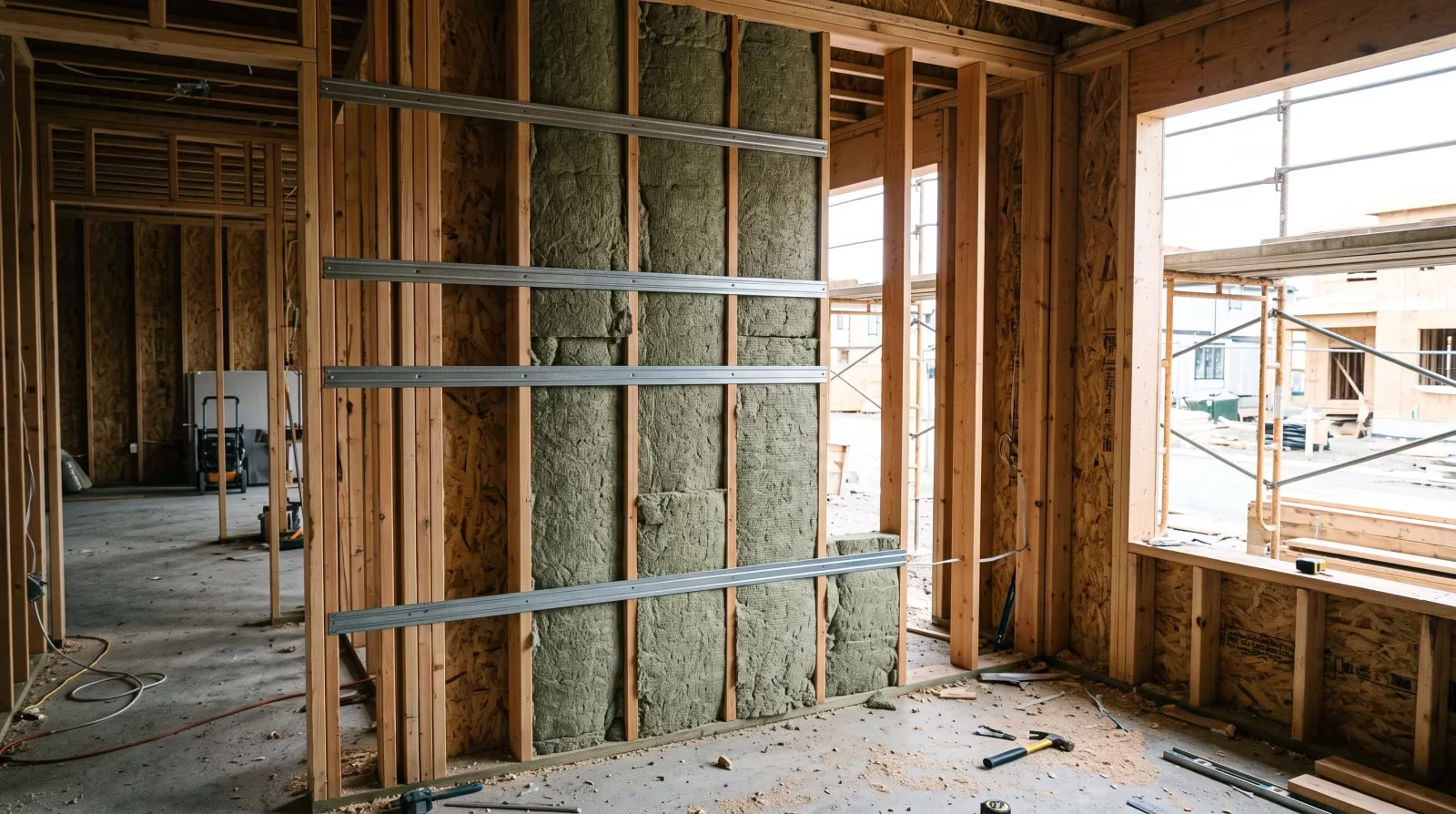
Double stud or staggered stud framing separates the two sides so vibration does not pass straight through the framing. Resilient channel decouples the drywall from the studs. Sound insulation in the cavity absorbs energy. Additional layers of drywall add mass, and mass reduces transmission.
A wall using several of those measures performs substantially better than a single stud wall with one layer of drywall on each side. From the inside of either home, both look like a painted wall.
Sound Transmission Class, usually written STC, is the rating used for airborne sound. Higher numbers mean more reduction. If a developer or listing mentions an STC rating, that is useful information, though for most resale purchases nobody will be able to tell you the number.
Airborne versus impact sound
These get confused constantly, and they have different causes and fixes.
Airborne sound is voices, television, music. It travels through the air and passes through the wall assembly.
Impact sound is footsteps, dropped objects, furniture moving. It travels through the structure itself, which is why you hear it from the unit above rather than beside you, and why adding insulation to a wall does nothing about it.
Impact sound is generally addressed through the floor assembly and underlayment. That is exactly why so many strata bylaws include flooring requirements, often a minimum underlayment rating or restrictions on hard surface flooring in upper units.
If you plan to change flooring, read the bylaws first and follow the alteration approval process. Buyers who install hardwood and then receive a bylaw enforcement letter have an expensive problem.
How to assess it during a viewing
You cannot open the wall, so use what you can.
Stand against the shared wall and stop talking. Listen. In an occupied neighbouring unit you will hear something or you will not, and either result is information.
Visit at a different time of day. A Sunday afternoon showing of an empty townhouse tells you very little about a Tuesday evening when both households are home. Ask for a second viewing in the evening if the home is a serious contender.
Ask the seller about noise. Ask a neighbour if you get the chance, because neighbours are often candid in a way sellers cannot be.
Notice the layout too. A floor plan that puts your bedroom against their bedroom is different from one that puts your garage against their garage, even with an identical wall.
Age is a rough guide
Newer townhouses often perform better, because code requirements and construction practice have evolved. That is a tendency rather than a rule, and it varies by builder.
Our comparison of new versus resale townhouses covers the broader tradeoffs, and wood frame versus concrete construction covers how construction type shapes the experience in apartment buildings, where the same principles apply differently.
Fixing it afterwards
You can improve a wall from your side by adding mass and decoupling: additional drywall, sound-dampening compound between layers, resilient channel. It helps.
It also costs money, reduces your room dimension slightly, and rarely matches a wall that was designed properly in the first place. In a strata it requires approval, since you are altering something that may be common property or a boundary.
This is why we treat it as a pre-purchase question rather than a post-purchase project. Kitchens can be replaced. Party walls effectively cannot.
If the problem is behaviour rather than construction
Sometimes the wall is fine and the neighbour is loud at 2am.
Strata bylaws typically include nuisance provisions, and the strata can enforce them. Disputes that cannot be resolved internally may go to the Civil Resolution Tribunal.
That path works reasonably for behaviour. It does not work for a building that simply transmits ordinary living noise, because normal life at a normal volume is not a bylaw contravention. Knowing which situation you are in matters before you start a process.
End units
An end unit has one shared wall instead of two, and often more windows and light. It typically costs more, for those reasons and others.
Whether the premium makes sense depends on how much noise affects you personally. For some buyers it is the best money in the purchase. Our guides to condo versus townhouse and townhouse versus detached cover the wider set of tradeoffs in that decision.
The short version
Sound performance between townhouses lives inside the wall assembly and cannot be meaningfully changed afterwards. Assess it before you buy, using evening viewings, a quiet moment against the shared wall, and honest questions to the seller and neighbours.
Separate airborne sound from impact noise, because impact noise comes through the structure from above and is governed by flooring rules in most strata bylaws. Read those bylaws before planning any flooring change.
We are agents rather than acoustical consultants, and none of this is a technical assessment. What we can tell you is which complexes our buyers report as quiet and which questions to ask before you commit.
Key takeaways
- Party wall sound performance comes from the assembly and cannot be meaningfully changed after purchase.
- Double or staggered stud framing, resilient channel, cavity insulation, and extra drywall all reduce transmission.
- Airborne sound passes through walls, while impact sound travels through the structure from above.
- Many strata bylaws set flooring and underlayment requirements to limit impact noise.
- Evening viewings and a quiet moment against the shared wall are the most practical assessment tools available.
Frequently Asked Questions
What is a party wall?
It is the shared wall between two attached homes, such as neighbouring townhouses. It serves as both a structural and fire separation between the units, and how it is built determines how much sound passes through.
What does STC mean?
Sound Transmission Class is a rating of how well an assembly reduces airborne sound. A higher number means more reduction. The BC Building Code sets minimum sound transmission requirements for separations between dwelling units.
Why do some townhouses sound quieter than others?
Assembly design. Double stud or staggered stud framing, resilient channel, sound insulation in the cavity, and multiple layers of drywall all reduce transmission. A single stud wall with drywall on both sides transmits considerably more.
Can I soundproof after I move in?
You can improve a wall, usually by adding mass and decoupling layers on your side, which reduces the interior room dimension slightly. It rarely matches the performance of a properly designed assembly, and in a strata it requires approval.
What about footstep noise from above?
That is impact sound rather than airborne sound, and it travels through the structure. It is generally addressed through floor assembly design and underlayment. Many strata bylaws set flooring requirements for exactly this reason.
How do I test for noise during a viewing?
Visit at different times of day if you can. Stand against the shared wall and listen. Ask the seller and, if possible, a neighbour, about noise. A second showing in the evening tells you more than a Sunday afternoon one.
Do newer townhouses perform better?
Often, because code requirements and construction practice have evolved, but it varies by builder and by assembly. Age is a rough guide rather than a guarantee, so assess the specific home.
Are flooring rules common in strata bylaws?
Yes. Many BC strata bylaws require a minimum underlayment rating or restrict hard surface flooring in upper units, specifically to limit impact noise. Read the bylaws before planning a flooring change.
What if my neighbour is genuinely too loud?
Strata bylaws typically include nuisance provisions and the strata can enforce them. Disputes that cannot be resolved internally may go to the Civil Resolution Tribunal. That process works better for behaviour than for building performance.
Is an end unit always quieter?
An end unit has one shared wall instead of two, which helps. It usually costs more for that and other reasons. Whether the premium is worth it depends on how much noise affects you and what the specific walls are like.
Sources
Verified September 1, 2026. General information only, not an acoustical or building code assessment. Requirements and assembly performance vary. Consult qualified professionals about a specific property.
Related FRIVE guides
- Condo vs townhouse in the Fraser Valley, the wider comparison
- New vs resale townhouses, how construction era affects the experience
- Renovating with strata approval, what flooring changes require
- Strata bylaws vs rules, where flooring requirements live
- Wood frame vs concrete condos, construction type and daily living
Next Steps: Work with FRIVE
Noise is one of the most common regrets we hear about from townhouse buyers, and it is almost always something that could have been assessed with a second evening viewing.
If you are comparing complexes in Willoughby, Clayton, or Abbotsford and want an honest read on which ones our buyers report as quiet, start a conversation with the FRIVE team or browse current Fraser Valley listings.
Sources
- BC Building Code, Province of British Columbia
- Strata Property Act, Government of British Columbia
Related guides
Found this useful? Share it.
A neighbour, a partner, a friend who's two FHSA contributions away, send it their way.