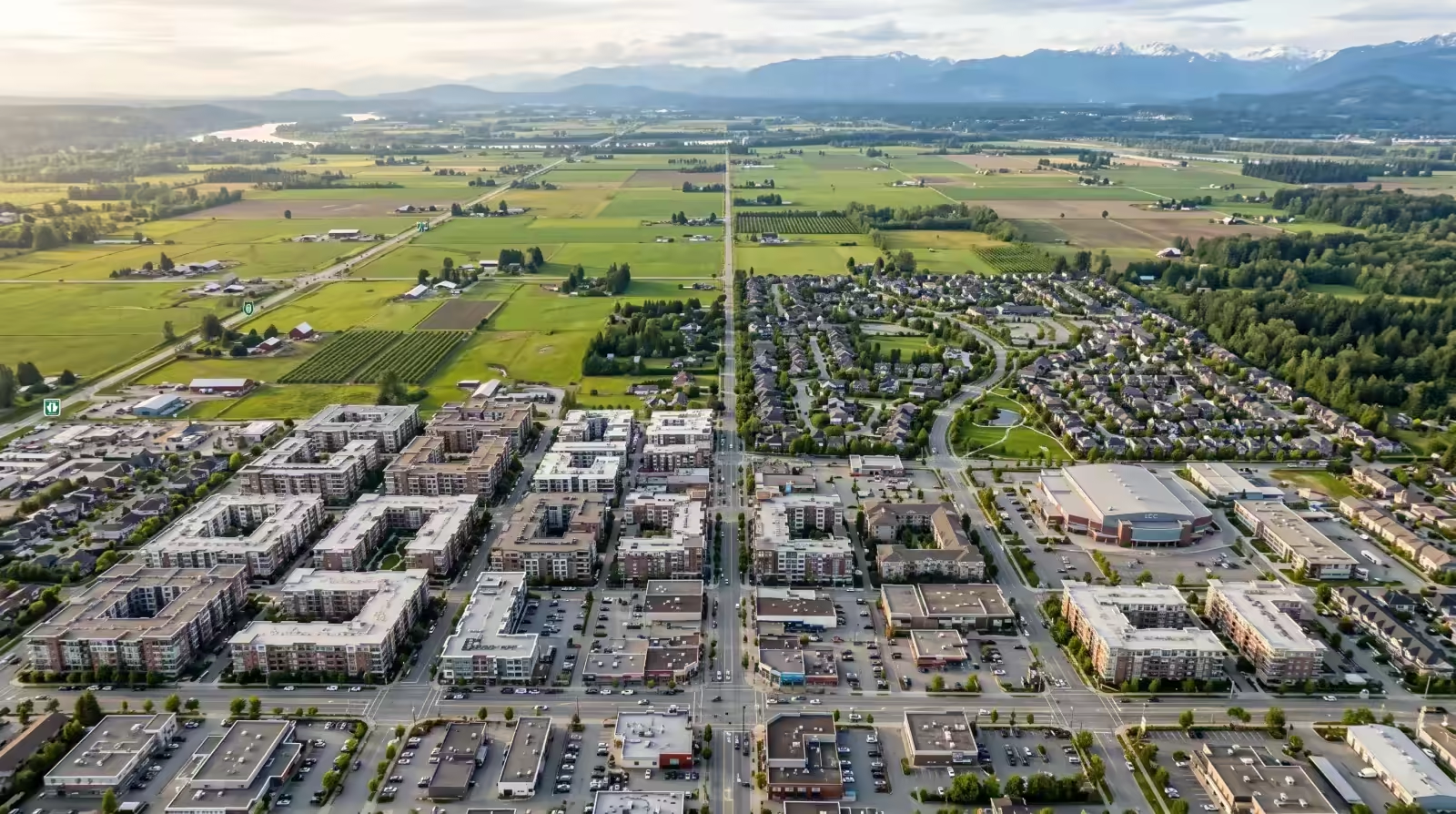

There are two Langleys, and most first-time buyers the FRIVE team works with don't discover this until they're well into a search and notice that two listings "in Langley" feel like they're in different worlds. They are, in a sense. The City of Langley and the Township of Langley are separate municipalities, different governments, different taxes, different services, and knowing which one a property sits in tells you a lot about what you're actually buying.
This is a plain-English guide to telling the two Langleys apart and what the difference means for a first-time buyer.
At a glance
| City of Langley | Township of Langley | |
|---|---|---|
| Character | Small, compact, urban core | Large, varied, includes farmland |
| Government and taxes | Separate municipality, sets its own rate | Separate municipality, sets its own rate |
| Neighbourhoods | The urban core itself | Willoughby, Walnut Grove, Aldergrove, Brookswood, Fort Langley, Murrayville |
| SkyTrain terminus | Planned near 203 Street, in the City | Not in the Township |
| School district | SD35 (shared with the Township) | SD35 (shared with the City) |
| Best fit for | Buyers wanting walkable, transit-adjacent density | Buyers wanting new townhouses, established suburbs, or rural space |
Two municipalities, one name
The City of Langley is a small, more urban municipality, a compact, denser core with walkable amenities. The Township of Langley is the much larger municipality wrapped around it, stretching out to include a wide range of neighbourhoods and a lot of farmland. They are genuinely separate local governments, not two parts of one city.
That's the root of the confusion. People say "Langley" as a single place, but a listing under that name could be a condo in the City's compact core or an acreage twenty minutes away in the rural reaches of the Township. For a buyer, those are completely different purchases, in price, in lifestyle, and in the practical details of ownership.
Why it matters for your wallet and your services
Because the City and the Township are separate municipalities, each sets its own property tax rates and provides its own municipal services. Two similar homes, one in the City, one in the Township, can carry different municipal taxes and different service arrangements.
For a first-time buyer building an ownership-cost picture, that's worth knowing. Property tax is a recurring cost (our guide to property tax and the home owner grant covers how it works), and the municipality you buy in determines the rate. So when you're comparing two "Langley" homes, confirm which municipality each is in and factor the specific rates into your numbers rather than assuming they're identical.
Property taxes in the City and Township have varied relative to each other over the years, and the gap can be meaningful on comparable homes. Confirm current mill rates with the City of Langley and Township of Langley directly, or ask your lawyer to pull the most recent tax figures for any specific property you're considering, before relying on a number. The direction of the difference can flip from year to year depending on each municipality's budget, so don't rely on what you heard last year.
Here's a scenario that comes up. A buyer focuses their Langley search entirely on price and strata fees, compares a City condo and a Township townhouse, and makes an offer on what looks like the better value. When they do the ownership-cost math more carefully with their realtor, they realize the two properties are in different tax jurisdictions with different annual property tax bills, which changes the comparison. Neither is automatically more expensive, but the number is different, and the buyer wished they'd confirmed it earlier.
The Township is many neighbourhoods, not one
Most of the variety lives in the Township, which is large and contains very different kinds of places. A quick tour:
Willoughby is the Township's fast-growing, townhouse-and-condo-heavy area, dense with new development, closer to the transit corridor, our Willoughby guide covers it. Walnut Grove is established and family-oriented, up near Highway 1, which we cover in our Walnut Grove guide. Brookswood and Fernridge feel more spacious and semi-rural. Aldergrove, further east, has a smaller-town character. Fort Langley is a historic riverside village with heritage character and its own pricing. Murrayville and others round it out.
The point is that "Township of Langley" is not a single neighbourhood, it's a big, varied municipality where a dense new townhouse complex and a rural acreage can both share the same municipal name. The City of Langley, by contrast, is the compact urban core with a more consistent, walkable character.
The SkyTrain terminus is in the City, not the Township
The Surrey-Langley SkyTrain extension runs along the Fraser Highway corridor toward the Langley town centre (Government of British Columbia). The planned terminus is near 203 Street, in the City of Langley.
This is a distinction that matters more than most people realize when they type "Langley near SkyTrain" into a search. The transit proximity advantage, and the future development activity around the station area, belongs to the City end of the corridor. A buyer who finds a townhouse in Willoughby, a Township neighbourhood, and assumes they're equally close to the terminus may be surprised at the distance. Willoughby is along the Fraser Highway corridor and will have better transit than before, but the terminus station itself is in the City.
In our experience, this is one of the most common misconceptions we clear up with transit-focused buyers. Someone searches for "Langley condo near SkyTrain," finds options in Willoughby because supply is higher there, and doesn't realize they're looking at a different municipality, and a different station relationship. Our Surrey-Langley SkyTrain buyer's guide breaks down which specific neighbourhoods and stations sit where along the line, and it's worth reading before you make any transit-proximity assumptions. Check the walking distance from a specific property's address to the nearest planned station rather than trusting the general label "Langley."
The broader point: if transit access is a priority for you, the City-versus-Township distinction is directly relevant. The City's proximity to the terminus is one of its defining near-term advantages over most Township neighbourhoods for a transit-oriented buyer.
Schools: both Langleys share a school district, but your catchment still matters
Both the City of Langley and the Township of Langley fall under School District 35, Langley School District. So from a district perspective, buying in either municipality puts you in the same school system.
But which school a child attends still depends on their specific address. School District 35 assigns students to schools based on catchment boundaries that don't follow the City-Township line. A family buying in Willoughby and a family buying near the City core may be in different catchments within the same district, and the schools they're assigned to will differ.
This matters most for buyers who have a specific school in mind, whether because of a French immersion program, a particular elementary's reputation, or proximity to a secondary school. Our school catchments guide for Fraser Valley buyers covers how to look up a specific address's catchment before you commit.
Here's the scenario we see. A family is drawn to Langley generally because of positive things they've heard about schools in the district. They find a townhouse in a part of the Township they like, make an offer, and start thinking about schools after the fact. When they look up the catchment for their address, the school it feeds is not the one they'd pictured. The district is the same, but the catchment isn't. This is a five-minute check that's worth doing during the subject period, not after possession.
Don't assume that being in "Langley", City or Township, places you in any particular catchment. Look up the specific address. The school district's website or your realtor can help.
French immersion program placement is another layer worth checking. School District 35 has French immersion entry points at specific schools, and your address catchment determines which French immersion path you're eligible for. If French immersion is part of the plan, confirm both the regular catchment school and the applicable French immersion school for the specific address before you buy.
Which Langley suits which buyer
Neither is universally better; they suit different priorities. The City of Langley offers a compact, more urban setting with walkable amenities and transit-corridor proximity, good for a buyer who wants density and convenience. The Township offers far more range: dense new townhouse living in Willoughby, established family neighbourhoods like Walnut Grove, more spacious semi-rural areas, and the heritage character of Fort Langley.
So the real question isn't "City or Township" in the abstract, it's what kind of neighbourhood and lifestyle you want, which then points you to the right part of one Langley or the other. A first-time buyer who wants a new townhouse near future transit is probably looking at Willoughby in the Township; one who wants a walkable urban condo might look at the City; one who wants space and quiet might look at Brookswood or Aldergrove.
The practical step
When you're searching, don't let "Langley" function as one undifferentiated label. A listing's address and municipality indicate which Langley it's in, and your agent can confirm it, but it's easy to overlook. Because it affects taxes, services, transit access, and the entire character of the neighbourhood, it's worth being deliberate about. Knowing there are two Langleys, and which one you're looking at, turns a vague search into a focused one.
If you'd like help figuring out which part of which Langley fits your budget and your life, reach out to the FRIVE team, we know the two Langleys well, or browse current Langley listings to start comparing.
Frequently asked questions
What is the difference between the City of Langley and the Township of Langley?
- They are two separate municipalities. The City of Langley is a small, more urban municipality forming a dense core. The Township of Langley is a much larger municipality surrounding the City, containing neighbourhoods like Willoughby, Walnut Grove, Aldergrove, Brookswood, and Fort Langley, plus significant farmland. They have separate governments, taxes, and services.
Is Willoughby in the City or Township of Langley?
- Willoughby is in the Township of Langley. It is one of the Township's fastest-growing areas, known for its dense townhouse and condo development along the Fraser Highway corridor. Many buyers say Langley without realizing Willoughby sits in a different municipality from the City core, with its own tax rate and services. The planned Surrey-Langley SkyTrain terminus near 203 Street sits in the City of Langley.
Sources
- Surrey-Langley SkyTrain, Province of British Columbia, Government of British Columbia
- Monthly Market Report, Fraser Valley Real Estate Board
Related guides
- Neighbourhood GuidesAbbotsford Neighbourhoods for First-Time Buyers: West Abbotsford, Central, and the Areas In Between
- Neighbourhood GuidesBuying Your First Home in Maple Ridge: Two Train Stations, Mountains, and Room to Grow
- Neighbourhood GuidesBuying Your First Home in Mission, BC: The Commuter Train Town Most Buyers Overlook
- Buyers GuideFlood Risk in the Fraser Valley: What Buyers Should Check After 2021
Found this useful? Share it.
A neighbour, a partner, a friend who's two FHSA contributions away, send it their way.