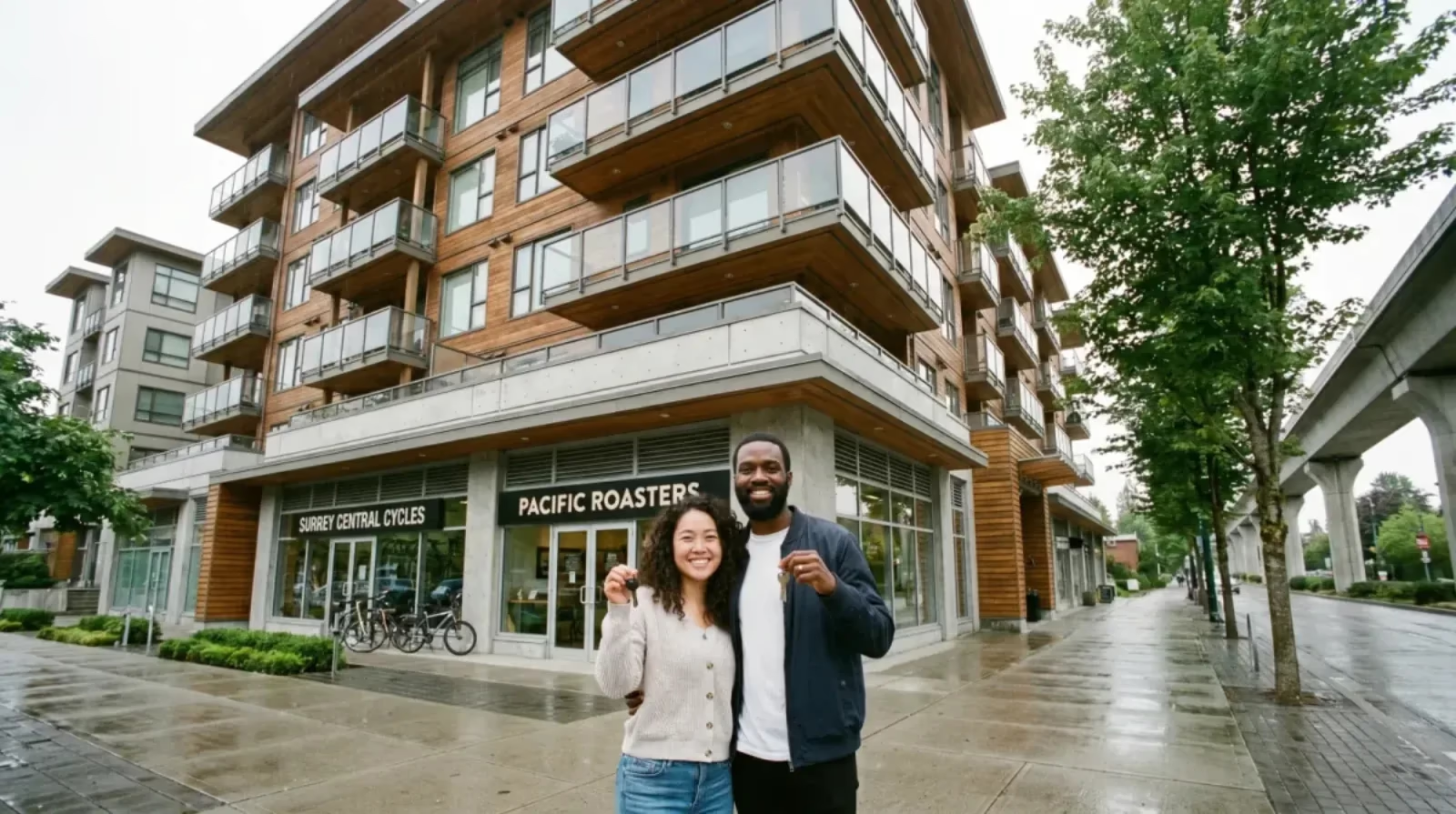

Surrey is BC's largest city by area, and it's also the Fraser Valley's biggest, most varied real estate market. The buying process here looks the same on paper as anywhere else in BC, but the neighbourhood choices are genuinely different from one end of the city to the other, and a few BC-specific steps catch first-time buyers off guard every time.
The eight steps, in order:
- Check your finances before you look at a single listing.
- Get a real mortgage pre-approval, not just an online estimate.
- Sign a Buyer Representation Agreement with your agent.
- Get specific about what you're actually shopping for in Surrey.
- Tour properties and make an offer.
- Use the subject-removal period properly.
- Complete and take possession.
- Apply the first-time buyer programs that fit your purchase.
Each step is broken down below.
Step 1: Check your finances before you look at a single listing
The buyers we work with who have the smoothest experience all have one thing in common: they looked at their finances first, before they opened a single MLS app.
This means knowing your credit score and doing something about it if it's below roughly 680. Most lenders want to see at least that; some insured mortgage products require higher. Your debt load matters as much as your income, total monthly debt payments (car loan, student loan, credit cards) affect the qualifying math directly through what's called your Total Debt Service (TDS) ratio. Both your income and your debt are tested.
Down payment is the other number to nail down before anything else. In BC, minimum down payments are:
- 5% on the first $500,000 of purchase price
- 10% on the portion from $500,000 to $1.5M
For a Surrey condo around the Fraser Valley-wide June 2026 benchmark of $476,400 (FVREB, July 2026), you're looking at a minimum of roughly $23,820 down. On a Surrey townhouse closer to the municipal benchmark of $794,500 (FVREB Municipal Report, April 2026), it's around $39,725. And those minimums don't include closing costs, typically 1.5% to 4% of the purchase price, due in cash. Budget for both at the same time, not as an afterthought.
Two programs that help with down payment savings deserve mention here. The First Home Savings Account (FHSA) lets you contribute up to $8,000 per year (lifetime $40,000) with tax-deductible contributions and tax-free withdrawals for a qualifying first home. The RRSP Home Buyers' Plan lets you withdraw up to $60,000 from your RRSP for a first home purchase (repayable over 15 years). These can work together, and starting early makes a meaningful difference. We typically suggest buyers open the FHSA even a year or two before they're ready to buy, just to start accumulating contribution room.
Step 2: Get a real mortgage pre-approval, not just an online estimate
A pre-approval is not the same as an approval. It's not a guarantee the bank will lend you money on a specific home. But a real one, meaning a lender who has pulled your credit, reviewed your income documents, and issued a rate-hold letter, is the foundation of every successful Surrey purchase.
What "real" means in practice: you bring your T4s or employment letter, your last two Notices of Assessment, recent pay stubs, three months of bank statements, and any debt statements the lender asks for. The lender runs a hard credit check, verifies the income, and tells you your actual maximum purchase price based on the stress test, which qualifies you at the higher of your contract rate plus 2%, or 5.25%, whichever is greater. With the Bank of Canada's policy rate at 2.25% (held June 10, 2026), typical contract rates for insured buyers have been sitting in the low-to-mid 4% range, so the stress-test qualifier lands roughly in the 6 to 7% range. Your lender will give you the exact current number.
The pre-approval locks a rate for 90 to 120 days and tells you clearly what you can spend. In Surrey, that matters because the price gap between a Whalley condo and a South Surrey townhouse is enormous, knowing your real budget before you tour keeps you from falling in love with something you can't qualify for. It also makes your offer more credible when you're ready to write.
For a deeper look at what a pre-approval does and doesn't protect, see our pre-approval vs. approval guide.
Step 3: Sign a Buyer Representation Agreement with your agent
This step trips up first-time buyers because it didn't always work this way. Since 2024, the BC Financial Services Authority has required that any realtor who provides real estate services to a buyer, including showing a property, first present a written Buyer Representation Agreement (BRA) and have you sign it. You can no longer just call a listing agent and tour a home without signing something that defines the relationship.
The agreement spells out: who the agent represents (you, the buyer), what services they'll provide, how their commission is paid, and how long the agreement lasts. Read it before signing. Key things to understand: the commission structure for buyer's agents changed under BCFSA's 2024 rules, in many transactions, the buyer is now responsible for confirming their agent's compensation or negotiating it as part of the offer rather than assuming the seller's listing automatically covers it. Ask your agent to walk through this before you sign anything.
Once you've signed with an agent you trust, they can start sourcing properties, booking showings, and helping you assess the market. In Surrey, a good agent's knowledge of specific buildings, strata documents, and recent comp sales by subarea makes a real difference.
Step 4: Get specific about what you're actually shopping for in Surrey
This step sounds obvious. In Surrey, it isn't. The city is roughly 317 square kilometres, and the buying decision looks completely different depending on which part of Surrey you're talking about.
Surrey City Centre (Whalley, near King George Station and Gateway Station) is the most transit-connected part of Surrey, SkyTrain direct to downtown Vancouver in under 40 minutes, dense condo towers, walkable amenities. It also has the lowest condo benchmarks of any Surrey submarket. It suits buyers who commute by transit and want the lowest entry point to Surrey.
Guildford is a mid-tier option with good highway access and a large commercial centre. More of a car-dependent neighbourhood than Whalley, but a popular choice for families and buyers who want a quieter feel than Surrey Central.
Clayton and Fleetwood are the primary first-time townhouse corridors in Surrey. More suburban character, strong school infrastructure, and priced below South Surrey. Both neighbourhoods are in line to benefit from new SkyTrain stations on the Surrey-Langley extension, anticipated around late 2029. The station sites mean there will be development pressure in those areas over the next several years, worth factoring in if you're buying close to a planned station.
Cloverdale is smaller, with a distinct small-town character and prices that often come in a touch below Clayton. We've worked with buyers who found Cloverdale felt like a different city compared to Whalley, lower density, quieter streets, and some older heritage character mixed with newer subdivisions.
South Surrey and Morgan Crossing / Grandview Heights are higher-priced and tend to suit move-up buyers rather than first-timers. Townhouses here commonly exceed the $835,000 PTT exemption threshold, which changes the closing-cost math materially.
Decide on two or three of these subareas before you start touring. Spreading yourself across all of Surrey wastes time, invites decision fatigue, and makes it hard to learn the comp sales that tell you whether a listing is priced fairly.
Browse condos for sale in Surrey or townhomes for sale in Surrey once you've narrowed your search area.
Step 5: Tour properties and make an offer
In Surrey's current market, touring is lower-pressure than it was a few years ago. The Fraser Valley June 2026 data showed condos averaging 38 days on market (FVREB, July 2026). Inventory is ample. You're rarely competing against five other buyers on the same unit, and the pressure to skip due diligence to "win" is mostly gone in this market.
When you're ready to make an offer, your agent prepares a Contract of Purchase and Sale, the binding legal agreement in BC. The main elements:
- Price, based on recent comparable sales, not list price. Your agent pulls sold comps for similar units in the same building or complex.
- Subjects, your conditions. For a first-time buyer, the core subjects are: subject to financing (usually five business days), subject to a home inspection, subject to strata document review (if applicable), and title review. Keep your subjects. In this market, sellers expect them and there's almost no need to waive them. See our offer guide for more on this.
- Deposit, typically around 5% of the purchase price, due within 24 hours of subject removal, not offer acceptance. The deposit signals commitment but isn't "at risk" until you remove subjects.
- Completion and possession dates, completion is when title transfers and money moves; possession is usually the same day or one day later in BC.
On a unit that's been listed past 45 days, there's often room to negotiate. In our experience, realistic below-ask offers on longer-sitting Surrey condos have been accepted in 2026. The specific building, the condition of the unit, and how the price compares to recent solds in the same complex are what drive how much room you have.
Step 6: Use the subject-removal period properly
Once your offer is accepted, the subject-removal period begins. This is where the deal either firms up or falls apart, and it's the window that exists to protect you. Don't treat it as a formality.
The typical window is five to seven business days. In that time:
Finalize your financing. Your mortgage broker or lender submits the property details, orders an appraisal, and converts your pre-approval into a property-specific commitment. For a strata property, the lender also reviews the strata documents. If the appraisal comes in below the purchase price, or the strata financials raise concerns, this is where you find out, not after you've removed subjects.
Get the home inspection done. Budget $400 to $600 for a condo or townhouse in Surrey. A good inspector checks for moisture intrusion, mechanical systems, electrical, and visible structural issues. For an older wood-frame building especially, the inspection earns its fee. We've seen inspections in Surrey uncover issues that led to successful renegotiations, lower price or seller repairs, before subject removal.
Review the strata documents (if buying a condo or townhouse). The package includes the Form B, bylaws, minutes from the last two years, the depreciation report, and the financials. You're looking for pending special levies, deferred maintenance, low reserve fund balances, and any bylaw restrictions that affect how you plan to use the unit, pets, rentals, short-term rentals. This takes time to read properly. Start on day one of the subject period, not day four.
At the end of the period, you have three choices: remove subjects and proceed (the deal is now firm and binding), ask for an extension (the seller must agree), or walk away and receive your deposit back.
Step 7: Complete and take possession
Once subjects are removed, the deal is firm. Your lawyer or notary takes over. They handle title registration, mortgage registration, balance of purchase price transfer, and adjustments for prepaid property tax and strata fees.
There are a few BC-specific items to understand:
BC Property Transfer Tax (PTT). Every purchase in BC attracts PTT, 1% on the first $200,000 of price, 2% on the portion up to $2M, 3% on the portion to $3M. On a $500,000 home, that's $8,000. But the first-time buyer PTT exemption removes it entirely on qualifying homes priced at or below $835,000, with a partial exemption between $835,000 and $860,000. The maximum saving is around $8,000. For most first-time buyers in Surrey, where the apartment benchmark sits at $474,100 and the townhouse benchmark at $794,500, this exemption applies and saves a meaningful amount.
To qualify you must be a Canadian citizen or permanent resident, have lived in BC for 12 months before the purchase (or filed two BC income tax returns as a BC resident), have never owned a principal residence anywhere in the world, and occupy the home as your principal residence within 92 days of completion for at least a year. Talk to your lawyer about the specific requirements.
Completion day vs. possession day. Completion is when your lawyer transfers funds and the Land Title Office registers the new title. Possession is when you physically get the keys, usually the same day, occasionally the next business day. Your lawyer coordinates both.
Budget for legal/notary fees ($1,500 to $2,500), title insurance ($300 to $500), and adjustments (prepaid property tax and strata fees) on top of your down payment. For a more complete breakdown of what you'll owe at closing, see our closing costs guide.
Step 8: First-time buyer programs worth knowing for Surrey purchases
These programs are provincial and federal, they apply anywhere in BC including Surrey. We cover them here as a reference, but each one has qualification rules worth reviewing in detail before you rely on them.
BC PTT First-Time Buyer Exemption, up to $8,000 saved on a qualifying home at or below $835,000. For a Surrey condo at the most recent benchmark of $474,100 or a townhouse at $794,500 (both April 2026 municipal), this exemption fully applies and is the largest single closing-cost saving available to you. Details at gov.bc.ca, or see our PTT exemption guide.
First Home Savings Account (FHSA), contributes up to $40,000 lifetime into a registered account. Contributions are tax-deductible (like an RRSP); withdrawals for a qualifying first home are tax-free (like a TFSA). Open one early. The sooner you start contributing, the more room you accumulate. Details at CRA, or see our FHSA guide.
RRSP Home Buyers' Plan (HBP), withdraw up to $60,000 from your RRSP tax-free for a qualifying first home purchase, repayable over 15 years. Works alongside the FHSA. If you have existing RRSP savings, this is worth calculating. See our HBP guide.
GST New-Home Rebate, if you buy a new or substantially renovated home, 5% federal GST applies. A partial federal rebate is available on new homes under approximately $450,000, and BC has a provincial new-housing rebate with a threshold of $550,000. Most first-time buyers in Surrey buying resale condos and townhouses don't hit this line at all, GST only applies to new homes.
These programs are separate from your mortgage pre-approval process and most of them don't interact with each other negatively, but it's worth reviewing the details of each with a mortgage broker or financial advisor who knows your specific situation. For a full overview, see our first-time buyer programs page.
Frequently Asked Questions
How long does it take to buy a home in Surrey, BC?
From the day you start seriously preparing to the day you get keys, six to twelve months is a realistic window for a first-time buyer who needs time to save, get pre-approved, and search. The offer-to-completion phase, once you've made an accepted offer, typically runs four to six weeks in Surrey.
How much do I need to buy a condo in Surrey in 2026?
The FVREB Fraser Valley-wide apartment benchmark was $476,400 in June 2026. Surrey's most recent municipal benchmark was $474,100 in April 2026. On a $474,100 condo, the minimum insured down payment is 5% ($23,705), but you'll need additional funds for closing costs, roughly 1.5% to 4% of purchase price, and you must meet the mortgage stress-test qualifying rate.
Do first-time buyers pay property transfer tax in Surrey?
Generally no. BC's first-time buyer PTT exemption removes the tax entirely on qualifying homes priced at or below $835,000. Surrey's most recent apartment benchmark ($474,100) and townhouse benchmark ($794,500, both April 2026 municipal) both sit well inside that ceiling, so most first-time buyers in Surrey qualify for the full exemption, saving up to $8,000.
Do I need a buyer's agent to buy a home in Surrey?
You don't have to use one, but since 2024 any realtor who works with you in BC must present you with a Buyer Representation Agreement before showing properties. The seller pays the listing agent's commission, but the buyer's agent's commission structure changed under 2024 BCFSA rules, ask about it up front. An experienced agent adds real value in strata-document review, offers, and negotiation.
What is the subject-removal period when buying in BC?
The subject-removal period (usually five to seven business days) is the window after your offer is accepted to finalize financing, conduct a home inspection, and review strata documents if it's a condo or townhouse. Once you remove subjects in writing, the deal becomes firm and binding, deposits are typically due within 24 hours.
Which Surrey neighbourhoods are best for first-time condo buyers?
Whalley and Surrey City Centre (near King George and Gateway stations) have the deepest condo inventory and the most transit-accessible addresses. Guildford is a solid mid-tier option. Clayton and Fleetwood are better if you want a quieter feel, those two areas will also benefit from new SkyTrain stations anticipated around 2029.
Which Surrey neighbourhoods are best for first-time townhouse buyers?
Clayton Heights and Fleetwood are the most popular townhouse corridors for first-time buyers in Surrey, more family-oriented, good schools, and priced below South Surrey. Cloverdale tends to run slightly more affordable than Clayton and has a small-town feel. South Surrey townhouses are higher-priced and generally suit move-up buyers.
Is Surrey a buyer's market or seller's market in 2026?
June 2026 FVREB data shows ample inventory and condos averaging 38 days on market across the Fraser Valley, conditions that lean toward buyers. Surrey's deep supply means you generally have room to negotiate and keep reasonable conditions in your offer without having to compete in a bidding war.
How much does a home inspection cost in Surrey, BC?
For a condo or townhouse, expect $400 to $600. A detached home typically runs $500 to $800 or more depending on size and age. The inspection fee is part of your subject-removal costs and is one of the best ways to avoid inheriting a problem you can't see during a showing.
What is the FHSA and should Surrey first-time buyers use it?
The First Home Savings Account (FHSA) is a federal account letting you save up to $8,000 per year (lifetime limit $40,000) with tax-deductible contributions and tax-free withdrawals for a qualifying first home purchase. If you're more than a year from buying, opening an FHSA now to start accumulating room is almost always worth doing. It works alongside the RRSP Home Buyers' Plan.
Sources
- Fraser Valley Real Estate Board, June 2026 statistics package
- Fraser Valley Real Estate Board, Municipal Market Report
- Province of British Columbia, First Time Home Buyers' Program (Property Transfer Tax)
- Bank of Canada, Maintains policy rate at 2¼%, April 29, 2026
- Canada Revenue Agency, First Home Savings Account (FHSA)
- BC Financial Services Authority, Buyer representation agreements
- TransLink, Surrey Langley SkyTrain
Related guides
- Best Surrey neighbourhoods for first-time buyers, where to focus once you've decided on Surrey
- Surrey vs. Langley for first-time buyers, how to choose between the Valley's two biggest markets
- Surrey condos and the SkyTrain extension, what the Expo Line to Langley means for condo buyers
- First-time buyer programs in BC, PTT, FHSA, HBP, and how they stack
- How much down payment you actually need, the 5/10/20 rule with Fraser Valley examples
- How to write a competitive offer in BC, the offer structure, subjects, and deposit in a buyer-leaning market
- First-time buyers hub, the full FRIVE buying guide
- Buying timeline: offer to keys, what happens at every stage
Data updated July 7, 2026 (June 2026 FVREB data). Market conditions, program thresholds, and tax rules change. Surrey neighbourhood benchmarks vary by subarea and building, the figures here are Fraser Valley-wide and municipal averages. Confirm current rates, program eligibility, and legal requirements with your mortgage broker, lawyer, and BC-licensed realtor before making decisions.
Work with FRIVE
The FRIVE team works with first-time buyers across Surrey, from Whalley condos to Clayton townhouses to Cloverdale. We know the buildings, we read the strata documents, and we write a lot of offers for buyers who want to protect themselves and still actually close.
Start a conversation with us, no pressure, no pushy sales pitch, just a conversation about where you are and what makes sense for your situation. Or browse what's available now: condos for sale in Surrey and townhomes for sale in Surrey.
Sources
- FVREB June 2026 statistics package, Fraser Valley Real Estate Board (via GlobeNewswire) (2026-05-04)
- Municipal Market Report, April 2026, Fraser Valley Real Estate Board (2026-05-04)
- First time home buyers' program, Property Transfer Tax, Province of British Columbia
- Bank of Canada maintains policy rate at 2¼%, Bank of Canada (2026-04-29)
- First Home Savings Account (FHSA), Canada Revenue Agency
- BCFSA, Buyer representation in BC, BC Financial Services Authority
- Surrey Langley SkyTrain, stations and schedule, TransLink
Related guides
- Buyers GuideSteps to Buying a Home in Langley, BC: A First-Time Buyer's Guide
- Buyers GuideRealtor Fees and Buyer Representation in BC: What You Actually Pay in 2026
- Buyers GuideHome Inspection Guide for BC First-Time Buyers: Condos and Townhouses
- First-Time BuyersLangley vs Abbotsford for First-Time Buyers: Space, Price, and the Commute Math
Found this useful? Share it.
A neighbour, a partner, a friend who's two FHSA contributions away, send it their way.