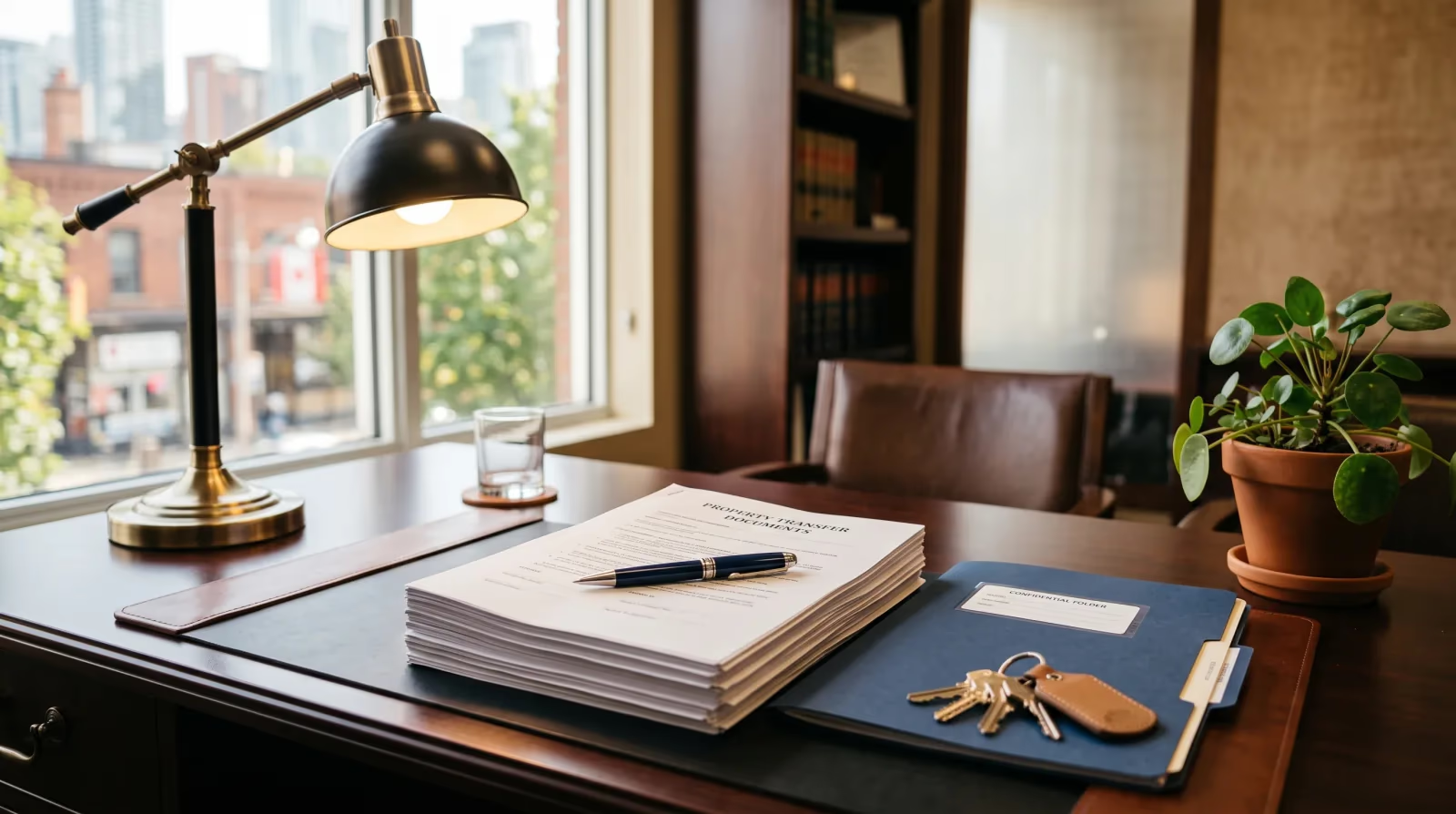
When a parent decides to sell the family home, a son or daughter often makes the calls, finds the documents and meets the lawyer. The house and the money from the sale still belong to the parent. Only the owner, or someone with legal authority to act for them, can sign.
This guide is for the family member doing that work. Each section answers one question, with the government source for each rule. It is general information. Your parent's lawyer or notary will confirm what applies to them.
Who can sign the papers to sell your parent's house?
The owners named on the title sign the listing contract and the sale. If your parent is able to make decisions, they sign for themselves, even when you do everything else.
If your parent cannot sign, someone needs legal authority. The usual tool is an enduring power of attorney. The Province of BC describes it as "a legal document that appoints another person to make financial and legal decisions for you," and says it continues even if the person becomes mentally incapable. The document must say whether the attorney can act while your parent is capable, or only once they are incapable. An ordinary power of attorney ends when the person becomes mentally incapable, which is why the enduring kind matters for a parent whose health is changing.
To sign a land transfer, the Land Title Office needs the power of attorney itself. Its practice manual says a document signed by an attorney must not be registered unless the original power of attorney or a certified copy is filed. For an enduring power of attorney, the attorney must be at least 19 at the time of registration and files a statutory declaration (a signed statement) saying so. Give the document to the lawyer or notary early, so they can check it before the house is listed.
What if your parent has no power of attorney?
Then a court may need to act. The Province says that if a person becomes mentally incapable and has not named someone, the BC Supreme Court may appoint someone to make decisions on their behalf, and the Public Guardian and Trustee of BC may be appointed as committee for financial and legal decisions.
In our experience, a court process adds months before a house can be sold. If your parent can still make decisions, ask them about an enduring power of attorney now, with their lawyer or notary.
What are your duties if you act for your parent?
BC's Power of Attorney Act, section 19, lists them. An attorney must:
- act honestly and in good faith
- act in the adult's best interests, taking into account their current wishes, known beliefs and values
- keep prescribed records, and show them to the adult on request
- give priority, as far as reasonable, to the adult's personal care and health care needs
- keep the adult's property separate from the attorney's own property
- not dispose of property that the attorney knows the adult's will gives to a specific person, unless it is needed to meet the attorney's duties
The last point matters for a house. If the will leaves the house to one child, the attorney cannot sell it without a reason the Act accepts. Ask the lawyer before you list in that case.
In practice, have the sale money paid into an account in your parent's name, and keep a record of every payment from it.
What should happen to the house when a parent moves into care?
Often it sits empty for a while, and that brings two tasks.
The speculation and vacancy tax. Abbotsford, Chilliwack, Mission, Surrey, the City and Township of Langley, Maple Ridge and Pitt Meadows are all on the Province's list of taxable areas. The Province says owners in those areas must complete a declaration each year, due March 31, and an owner who does not declare pays tax at the maximum rate of 2 percent of the assessed value. An owner who lived in the home before entering a residential care facility is exempt for up to two years. The facility must offer services such as daily meals, housekeeping or nursing care.
Home insurance. Read your parent's policy for its rules on an empty home and call the insurer before the move. Insurers set their own conditions, so ask them directly.
Should you put your name on your parent's title?
Families sometimes ask about this to make a later sale easier. Talk to a lawyer and an accountant first. Adding a person to the title changes who owns the home, and it can have tax results for both of you.
There is one rule we can point to. The Province of BC lists "adding another person on title (other than a spouse)" among the events that require a property tax deferment loan to be repaid in full. If your parent has deferred their property tax, adding your name triggers that repayment.
What changes if your parent has died?
The executor named in the will deals with the house. The Province of BC says institutions holding assets can require the will to be probated before they accept it, and that a grant of administration is needed when there is no will, no executor was named, or the executor cannot or will not act. You can apply in any BC Supreme Court registry, and the Province says you do not need a lawyer to apply.
The executor's duties on the Province's list include "taking control of all assets and transferring ownership registrations" and "selling assets as necessary and distributing the estate." Ask the estate's lawyer when the house can be listed and when a sale can complete.
How do you start the conversation?
There is no form for this part. In our experience these steps help:
- Start with a real number. A free home value gives the family a price range by email, so the talk is about facts.
- Visit two or three smaller homes together. A condo or townhouse in person answers questions a listing cannot.
- Let your parent lead. It is their home and their money. Your job is to make each decision easier.
- Bring brothers and sisters in early. Share the same information with everyone at the same time.
Our downsizing checklist lists the steps of the move in order, and our guide to protecting a home sale from fraud covers the checks to make on anyone who contacts your parent about the house.
Next step
Ask us for a free home value for your parent's house. A BC-licensed REALTOR® looks at recent sales of similar homes and emails a price range. Your parent does not have to sell with us. The free downsizing guide below covers the whole move in eight pages, and you can read it together.
Frequently asked questions
Can I sell my parent's house for them in BC?
- Only with legal authority. The owners on title sign the sale. If your parent cannot sign, the person named in an enduring power of attorney can act on their financial and legal affairs, as the document allows. The Land Title Office needs the original power of attorney or a certified copy filed with the transfer. Ask a lawyer or notary to check the document before you list.
What is an enduring power of attorney in BC?
- The Province of BC describes it as a legal document that appoints another person to make financial and legal decisions for you. It continues even if you become mentally incapable of making decisions. The document must say whether the attorney can act while you are capable or only when you are incapable. An ordinary power of attorney ends if the person becomes mentally incapable.
Sources
- Substitute Decision-Making and Incapacity Planning, Province of British Columbia (Accessed 2026-10-18)
- Power of Attorney Act, section 19, BC Laws (Accessed 2026-10-18)
- Land Title Practice Manual, 51: Deposit of Power of Attorney on Registration of Instrument, Land Title and Survey Authority of British Columbia (Accessed 2026-10-18)
- Taxable areas for the speculation and vacancy tax, Province of British Columbia (Accessed 2026-10-18)
- How the speculation and vacancy tax works, Province of British Columbia (Accessed 2026-10-18)
- Exemptions from the speculation and vacancy tax for individuals, Province of British Columbia (Accessed 2026-10-18)
- Repaying your property tax deferment loan, Province of British Columbia (Accessed 2026-10-18)
- After a Death: Deal with wills and estates, Province of British Columbia (Accessed 2026-10-18)
The Fraser Valley Downsizing Guide
Eight pages on selling the family house and buying a smaller home: the steps in order, prices by city, the costs of selling and buying, the tax rules, and what to read before you buy in a strata. Written for owners who have not sold a home in a long time.
- The move in eight steps, from the first price check to the paperwork after you move
- Benchmark prices for houses, townhouses and condos in six Fraser Valley cities
- The costs of selling and buying, and the tax rules on the sale of your home

Put together by the FRIVE team with Michael Goering, BC-licensed REALTOR®.
Tell us where to send it, you'll get it right away.
Downsizing in the Fraser Valley
17 pieces that fit together. Read them in order, or jump to the one you need.
- Start hereDownsizing in the Fraser Valley: The Complete Guide
- GuideSell First or Buy First? How Downsizers in BC Decide
- GuideGetting a 30-Year-Old House Ready to Sell in the Fraser Valley: What to Fix and What to Leave
- GuideDo You Pay Capital Gains Tax When You Sell Your Home in BC?
- Guide55 and Over Buildings in BC: The Rules for Downsizers
- GuideCondo, Townhouse or Rancher: Which Smaller Home Suits a Downsizer in the Fraser Valley?
- GuideStrata Fees on a Fixed Income: What a BC Downsizer Should Check Before Buying
- GuideBC Property Tax Deferment and the Seniors Home Owner Grant: 2026 Rules and What You Repay When You Sell
- GuideSell in Surrey or Langley, Buy Farther East: What Downsizers Gain and What It Costs
- GuideGiving Your Child a Down Payment in BC: How a Gift Works After You Downsize
- GuideDownsizing Checklist for the Fraser Valley: Every Step From the First Price Check to After the Move
- GuideWhat It Costs to Sell a House in the Fraser Valley: A Worked Example for Six Cities
- GuideDoes Selling Your House Change Your OAS or GIS?
- GuideWill Your Property Tax Go Down If You Move to a Smaller Home in BC?
- GuideFraud When You Sell Your Home in BC: Five Risks and How to Check Each One
- GuideWhen Is the Best Time to Sell a House in the Fraser Valley? What 24 Months of Board Data Show
- Guide · you are hereHelping a Parent Sell the Family Home in BC: A Guide for Adult Children
Related guides
- Hub - DownsizingWill Your Property Tax Go Down If You Move to a Smaller Home in BC?
- Hub - DownsizingDoes Selling Your House Change Your OAS or GIS?
- Hub - DownsizingWhat It Costs to Sell a House in the Fraser Valley: A Worked Example for Six Cities
- Hub - DownsizingWhen Is the Best Time to Sell a House in the Fraser Valley? What 24 Months of Board Data Show
Found this useful? Share it.
A neighbour, a partner, a friend who's two FHSA contributions away, send it their way.