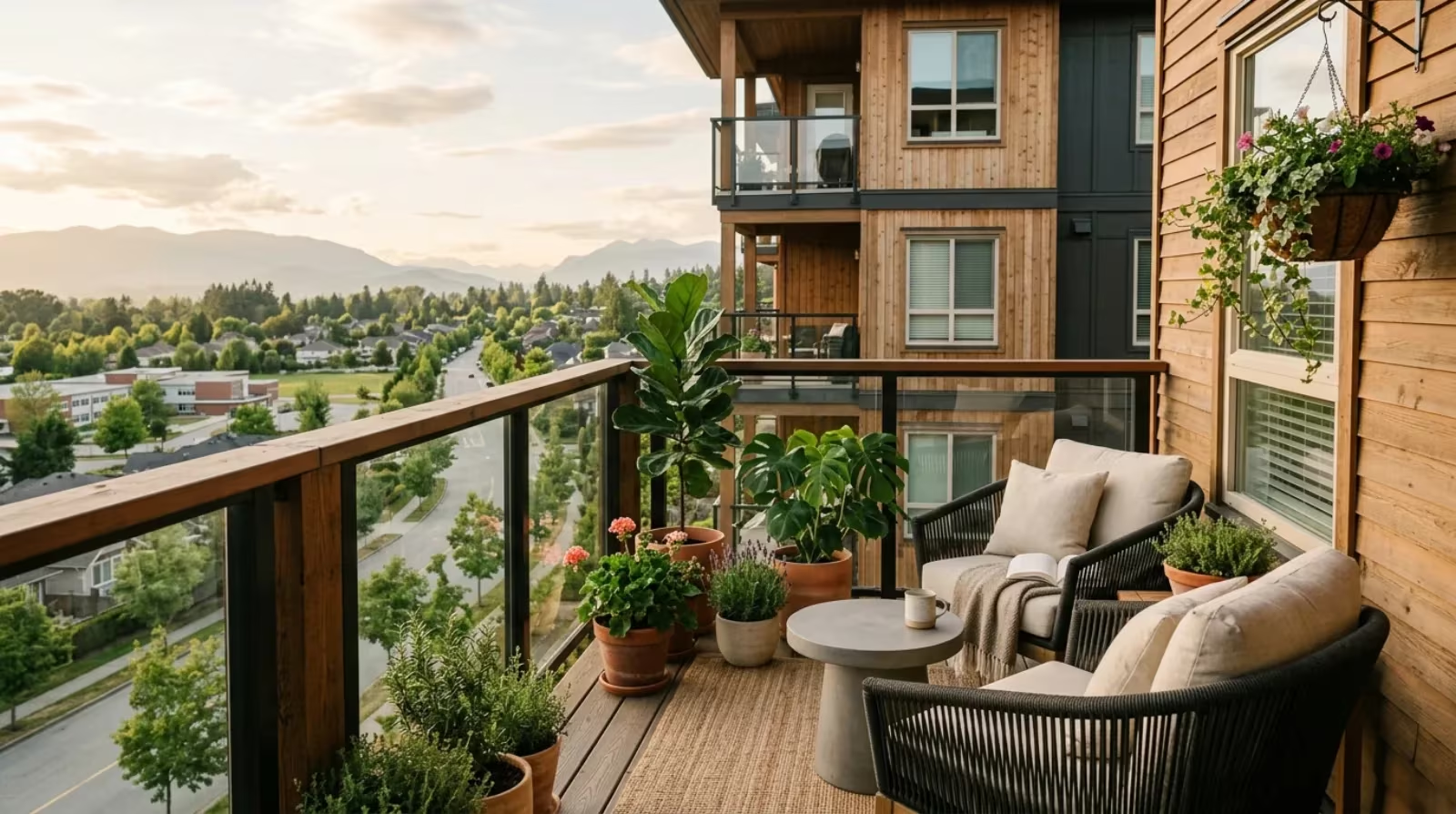

A 55 and over building is a condo or townhouse complex where the owners have voted in a minimum age for the people who live there. BC changed the law for these buildings on November 24, 2022, and added family exemptions on May 1, 2023. This guide explains who can live in one today, how the age rule is voted in and out, and what to check before you buy.
What is a 55 and over building in BC?
A strata is the owners' group that runs a condo or townhouse complex. The Province of BC says that in strata housing the owners own their individual strata lots and together own the common property as a strata corporation. A strata lot is the legal name for one home in the complex. The owners elect a strata council, and the council enforces the bylaws.
A bylaw is a rule that the owners vote in. An age-restriction bylaw sets a minimum age for the people who live in a home, and a "55 and over building" is a strata that has one. The bylaw has effect only once it is filed at the Land Title Office, the office that keeps the legal records for land in BC.
What the law has said since 2022
The Province says that as of November 24, 2022, strata corporations can no longer have bylaws that restrict residents to other ages, "such as restricting strata residents to age 19+, 25+ or 40+". The Province's list of changes to strata law says a bylaw for an age below 55 is invalid, and that this applies "regardless of existing strata bylaws".
The rule is in section 123.1 of the Strata Property Act, the BC law for stratas:
The strata corporation may pass a bylaw that requires one or more persons residing in a strata lot to have reached a specified age that is not less than 55 years.
How many people in the home must be 55? The Act says "one or more persons", so each strata decides. One strata's bylaw may require one resident of each home to be 55 or older. Another may require every resident to be. Read the bylaw of the building you want.
What age? The Act says "not less than 55 years". A bylaw can set 55 or a higher age.
Who can live there if they are under 55?
The age rule has exemptions. Exempt means the age requirement does not apply to that person. Two exemptions are in section 123.2 of the Act:
- People who already lived there. A person who lawfully lived in the strata lot immediately before the bylaw was passed, and who continues to live there. The Province calls these people legacy residents.
- Live-in caregivers. A caregiver who lives in the strata lot to care for another resident who "is dependent on caregivers for continuing assistance or direction because of disability, illness or frailty". Frailty means physical weakness. The Province's example is an 87-year-old resident with a 44-year-old caregiver.
Three more exemptions are in section 7.01 of the Strata Property Regulation, and the Province says they took effect on May 1, 2023. They depend on a "specified resident": an owner, a tenant or another occupant who lives in the home and who either meets the age requirement or is a legacy resident. The regulation exempts:
- "a child, if one of the child's caregivers is a specified resident". A child is a person under the age of 19.
- "a person who is 19 years of age or older, if the person resides in a strata lot with a specified resident who was one of the person's caregivers before the person reached the age of 19 years".
- "the spouse of a specified resident". A spouse is a person who is married to another person, or is living with another person in a marriage-like relationship.
The Province adds that a strata's own bylaw "can also specify further exemptions".
These exemptions mean a 55 and over building can lawfully have younger residents, including children. One of the Province's examples is a 36-year-old legacy resident. Keep this in mind if quiet is your main reason for choosing such a building.
A couple where one partner is 52
Take a couple aged 57 and 52. The 57-year-old meets a 55 and over bylaw and is the specified resident. The 52-year-old is exempt as the spouse. This is true even where the bylaw requires every resident to be 55, because the Act says the requirement does not apply to an exempt person.
One question remains. The Province says the exemptions "exist in relationship to the specified resident". The pages and sections we read do not say what happens to the younger spouse if the older spouse dies or moves to a care home. Ask a lawyer who knows strata law before you buy.
Two people who are not spouses, such as a brother aged 57 and a sister aged 52, have no exemption in the Province's list. Their answer depends on whether the bylaw requires one resident or every resident to be 55, and on any exemptions the bylaw adds.
An adult child who moves back
An adult child can live with you if you are a specified resident and you were one of that child's caregivers before the child turned 19. The Province's example is a 23-year-old who was in the resident's care before age 19. The regulation's list has three groups: children, adult children and spouses of the specified resident. If your child would bring a partner, ask the strata council in writing first.
Grandchildren who visit or stay
The Act lets a bylaw set an age for persons "residing in a strata lot". In its section on fines, the Act uses different words for a guest: "a person who is visiting the owner". The Act and the Province's page give no number of nights at which a visit becomes residing, so read the building's bylaws for anything about guests and the length of a stay.
A grandchild who lives with you is a separate case. The child exemption applies if you are a specified resident and one of the child's caregivers.
How does a building adopt, change or remove the age rule?
The owners vote. For a strata made up entirely of residential strata lots, the Act says a change to the bylaws must be approved at an annual or special general meeting "by a resolution passed by a 3/4 vote". The Act defines a 3/4 vote as at least 3/4 of the votes cast by eligible voters who are present in person or by proxy and who have not abstained. A proxy is a person an owner appoints in writing to vote for them. To abstain is to cast no vote. The count uses only the votes cast at the meeting.
The Province's page on amending bylaws adds two steps. The strata must give at least two weeks' written notice of the meeting, with the proposed wording of the bylaw. After the vote, it must file the change at the Land Title Office, and the Act says that until that filing the amendment has no effect.
The same procedure removes the rule. Section 126 of the Act says bylaws "may be changed, repealed, replaced, added to or otherwise amended". Owners of a 55 and over building can vote the age bylaw out. Owners of a building with no age rule can vote one in, and the people who lawfully live there then become legacy residents.
How the rule is enforced
The Province says a strata can fine an owner or a tenant who breaks a bylaw. For a bylaw of this type, the Strata Property Regulation sets the highest fine a strata may write into its bylaws: $200 each time the bylaw is broken, and one fine every 7 days while the breach continues. Disputes about how a bylaw is enforced can go to the Civil Resolution Tribunal, BC's online tribunal.
Section 121 of the Act says a bylaw is not enforceable to the extent that it contravenes the Human Rights Code, BC's law against discrimination. Section 41 of the Code says nothing in the Code "prohibits a distinction on the basis of age if that distinction is permitted or required by any Act or regulation". Section 123.1 of the Strata Property Act is such a permission.
Can you rent out a home in a 55 and over building?
Yes. The Province's list of changes says that as of November 24, 2022, no strata corporation is allowed to have a bylaw that restricts residential rentals. A strata can still have a bylaw that bans or limits short-term rentals.
The Province says an age-restriction bylaw applies to the residents of the strata lot, and that a specified resident "can be an owner, tenant or occupant". An owner can rent the home to a tenant, and the tenant's household has to meet the age bylaw as an owner's household does. Ownership is a separate matter. The Province says people younger than age 55 "can own strata lots in an age 55+ restricted strata corporation but they may not be able to live in the strata lot".
The Province says a landlord must give the tenant the current bylaws and rules with a Form K, the Notice of Tenant's Responsibilities. The strata can collect a tenant's fine from the landlord.
For a downsizer, this matters in two cases. If you later move to a care home, you can keep the home and rent it to a household that meets the bylaw. If a child younger than 55 inherits the home, the same two rules apply: the child can own it, and can rent it to a household that meets the bylaw. Ask your lawyer how this fits your will.
How do you check a building before you buy?
Start with the bylaws. The Province says bylaws that differ from the Standard Bylaws, the Province's default set, must be filed at the Land Title Office to be effective. The strata must also give an owner, or a person the owner authorizes in writing, access to its bylaws within one week.
The Province's page on amending bylaws says no amended bylaws are deleted from a strata's index at the Land Title Office, including bylaws that "no longer apply". An old bylaw for a lower age can appear there together with a newer one for age 55, so ask your agent or lawyer which filing is current.
Then ask for a Form B, the Information Certificate. The Province says a strata must provide it within 7 days of a request from an owner, a purchaser (a person who has an agreement to buy the home), or a person either of them authorizes. The Form B adds what the Land Title Office record leaves out: any amendments to the bylaws that are not yet filed, and any notice of a coming vote on a bylaw amendment.
BC Financial Services Authority, the provincial regulator of real estate, lists "a satisfactory review of all relevant strata documentation" among the conditions a buyer might put in an offer on a strata lot. A condition is something that must happen before the purchase goes ahead. Our advice is to include that condition and to read the age bylaw yourself before you remove it. Ask the seller's agent in writing what age the bylaw sets, whether it requires one resident or every resident to reach that age, and whether any vote on the age bylaw is planned.
Our pages on strata bylaws and strata documents explain the other papers, and our earlier post on pet and age restrictions covers pet bylaws as well.
The table sets the Province's rules beside common households.
| Your household | What the Province's rule says | What to check |
|---|---|---|
| One partner has reached the bylaw's age and the other is younger | The spouse is exempt, whether married or in a marriage-like relationship | What happens if the older partner dies or moves out |
| An adult child may move in | Exempt if you were one of the child's caregivers before the child turned 19 | Any other person who would move in with your child |
| Grandchildren visit | The age requirement is for persons "residing" in the strata lot | The bylaws on guests and the length of a stay |
| Everyone is under 55 | You can own the home. You may not be able to live in it. | Any exemptions the bylaw adds |
Source: Strata Property Act, sections 123.1 and 123.2; Strata Property Regulation, section 7.01; Province of British Columbia, "Strata age-restriction bylaws". Rows 1 and 2 assume you are a specified resident. The third column is the FRIVE team's suggestion.
What does the age rule mean when you sell?
This section is the FRIVE team's opinion. We have no real estate board figures for 55 and over homes as a group, so it has no numbers.
An age bylaw decides who can live in the home, so it also decides who would buy it to live in. Fewer households can buy your home to live in than could buy the same home in a building with no age rule. Among the households that can, some are looking for this type of building. We cannot tell you which effect is larger for a given home.
Two facts from the earlier sections also affect a later sale. The owners can vote the age bylaw out, so the building may have a different rule on the day you sell. And an heir younger than 55 can own the home and may be unable to live in it.
Which seniors' housing is a different arrangement?
Several types of housing for older adults are advertised with similar words. Each one in the table is covered by a different law.
| Type of housing | What the Province says | The law the Province names |
|---|---|---|
| Independent living | The term "is not defined in any legislation". It typically refers to retirement communities or other housing for seniors. | Generally the Residential Tenancy Act, the BC law for renters and landlords |
| Assisted living | Housing and assistance services for adults who can live independently but require regular assistance with daily activities | Facilities must be registered under the Assisted Living Registrar |
| Co-op housing | A not-for-profit housing cooperative rents a home to a member of the cooperative | Cooperative Association Act |
| Manufactured home park | The resident owns the manufactured home and rents the site it sits on | Manufactured Home Park Tenancy Act |
Source: Province of British Columbia, Types of rental housing situations, read on October 10, 2026.
A 55 and over strata is ownership under the Strata Property Act. You own your strata lot, you pay strata fees, and you vote on the bylaws. When an advertisement says "55 plus", ask which arrangement it is before you compare prices. Our post on condo, townhouse or rancher compares the types of home you can own.
This guide is general information about published rules. It cannot replace advice on your own purchase, will or tax return. Confirm legal questions with your own lawyer or notary, and tax questions with your own accountant, before you sign.
Next step
Your budget for a smaller home starts with what your house would sell for today. Ask us for a free home value, and a BC-licensed REALTOR® will email you a price range based on recent sales of homes like yours. Then enter that price in the downsizing calculator, along with the price of the home you want. The rest of our downsizing guide covers tax, strata fees and six Fraser Valley cities.
Frequently asked questions
What does 55 and over mean for a condo or townhouse in BC?
- It means the owners of the complex have approved a bylaw that sets a minimum age for the people who live there. The Strata Property Act lets a strata require one or more persons residing in a strata lot to have reached a specified age of 55 years or more. The bylaw is filed at the Land Title Office. Read the bylaw itself, because each strata writes its own wording.
Can a BC strata still have a 19 and over age rule?
- No. The Province of BC says that as of November 24, 2022, only strata bylaws which limit occupants to age 55 and over are allowed, and any age-restriction bylaw for an age below 55 is invalid. The change applies regardless of a strata's existing bylaws. An older bylaw can still appear in the Land Title Office records, because the Province says amended bylaws stay in a strata's index after they are replaced.
Sources
- Strata age-restriction bylaws, Province of British Columbia (Accessed 2026-10-10)
- Strata Property Act, Part 7: Bylaws and Rules, Province of British Columbia, BC Laws (Accessed 2026-10-10)
- Strata Property Act, Part 1: Definitions and Interpretation, Province of British Columbia, BC Laws (Accessed 2026-10-10)
- Strata Property Regulation, Province of British Columbia, BC Laws (Accessed 2026-10-10)
- Human Rights Code, Province of British Columbia, BC Laws (Accessed 2026-10-10)
- Changes to strata legislation, Province of British Columbia (Accessed 2026-10-10)
- Understanding stratas, Province of British Columbia (Accessed 2026-10-10)
- Living in a strata, Province of British Columbia (Accessed 2026-10-10)
- Strata bylaws and rules explained, Province of British Columbia (Accessed 2026-10-10)
- Amending strata bylaws and rules, Province of British Columbia (Accessed 2026-10-10)
- Enforcing strata bylaws and rules, Province of British Columbia (Accessed 2026-10-10)
- The Civil Resolution Tribunal and strata disputes, Province of British Columbia (Accessed 2026-10-10)
- Landlords and strata corporations, Province of British Columbia (Accessed 2026-10-10)
- Form B: Information Certificate, Province of British Columbia (Accessed 2026-10-10)
- Offers to Sellers, BC Financial Services Authority (Accessed 2026-10-10)
- Types of rental housing situations, Province of British Columbia (Accessed 2026-10-10)
Downsizing in the Fraser Valley
11 pieces that fit together. Read them in order, or jump to the one you need.
- Start hereDownsizing in the Fraser Valley: The Complete Guide
- GuideSell First or Buy First? How Downsizers in BC Decide
- GuideGetting a 30-Year-Old House Ready to Sell in the Fraser Valley: What to Fix and What to Leave
- GuideDo You Pay Capital Gains Tax When You Sell Your Home in BC?
- Guide · you are here55 and Over Buildings in BC: The Rules for Downsizers
- GuideCondo, Townhouse or Rancher: Which Smaller Home Suits a Downsizer in the Fraser Valley?
- GuideStrata Fees on a Fixed Income: What a BC Downsizer Should Check Before Buying
- GuideBC Property Tax Deferment and the Seniors Home Owner Grant: 2026 Rules and What You Repay When You Sell
- GuideSell in Surrey or Langley, Buy Farther East: What Downsizers Gain and What It Costs
- GuideGiving Your Child a Down Payment in BC: How a Gift Works After You Downsize
- GuideDownsizing Checklist for the Fraser Valley: Every Step From the First Price Check to After the Move
Related guides
- Hub - DownsizingDo You Pay Capital Gains Tax When You Sell Your Home in BC?
- Hub - DownsizingGetting a 30-Year-Old House Ready to Sell in the Fraser Valley: What to Fix and What to Leave
- Hub - DownsizingSell First or Buy First? How Downsizers in BC Decide
- Buying ProcessBuying a Court-Ordered Sale in BC: What Changes
Found this useful? Share it.
A neighbour, a partner, a friend who's two FHSA contributions away, send it their way.