What Clayton is
Clayton, most people say "Clayton Heights", is a planned suburban community in Surrey's Cloverdale quadrant, built out in two phases under the City of Surrey's East Clayton and West Clayton Neighbourhood Concept Plans. The broader Clayton area covers roughly 809 hectares extending from Fraser Highway in the south to the agricultural land reserve to the north and west, bordered by the Township of Langley on the east.
For a first-time buyer in Surrey, the practical reality is this: Clayton is one of the highest-volume townhouse markets in the entire Fraser Valley. The housing stock is predominantly strata townhouses and low-rise condos, the schools are newer, the demographics skew young families, and the incoming SkyTrain station puts it directly on the trajectory of one of the province's biggest infrastructure investments.
The trade-offs are the trade-offs of any high-growth suburban area. Traffic on 192 Street and the Fraser Highway corridor backs up. Some of the earliest East Clayton complexes are now old enough that depreciation reports are starting to matter. And while the walkability is better than most car-only Surrey suburbs, deliberately so, given the East Clayton NCP's design principles, it's still a car-first neighbourhood for most day-to-day errands outside the town centre walkshed.
East Clayton and West Clayton, what the phases mean for buyers
The City of Surrey's Clayton General Land Use Plan covers the full area, but the practical story for buyers is told through two distinct Neighbourhood Concept Plans.
East Clayton was developed first, starting in the mid-2000s, and drew attention in urban planning circles for its explicit walkability principles, narrow streets, front-facing porches designed to activate the sidewalk, school sites positioned as neighbourhood anchors, and housing types deliberately mixed rather than sorted by price. East Clayton is now home to over 15,000 Surrey residents. The housing is relatively mature by suburban Surrey standards: most complexes are 15+ years old, which means you'll find depreciation reports with real data, established strata councils, and a clearer picture of what maintenance costs are running.
West Clayton is the later phase, projected to add over 12,000 more residents. It's newer, which means fresher buildings but shorter track records, you're reading minutes more for early warning signs than for established patterns.
For most first-time buyers we talk to, the key distinction between the two phases is age of building versus proximity to the future SkyTrain station. The Clayton Station on the Expo Line extension sits at the future intersection of Fraser Highway and 190 Street, geographically closer to the West Clayton side and to the Clayton Corridor Plan's transit-oriented development vision. If transit access is a priority, understanding where in Clayton you're buying relative to the station site matters.
The SkyTrain question
The Surrey-Langley SkyTrain extension is a 16-kilometre Expo Line extension running elevated along Fraser Highway from King George Station to 203 Street in Langley City Centre. Eight stations are being built, and Clayton's station, at Fraser Highway and 190 Street, is one of them. The Province's anticipated in-service date is 2029.
That's a meaningful piece of context for any buyer thinking about the long game. Clayton sits on a transit corridor that didn't exist when the first East Clayton townhouses were built. The Clayton Corridor Plan envisions the station area as the future commercial and residential centre of the neighbourhood, which means the areas nearest the station are likely to see both new development density and evolving character over the next decade.
We're not in the business of predicting how that affects prices, nobody can do that reliably. What we can say is that buyers choosing a unit because of the SkyTrain premium are making a bet on a 2029 opening and on how the city executes the Corridor Plan vision. That's worth going in with eyes open.
What the housing looks like
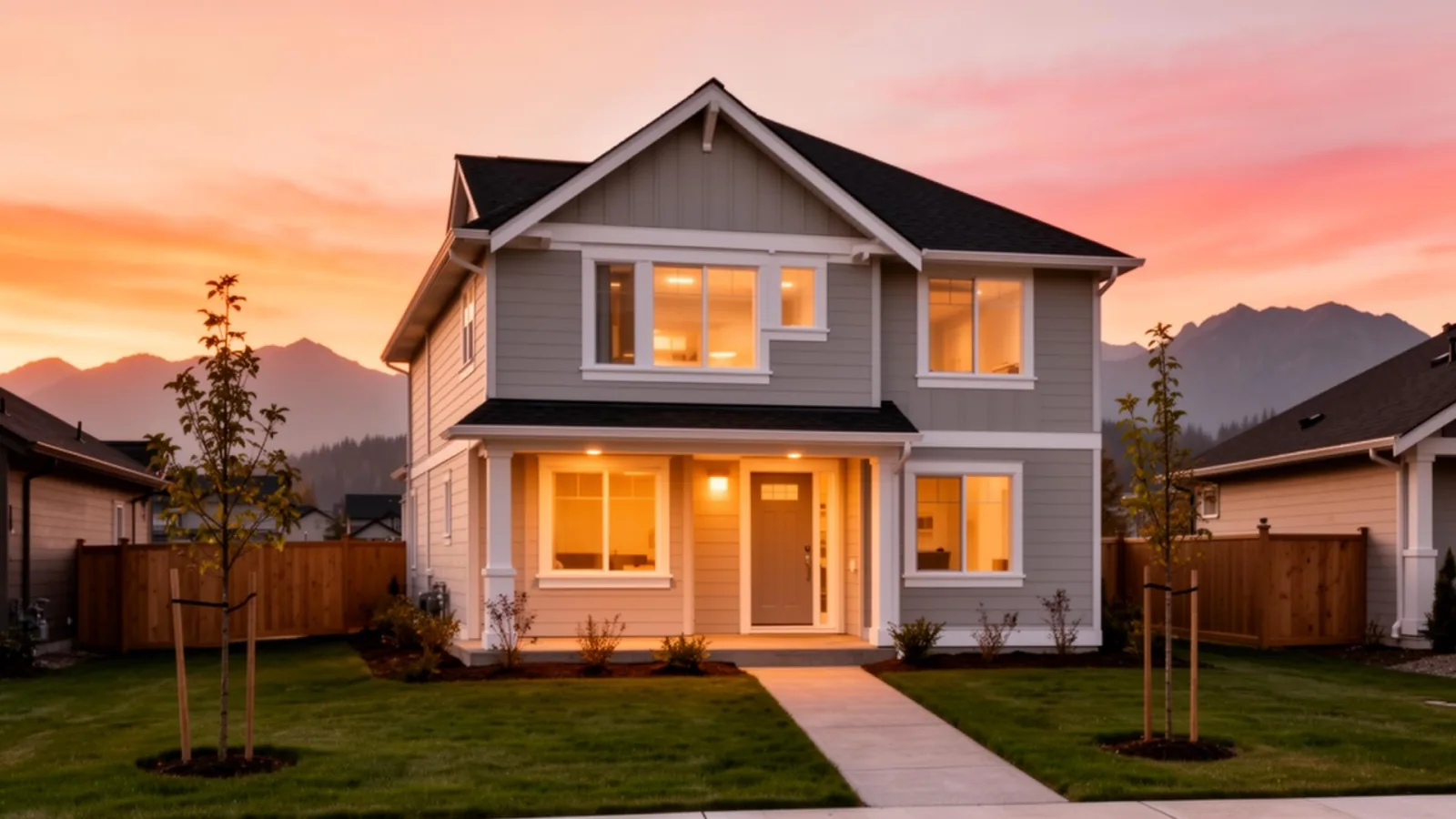
Townhouses are the dominant type, three-bedroom, double-garage, strata units in complexes that range from small (12 to 20 units) in the older East Clayton fabric to larger developments in newer areas. The older townhouses have the peaked roofs and stucco cladding typical of 2000s construction. More recent buildings trend toward flat or low-pitch roofs, fibre-cement siding, and more glass.
Condos, particularly low- and mid-rise apartments, have grown as a proportion of newer Clayton development, especially along the Fraser Highway corridor near the future station alignment. These skew smaller than townhouses and often represent the lowest entry points in the neighbourhood for first-time buyers.
Detached single-family homes exist, but they're not the story here. If detached is the priority, Cloverdale proper or the older sections of Sullivan Station give you more options.
Schools and the catchment reality
Clayton has several newer schools built to serve the growth areas, operated by Surrey School District 36. Because the district is one of the largest in BC and its high-growth areas are under constant enrolment pressure, catchments get redrawn periodically. The school a listing description points to as "the neighbourhood school" may or may not be the catchment school for that specific address in the year your kids start. Before offering on any property, verify the current catchment through the Surrey Schools school locator, and call the school to ask about capacity. Don't rely on listing marketing.
Getting around today and in 2029
Today, Clayton is a car-oriented neighbourhood with TransLink bus service along Fraser Highway and connecting routes. King George Boulevard and Highway 1 are the main arteries west into Surrey and Metro Vancouver. The commute to downtown Vancouver by bus and SkyTrain runs about 60 to 90 minutes depending on your starting point and transfer timing.
In 2029, if the SkyTrain extension opens on schedule, the Clayton Station at 190 Street puts direct Expo Line service to Surrey City Centre, King George Station, and onward into Vancouver. That changes the transit math significantly, particularly for buyers who live within walking or cycling distance of the station footprint.
What to check before you offer
When we walk a Clayton strata with a buyer, the script doesn't change. Pull the depreciation report, two years of strata council meeting minutes, and the contingency reserve fund balance. East Clayton's oldest townhouses are now old enough that roofing and building envelope items are starting to appear on depreciation schedules. A complex with a deferred CRF may be planning a special levy.
The other question we always ask on Clayton condos and townhouses: EV charging. Some complexes have roughed in capacity for the whole building; others added a handful of Level 2 outlets years ago and have no infrastructure headroom for more. If you're buying a plug-in vehicle or planning to, ask before you offer, retrofitting in a strata without existing capacity is expensive and requires strata council votes.
The honest trade-offs
Clayton makes sense for buyers who want newer housing, a family-oriented demographic, and transit infrastructure coming their way, and who can handle a car-dependent commute for the next few years while SkyTrain is under construction. It makes less sense for buyers who need walkable daily errands today, who are buying on the assumption of a specific 2029 opening date, or who are stretched enough that a special levy from a deferred depreciation item would cause real difficulty.
For current Clayton market context, benchmark prices, sales pace, how the neighbourhood sits in the broader Surrey market, see our monthly Fraser Valley market update on the FRIVE journal. The live MLS® listings on this page show what's available right now.