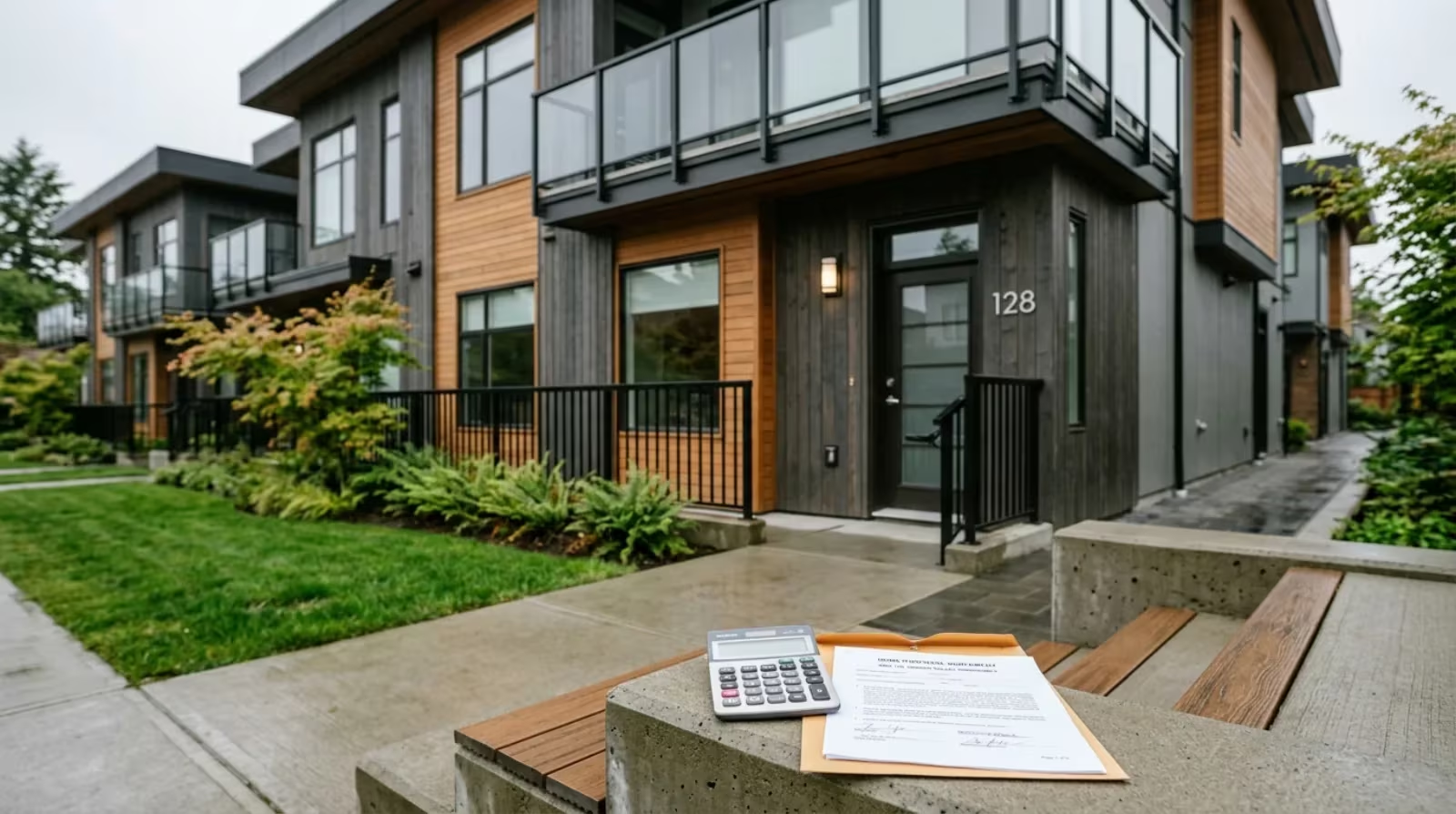

A power of attorney lets one person sign on another's behalf. In a real estate transaction that is ordinary and manageable, and it becomes a problem only when nobody reviews the document until the week of completion.
What it is and why it appears
A power of attorney is a legal document granting one person authority to act for another.
In a purchase or sale it allows an attorney to sign documents for the owner or buyer, within whatever authority the document grants. The reasons are usually mundane. Someone is working abroad, someone cannot attend, or a family member is handling matters for a parent.
BC's Power of Attorney Act governs these documents, including enduring powers of attorney, which are intended to continue if the person granting them loses capacity. The type matters to what the document can be used for, which is one reason a lawyer needs to read the specific one rather than a general description of it.
The real issue is registration
Here is why this matters more than it sounds.
At completion, the transfer has to be registered under BC's Land Title Act. If the power of attorney does not satisfy the requirements for registering a land transfer, the registration can stall.
That stall happens at the worst possible moment. Your funds are moving, your completion date is fixed, and often the seller is relying on your money to fund their own purchase. Our closing day guide covers how tightly those dates interlock, and our failed completion guide covers what happens when they do not hold.
Your lawyer or notary is the person who knows the current requirements and can confirm the document meets them. That is the whole job here, and it takes time rather than genius.
Tell your lawyer early
This is the practical point of the entire topic.
Raise it as soon as you know a power of attorney is involved, on either side of the transaction. Reviewed two weeks out, it is routine document work. Reviewed two days out, it is a scramble and sometimes a delayed completion.
Our notary versus lawyer guide covers who handles a BC conveyance, and our closing timeline guide covers where this fits in the sequence.
If the seller is signing by attorney
Ask whether your lawyer has seen and accepted the document.
A problem on the seller's side of the file becomes your delayed completion, which is a reason to ask rather than assume somebody else is handling it. Your lawyer will want to review the document and confirm it is adequate for registration.
This is a normal request and a reasonable one. It is also the sort of thing that gets left to the final week because everyone assumed the other side had it covered.
Currency matters, not just contents
A power of attorney can be revoked by the person who granted it, and death affects it too.
Those are exactly the circumstances that create mid-transaction problems, which is why a lawyer verifies that a document is still current rather than simply reading it once. A document that was valid when signed is not automatically valid on completion day.
Again, this is your lawyer's work rather than yours. Knowing it is the work is what tells you why the timeline matters.
Your lender has views too
Tell your mortgage broker as soon as a power of attorney is in the picture.
Lenders have requirements about who signs mortgage documents, and those requirements are lender-specific. Our broker versus bank guide covers who can check across several lenders, and our rate hold guide covers why a delayed completion can have a financing cost attached.
Discovering a lender restriction in the final week is a poor way to find out about it.
Estate situations are a different thing
Buyers sometimes conflate the two.
An estate sale more commonly involves an executor acting under a will and a different set of documents rather than a power of attorney. Either way it is a document-heavy closing that needs your lawyer's attention early, and our court-ordered sale guide covers another category of transaction where the signing authority is not a simple owner signature.
The common thread across all of them is that the paperwork determines the timeline, so the paperwork goes to the lawyer first.
Not a red flag
Worth saying plainly, because buyers occasionally get nervous.
A power of attorney is not a sign that something is wrong with a transaction. It is a documentation requirement with a deadline attached. Handled early, it is invisible in the final result. Handled late, it is the reason a completion moves.
Our closing a home purchase guide covers the full sequence from offer to keys.
We are agents rather than lawyers, and none of this is legal advice. Your lawyer or notary is the right person to review a power of attorney and confirm it is adequate for your transaction.
Key takeaways
- A power of attorney lets one person sign for another, within the authority the document grants.
- The practical risk is registration: a document that does not meet Land Title requirements can stall a completion.
- Tell your lawyer or notary as soon as a power of attorney is involved on either side.
- A power of attorney can be revoked, and death affects it, so currency is verified rather than assumed.
- Tell your mortgage broker too, because lenders have their own signing requirements.
Frequently Asked Questions
What is a power of attorney?
A power of attorney is a legal document letting one person act on another's behalf, governed in BC by the Power of Attorney Act. In a real estate transaction it allows an attorney to sign documents for the owner or buyer, within whatever authority the specific document grants, whether that is broad or limited to a single transaction. The reasons someone uses one are usually mundane, including working abroad, being unable to attend, or a family member handling matters for a parent. It is a documentation issue rather than a warning sign about the transaction itself.
Can someone buy a home for me using one?
It is possible, and the document granting that authority has to meet the requirements for registering a land transfer under BC's Land Title Act. At completion, the transfer has to be registered, and if the power of attorney does not meet the registration requirements, registration can stall at the moment your money is moving and your completion date is fixed. Have your lawyer or notary review the specific document as soon as you know it will be used.
Why do the Land Title Office requirements matter?
They matter because a property transfer has to be registered under BC's Land Title Act before a purchase or sale is complete. If the power of attorney used to sign for a buyer or seller does not meet the registration requirements, the transfer can be held up at exactly the point where your money is moving and your completion date is fixed. Often the seller is relying on your funds to complete their own purchase, so a stalled registration on either side can ripple through the whole chain. Your lawyer or notary is the person who confirms the document meets current requirements before that day arrives.
When should I raise this with my lawyer?
Raise it as early as you know a power of attorney is involved, on either side of the transaction, since this is a document-review issue rather than a last-minute formality. Reviewed two weeks out, confirming the document meets Land Title Office registration requirements is routine work for your lawyer or notary. Reviewed two days out, it becomes a scramble, and sometimes results in a delayed completion because there is no time left to fix a problem in the document. Tell your mortgage broker too, since lenders have their own requirements about who signs mortgage paperwork.
What if the seller is signing by attorney?
Your lawyer or notary will want to see and review the document to confirm it satisfies the Land Title Office's requirements for registering the transfer. Ask early in the process whether it has actually been reviewed and accepted, because a problem on the seller's side of the file becomes your delayed completion, not something the seller alone absorbs. This is a normal request during a purchase and a reasonable one to make, even though it sometimes gets left to the final week because everyone assumes the other side already has it covered.
Is an enduring power of attorney different?
Yes. Under BC's Power of Attorney Act, an enduring power of attorney is intended to continue in effect if the person who granted it later loses mental capacity, unlike a general power of attorney that may not survive that change. The type of document in use matters to what it can be validly used for in a real estate transaction, which is one more reason a lawyer needs to read the specific document rather than a general description of what a power of attorney does. Currency also matters, since revocation and death both affect a document's validity.
Can a power of attorney be revoked?
Yes, a power of attorney can be revoked by the person who granted it, and it stops being effective on the death of that person. Those events create problems mid-transaction, because a document that was valid when signed may have lost its effect by completion day months later. A lawyer checks that the document is still current before relying on it at registration, and you should tell your lawyer at once if anything changes.
Does this come up in estate sales?
Buyers sometimes confuse the two. An estate sale usually involves an executor acting under a will, with a different set of documents, because a power of attorney stops being effective on the death of the person who granted it. Either situation produces a document-heavy closing that needs your lawyer's attention early, because someone other than the property owner signs on their behalf. A court-ordered sale is another case where someone other than the owner signs, and it deserves the same early legal review.
Does it affect my financing?
It can, because your lender has its own requirements about who is permitted to sign mortgage documents, and those requirements are lender-specific rather than uniform across the industry. Tell your mortgage broker as soon as a power of attorney is in the picture on either side of the transaction, since discovering a lender restriction in the final week before completion is a poor way to find out about it. A mortgage broker who can check across several lenders may be able to find one whose requirements fit your situation if your current lender's rules create a problem.
Is buying with a power of attorney a red flag?
No, a power of attorney in a real estate deal is not a sign that something is wrong with the transaction. There are ordinary reasons for one, including a buyer or seller working abroad, being unable to attend in person, or a family member handling matters for a parent. The real issue is never the reason someone is using one. It is whether the specific document satisfies the requirements for registering a land transfer, which is a documentation question for your lawyer or notary rather than a warning sign about the people involved.
Sources
Verified September 12, 2026. General information only, not legal advice. Have your lawyer or notary review any power of attorney used in a transaction.
Related FRIVE guides
- Notary vs lawyer, who handles a BC conveyance
- Closing day, how tightly the dates interlock
- Failed completion, what a missed date can cost
- Court-ordered sales, another non-standard signing situation
- Closing timeline, where document review fits
Next Steps: Work with FRIVE
If a power of attorney is involved on either side of your Fraser Valley purchase, the fix is early document review rather than anything complicated.
Start a conversation with the FRIVE team and we will flag it to your lawyer in week one, or browse current Fraser Valley listings.
Sources
- Power of Attorney Act, BC Laws
- Land Title Act, BC Laws
Related guides
Found this useful? Share it.
A neighbour, a partner, a friend who's two FHSA contributions away, send it their way.