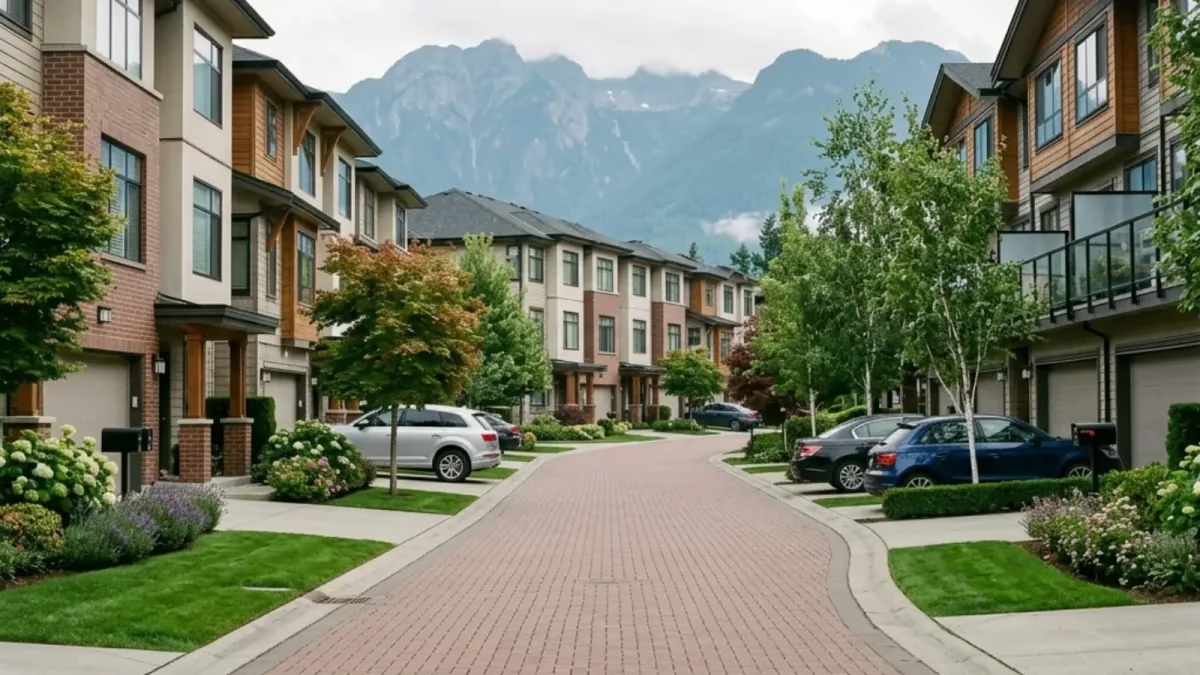

In a bare land strata the road outside your house is frequently owned by the strata corporation rather than the municipality. That single fact changes who repaves it, who clears the snow, and what a low monthly fee actually tells you.
What a bare land strata owns
A bare land strata divides land rather than a building. You own your lot, and the areas between lots are common property held by the strata corporation.
In a conventional strata the common property is hallways, a roof, a parkade. In a bare land strata it is often the roads, the drainage, the lighting, and sometimes the servicing lines. Our bare land versus conventional strata guide covers the structural difference, and the traditional versus bare land townhouse guide covers how it shows up in Fraser Valley townhouse complexes.
The practical question is not which type you are buying. It is what the strata owns, and whether the money to maintain it exists.
Why a private road is a real cost
Road surfaces wear out. When the road is municipal, the city repaves it from tax revenue on its own schedule.
When the road is common property, the owners pay. That cost is a common expense, funded either from the contingency reserve fund or from a special levy charged to every owner. Our special levies guide covers how those land and how large they can be.
A road is not a small item. It is also not a surprise item, which is the encouraging part. Asphalt has a known service life, and a strata that has been paying attention has been putting money aside.
Snow, drainage, and the things nobody thinks about in July
The city plows city roads. A private road is the strata's responsibility.
Some bare land stratas hold a snow removal contract. Some expect owners to sort it out among themselves, which works until a winter when it does not. In the Fraser Valley this is a handful of days most years, and it is worth asking how the strata handles them.
Drainage is the quieter one. Surface water has to go somewhere, and if the drainage inside the strata is common property then the strata maintains it. Our perimeter drain guide covers drainage on an individual property, and the same logic about deferred maintenance applies at the strata scale.
The two documents that answer the question
Read the depreciation report and the contingency reserve fund balance together.
A depreciation report assesses common property and projects what needs replacing and when. For a bare land strata that should include the road surface, the drainage, and any lighting or gates. Our depreciation report guide covers how to read one.
The contingency reserve fund is money set aside for expenses that occur less often than once a year. The Government of BC lists road repaving as one of its examples, alongside roof replacement and elevator upgrades, so this is not an edge case the legislation overlooked.
Since November 1, 2023, strata corporations must contribute a minimum of 10% of their budgeted annual operating fund to the CRF each year, up from the previous 5%. Our CRF guide covers what a healthy balance looks like.
Neither document means much alone. A reserve balance that looks comfortable against a road with fifteen years of life left is a different situation from the same balance against a road with three.
Why a low fee can be a warning
Buyers read the monthly strata fee as a cost and want it low. In a bare land strata it is better read as a signal.
Fees have to cover operating expenses plus contributions to the reserve. A strata that owns a road, drainage, and lighting has more to fund than one that owns a lawn. If its fees are lower than comparable complexes, either it is efficient or it is underfunding, and the depreciation report tells you which.
In our experience this is the most common miss on bare land strata purchases in the Fraser Valley. The buyer compares monthly fees across complexes, picks the cheapest, and meets the deferred road two years later as a levy. Our strata package red flags guide covers the wider set of signals.
Ask which services are municipal
Do not assume the servicing stops being the strata's problem at the road.
Water, sewer, and storm lines within a bare land strata may be common property, maintained by the owners up to a connection point. Ask specifically which services are municipal to the property line and which the strata maintains. The answer belongs in your due diligence alongside the road.
Your lawyer or notary reviews title and the strata plan. This is a good question to put to them directly, because the strata plan is where the designations live. Our strata documents checklist covers the full review, and the Form B guide covers what that certificate discloses.
What we tell buyers looking at these complexes
Bare land stratas are not a problem to avoid. Plenty are well run, and the lot-ownership structure suits a lot of first-time buyers who want a bit of land.
The work is to price the common property honestly. Find out what the strata owns, read the depreciation report for the replacement schedule, check the reserve against it, and read the last two years of council minutes for whether road or drainage work is already being discussed. A strata talking openly about the asphalt is usually a strata that is planning for it.
We are agents rather than engineers or lawyers, and none of this is a technical or legal assessment. Your lawyer or notary, and a qualified professional where the report raises a question, are the right sources for a specific property.
Key takeaways
- In a bare land strata, roads and drainage are often common property owned by the strata rather than the municipality.
- Road replacement is a common expense, funded from the reserve fund or from a special levy on owners.
- Snow clearing on a private road is generally the strata's responsibility, not the city's.
- Read the depreciation report and the contingency reserve fund balance together, not separately.
- Since November 1, 2023, stratas must contribute at least 10% of the budgeted operating fund to the reserve annually.
- A low monthly fee on a strata that owns a road can signal underfunding rather than efficiency.
Frequently Asked Questions
Who owns the road in a bare land strata?
In a bare land strata, the road outside your home is often owned by the strata corporation as common property rather than by the municipality. That means the owners collectively pay to maintain and eventually replace it, instead of the city funding the work from tax revenue. The same can apply to drainage and lighting within the strata. Read the strata plan to find out what is designated common property before you assume the city is responsible for the road.
Why does that matter to a buyer?
Owning a bare land strata road matters to a buyer because road replacement is expensive and arrives on a schedule nobody controls. If the contingency reserve fund has not been built up for it, the cost reaches owners as a special levy rather than coming out of a municipal budget. Since November 1, 2023, stratas must contribute at least 10% of their budgeted operating fund to that reserve each year, which helps, but a strata that started saving late may still fall short when the road needs work.
How do I find out whether the road is private?
You find out whether a bare land strata road is private by reading the strata plan and asking what is designated common property. Your lawyer or notary reviews title and the strata plan during your purchase, and this is a specific question worth putting to them directly rather than assuming the answer. The depreciation report is the other document to check, since it should list the road as an asset if the strata owns it.
Does the city plow a private strata road?
No. The city plows city roads, and snow clearing on a common property road is the strata's responsibility. Some bare land stratas carry a snow removal contract, while others expect owners to arrange it among themselves, which can fail in a heavy winter. Ask the strata how it handles snow before you buy, since the answer affects both your fees and your own effort.
Where would I see the future cost?
The depreciation report. It assesses common property and projects what needs replacing and when, which for a bare land strata should include the road surface and any drainage. The Government of BC names road repaving as an example of what a contingency reserve fund is for.
How much must a strata put into its reserve fund?
Since November 1, 2023, a strata corporation must contribute at least 10% of its budgeted annual operating fund to the contingency reserve fund each year, replacing an earlier 5% minimum. That floor applies whether the strata is a bare land strata with a road to fund or a conventional building with a roof and elevators. The depreciation report shows whether that minimum contribution is enough for what the strata actually owns, which is why the two documents belong together.
Are strata fees higher in a bare land strata?
Not automatically. What matters is whether the fees and the reserve fund are sized for the common property the strata actually owns, such as roads, drainage, and lighting. A strata that owns a road has more to fund than one that owns only a lawn, so its fees should reflect that. Low fees on a strata that owns a road signal underfunding as often as they signal genuine efficiency, and the depreciation report tells you which one you are looking at.
Can the strata charge a special levy for road work?
Yes. A special levy is a one-time charge to owners for a common expense, and road replacement counts as a common expense when the road is common property owned by the strata rather than the municipality. This is most likely to happen when the contingency reserve fund has not built up enough money for the work by the time it is needed. Reading the depreciation report and the reserve fund balance together tells you how likely a levy is on a specific complex.
Does utility servicing work the same way?
Not always. Water, sewer, and drainage lines within a bare land strata may also be common property maintained by the owners rather than the municipality, in the same way the road can be. Do not assume servicing stops being the strata's problem at the road. Ask specifically which services are municipal up to the property line and which ones the strata maintains beyond it, and put that question to your lawyer or notary during the review of title and the strata plan.
Is a bare land strata a bad idea for a first-time buyer?
No, a bare land strata is not a bad idea for a first-time buyer, and plenty are well run. The lot-ownership structure suits buyers who want a bit of land without the cost of a detached home. The work is to price the common property honestly rather than assume it is like a conventional strata. Read the depreciation report and the reserve fund balance, and check the last two years of council minutes for any sign that road or drainage work is already being discussed.
What is the single most useful document here?
The most useful document is the depreciation report, read alongside the contingency reserve fund balance. The depreciation report assesses common property and projects what needs replacing and when, including the road surface and drainage in a bare land strata. The reserve fund balance tells you whether the money for that project already exists. Together they tell you whether the next road project is funded or will land on owners as a special levy.
Sources
Verified September 12, 2026. General information only, not legal or engineering advice. Consult your lawyer or notary and a qualified professional about a specific property.
Related FRIVE guides
- Bare land vs conventional strata, the structural difference
- Depreciation reports, where the replacement schedule lives
- Contingency reserve fund, what a healthy balance looks like
- Special levies, how deferred work reaches owners
- Strata package red flags, the wider signal set
Next Steps: Work with FRIVE
If you are looking at a bare land strata in Langley, Abbotsford, or Chilliwack, the question worth answering before you remove subjects is what the strata owns and whether it has saved for it.
Start a conversation with the FRIVE team and we will read the depreciation report with you, or browse current Fraser Valley listings.
Sources
- Strata Property Act, BC Laws
- The contingency reserve fund (CRF), Government of British Columbia
Related guides
- Strata & CondosBuying a Condo With a Pet in the Fraser Valley: Read the Bylaws First
- Strata & CondosStrata Move-In Fees and Rules in BC: What to Expect on Move Day
- Strata & CondosCondo Square Footage in BC: Why the Listing Number Might Be Wrong
- Home ConditionGalvanized and Cast Iron Plumbing in Older BC Homes
Found this useful? Share it.
A neighbour, a partner, a friend who's two FHSA contributions away, send it their way.